We can make working poverty history

6 April 2017

Working poverty in Scotland is at its highest level since devolution.

Since 2007 the number of households in poverty where at least one adult works has increased by 150,000 to 420,000. That’s a failure of the SNP in government, and a sign of a broken economy.

A job should be enough to keep people above the breadline. Here is what Labour would do to change that:

Use the social security powers

We’d increase Child Benefit by £240 by 2020 and ensure that £2 billion worth of unclaimed payments like tax credits and housing benefit go to the people who are entitled to them. Increasing Child Benefit would lift around tens of thousands of children out of poverty, according to expert groups like the Child Poverty Action Group.

Make work pay

While the SNP dishes out millions of pounds in taxpayer funded grants to companies like Amazon, Labour will ensure that no business receives a public contract or taxpayer grant without guaranteeing to pay the real living wage.

We’ll work to extend the real living wage into the jobs where it needs to be: low paid industries like hospitality and retail.

Tackle the cost of living

A decade on from promising to the scrap the council tax, all the SNP has done is scrap the council tax freeze.

Labour would abolish the council tax and replace it with a fairer system where 80% of households would pay less.

We would move towards more flexible childcare, starting with a breakfast club in every school.

And we would take back control of public transport, meaning we could freeze or even cut fares on our trains and buses.

Invest for the long term

We’ll only end working poverty for good if we give our people the skills they need to compete for the jobs of the future.

That means investing in education with more resources in our schools and fairer bursaries for our students.

We would reform our schools system to tilt the balance away from the richest and towards the rest.

And we’ll future proof our economy to take steps towards coding being as vital in our classrooms as literacy and numeracy.

Agree with our plan? Then spread our message.


Britain betrayed by Labour MEPs and their federalist cabal on Brexit vote

In response to the European Parliament’s joint resolution from the main federalist groups UKIP proposed 14 separate amendments to protect British interests, from controlling immigration to protecting Gibraltar’s sovereignty. All of these amendments were voted down today with help from Labour MEPs.

Paul Nuttall MEP and UKIP leader commented: “For once it would have been nice for British MEPs to put aside petty party political differences to ensure Britain’s best interests would be served. Needless to say Labour MEPs just couldn’t play nice and voted against protecting Gibraltar from an ever more antagonistic Spain, controlling EU immigration post-Brexit and even to actively disadvantage Britain by not allowing us to pursue free trade deals.


Scotland’s mental health strategy: what you need to know

The SNP Scottish Government has launched it’s new ten-year Mental Health Strategy, setting out 40 actions to improve access to services and ensure people get help earlier.


News story: UK personnel arrive in Poland and Estonia

The British Army’s Light Dragoons have arrived in Poland as part the UK commitment to NATO’s Enhanced Forward Presence in Eastern Europe, taking the total deployment in the region to nearly 1,000.

Supporting the US led battle group in Poland, 150 UK personnel have travelled from their base in Catterick Garrison to arrive this week in Orzysz, Poland in Jackal and Coyote light reconnaissance vehicles.

The regiment will be based in Poland for at least six months, when they will be replaced by another unit to carry on our enduring commitment to the region.

Meanwhile the arrival of the remaining UK personnel into Estonia this week, forming part of a nearly 800-strong British-led battle group, means nearly 1000 troops are providing deterrence in Eastern Europe.

Soldiers from 5 Rifles battle group, based in Bulford, Wiltshire and The Queen’s Royal Hussars, based in Paderborn, Germany, have travelled to Estonia to work under the command of Lieutenant Colonel Mark Wilson.

The commitments in the Baltic region will be augmented by the deployment of RAF Typhoon aircraft to Romania later this year, to carry out a NATO Air Policing mission in the Black Sea.

Defence Secretary Sir Michael Fallon said:

The UK is stepping up its support for NATO’s collective defence through our deployments across the alliance.

British personnel are playing a leading role in NATO: delivering deterrence and defence in Estonia and Poland and air policing in Romania underlines our commitment to the security of Europe.

On Monday, Defence Minister Earl Howe, joined by His Excellency Mr Lauri Bambus, Estonian Ambassador, bade farewell to Estonia-bound personnel at RAF Brize Norton.

Defence Minister Earl Howe said:

The men and women of 5 Rifles have travelled to Estonia as a part of the biggest reinforcement of NATO’s collective defence in a generation, standing by our allies and working closely with forces from across the Alliance.

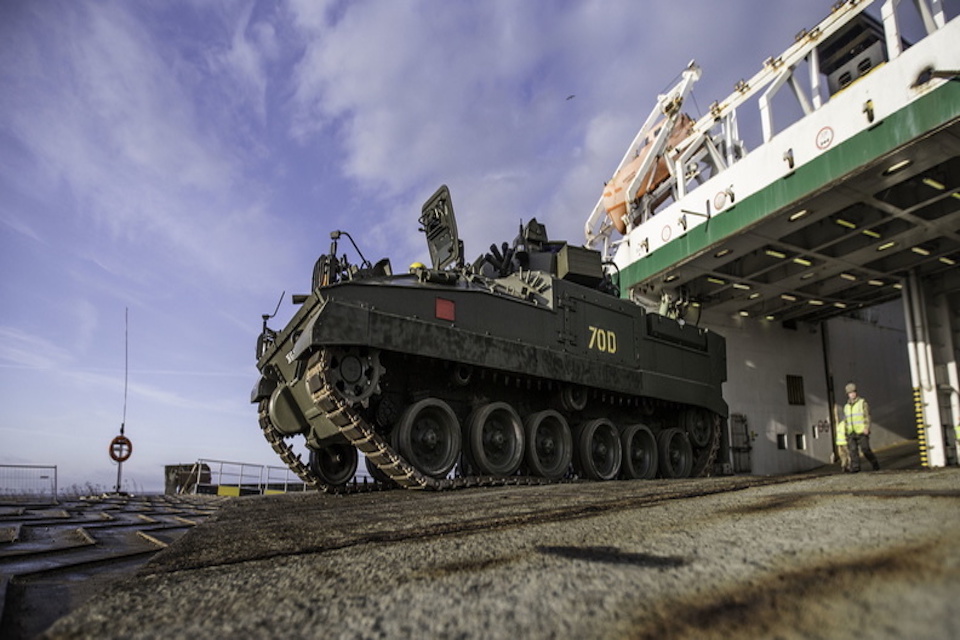
The final UK vehicles also departed Marchwood, UK last week, carrying nearly 200 vehicles including Warriors and Panthers vehicles.

Last week also saw two trains carrying French vehicles arrive in Tapa, Estonia, supporting the UK-led battalion.

UK Vehicles arrive in Estonia
Credit Estonian Defence Forces


News story: UK personnel arrive in Poland and Estonia

The British Army’s Light Dragoons have arrived in Poland as part the UK commitment to NATO’s Enhanced Forward Presence in Eastern Europe, taking the total deployment in the region to nearly 1,000.

Supporting the US led battle group in Poland, 150 UK personnel have travelled from their base in Catterick Garrison to arrive this week in Orzysz, Poland in Jackal and Coyote light reconnaissance vehicles.

The regiment will be based in Poland for at least six months, when they will be replaced by another unit to carry on our enduring commitment to the region.

Meanwhile the arrival of the remaining UK personnel into Estonia this week, forming part of a nearly 800-strong British-led battle group, means nearly 1000 troops are providing deterrence in Eastern Europe.

Soldiers from 5 Rifles battle group, based in Bulford, Wiltshire and The Queen’s Royal Hussars, based in Paderborn, Germany, have travelled to Estonia to work under the command of Lieutenant Colonel Mark Wilson.

The commitments in the Baltic region will be augmented by the deployment of RAF Typhoon aircraft to Romania later this year, to carry out a NATO Air Policing mission in the Black Sea.

Defence Secretary Sir Michael Fallon said:

The UK is stepping up its support for NATO’s collective defence through our deployments across the alliance.

British personnel are playing a leading role in NATO: delivering deterrence and defence in Estonia and Poland and air policing in Romania underlines our commitment to the security of Europe.

On Monday, Defence Minister Earl Howe, joined by His Excellency Mr Lauri Bambus, Estonian Ambassador, bade farewell to Estonia-bound personnel at RAF Brize Norton.

Defence Minister Earl Howe said:

The men and women of 5 Rifles have travelled to Estonia as a part of the biggest reinforcement of NATO’s collective defence in a generation, standing by our allies and working closely with forces from across the Alliance.

The final UK vehicles also departed Marchwood, UK last week, carrying nearly 200 vehicles including Warriors and Panthers vehicles.

Last week also saw two trains carrying French vehicles arrive in Tapa, Estonia, supporting the UK-led battalion.

Credit Estonian Defence Forces