Sturgeon and Corbyn confirm indyref2 would be first priority of SNP-Labour alliance

29 May 2017

Ruth4

Nicola Sturgeon has confirmed her first priority in any alliance with Jeremy Corbyn would be consent for a second independence referendum.

Speaking on television earlier, the First Minister again talked-up the possibility of propping up a Labour government in Westminster.

And should she secure such a deal, the prospect of another divisive vote would be the first thing on the table, she confirmed.

It comes as Corbyn admitted he would “open discussions” with the SNP about another referendum.

He said today when asked about a re-run of the 2014 vote: “I’ll obviously open discussions with the government in Scotland and listen very carefully to what the Scottish Parliament says.”

That marries with Nicola Sturgeon’s position on the issue.

After being asked on Sky News if another referendum would be a condition of any arrangement, she said: “If there’s any chance of a progressive alliance that locks the Tories out I’d want to get as much of SNP manifesto implemented as possible.”

It’s the strongest indication yet that the SNP and Labour are working behind the scenes for a post-election deal.

Corbyn’s insiders said last month they wanted to “cut a deal” with the SNP to put him into Number 10.

And for its part, the SNP thinks a Corbyn government could act as a “midwife for independence”.

Scottish Conservative leader Ruth Davidson said:

“Nicola Sturgeon is desperate for a second referendum and will do anything to get it – even putting Jeremy Corbyn into Number 10.

“The Labour leader has already said he’s ‘absolutely fine’ with another referendum – so it looks like a sweetheart deal is in the offing.

“This might suit the two of them but it would be a disaster for Scotland – dragging us back to more division just at the moment when we need to move on, together.

“I will always stand up for the decision we made to stay part of the UK and a vote for the Scottish Conservatives will help me send Nicola Sturgeon a message – no to another referendum.”
Notes to editors:
Nicola Sturgeon appeared live on Sky News earlier today.
Labour sources have already confirmed Jeremy Corbyn wants to do a deal with the SNP after June 8:
http://www.scottishconservatives.com/2017/04/reports-state-labour-will-pursue-election-deal-with-snp/
And the SNP is equally keen on such an arrangement:
http://www.scottishconservatives.com/2017/04/snp-says-it-wants-corbyn-alliance-to-act-as-midwife-for-independence/
Below are words from Jeremy Corbyn today, as reported by PA:
“I’ll obviously open discussions with the Government in Scotland and listen very carefully to what the Scottish Parliament says.”


15 Questions that the Conservatives must answer:

The Tories seem to think – if we ignore any difficult question – we don’t have to tell the public the truth. If they cannot tell us even the most basic things why should we trust them at all.

Theresa May seems to be hiding their real agenda from the public.

The Tories cannot tell us anything about their plans and they are doing it on purpose. They hope to secure a colossal majority and then to take the country for a ride. We cannot let this happen – our schools, hospitals and social care are at risk

After the debacle on the Dementia Tax, the only policy they gave us detail on, it is no wonder they are trying to hide things from us. They need to come clean and tell us the truth.

These are the fifteen questions that the Conservatives must answer


Security

1. Why are the Conservatives insisting on a Brexit negotiation strategy that will automatically prevent access to the vital EU Schengen Information System – used 16 times a second by UK police forces to track terrorists and criminals?
2. Why has only one individual out of hundreds who have travelled to fight for ISIS in Syria been subject to the Temporary Exclusion Order powers introduced by the Coalition?
3. How will the Conservatives ‘ban encryption’ without weakening internet banking security for millions of British citizens?

Schools

4. How many children will lose their free school lunches?
5. How much money will the Conservatives spend on providing free school breakfasts instead of lunches?
6. Exactly how much money will the Conservatives give to schools to plug the the hole in their budgets, and why is their pledge unfunded?

Health and social care

7. How many people risk losing their house as a result of their social care policy?
8. At what level will losses be capped for people with long-term degenerative conditions like dementia?
9. How will the NHS cope with the loss of 26,000 EU staff who are planning to leave because of Brexit?

Welfare

10. How many people will lose their winter fuel payments?
11. How many lives will be lost as a result?
12. Will the coldest areas of England and Wales be exempted, as Scotland has been?

How will they pay for their manifesto policies?

13. Why should anyone vote for a manifesto without costings?
14. How many billions will be lost to the public finances as a result of the Conservatives’ plan to reduce net immigration to the tens of thousands?
15. How much will they raise taxes and national insurance by in order to pay for their pledges?


Dementia tax could wipe out up to half the value of average family home

It comes after Amber Rudd said the Conservatives did not know what a future cap on social care costs would be, while refusing to rule out that it could be as high as £200,000 or £300,000.

The analysis reveals that:
• If a cap was introduced at £200k, the costs of care for those with long-term conditions could wipe out over half of the value of an average family home

• If a cap was introduced at £150k, the costs of care for those with long-term conditions could wipe out around a third of the value of an average family home

• In Theresa May’s constituency of Maidenhead, the dementia tax could wipe out 40% of the value of an average home if a cap of £200k was introduced.
Liberal Democrat Shadow Health Secretary Norman Lamb said:

“These figures show Theresa May’s dementia tax could devastate hard-working families, with a cap on costs in the hundreds of thousands.

“Across the country, people risk seeing over half the value of their homes taken to pay for care costs.

“Theresa May’s stubborn refusal to set out the full details of the dementia tax shows she has no plans to ditch it.

“She is showing contempt for vulnerable older people who have developed a condition like dementia through no fault of their own.”


News story: UK Armed Forces recognised for support to UN Peacekeeping

Today (29 May) is the annual International Day of UN Peacekeepers, which was marked by a number of events in London on Wednesday.

The day also commemorates those who have lost their lives while serving on Peacekeeping operations. Over 100 UK service personnel make up part of more than 3,500 personnel from around the world who have died serving as UN Peacekeepers since 1948, and they were remembered during a ceremony and wreath-laying at the Cenotaph.

Commander of Joint Forces Command General Sir Chris Deverell and Foreign Office Minister for Asia and Pacific Alok Sharma laid wreaths during the event, and wreaths were also laid by representatives from nearly 100 Embassies and High Commissions, the Chief Inspector of the Constabulary, UN Veterans Association, widows and schoolchildren.

The Band of the Welsh Guards performed at the wreath-laying, and Wednesday’s events also included a Conference at the Royal United Services Institute for Defence and Security Studies (RUSI), opened by Vice Chief of the Defence Staff General Sir Gordon Messenger.

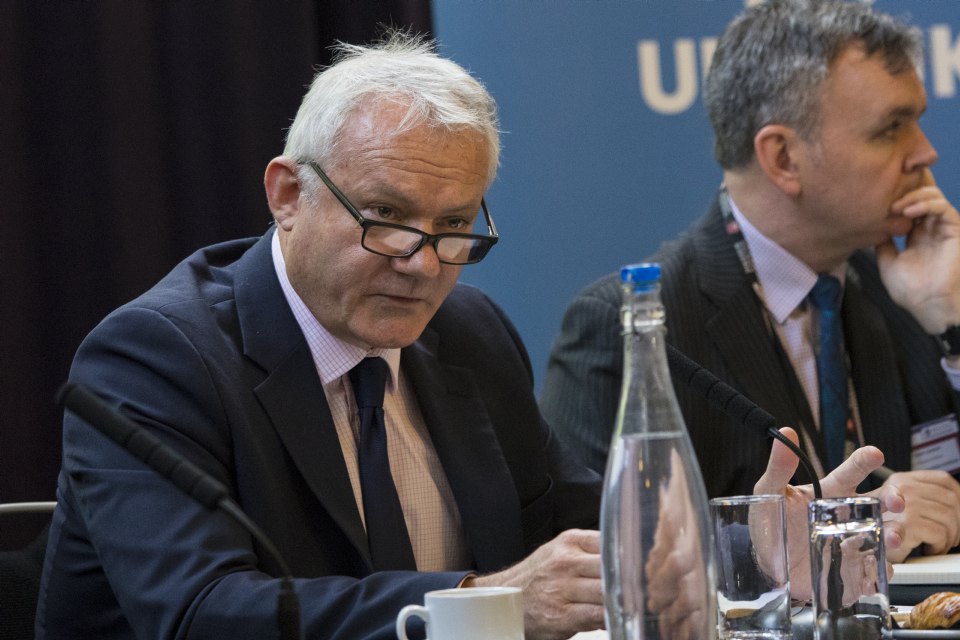
Vice Chief of the Defence Staff General Sir Gordon Messenger opened a conference at the Royal United Services Institute for Defence and Security Studies. Crown Copyright.

Over 690 UK military personnel are currently deployed in support of multiple UN Peacekeeping missions, the majority in South Sudan, Cyprus and Somalia. The largest of these deployments, with nearly 400 British troops now deployed, is in South Sudan to support the UN’s mission in country.

Commander of Joint Forces Command General Sir Chris Deverell said:

Today, on the International Day of UN Peacekeepers, we pay tribute to the 3,500 personnel from over 120 countries who have died while serving the United Nations. When peacekeepers deploy they do so on behalf of the international community and in support of efforts by previously warring parties to find a path to peace. I am grateful to each person who deploys, and very proud that over 690 members of the UK Armed Forces are currently deployed as part of this effort.

The UK contribution to the UN Mission in South Sudan includes engineering tasks and the construction and running of a temporary field hospital, to be followed by a permanent facility which will provide medical care for over 1,800 UN Peacekeepers and UN staff.


News story: UK Armed Forces recognised for support to UN Peacekeeping

Today (29 May) is the annual International Day of UN Peacekeepers, which was marked by a number of events in London on Wednesday.

The day also commemorates those who have lost their lives while serving on Peacekeeping operations. Over 100 UK service personnel make up part of more than 3,500 personnel from around the world who have died serving as UN Peacekeepers since 1948, and they were remembered during a ceremony and wreath-laying at the Cenotaph.

Commander of Joint Forces Command General Sir Chris Deverell and Foreign Office Minister for Asia and Pacific Alok Sharma laid wreaths during the event, and wreaths were also laid by representatives from nearly 100 Embassies and High Commissions, the Chief Inspector of the Constabulary, UN Veterans Association, widows and schoolchildren.

The Band of the Welsh Guards performed at the wreath-laying, and Wednesday’s events also included a Conference at the Royal United Services Institute for Defence and Security Studies (RUSI), opened by Vice Chief of the Defence Staff General Sir Gordon Messenger.

Vice Chief of the Defence Staff General Sir Gordon Messenger opened a conference at the Royal United Services Institute for Defence and Security Studies. Crown Copyright.

Over 690 UK military personnel are currently deployed in support of multiple UN Peacekeeping missions, the majority in South Sudan, Cyprus and Somalia. The largest of these deployments, with nearly 400 British troops now deployed, is in South Sudan to support the UN’s mission in country.

Commander of Joint Forces Command General Sir Chris Deverell said:

Today, on the International Day of UN Peacekeepers, we pay tribute to the 3,500 personnel from over 120 countries who have died while serving the United Nations. When peacekeepers deploy they do so on behalf of the international community and in support of efforts by previously warring parties to find a path to peace. I am grateful to each person who deploys, and very proud that over 690 members of the UK Armed Forces are currently deployed as part of this effort.

The UK contribution to the UN Mission in South Sudan includes engineering tasks and the construction and running of a temporary field hospital, to be followed by a permanent facility which will provide medical care for over 1,800 UN Peacekeepers and UN staff.