Government agrees £200 million deal to keep vital Transport for London services running

News story

Announcing a fourth extraordinary funding and financing package for TfL ensuring the continued running of London’s transport network.

  • fourth emergency funding settlement takes government support close to £5 billion
  • the settlement includes conditions to put Transport for London (TfL) on track to financial sustainability by 2023
  • includes the potential for a longer-term capital settlement dependent on the Mayor and TfL’s cooperation with the government

The government has today (25 February 2022) agreed a fourth extraordinary funding settlement for Transport for London (TfL) worth £200 million, allowing the capital’s transport network to continue to operate while representing value for money for all taxpayers.

The settlement will run until 24 June 2022, reaffirming the government’s commitment to the network as it recovers from the pandemic and continues to work towards long-term financial sustainability.

Recognising the need for stability and forward planning, the new deal also includes the potential for a longer-term capital investment settlement for TfL. This would be agreed ahead of the next financial year and will be dependent on the Mayor and TfL’s cooperation with the government, including providing sufficient information regarding its capital investment plans and meeting conditions set out in the previous settlement.

This follows 3 previous emergency funding packages and takes the government’s support for TfL, since March 2020, close to £5 billion. This is on top of an additional pledge to provide over a billion pounds of capital investment every year in October’s Spending Review.

Transport Secretary, Grant Shapps said:

Over the past 2 years, the government has repeatedly shown its commitment to London and the transport network it depends upon, by providing close to £5 billion in emergency funding.

These support packages must be fair to all taxpayers and the settlement agreed today provides enough to cover lost revenue from the pandemic while the Mayor follows through on his promises to keep TfL on the path to financial sustainability by 2023.

In this funding settlement, the Mayor will consult on the options he believes will raise between £500 million and £1 billion of additional yearly revenue from 2023. He will also be outlining options to achieve operating cost savings of up to £400 million in 2022 to 2023 and delivering against TfL’s accelerated modernisation plan while making significant progress in moving the pension fund into a financially sustainable position.

Throughout this period, government will continue to work closely with the Mayor and TfL to ensure London’s transport system delivers for Londoners and contributes to the entire country’s economic recovery while maintaining the interests of national taxpayers.

Published 25 February 2022


Transport for London fourth extraordinary funding and finance package

Further to my statement to the House on 21 February 2022, I am updating the House on a new extraordinary funding settlement between Transport for London (TfL) and government, which expires on 25 February 2022. I have agreed with the Mayor of London a new settlement to 24 June 2022.

This new settlement demonstrates government’s ongoing commitment to supporting the capital while balancing the interests of the national taxpayer. It provides TfL with £200 million of emergency funding as it recovers from the pandemic and continues to work towards financial sustainability. It also continues the government’s commitment to cover fare revenues lost due to the pandemic.

Together, this takes the government’s overall contribution to close to £5 billion, on top of an ongoing annual capital commitment of just over a billion pounds through the Spending Review, in line with previous levels of funding.

Furthermore, government recognises the need for certainty and stability in TfL’s capital investment programme. Government is, therefore, willing to consider a longer-term capital settlement for TfL, which we intend to agree before the start of the next financial year. This will be on the condition that TfL cooperates fully and openly with government and provides sufficient information and data about their capital investment plans.

TfL needs to ensure that it is both financially sustainable in the short- to medium-term and in good financial health in the long term, ensuring good value for money for the UK taxpayer.

Within this next funding period, the Mayor has agreed to:

  • prepare a plan setting out options to realise operating cost savings up to and including £400 million in 2022 to 2023
  • progress with consultation on the options he has identified to raise between £0.5 billion and £1 billion per annum of additional revenue from 2023
  • deliver against TFL’s accelerated modernisation plan and make significant progress in moving the pension fund into a financially sustainable position

Transport is devolved to the Mayor of London. It is, therefore, for him alone to take responsibility for the decisions needed to return TfL to financial sustainability.

Government will continue to work with the Mayor and TfL to ensure London’s transport system delivers for local citizens and businesses and contributes to the country’s economic recovery.

At all times, government will continue to balance with our obligations to the national transport network as a whole and to provide value for money for the taxpayer.


PM call with President Zelenskyy of Ukraine: 25 February 2022

Press release

Prime Minister Boris Johnson spoke to Ukrainian President Volodymyr Zelenskyy this morning.

The Prime Minister spoke to President Zelenskyy this morning to express his solidarity with Ukraine.

President Zelenskyy updated the Prime Minister on the most recent Russian military advances, including missile and artillery strikes on Ukrainian cities and the terrible developments in Kyiv in the early hours of this morning.

The Prime Minister assured President Zelenskyy that the world is united in its horror at what Putin his doing. He paid tribute to the bravery and heroism of the Ukrainian people in standing up to Russia’s campaign of violence, and expressed his deep condolences for those who have been killed.

The Prime Minister committed to provide further UK support to Ukraine in the coming days as the people of Ukraine and the world continue to demonstrate that Putin cannot act with impunity.

Published 25 February 2022


UK and Singapore sign new innovative digital trade deal

  • International Trade Secretary lands in Singapore to sign groundbreaking digital trade deal and strengthen trade ties.
  • New Digital Economy Agreement will cut costs, slash red tape and pave the way for new era of modern trade.
  • Far-reaching deal will set standard for modern trade rules, helping the UK Build Back Better from the Covid pandemic.

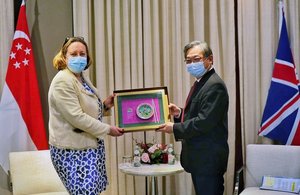
The International Trade Secretary today joined her counterpart in Singapore to sign a trade deal that will help businesses seize new opportunities and lay the ground rules for modern global trade.

Secretary of State Anne-Marie Trevelyan signed the UK-Singapore Digital Economy Agreement (DEA) alongside Singapore’s Minister-in-charge of Trade Relations, S. Iswaran, on the final day of her Asia-Pacific tour, following visits to Indonesia and Japan.

The DEA is the most innovative trade agreement ever signed, and the first by a European nation. It will strengthen our trading relationship with Singapore – worth £16 billion in 2020 – by ending outdated rules that affect both goods and services exporters, making it easier for UK business to target new opportunities in both Singapore and the wider region.

International Trade Secretary Anne-Marie Trevelyan said:

This digital agreement plays to our strengths as a services superpower and will ensure our brilliant businesses can build back better from the pandemic and benefit from easier, quicker and more trusted access to the lucrative Singapore market.

We’re using our independent trade policy to strike these groundbreaking agreements that create high-skilled, well-paid jobs across the UK – paving the way for a new era of modern trade.

The deal links two of the world’s most dynamic hi-tech and services hubs and will capitalise on the UK’s strength as the world’s second-largest services exporter. A third of our exports to Singapore are already digitally delivered, including in finance, advertising and engineering, and this deal will create new opportunities to expand modern services and help level up the country.

The digital sector alone adds £151 billion to the economy and lifts wages, with workers earning around 50% more than the UK average. UK services companies already operating in Singapore are well placed to take advantage of the deal, including financial giants, telecoms firms or software companies.  

The deal will also cut red tape for goods exporters, streamlining cumbersome border processes and replacing time-consuming and costly paperwork with e-signatures and e-contracts.

Other benefits include:

  • Free and trusted cross-border data flows. Data flows are vital for the modern global economy, enabling everything from more efficient manufacturing and supply chains to effective maintenance of jet engines.

  • Binding commitments that ensure individuals and businesses know their data, money and intellectual property are safe.

  • Strengthening the UK and Singapore’s relationship for financial services by ensuring data can flow freely without unjustified barriers and enhanced cooperation for innovative financial services. Financial Services trade between the UK and Singapore was worth £1.7bn in 2020.

  • A new partnership with Singapore to build ever-stronger cybersecurity defences against attacks by private operators or hostile states, which are a growing threat to individuals and businesses. 

Singapore is a gateway to the wider Indo-Pacific region and the DEA will support our bid to join Singapore and 10 other nations in the Trans-Pacific Partnership (CPTPP). Membership would mean access to a £8.4 trillion free trade area with vast opportunities for UK business.  

UK-founded tech unicorns are being created at a rate of almost one a week, and more will now be able to follow in the footsteps of British companies which are already thriving in Singapore. 

In addition to signing the Digital Economy Agreement, the UK and Singapore also agreed to revitalise the existing FinTech Bridge, a move that will support innovative financial services and strengthen cooperation on emerging technologies.

An enhanced FinTech bridge will help provide extra support for UK and Singaporean firms and investors expand into each other’s markets, so both countries can capitalise on opportunities in our advanced FinTech sectors.

The ministers also held the first meeting of the Trade Committee for the UK-Singapore Free Trade Agreement, where they agreed to deepen cooperation on the green economy, including working together to support the net zero transition in the wider Indo-Pacific region, and strengthen the important bilateral investment relationship between the two countries.

Discussions will begin this year to explore opportunities to deepen our obligations on investment protection with formal discussions expected to begin in the next year.

The Economic Secretary to the Treasury, John Glen, said:

The signing of the UK-Singapore DEA signifies the importance of innovative financial services trade between our two global financial centres and sets a new standard for cooperation through our commitment to revitalise the existing UK-Singapore FinTech Bridge, providing an opportunity to strengthen business support and deepen trade between our markets.

The agreements announced today build on ground-breaking Digital Trade Principles agreed by G7 countries under the UK’s Presidency and is the UK’s latest achievement as a pioneer in digital trade.

The UK has already negotiated ambitious digital provisions in its trade agreements with Japan, Australia and New Zealand, and will be pursuing advanced digital chapters in negotiations with Israel, Canada and Mexico this year.


UK-Singapore Joint Statement on CPTPP and WTO

News story

Joint Statement from Singapore Minister for Trade and Industry Gan Kim Yong and United Kingdom Secretary of State for International Trade Anne-Marie Trevelyan

Joint Statement from Singapore Minister for Trade and Industry Gan Kim Yong and United Kingdom Secretary of State for International Trade Anne-Marie Trevelyan on the Comprehensive and Progressive Agreement for Trans-Pacific Partnership and the World Trade Organisation.

  1. Singapore and the UK warmly welcome the 18 February decision of the Comprehensive and Progressive Agreement for Trans-Pacific Partnership (CPTPP) Accession Working Group to progress to the market access stage of the UK’s accession. This is a key milestone achieved through the substantial efforts and constructive cooperation between the CPTPP Members and the UK. Singapore and the UK affirm the shared commitment to maintain the momentum of the UK’s accession process under Singapore’s Commission Chairmanship year.

  2. Singapore and the UK have a shared interest in a vital and relevant multilateral trading system as embodied by the World Trade Organisation (WTO). Singapore and the UK reaffirm our shared commitment to intensify efforts and work closely with other WTO Members to ensure that the WTO achieves meaningful outcomes at the 12th WTO Ministerial Conference.

  3. Singapore and the UK have cooperated constructively during the UK’s COP26 Presidency ensuring ambitious outcomes in particular under Article 6 negotiations on carbon markets. We share interest in decarbonising our economies by developing standards, expertise and technologies to progress the energy transition and achieve net zero emissions.

Ministry of Trade and Industry, Singapore

Department of International Trade, UK

25 February 2022

Published 25 February 2022