PM meeting with Prime Minister Mateusz Morawiecki of Poland: 1 March 2022

Press release

The Prime Minister met Polish Prime Minister Mateusz Morawiecki in Poland today.

The Prime Minister met Polish Prime Minister Mateusz Morawiecki in Poland today.

He told Prime Minister Morawiecki that this is a key moment for the Ukrainian resistance and we must be ready to increase and intensify sanctions.

The Prime Minister praised Poland for being on the front line of humanitarian efforts.

They discussed the talks between Ukraine and Russia and the long-term disinformation that had misled Russian troops. The leaders welcomed EU and Germany’s support for defence and humanitarian efforts.

Published 1 March 2022


Latest data reinforces the safety of COVID-19 vaccinations in pregnant women

The latest data from UKHSA shows that vaccinated women who gave birth between January and October 2021 had a very similar low risk of stillbirth, low birthweight and premature birth compared to women who were not vaccinated in pregnancy.

Previous studies have shown the risk of being severely ill with coronavirus (COVID-19) is higher for unvaccinated women. Out of 235 pregnant women who were admitted to intensive care with COVID-19 between January and September 2021, none had received 2 doses of vaccine.

The latest analysis shows that women who had received at least one dose of COVID-19 vaccine during their pregnancy and gave birth between April and October 2021 were more likely to give birth without any of the reported adverse outcomes than women who had not been vaccinated in pregnancy (92.9% compared with 91.6%). This difference was more apparent in those aged 30 years and older.

The stillbirth rate for vaccinated women who gave birth was approximately 3.6 per 1,000, a similar rate for women who were not vaccinated in pregnancy (3.9 per 1,000).

The proportion of vaccinated women giving birth to babies with low birthweight (5.01%) was lower than the proportion for women who were not vaccinated in pregnancy (5.33%).

The proportion of premature births was 5.97% for vaccinated women, similar to the 5.88% in women who were not vaccinated in pregnancy.

Vaccine coverage has been increasing overall – in August 2021, 22.5% of women giving birth had received at least one dose of vaccine. This increased to 32.1% of women who gave birth in September, and 41.3% in October 2021, almost doubling in 2 months. Of women who gave birth in October 2021, 29.4% had received 2 doses of the vaccine.

Despite the marked increase in coverage in recent months, women of black ethnicity and women living in the most deprived areas in England were least likely to have been vaccinated in pregnancy. A total of 13.3% of pregnant black women and 18.3% of pregnant women living in more deprived areas of England had a first dose of a COVID-19 vaccine by time of delivery – up from 5.5% and 7.8% respectively in the last published statistics in November.

However, just 6.8% of pregnant black women and only 10.2% of pregnant women living in more deprived areas of England had 2 doses, compared with 23.4% of white women and 34.8% living in less deprived areas.

Dr Gayatri Amirthalingam, Consultant Epidemiologist at UKHSA, said:

There is growing evidence indicating that if you are pregnant, you are at increased risk of serious illness from COVID-19, especially in late pregnancy.

We know that the COVID-19 vaccines used in the UK are highly effective at protecting against hospitalisation and our ongoing monitoring of the vaccine programme continues to provide reassuring evidence on the safety of COVID-19 vaccines in pregnant women.

I would urge all pregnant women to come forward and get their vaccine without delay. This is the best way to protect you and your baby.

Professor Lucy Chappell, Chief Scientific Adviser at the Department of Health and Social Care and a consultant obstetrician, said:

It’s really promising to see the number of pregnant women who were vaccinated at time of birth almost doubling in just 2 months and should be hugely reassuring for other women thinking about getting the jab.

The data also show that outcomes for babies continue to be reassuringly similar for vaccinated pregnant women compared to unvaccinated pregnant women.

The vaccines are the best possible way for a pregnant women to protect herself and her baby – we urge pregnant women to get their vaccine, whether it’s their first dose, second dose, or booster, as soon as you can.

Dr Alison Cave, MHRA Chief Safety Officer, said:

The latest data from the UKHSA support the findings of our own rigorous and ongoing safety monitoring of the COVID-19 vaccines in pregnancy – that these vaccines are safe and that there is no increased risk of pregnancy complications. There is no evidence to suggest that COVID-19 vaccines affect fertility and the vaccines can be taken at any time in pregnancy.

COVID-19 infections can be very severe in pregnancy, particularly if women get infected in the third trimester of pregnancy or if they have underlying medical problems. This can lead to increased rates of stillbirth as well as complications for the mother.

Our advice remains that the benefits of vaccination against COVID-19 and flu outweigh the risks for those who are pregnant. We encourage all pregnant women to take up the COVID-19 and flu vaccines as soon as possible to boost immunity and protect themselves, their baby and others from further infection.

Dr Mary Ross-Davie, Director for Professional Midwifery at the Royal College Of Midwives, said:

All the evidence is showing that having the vaccine is safe for you and your baby and is the best way to protect you both against this potentially serious, and deadly, virus. Hundreds of thousands of pregnant women across the USA, the UK and elsewhere have had the vaccine with no harms to them or their baby reported.

I urge pregnant women who have not yet been jabbed to go to trusted sources for their information about the vaccination such as the RCM or NHS websites, midwives and doctors, and not to be influenced by the mass of incorrect misinformation swirling around the internet and social media.

It is also particularly important that we work to increase levels of vaccination in pregnant women in communities where the uptake is low. A concerted effort is needed to engage with these women, and to support them with advice and information about the vaccine, about its safety and about its benefits.

Dr Edward Morris, President of the Royal College of Obstetricians and Gynaecologists, said:

It is encouraging to see the number of women who gave birth in October 2021 who had received the COVID-19 vaccine has nearly doubled from previous figures from August 2021.

We hope that this increase in uptake will reassure and encourage other pregnant women who have not yet been vaccinated to come forward for their first, second or booster doses.

We know that pregnant women are more vulnerable of becoming seriously ill with COVID-19, which can lead to an increased risk of giving birth prematurely, and stillbirth. We have high-quality evidence that the COVID-19 vaccine is the best way to protect both pregnant women and their babies against COVID-19.

We remain concerned that those living in the most deprived areas of England and women of black ethnicity were the least likely to be vaccinated before giving birth, and we continue to advocate for concerted efforts to support these women to feel more confident about having the vaccine.


Funding for next generation of space science missions

The UK has been at the heart of international space science missions, including the once-in-a-generation James Webb Space Telescope, which launched in December; Solar Orbiter, a mission to study the Sun and its effects on the solar system; and the BepiColombo mission to Mercury.

The new funding aims to encourage collaboration between industry and academia and boost technology that will support the future exploration of the universe through space-based astronomy, cosmology, solar system science and astrophysics.

Led by organisations across Scotland, Northern Ireland and England, the projects include using tiny, digitally controlled mirrors, smaller than the width of a human hair, to counteract the movements of space telescopes and get sharper images. If successful, the UK-led technology could be used as a basis for instruments on future space missions.

Another will develop a space-based atomic clock small enough to fit inside a cubesat the size of a microwave. Tests of fundamental physics, such as quantum mechanics and general relativity, rely on extremely precise time measurement. An ultra-accurate atomic clock that can fit into a tiny satellite could help revolutionise space-based physics experiments, as well as deep-space navigation for planetary science and exploration missions.

Science Minister George Freeman said:

The UK’s space and satellite technology sector is already worth over £16 billion and growing fast. As well as our ground-breaking leadership on projects like the James Webb Telescope and Solar Orbiter missions, our UK Space Agency is supporting hundreds of SMEs developing cutting edge technology.

From miniature atomic clocks and tiny digitally-controlled mirrors that help channel light into moving spacecraft, to new space weather detectors to help warn of devastating solar storms, these new projects will ensure the UK continues to grow as a global science superpower.

The Technology for Space Science call is a joint initiative between the UK Space Agency’s National Space Technology Programme and the Science and Technology Facilities Council (STFC), part of UK Research and Innovation. A total of £455,000 has gone to the 10 projects across the UK.

In addition to national funding, the UK is a major contributor to the European Space Agency’s Science Programme, investing approximately £94 million per year, giving UK companies opportunities to bid for high value contracts and access to European suppliers and customers, and allowing UK researchers to collaborate with European and international partners on pioneering space science missions that would be too large and ambitious for one country alone.

The National Space Strategy outlines the long-term plans to grow the UK space sector and make Britain a science and technology superpower, including building on manufacturing and technology capacity, catalysing investment and working internationally.

Rb-TP: A Rubidium atomic clock for tests of fundamental physics

Lead: TwinParadox Ltd, London

Funding: £36,500

Optical atomic clocks in space will be able to make orders-of-magnitude improvements to tests of Quantum Mechanics and General Relativity. They also open up new fields such as Gravitational Wave observatories, extreme-VLBI astronomy, and have the potential to revolutionise deep-space navigation for planetary science and exploration missions.

Warm rubidium vapour optical clocks are an excellent candidate for a space optical clock, achieving stabilities of parts in 10-15 at one hour – better than any existing space clock. This project will perform the necessary pre-cursor design for an ultra-compact Rb-TP clock in a small, low-cost format, suitable for a CubeSat demonstration.

Miniaturisation of high-precision radio receivers for cosmological observations of the Dark Ages from cost-effective space platforms on Moon’s orbit

Lead: University of Cambridge

Partner: STFC RAL Space

Funding: £50,000

Low frequency radio cosmology aims at studying the mysterious early Universe (Dark Ages and Cosmic Dawn). The observational endeavour is an extreme instrumental challenge, where a cosmological signal needs to be extracted from much brighter (~ 100,000 times) noise signals originated in the sky, on Earth and in the radio telescope itself. Ground-based experiments face challenges like human-made interference and distortions introduced by Earth’s ionosphere. This project will build a prototype miniature receiver for radio cosmology observations from the quietest location in the solar system: Far-side of Moon’s orbit. This could be installed in a cost-effective CubeSat platform enabling an iterative experimental approach without the contaminating factors.

A technology roadmap for astrophysical X-ray interferometry

Lead: University of Leicester

Partner: Open University

Funding: £50,000

The highest resolution images of the X-ray sky have to-date been taken by the Chandra X-ray observatory, a remarkable telescope that has revolutionised our view of high energy processes in astrophysics. But telescopes of this type appear to be reaching a practical limiting resolution. A radical new approach to X-ray imaging is needed to drive future advances in X-ray astronomy. This proposal will create a technology roadmap aiming to deliver the tools that astronomers need for new scientific observations – from imaging exoplanets passing in front of nearby stars to resolving the event horizon of a black hole.

Feasibility Study of a Moon-enabled Sun Occultation Mission

Lead: Surrey Space Centre, University of Surrey

Funding: £50,000

According to the Royal Academy of Engineering’s most recent assessment of space weather, better modelling and observations of the inner heliosphere represent a “crucial step in understanding all aspects of solar activities”. These include catastrophic events such as solar flares and corona mass ejections that can wreak havoc on power grids and space-based technologies. This project wants to explore the feasibility of a spacecraft mission aimed at collecting more frequent and higher-quality measurements of the inner Sun corona via Moon-enabled total solar eclipses in space. Candidate spacecraft trajectories will be researched in the chaotic dynamics of the Sun-Earth-Moon system and used to inform the preliminary design of a UK-led small satellite platform.

Integral Field Units: the next generation of space-based solar instrumentation

Lead: Queen’s University Belfast

Funding: £50,000

Placing high-powered telescopes in space offers an unrivalled viewpoint of celestial objects, including our nearest star, the Sun. Unfortunately, the spacecraft mechanics necessary to maintain stable orbits often introduce unwanted jitter in the telescope pointing, which can result in blurring of the acquired images. This project will investigate the suitability of digitally controlled small-scale mirrors, which are smaller than the width of a human hair, to reduce the impact of spacecraft jitter by allowing the re-pointing of incoming light at very high rates (exceeding thousands of times each second). Understanding the suitability of micromirrors for spaceflight will pave the way for future UK-led instrumentation suites in the decades to come. 

GaiaNIR:UK – capacity building and feasibility study for next generation astrometry

Lead: Institute of Astronomy, University of Cambridge

Partners: Durham University, University College London’s Mullard Space Science Laboratory and the UK Astronomical Technology Centre and Leonardo UK Ltd

Funding: £47,000

The focus of the study is to conduct initial feasibility studies related to the development of a future near-infrared astrometry space mission in the context of the ESA Voyage 2050 programme, building on UK strengths in science, data and IR detector technologies. Observing in the infrared would allow the study of regions hidden in the optical due to dust, for instance the central regions of the Milky Way, and thus allow a detailed understanding of our galaxy’s ecosystem and formation history.

Ultrasonically assisted augers

Lead: University of Glasgow

Funding: £50,000

Exploring the subsurface of another planet may require us to drill below the ground, but low gravity might make it difficult to create the forces and torques required to operate a rotating drill string. However, ultrasonic vibration – small, high frequency movements – are known to fluidise soil-like materials. This project will determine if this fluidisation phenomenon can be applied to a drilling auger, which would reduce the force and torque that would need to be applied and allow us to explore the terrain using smaller, and therefore faster and cheaper, planetary landers.

Improved control loop for a miniaturised space weather magnetometer

Lead: Imperial College London

Funding: £36,500

Imperial College is leading a project to improve the performance of miniaturised magnetic field detectors that are deployed on nano-satellites to detect space weather disturbances coming from the Sun. These disturbances can cause serious environmental interference on the ground such as shutting down power grids. The project involves development of a new type of electronics control that is compatible with the most sensitive magneto-resistive sensors, solid state miniature sensors that are more commonly use in navigation and vehicle detection applications.

Using Multivariate Statistical Analysis to fit spectroscopy data from remote and in situ analysis of planetary surfaces: A proof-of-concept assessment

Lead: The Open University

Funding: £40,500

One of the most powerful tools that scientists use for the remote exploration of planetary bodies is reflectance spectroscopy. When light from the Sun is reflected back from the surface of a planetary body, its spectrum (or pattern of wavelengths) is changed in ways that depend on the composition and roughness of the surface. Spectra are interpreted by comparison with known rocks and minerals – but it is not an exact procedure. The team is developing mathematical techniques that can speed up and make more accurate the interpretation of planetary spectra. This will help future exploration of space and recognition of potential in situ resources.

Optical Coatings by the ContinUous Processing of Large ARea Parts using Plasma Electrolytic Oxidation (“OCULAR”)

Lead: Keronite International Ltd, Haverhill, Suffolk

Funding: £44,000

Black surface treatments are needed for optical instruments and solar shielding to withstand the extreme conditions found in space, but very few surface treatment technologies meet these requirements. Keronite’s proprietary plasma electrolytic oxidation (PEO) process involves creating a ceramic oxide layer on the surface of metals, which offers exceptional properties for space applications.

To cater for an increased demand for coating large components, including the next generation of space telescopes, the OCULAR approach envisages an innovative continuous coating process whereby only a section of a part is coated at any given time while rotating the part to ensure full coverage. This will be a globally unique capability that will put UK space technology at the forefront of the future development for large space parts requiring functional optical coatings.


British Embassy Bangkok hosts Child Safeguarding Conference for Thai schools

Today the British Embassy Bangkok, in collaboration with UNICEF and the International Schools Association of Thailand (ISAT), hosted the Child Safeguarding in Schools (Thailand) Conference 2022. The event highlighted the importance of child safeguarding in schools in Thailand and showcased best practice that schools can effectively adopt to prevent child abuse.

According to One Stop Crisis Centre under the Thai Ministry of Social Development and Human Security, over 10,000 children in Thailand are treated in hospital every year due to abuse. A national survey conducted by the National Statistical Office (NSO) and UNICEF on the situation of children and women in Thailand in 2019 showed that 58 percent of children aged 1 to 14 years said they had experienced violent discipline (any physical punishment).

The British Embassy’s Consular Team in Bangkok provides supports to an average of 60-70 child welfare cases every single year. Despite travel restrictions and reduced number of incoming visitors, there have been 35 child safeguarding cases in 2021.

Globally and regionally, evidence is fast-growing that children’s well-being and learning are inter-connected. Violence has short and long-term negative impacts on children’s health and well-being including injuries, risky behaviours, lack of trust in others, hurting oneself, health problems, among others. Facing violence can also lead to lower school attendance and dropouts, resulting in lower learning levels and completion rates.

The conference brought together experts and practitioners to share best practice as to how schools can implement robust safeguarding practices. It has opened a discussion on the role of schools and teachers in child safeguarding, with a view to support all schools in Thailand to adopt a child safeguarding policy as part of a holistic approach to school safety and student well-being. It further advocated for training for all teachers in recognising signs of abuse and how to best support children who disclose abuse.

The event featured keynote speakers from UNICEF, ECPAT, the British Embassy, Childline Thailand and child protection experts. Due to Covid-19 restrictions on gatherings, the event was broadcast online via Zoom to nearly 200 participants, concluding with a roundtable involving stakeholders from the Ministry of Education, civil society, and young people and parent representatives.

Mark Gooding, British Ambassador to Thailand, said:

Schools have a unique insight into how children are developing and interacting. Teachers can spot changes in behaviour, injuries or trauma in children, and have a vital role in spotting signs of abuse. I am therefore delighted that we have come together today to share knowledge and understanding on what more we can do to safeguard children going forward.

Suphat Champatong, Permanent Secretary, Thailand’s Ministry of Education, said:

The Ministry of Education places utmost importance to the issue of child safeguarding in Thai educational system. We see this conference as a highly valuable venue to share best practices and highlight the importance of child safeguarding in schools in Thailand.

The Ministry would like to express our appreciation to the host of this event including the British Embassy, UNICEF and the International Schools Association of Thailand (ISAT) and we look forward to continuing this dynamic relationship in working together to best safeguard all children in schools in Thailand.

Kyungsun Kim, UNICEF Representative for Thailand said:

There is a growing body of evidence of how childhood well-being and learning are inter-connected. I strongly believe that the Ministry of Education’s commitment to school safety as a key ministerial policy priority is a potential gamechanger to better protect children from violence in Thailand and improve the quality of their schooling experience. Making schools a safer place for all children, in Thailand and elsewhere, is a priority for UNICEF as the co-founding member of the Safe To Learn global initiative, along with the UK Government and other partners.

Background

  • In March 2021, the British Embassy, in partnership with the International Schools Association of Thailand (ISAT), hosted Child Safeguarding Webinar for international schools in Thailand highlighting how the Embassy and other agencies can work together to provide support on child protection.

  • The Foreign, Commonwealth & Development Office (UK FCDO) and UNICEF are co-founding members of the Safe To Learn global initiative, dedicated to ending violence in and through schools so children are free to learn, thrive and pursue their dreams. Safe to Learn presents an opportunity to unlock the multiple wins of ending violence in schools, improving learning outcomes, better leveraging investments in education, and raising awareness and change attitudes towards violence against children.


GPA launches competition for property and financial services

Press release

GPA has launched a competition to appoint a new strategic partner for property and financial services.

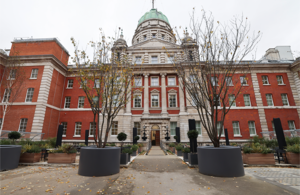
The Old Admiralty Building is covered in bricks with rows of oval windows down it. In the middle it has is beige, with cylinder structures on the sides of it. On top, is an oval structure with windows and a mint green roof.

London, Old Admiralty Building

The Government Property Agency (GPA) has launched a competition to appoint a new strategic partner for property and financial services. The new property partner contract is aligned to the GPA’s current and future needs and will deliver improved tax-payer value, enhanced satisfaction across GPA’s clients and social value.

The new contract will be for an initial three-year term, with the option to extend for up to an additional four years. It will be procured via the Crown Commercial Services Estates Management Services framework (RM 6168).

Service requirements include outstanding client satisfaction, high quality data provision, a commitment to Net Zero and improvements in corporate real estate management. The new strategic supplier will be a partner in GPA’s continued growth and will deliver high quality property and financial management services.

Alan Whitelaw, Property Director at the GPA said: “We have taken lessons learnt from our previous contracts as well as feedback from the market to improve how we procure services.

“We want to attract best-in-class service providers to ensure we continue to deliver a transformed, shared, sustainable and value for money government estate which supports civil servants to work productively in every nation and region of the UK.”

The GPA is an Executive Agency of the Cabinet Office, and is the delivery body of the Government’s property strategy for its office and warehouse portfolios. It plays a crucial role in delivering the property elements of the Government’s Levelling Up agenda, Net Zero initiative and the Civil Service Reform. This includes our Whitehall Campus, Government Hubs and Smarter Working programmes.

Find out more about the Government Property Agency here.

Media enquiries: contact the Communications Team at the GPA on comms@gpa.gov.uk

Published 1 March 2022