Russian aggression against Ukraine: G7 foreign ministers’ statement, 4 March 2022

Press release

Foreign ministers of G7 countries and the European Union High Representative condemned Russia’s unprovoked and unjustifiable war of choice against Ukraine.
A statement by the foreign ministers of Canada, France, Germany, Italy, Japan, the United Kingdom and the United States of America, and the High Representative of the European Union:

  1. We, the G7 Foreign Ministers of Canada, France, Germany, Italy, Japan, the United Kingdom, and the United States of America, and the High Representative of the European Union reiterate our profound condemnation of Russia’s unprovoked and unjustifiable war of choice against Ukraine, enabled by the Belarussian government.

  2. Russia must immediately stop its ongoing assault against Ukraine, which has dramatically impacted the civilian population and destroyed civilian infrastructure, and immediately withdraw Russia’s military forces. With its further aggression, President Putin has isolated Russia in the world, as evidenced by the overwhelming vote at the United Nations General Assembly condemning Russia’s aggression and calling upon it to withdraw its forces immediately.

  3. We express our heart-felt solidarity with the Ukrainian people and our sympathy with the victims of this war and their families. We underline our unwavering support for Ukraine, its freely-elected government and its brave people at this most difficult time, and express our readiness to assist them further.

  4. We condemn the Russian attacks on Ukrainian civilians and civilian infrastructure, including schools and hospitals. We call on Russia to uphold its obligation to fully respect international humanitarian law and human rights law. Ukrainian and UN humanitarian agencies, medical personnel, and non-governmental assistance providers must be given safe, rapid and unimpeded access to people in need immediately throughout the entire territory of Ukraine within its internationally recognized borders. We acknowledge the announcement of an arrangement on humanitarian access as an important first step. This will need to be implemented reliably and swiftly. We commit to increasing humanitarian support, as the needs of the Ukrainian people grow due to Russia’s aggression. We urge Russia to stop its attacks especially in the direct vicinity of Ukraine’s nuclear power plants. Any armed attack on and threat against nuclear facilities devoted to peaceful purposes constitutes a violation of the principles of international law. We support the initiative of IAEA Director General Grossi announced today for an agreement between Ukraine and Russia to ensure the safety and security of nuclear facilities in Ukraine.

  5. We are deeply concerned with the catastrophic humanitarian toll taken by Russia’s continuing strikes against the civilian population of Ukraine’s cities. We reemphasize that indiscriminate attacks are prohibited by international humanitarian law. We will hold accountable those responsible for war crimes, including indiscriminate use of weapons against civilians, and we welcome the ongoing work to investigate and gather evidence, including by the Prosecutor of the International Criminal Court (ICC).

  6. Russia’s blatant violation of the fundamental principles of international peace and security and the breach of international law have not gone unanswered. We have imposed several rounds of far-reaching economic and financial sanctions. We will continue to impose further severe sanctions in response to Russian aggression, enabled by the Lukashenka regime in Belarus.

  7. We wish to make clear to the Russian and Belarusian people that the severe sanctions imposed on Russia and Belarus are a consequence of and clear reaction to President Putin’s unprovoked and unjustifiable war against Ukraine. President Putin, and his government and supporters, and the Lukashenka regime, bear full responsibility for the economic and social consequences of these sanctions.

  8. We condemn the widespread use of disinformation by the Russian Government and its affiliated media and proxies to support its military aggression against Ukraine. Their steady stream of fabricated claims is putting additional lives at risk. We commit to countering Russia’s disinformation campaign.

  9. We reaffirm our support and commitment to the sovereignty, independence, unity and territorial integrity of Ukraine within its internationally recognized borders, extending to its territorial waters. We underline that any purported change of status achieved by Russia’s renewed aggression will not be recognized.

Published 4 March 2022


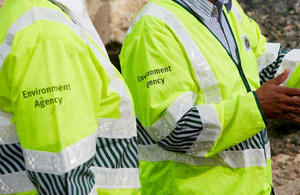
New fishing licences unveiled by the Environment Agency

The Environment Agency (EA) has released new fishing licence images designed by British Fish and Wildlife Artist, David Miller.

Ahead of the start of this year’s fishing season, David has designed new and unique images of three of the nation’s most beloved species: the grayling; perch; and salmon. All new paper licences purchased on gov.uk will now include these images.

Two of the species, the grayling and the perch, are regarded to be the ‘beauty and the beast’ of fishing. While the grayling is the ‘lady of the stream’ on every anglers’ bucket list, the perch is the underwater predator that is a favourite first catch for most anglers. The grayling is depicted on the trout and coarse 2 rod licence, whilst the perch is depicted on the trout and coarse 3 rod licence.

This year, the Environment Agency is continuing the popular A Licence to Chill campaign for a second year running, aiming to welcome more people into the angling community and showcase the wide variety of benefits that fishing can provide. Fishing is not only an opportunity to get outside, but allows anglers to exercise, socialise, relax and unwind. Many anglers have found this benefits their mental health and as a result has led to new anglers taking up the sport.

Kevin Austin, Deputy Director Agriculture, Fisheries and the Natural Environment at the Environment Agency said:

We are thrilled with the images that David has created for our fishing licences this year. The new licence images capture the beauty of our much-loved salmon, grayling and perch and I hope this encourages our anglers and aspiring anglers, to get outside and go fishing.

All of the income we receive from fishing licence sales is re-invested into vital work to protect and restore fish habitats across the country, and to ensure that we are able to provide anglers with the best possible experiences, services, and facilities.

The Environment Agency reinvests rod licence income directly back into vital work to benefit anglers and the natural environment. This includes projects to protect and improve fish stocks, tackle illegal fishing, and improve facilities and services for anglers. Last week, the EA announced that that through the use of rod licence income, Calverton Fish Farm restocked a record-breaking 600,000 fish into rivers, lakes and ponds across England. This restocking has provided an essential boost to fish stocks recovering from pollution incidents or poor environmental quality.

In order to fish legally and responsibly, anglers must purchase a rod licence which are easy to buy online. Annual licences start from only £30, whilst juniors go free and a one-day licence is available from £6.

Further information:

  • We have created a new way to view your fishing licence. You can now get your licence digitally, as an email or a text message, or you can continue to get your licence card decorated with David Miller’s artwork in the post.
  • The revenue generated by over one million licence sales in 2020/21 funded a range of initiatives, including 45 fish pass projects, the construction of facilities such as accessible toilets and improved access to fisheries sites for wheelchair users, and the training of new coaches to facilitate 495 participation events which saw around 5,000 people try fishing for the first time. The income was also boosted by government funding and partner contributions to deliver £33 million through the Water Environment Improvement Fund (WEIF), to enhance the environment which fish stocks rely on to thrive.


UN Human Rights Council 49: UK statement for the interactive dialogue with the Special Rapporteur on Eritrea

World news story

The UK delivered this statement and outlined its concerns about the ongoing human rights situation in Eritrea.

Thank you, Mr President.

The United Kingdom thanks the Special Rapporteur for his update, and we take this opportunity to reaffirm our full support for his mandate.

We remain deeply concerned about the ongoing human rights situation in Eritrea. We urge Eritrea to release all those who have been arbitrarily detained, to progress with National Service reform, and guarantee freedom of religion or belief. We should also reflect on the sad death of Patriarch Abune Antonios, held incommunicado for 16 years.

The continued involvement of Eritrean forces in the Tigray conflict remains a serious barrier to peace. Eritrea should withdraw its troops, accept the report of the recent Joint Investigation by the Office of the High Commissioner for Human Rights and the Ethiopian Human Rights Commission, and fully investigate all alleged breaches of international law by Eritrean actors identified in the report.

Mr President, we note that UN agencies were allowed to visit Eritrea in January. We remain hopeful that this may signal a new willingness by Eritrea to engage with international institutions on human rights, and to make much needed progress on implementing its accepted UPR recommendations.

Special Rapporteur,

What are your views on prospects for Eritrean cooperation with your mandate, and with the International Commission of Human Rights Experts on Ethiopia once established, now that the Commissioners have been appointed, including in light of the UN’s recent visit?

Published 4 March 2022


Applications for Permit Variations at Horse Hill oilfield

Press release

Second round of public consultation is now open.

Horse Hill Developments Ltd (HHDL) has applied for several permit variations as part of its operations at Horse Hill well site in Surrey.

These are to:

  • Construct up to 4 new boreholes in addition to the 2 boreholes already constructed;
  • Use 2 of the 6 boreholes as reinjection wells to support production;
  • Carry out well treatments such as an acid wash and solvent treatments;
  • Run 90-day well tests for each of the 4 additional wells before they are either added as production wells at the site, or abandoned;
  • Undertake an injectivity test within one of the wells (HH-2z) and any other wells as dictated by HHDL;
  • Incinerate natural gas at a rate not exceeding 10 tonnes per day during production operations. This to continue until it can be demonstrated that the incineration of natural gas is no longer considered Best Available Technique through a cost-benefit analysis.

An Environment Agency spokesperson said:

An environmental permit sets out stringent conditions that all oil and gas sites must adhere to. We will not issue an environmental permit for a site if we consider that activities taking place will cause significant pollution to the environment or harm to human health.

Public consultation lets people and organisations take part in our decision making. We welcome specifically, comments on environmental and health issues and where people have particular local knowledge. We take all relevant comments into account when making our decisions.

When making permit decisions, we use information on the potential environmental and human health impacts of the activity.

In deciding whether or not to issue the permit, the Environment Agency will take into account all relevant considerations and legal requirements.

Public consultation

A second round of consultation is now open for public comments, before the Environment Agency makes the final decision on whether to issue the permit variations.

The consultation is now open and will run until Thursday 31 March 2022.

See further information and details on how to take part in the consultation.

Previous public consultation on the permit variations took place between 22 March and 21 April 2021.

For further information, please email KSLE@environment-agency.gov.uk.

For further information on how we determine applications, the timescales involved and how we regulate onshore oil and gas, please see the following links: • Environmental permitting: public participation statementOnshore oil and gas exploration and extraction: environmental permitsOnshore oil and gas regulation – information page

Public consultations

See further information on how when and how the Environment Agency consults on permit applications and standard rules for environmental permits

Published 4 March 2022


Defence Secretary discusses shared security response in face of Russian invasion of Ukraine

Defence Secretary Ben Wallace has met with Defence Ministers from the Joint Expeditionary Force (JEF) nations to provide plans for ongoing support for Ukraine against the invasion from President Putin’s forces.

The ministers discussed what increased measures can be brought forward to support Ukraine against Russia’s brutal assault and how the group will work together to promote European security, complementing NATO activity.

The Defence Secretary met with his counterpart Kalle Laanet in Tallinn, Estonia to discuss the crisis and the impact on wider security across Europe. Like the UK, Estonia has also sent a range of defensive and non-lethal aid to Ukraine to help the country defend itself, providing javelin anti-tank missiles and anti-aircraft ammunition as well as food and medical equipment.

Minister Laanet awarded Ben Wallace with the Ministry of Defence Cross of Merit, First Class – the highest decoration conferred by the Ministry – for his commitment to European defence and security.

In Copenhagen, Denmark, the Defence Secretary met with a number of his counterparts from the JEF nations to see off Danish Frigate HDMS Niels Juhl. The vessel is providing a naval escort to support the deployment of Danish land forces in Estonia, where they serve alongside UK troops as part of the recently strengthened NATO enhanced Forward Presence (eFP) battlegroup. The Danish ship will be joined by Royal Navy frigate HMS Northumberland and Swedish corvette HSwMS Karlstad before accompanying a supply ship delivering specialist vehicles and equipment.

Ben Wallace also held a bilateral meeting with the Danish Defence Minister, Morten Bødskov and laid a wreath at the Danish National Memorial in Kastellet, central Copenhagen.

Defence Secretary Ben Wallace said:

President Putin’s invasion of Ukraine is an attack on our freedoms, our values and the security of Europe. He has sought to break our defensive alliances, which is why now, more than at any point in the history of the JEF, our partnership is so vital.

We are united in our resolve across the JEF nations to support Ukraine. Our values are Ukraine’s values and we will continue to provide lethal and non-lethal aid, alongside sending additional forces to Estonia serving with our Danish allies.

The UK is playing a leading role in supporting Ukraine, including providing defensive anti-tank weapons and non-lethal aid including helmets and medical supplies. Britain has also imposed comprehensive sanctions covering Russian elites, companies and financial institutions in response to Russia’s invasion of Ukraine.

In response to the crisis, the UK has also bolstered its contribution to NATO’s eFP in Estonia, where British and Danish troops have been deployed together alongside other NATO nations since 2018. The JEF supply mission will support this long-standing UK contribution.

The JEF is a coalition comprising of 10 nations working together to deliver forces at high readiness across a range of roles, complementing NATO and European security. Its members are Denmark, Estonia, Finland, Iceland, Latvia, Lithuania, the Netherlands, Norway, Sweden and the UK.

Defence Ministers from all ten countries met less than two weeks ago in Belvoir Castle, issuing a joint statement condemning Russia’s aggression towards Ukraine.

The JEF has carried out successful exercises in recent months, including Exercise Joint Protector 2021. In the coming months, militaries will be working together across its core areas of the North Atlantic, High North and Baltic Sea Region, with a particular focus on the upcoming command and control Exercise Joint Protector later in 2022, followed by the Live Exercise JEF Warrior in 2023. JEF will also conduct an exercise demonstrating freedom of movement in the Baltic Sea in a show of the group’s solidarity.