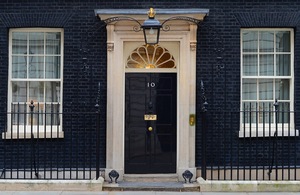
UK injects $100m into Ukraine’s economy as Canadian and Dutch Prime Ministers are welcomed to Downing Street

  • Today the Prime Minister will welcome Canadian Prime Minister Trudeau and Dutch Prime Minister Rutte to Downing Street
  • Leaders will visit RAF base to meet members of the UK Armed Forces before conducting a joint press conference
  • Comes as the UK pledges extra $100m to assist the people of Ukraine
  • Builds upon recent UK backing of £220 million overall aid support to Ukraine

Today the Prime Minister commences a week of focussed engagement with world leaders to mobilise the global outcry at the atrocities of Russian aggression into practical and sustained support for Ukraine.

On Monday he will work with leaders from Canada and the Netherlands to continue to champion the international response for Ukraine. They will also visit a RAF base to meet members of the UK Armed Forces.

The three Prime Ministers will convene for separate bilateral meetings and a joint trilateral meeting. There will also be a joint press conference at the Downing Street Briefing Room.

It comes as the UK allocates an additional $100m directly to the Ukrainian government budget to mitigate financial pressures created by Russia’s unprovoked and illegal invasion.

This grant could be used to support public sector salaries, allowing critical state functions to keep operating, as well as to support social safety nets and pensions for the Ukrainian people. The grant will be provided through the World Bank.

Prime Minister Boris Johnson said:

In the time since Russia’s illegal and brutal assault we have seen the world stand up tall in solidarity with the indomitable people of Ukraine.

UK aid is already reaching those who need it most, delivering essential supplies and medical support.

While only Putin can fully end the suffering in Ukraine, today’s new funding will continue to help those facing the deteriorating humanitarian situation.

The new UK $100m funding announced today comes on top of the UK training 22,000 soldiers, supplying 2,000 anti-tank missiles, providing £100 million for economic reform and energy independence, and providing £120 million of humanitarian aid including £25 million of match funding to the Disasters Emergency Committee (DEC) appeal.

This follows our offer to guarantee up to $500 million of Multilateral Development Bank financing. This will unlock further funding in support of the Ukrainian economy.

The UK is proving this support through a World Bank Multi-Donor Trust Fund established this week to support the Ukrainian government.

The Government urges other donors to pool their resources in this Trust Fund to ensure efficient and rapid support to the government and people of Ukraine.


Government over halfway to delivering 50,000 more nurses by 2024

  • Progress report published today outlines timing and plans for achieving the milestone
  • Extra nurses will help the NHS recover from the pandemic, tackle COVID backlogs and ensure it continues providing world-class care in the years to come

The government is on track to meet its manifesto commitment to deliver 50,000 more nurses in the NHS by 2024, with over 27,000 more nurses now working across the NHS.

A progress report published today shows that overall total nurse numbers now stand at 327,907, as of December 2021, compared to 300,904 in September 2019. By March 2024, there are set to be around 351,000 full-time equivalent nurses to provide world-class care across the health service. The new report also sets out the government’s plans for reaching the target.

The government is focused on recruiting and retaining nurses to compensate for those retiring, reducing their hours or leaving the NHS.

The report is published ahead of a speech this week from the Health and Social Secretary on his plans for long-term healthcare reform to support the NHS to recover and tackle the COVID backlogs.

Prime Minister Boris Johnson said:

It’s fantastic to see the progress we have made towards our manifesto commitment of delivering 50,000 more nurses by 2024. There are now over 27,000 more nurses providing exceptional care and treatment for patients across the country every day.

Nurses are the absolute backbone of our NHS, without whom we would have been lost throughout the pandemic and who will be vital in helping the NHS tackle the COVID backlogs. This government will continue to do everything we can to recruit and retain even more nurses and to support our NHS.

Health and Social Care Secretary Sajid Javid said:

We committed to deliver 50,000 more nurses in the NHS by 2024, and we are over halfway to meeting this target with over 27,000 more nurses already in our NHS compared to September 2019.

I’m grateful to all our NHS nurses who’ve shown immense commitment during the pandemic, working tirelessly to look after us and our loved ones. It is this dedication that is inspiring the next generation and ensuring the NHS continues to provide world-class healthcare.

As part of the progress report, government is outlining where additional nurses will come from and how they will be recruited. This includes:

  • Domestic recruitment, including undergraduates, postgraduates, apprenticeships, nursing associates and assistant practitioners converting to fully qualified nurses;
  • International recruitment; and
  • Successful retention of existing staff

Overall more than 50,000 nurses will be recruited to offset those who are retiring or leaving the workforce, delivering a net total of at least 50,000.

International recruitment is expected to deliver between 51,000-57,000 more nurses while around 68,000-75,000 more nurses will be trained in England by 2024.

Retention is also a key part of the plan and is expected to contribute between 3,000-9,000 nurses to the overall target by addressing the reasons why staff leave the NHS. The government and NHS are focused on making the NHS the best place to work through providing health and wellbeing initiatives, expanding flexible working and putting a greater focus on career development – initiatives which are already helping to retain more existing nurses.

This includes £37 million to fund 40 staff mental health hubs nationwide, that sit alongside a dedicated helpline and a 24/7 text support services.

Ruth May, Chief Nursing Officer for England, said:

The NHS is caring for more patients than ever before but, to continue doing so, it is vital that we boost the number of nurses in the NHS and reach the target of 50,000 more nurses by 2024.

While there is much more to do, the progress we have made with over 27,000 more nurses now working across the NHS in England than in September 2019, is testament to the tremendous efforts being made to recruit, retain and develop more nurses, and ensure the NHS remains one of the best places in the world to work and receive care.

Professor Mark Radford CBE, Chief Nurse at Health Education England and Deputy Chief Nursing Officer for NHS England, said: 

Over the past few years we have seen an increase in the numbers of people signing up to our universities to start their education as nurses, with a record number of college and school leavers applying for a nursing degree in 2021. It is brilliant to see so many people who are keen to start a rewarding and challenging career in nursing which is so critical to all areas of the NHS.

To continue on track to meet the 50,000 target, we will carry on working with our partners in health, social care and education to support and train new nurses as well all welcoming back people who want to return to the profession and ensuring the existing workforce, who have been so crucial to our pandemic response, are supported and given opportunities to develop in their career.

Also set out in the report are plans to respond to any shortfalls, including ramping up international recruitment, whilst maintaining the highest ethical standards and adhering to the Code of Practice.

The 50,000 nurses target is defined as including all full time equivalent registered nurses working in the NHS in England. This covers all NHS providers across acute, community, mental health and ambulance settings, and all those employed in general practice.

It does not include non-NHS providers, including social care providers and social enterprises, though these sectors will benefit indirectly as the numbers of nurses trained increases overall.

Applicants to nursing courses at the January deadline increased by 34% in 2022 when compared to 2019 and all eligible students will benefit from a training grant worth at least £5,000 a year, with up to £3,000 extra available for childcare and those studying certain specialisms.


PM call with President Zelenskyy of Ukraine: 6 March 2022

News story

Prime Minister Boris Johnson spoke to Ukrainian President Zelenskyy this afternoon.

The Prime Minister spoke to Ukrainian President Zelenskyy this afternoon.

The Prime Minister stressed that the British people stand fully behind the Ukrainian people. He said that international support and admiration for President Zelenskyy and the whole of Ukraine grows every day.

The leaders discussed the increasing threat Russia’s barbaric attacks pose to Ukrainian civilians and the Prime Minister underlined the UK’s determination to ensure Putin fails.

The Prime Minister outlined the steps the UK is taking to support Ukraine and the two leaders discussed the Prime Minister’s six-point plan for international action.

The leaders discussed the urgent needs of the Ukrainian Armed Forces and the Prime Minister undertook to work with partners to provide further defensive equipment.

The Prime Minister and President Zelenskyy also discussed the deteriorating humanitarian situation in Ukraine, precipitated by Russia’s indiscriminate attacks and ceasefire breaches.

The Prime Minister outlined what the UK is doing, both to provide humanitarian support and impose economic costs on Russia which strike at the heart of Putin’s war machine. This includes calling on other countries to take further action to remove Russia from SWIFT.

The leaders agreed to continue speaking to ensure the wishes of the Ukrainian people are at the forefront of the international response going forward.

Published 6 March 2022


PM: We must match our words on Ukraine with action

  • PM to meet leaders from Canada, Netherlands and Central Europe in London next week

  • Comes as the Prime Minister set out a six point ‘plan of action’ for the international community

  • In the last few days the UK has upped humanitarian and military support to Ukraine and doubled down on diplomatic efforts to isolate Russia

This week the Prime Minister will call on the international community to make a renewed and concerted effort to ensure Putin fails in Ukraine.

In the days since Russia invaded Ukraine we have seen an unprecedented wave of international condemnation from across the globe. On Wednesday evening 141 nations voted to denounce Russia’s actions in only the 11th Emergency Special Session of the UN General Assembly ever held.

The same day, 38 countries, coordinated by the UK, led the largest ever referral to the International Criminal Court to ensure Putin will be held to account for his war crimes.

At the same time, more and more countries have stepped up to provide much-needed humanitarian and military support to the people of Ukraine. Nations across the globe have imposed the largest ever package of sanctions against a major economy.

On Monday the Prime Minister will welcome Canadian Prime Minister Trudeau and Dutch Prime Minister Rutte to Downing Street for discussions on how to turn these commitments into a concerted campaign of solidarity with Ukraine. On Friday he spoke to President Macron and the leaders of Turkey and Serbia.

On Tuesday, he will host leaders of the ‘V4’ group of Central European nations – the Czech Republic, Hungary, Poland and Slovakia. These are countries already experiencing first-hand the humanitarian crisis rapidly engulfing the European continent.

The Prime Minister will tell leaders that, to ensure Putin fails in his ambitions, the international community must come together under a six-point plan of action to:

  1. Mobilise an international humanitarian coalition for Ukraine
  2. Support Ukraine in its efforts to provide for its own self-defence
  3. Maximise the economic pressure on Putin’s regime
  4. Prevent the creeping normalisation of what Russia is doing in Ukraine
  5. Pursue diplomatic paths to de-escalation but only on the basis of full participation by the legitimate government of Ukraine
  6. Begin a rapid campaign to strengthen security and resilience across the Euro-Atlantic area

Setting out his six-point plan today, the Prime Minister will say:

Putin must fail and must be seen to fail in this act of aggression. It is not enough to express our support for the rules-based international order – we must defend it against a sustained attempt to rewrite the rules by military force.

The world is watching. It is not future historians but the people of Ukraine who will be our judge.

Last week the UK increased its humanitarian support to Ukraine and the region to £220 million announced this year, including £25 million of match funding to the DEC appeal. The UK continues to supply defensive and lethal weaponry to Ukraine and the Prime Minister has spoken to Ukrainian President Zelenskyy daily to understand the Ukrainian Armed Forces’ needs.

The UK has already implemented the largest and most severe package of economic sanctions ever imposed on a major economy. We have brought in sanctions on President Putin, Sergey Lavrov, five Russian banks and more than 300 individuals and entities at the heart of Putin’s regime, and Belarus. We are preventing the Russian state from raising debt here and isolating all Russian companies from access to UK capital markets.

The government will continue to ratchet up pressure and use sanctions to degrade the Russian economy on a scale that the Kremlin, or any major economy, has ever seen before. On Friday the government announced new provisions to streamline the current legislation so we can respond even more swiftly and effectively to the current crisis.

The Prime Minister will host both Prime Minister Rutte and Prime Minister Trudeau in Downing Street for separate bilateral meetings and a joint trilateral meeting.

Tuesday’s meeting of the V4 will take place in London and include both a plenary session of all five leaders and separate bilateral meetings.


PM article on Ukraine: 6 March 2022

We must do more for Ukraine

Over the last week, in response to the gut-wrenching scenes in Ukraine, Western unity has been impressive and heartening. I know from my near-daily conversations with President Zelenskyy that this has provided Ukrainians with some comfort in their hour of need.

Never in my life have I seen an international crisis where the dividing line between right and wrong has been so stark, as the Russian war machine unleashes its fury on a proud democracy. Russia’s reckless attack on the Zaporizhzhia nuclear power plant reminds us just how grave the stakes are for everyone. Millions of people are fleeing from the violence, towards an uncertain future.

President Biden has displayed great leadership, consulting and convening allies, exposing the lie that America’s commitment to Europe is somehow diminished. The European Union has undertaken a remarkable effort to align behind severe sanctions on Russia. Dozens of European countries are now sending defensive equipment to Ukraine’s armed forces. But have we done enough for Ukraine? The honest answer is no.

Putin’s act of aggression must fail and be seen to fail. We must not allow anyone in the Kremlin to get away with misrepresenting our intentions to find post-facto justification for their war of choice. This is not a NATO conflict and it will not become one. No ally has sent combat troops to Ukraine. We have no hostility towards the Russian people and we have no desire to impugn a great nation, a world power and a founding member of the United Nations. We despair of the decision to send young innocent Russians into a bloody and futile war.

The truth is that Ukraine had no serious prospect of NATO membership in the near future – and we were ready to respond to Russia’s stated security concerns through negotiation. I and many other Western leaders have spoken to President Putin to understand his perspective. Mr Putin to understand his perspective. The United Kingdom even sent emissaries to Moscow before Russia’s invasion to deal directly with Defence Minister Gen. Sergei Shoigu and the chief of the general staff, Gen. Valery Gerasimov, who are spearheading this awful campaign.

It was now clear diplomacy never had a chance. But it is precisely because of our respect for Russia that we find the actions of the Putin regime so unconscionable. He is attempting the destruction of the very foundation of international relations and the United Nations Charter: the right of nations to decide their own future free from aggression and fear of invasion. His assault on Ukraine began with a confected pretext and a flagrant violation of international law. Now it is sinking further into a sordid campaign of war crimes and unthinkable violence against civilians.

Though there can be no comparison with the assault on Ukraine, we in Britain know something of President Putin’s ruthlessness. Four years ago, we endured the outcome of his order to his operatives to use chemical weapons to assassinate people in Salisbury in 2018 – and our allies rallied to our side. In our defence and foreign policy review, published a year ago, we warned that Russia remained the most acute security threat and we announced the biggest increase in defence spending since the end of the Cold War.

We also warned that the world was changing for the worse, entering into a period of competition in which authoritarian states would test the mettle of the West in every domain. Last year’s agreement between Britain, America and Australia to build nuclear submarines for the Australian navy demonstrated our shared resolve to meet these challenges in the Indo-Pacific. But we must restore effective deterrence in Europe where, for too long, the very success of NATO and of America’s security guarantee has bred complacency.

We have failed to learn the lessons of Russian behaviour that have led to this point. No one can say we were not warned: we saw what Russia did in Georgia in 2008, Ukraine in 2014 and even on the streets of the British city of Salisbury. And I know from speaking to my counterparts on recent visits to Poland and Estonia just how acutely they feel the threat.

It is no longer enough to express warm platitudes about the rules-based international order. We are going to have to actively defend it against a sustained attempt to rewrite the rules by force and other tools such as economic coercion. What happens in Europe will have profound implications worldwide.

We are pleased to see more nations now beginning to grasp this hard reality. In January, the UK was among a handful of European countries sending defensive aid to Ukraine. Now, more than 25 countries are part of that effort. Defence spending is going up, though it will take time for that to translate into capability.

These are welcome developments, but not going to be enough on their own to save Ukraine or keep the flame of freedom alive. Russia has overbearing force and apparently no regard for the laws of war. We need to prepare now for even darker days ahead.

So must begin a six-point plan for Ukraine, starting today.

First, we must mobilise an international humanitarian coalition. On Monday I will meet the leaders of Canada and the Netherlands in London to talk about creating the widest possible coalition to expose the outrages that are taking place in Ukraine. On Tuesday, I will host the leaders of Poland, Slovakia, Hungary and the Czech Republic, now on the frontline of a refugee crisis. The UK has 1,000 troops on standby for humanitarian operations on top of £220 million of aid. We must all work together to establish an immediate ceasefire and allow civilians safe passage, food and medical supplies.

Second, we must do more to help Ukraine to defend itself. More and more nations are willing to provide defensive equipment. We must act quickly to coordinate our efforts to support the legitimate government of Ukraine.

Third, we must maximise the economic pressure on Putin’s regime. We must go further on economic sanctions, expelling every Russian bank from SWIFT. We must go after the oligarchs, as the UK is doing – sanctioning over 300 elites and entities including Putin himself and giving our law enforcement agencies unprecedented powers to peel back the façade of dirty Russian money in London. But these measures will be insufficient unless Europe begins to wean itself off the Russian oil and gas that bankrolls Putin’s war machine.

Fourth, no matter how long it takes, we must prevent any creeping normalisation of what Russia does in Ukraine. The lesson from Russia’s invasion of Georgia in 2008 and seizure of Crimea in 2014 is that accepting the results of Russian aggression merely encourages more aggression. We cannot allow the Kremlin to bite off chunks of an independent country and inflict immense human suffering and then be allowed to creep back into the fold.

Fifth, we should always be open to diplomacy and de-escalation, provided that the legitimate government of Ukraine has full agency in any potential settlement. There can be no new Yalta decided over the heads of the people of Ukraine by external powers.

Sixth, we must act now to strengthen Euro-Atlantic security. This includes bolstering NATO’s eastern flank but also supporting non-NATO European countries that are subject to the same Kremlin playbook, such as Moldova, Georgia and the nations of the Western Balkans. And those who participate or enable Russian aggression, such as Belarus, will be subject to maximum sanctions.

Ukrainians have bravely defended their country. It is their valour that has United the international community. We can’t let them down.