Organisation offering alternative cancer therapies to wind up after charity regulator questioned its public benefit

Gerson Support Group was registered as a charity in 1997 to relieve sickness and to preserve and promote good health by providing support to cancer patients. The charity also aimed to advance public education in the “Gerson nutritional therapy”, based on a specific organic vegetarian diet, nutritional supplements and enemas.

In September 2019, the regulator opened a case to examine how the organisation fulfilled these purposes in practice, including seeking information from its trustees, and reviewing publicly available information about Gerson nutritional therapy.

This case was conducted and concluded in the period after the Commission’s 2018 review, which updated the regulator’s approach to assessing the charitable status of organisations offering complementary and alternative medicine (CAM) therapies. The review concluded that to satisfy the ‘public benefit’ requirement and qualify for charitable status, organisations must provide evidence that the therapy being offered is capable of delivering the claimed benefits. CAM organisations that claim a therapy can cure a particular condition therefore need to provide objective scientific evidence for their claims. This contrasts with those focussing on offering comfort and relief to patients, which may be able to rely on other types of evidence, such as patient reported outcomes, to demonstrate their public benefit.

In assessing Gerson Support Group, the regulator identified concerns about the extent to which it was providing public benefit. In response to the Commission’s concerns, the organisation’s trustees acknowledged that the evidence around Gerson nutritional therapy, and its claims to treat cancer and its symptoms, would not now meet the Commission’s criteria for registration as a charity.

The trustees are now in the process of winding the charity up and have applied its outstanding funds to other charitable organisations.

Helen Earner, Director of Regulatory Services for the Commission, said:

I welcome the decision by the trustees of Gerson Support Group to wind it up, having recognised our concerns regarding its claims to cure people from life-threatening diseases.

Charitable status is a special status that comes with clear expectations and responsibilities. The law is clear that all organisations which wish to hold that status must demonstrate public benefit.

It is right that, following the Commission’s intervention, the organisation has been removed from the register of charities.

Gerson Support Group has now been removed from the register of charities.

In a blog published today Helen Earner explains the Charity Commission’s wider approach to regulating organisations offering complementary and alternative medicine (CAM) therapies.

ENDS

Notes to Editors:

  1. The Charity Commission is the independent, non-ministerial government department that registers and regulates charities in England and Wales. Its purpose is to ensure charity can thrive and inspire trust so that people can improve lives and strengthen society.

Crime news: update to CA1 form for court appointee claims

News story

New digital CA1 form should now be used for court appointed advocacy claims after review of hourly rates.

Barristers talking to one another in courtroom

A new CA1 form (v5) is now available following a review of hourly rates for court appointed cross-examination advocacy work on behalf of unrepresented defendants.

Why is this happening now?

We amended the form after increases to the guideline hourly rates under sections 36 and 38 of the Youth Justice and Criminal Evidence Act 1999. This followed a request from the Law Society.

The rates will apply to claims made with the CA1 form, along with full travel and waiting rates where appropriate.

Providers will still be expected to justify their claims. These will be assessed on a case-by-case basis.

Timescales for new rates

You must use the new form to claim the increased rates, which apply to court appointments made on or after 1 October 2021. For all other claims, you must use the new form from 1 April 2022.

Providers who have had eligible claims reduced based on the hourly rate can request a redetermination from the Criminal Case Unit, which assesses the claims – see below.

Further information

Court appointee: magistrates’ court and crown court claims (CA1) – to download new CA1 form

courtappointee@justice.gov.uk – mailbox to request redetermination from Criminal Cases Unit

Claims paid out of central funds – claims dealt with by the Criminal Cases Unit

Published 8 March 2022


More than 7,000 shrubs planted to combat climate change in Essex

Press release

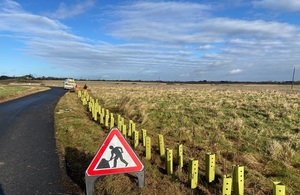
Over 2,000 metres of hedgerow has been planted in Seawick and Leewick near Clacton to help store carbon.

A row of hedges planted along a road.

Carbon catching hedges planted in Seawick and Leewick.

The hedges consist of more than 7,000 individual shrubs and have been planted at 3 separate locations. North and south of Beach Road in Seawick, north from Leewick Sewage Works and alongside the southern side of Leewick Depot.

Plants store carbon in the form of carbohydrates, for immediate and long-term growth. These are produced by photosynthesis, whereby they take carbon dioxide from the atmosphere. It is then turned it into sugars that go on to become leaves, stems, roots, and woody trunks.

The shrub planting forms part of the Environment Agency’s £1.1 million Seawick Sea Defence project.

Sarah Long, Senior Landscape Architect at the Environment Agency, said: > > The newly planted hedgerows provide numerous environmental and practical benefits. They will improve air quality, provide food and shelter to local wildlife and reinforce the character of the local landscape. > > We’ve deliberately used biodegradable plant guards to minimise the Seawick and Leewick project’s carbon impact, fully committed to carbon capture and habitat enhancement. > > These hedges are a fantastic example of a nature-based solution that helps to combat climate change.

The work forms part of the Environment Agency’s £1.1 million Seawick Sea Defence project, to improve the resilience of the sea defences in the area. This will better protect from sea flooding and the severe impact that it can have on people, properties and the local economy, which relies heavily on tourism.

Additional information

Published 8 March 2022


Peter Wilson appointed Principal Private Secretary to the Prime Minister

Press release

The Cabinet Secretary, with the approval of the Prime Minister, has today announced Peter Wilson as the new Principal Private Secretary to the Prime Minister.

The Cabinet Secretary, with the approval of the Prime Minister, has today announced Peter Wilson as the new Principal Private Secretary to the Prime Minister.

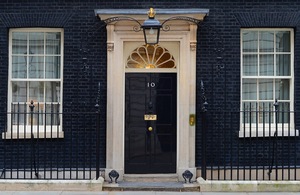
Mr Wilson, who is currently Her Majesty’s Ambassador to Brazil, will begin his role at Number 10 on Monday. He replaces Martin Reynolds, who will return to the Foreign, Commonwealth & Development Office.

Notes to Editors

  • Mr Wilson has been HM Ambassador to Brazil since January 2021.
  • His career in government has included roles as HM Ambassador to the Netherlands and as Second Ambassador to the United Nations in New York.
  • He also spent over a decade working on Asia policy in Beijing, Islamabad and London earlier in his career.

Published 8 March 2022


The ratification of the ILO Violence and Harassment Convention

Director General, no-one should be the target of violence and harassment, especially for simply doing their job.

I am pleased to be here today to mark the UK’s ratification of the ILO Violence and Harassment Convention, the first international treaty to recognise the right to a world of work free from violence and harassment, including based on gender.

The UK played a leading role during the two years of negotiations on the content of the Convention and will become the 11th country to ratify and register it.

It will build on our commitment to, and track record on, tackling all forms of violence and harassment, including gender-based violence.

This Convention is an opportunity to shape a future of work based on dignity and respect for all.

I am proud to sign it on behalf of the United Kingdom and look forward to seeing and encouraging more states to ratify this convention in the coming months.

It is all the more poignant today, on the eve of International Women’s Day.

The UK has a strong legal framework to prevent and address violence and harassment in the workplace, including civil, criminal and health and safety laws.

To strengthen those protections, we will introduce a new duty on employers to prevent sexual harassment in the workplace, as well as explicit protections against workplace harassment by third parties, for example customers or clients.

This follows our response to a consultation on sexual harassment, which we published in July 2021.

We are also supporting the Equality and Human Rights Commission to develop a statutory Code of Practice on workplace harassment, as well as preparing our own practical guidance for employers on preventing sexual harassment in the workplace.

These commitments to reinforce the law will help make workplaces safer.

But we know we have more to do to drive out abuse and violence wherever it happens across society, whether on the street, in the home or perpetrated by those in positions of authority who should be a source of safety, not danger.

In response to the recent high-profile cases of violent crimes against women in the UK, it is important we are open about the lessons that need to be learnt and we are working hard across government on new measures to improve public safety, particularly for women.

Alongside our determination at home and focus on delivering the commitments in this Convention, the UK has a strong record in leading the world in protecting and promoting the safety and rights of women and girls wherever they live and whatever background they are from, I know the UK is determined to build on the pioneering work they have done during the last decade.

At the heart of this Convention is people’s right to be safe – and feel safe – in their place of work.

That has been brought into sharp and extreme focus by the invasion of Ukraine. In the face of unimaginable threats and violence, many people have been bravely getting on with their jobs to continue vital support and services – including doctors and nurses working in hospitals to save lives or those who were working at Europe’s largest nuclear power plant at the time it was shelled and set on fire.

Moments of conflict and tragedy bring home the many consequences of violence and strengthen our resolve to create a safer world for everyone to live and work.

It is in that spirit that I am proud to deposit the UK’s Instrument of Ratification here at the ILO and to sign the Certificate of Deposit for a Convention that will deliver a more inclusive, integrated and international approach to tackling workplace violence and harassment.