National Tutoring Programme simplified to reach as many pupils as possible

Children and young people will benefit from more tutoring through their school from next year, with all funding going direct to schools to simplify the National Tutoring Programme and reach as many pupils as possible.

In plans announced today (Thursday 31 March), all £349 million of tutoring funding we are providing in AY22/23 will go directly to schools. This will simplify the system and give schools the freedom to decide how best to provide tutoring for their children, which could include one on one or small group tutoring through teachers or teaching assistants, or continuing to work with external tutoring specialists and academic mentors.

The move will build on the success of the School-Led route in 2021/22 as the Department for Education continues to follow the evidence of what works.

The new model follows feedback directly from schools and will embed tutoring into children’s education where they need extra support to progress.

New estimates published today show an estimated 887,521 courses have started so far this academic year – with 674,941 through the School-Led route and 1,198,239 in total since the programme began – as the Government remains on track to deliver the ambitious target of up to six million courses by 2024.

Today’s announcement follows the launch of the Schools White Paper on Monday, which pledged that any child who falls behind in maths or English will get the evidence-based support they need to reach their potential – including through tutoring.

Education Secretary, Nadhim Zahawi, said:

The National Tutoring Programme is transforming the way schools provide support for the children and young people who need it most, with over 1.X million courses now started across the country since the programme began.

It’s also pivotal to the pledge I made to every parent as part of my Schools White Paper, that if their child falls behind in English and maths, that child will receive the high-quality support they need to get back on track.

“It’s teachers and schools that know their pupils best, which is why we are building on the success of school-led tutoring so far – with evidence as our watchword – so that as many children and young people as possible can feel the huge benefits high quality tutoring provides.”

As a result of the changes to the programme, the Department will launch a procurement process in April for a potential new supplier(s). The supplier will be responsible for quality assurance, recruiting and deploying Academic Mentors and offering training, which will support schools to make best use of their funding.

Schools that are currently working with Tuition Partners will be able to continue to do so in the next academic year. Similarly, eligible schools can continue to employ Academic Mentors who are on their staff this year, and will also still be able to recruit Academic Mentors directly.

So far this academic year, an estimated total of 83,805 courses have now started as a result of schools employing Academic Mentors, whilst 128,776 courses have started through schools working with a Tuition Partner. Evidence suggests that small group tuition can boost progress by an average of two months in secondary schools and four months in primary schools.

Schools will also be given the flexibility to deliver tuition over the summer holidays, as the date to utilise the enhanced SLT funding has been extended to the 31st August. This comes as new research published from the department into the successful Summer Schools programme last year highlighted positive feedback from schools in support of delivering relevant provision over the summer period.

Almost 2,800 English schools took part in the Summer Schools programme, with over half of schools (53%) surveyed as part of the research indicating that they believed summer schools were ‘extremely effective’ at improving pupil wellbeing and over two-thirds (68%) indicated they were ‘extremely effective’ for improving transition.

Data published earlier this week from the department shows primary pupils have already recovered around two thirds of progress lost due to the pandemic in reading, and around half of progress lost in maths, demonstrating the effectiveness of the Government’s wider, ambitious education recovery programme, worth nearly £5 billion, along with pupils returning to school.

As part of the Spending Review, the Government announced an additional £1bn to extend the recovery premium over the next two academic years (22/23 and 23/24). Primary schools will continue to benefit from an additional c.£145 per eligible pupil, with nearly double that amount in secondary schools.

This extra support in secondary reflects evidence showing greater learning loss for older pupils, and these pupils also have less time left in education. The Department will publish further detail around rates, allocations and conditions of grant shortly.

Schools, Tuition Partners and Academic Mentors already engaged in the programme will be contacted on next steps.


Public encouraged to take action to prevent wildfires

Press release

Natural England calls for members of the public to take action to prevent wildfires in the Yorkshire area

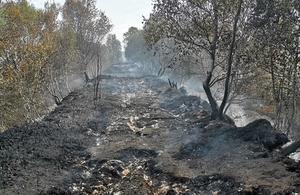
Peat and trees damaged from wildfires

Devastated peat and trees damaged from wildfires at Hatfield Moors, South Yorkshire, in 2020

  • Natural England calls for members of the public to take action to prevent wildfires in the Yorkshire area
  • People should follow the Countryside Code, avoid using barbecues and extinguish cigarettes responsibly
  • Humberhead Peatlands, England’s largest raised bog wilderness, is particularly vulnerable to wildfires

Natural England is partnering with Fire and Rescue Services in Yorkshire to raise awareness of wildfires ahead of the spring and summer period, where higher temperatures and dry weather increases the risks.

Wildfires have a devastating impact on local landscapes, wildlife and air quality, and with the Easter holidays just around the corner the risk to nature reserves like the Humberhead Peatlands and Marsden Moors will increase unless careful steps are followed to protect the environment.

In 2020, Hatfield Moors in South Yorkshire was devastated by a visitor-related wildfire that injured wildlife and cost emergency services hundreds of thousands of pounds.

Paul Duncan, Yorkshire Area Director for Natural England said:

We want people to enjoy their time responsibly when out on our beautiful moors by taking steps to protect our precious wildlife.

By following the Countryside Code, we can all do our bit to protect nature and prevent fires. Do not light fires, avoid using barbecues on moorland and dispose of cigarettes and bottles carefully – glass can cause sun rays to reflect on dry grass and start a fire.

If you see flames, retreat to a safe place and dial 999.

By following these simple rules we can ensure that our moorlands, including the ancient bogs of Thorne and Hatfield Moors, are protected.

West Yorkshire Fire and Rescue Service Wildfire Lead Officer, Richard Hawley, said:

As the days get longer and we all get to enjoy some long-awaited sunshine, we want to stress the seriousness and importance of the public spaces protection orders (PSPOs) in place in rural districts across the region which include a ban on any type of fire on moorland fire, BBQs or fireworks.

When our crews are called to these incidents, there is not only a high financial cost, but they are taken away from protecting our communities in other areas.

Working with the National Trust and other partners, our #BeMoorAware campaign was launched last year to try and prevent dangerous fires in our beautiful countryside. If you see a fire or naked flame of any kind, including someone using a BBQ on moorland – call 999 and ask for FIRE.

A spokesperson for the Humberside and South Yorkshire Fire and Rescue Services said:

Wildfires are a risk to life and property while causing extensive environmental damage and diverting Fire and Rescue Service resources away from where they are most needed – protecting and serving the community.

If visiting the countryside, people should follow the Countryside Code.

Published 31 March 2022


Foreign Secretary announces sanctions on Putin’s propaganda

  • Liz Truss announces 14 new sanctions, including Russian propagandist Sergey Brilev and Kremlin funded TV-Novosti – who own RT
  • New sanctions also include Russian Colonel-General Mikhail Mizintsev, known as ‘the butcher of Mariupol’
  • The UK is leading global action on sanctions to debilitate the economy funding Putin’s war machine and increase pressure on his regime

Foreign Secretary Liz Truss has announced 14 new sanctions today (Thursday 31 March) on Russian propagandists and state media who spread lies and deceit about Putin’s illegal invasion of Ukraine.
This includes Sergey Brilev, famous TV anchor on Russia state-owned media Rossiya and propagandist for Putin. Having previously lived in the UK, Brilev will no longer be able to access any of his UK assets or continue business dealings.

The government is also directly sanctioning state media organisations, targeting the Kremlin funded TV-Novosti who own RT, formerly Russia Today, and Rossiya Segodnya who control news agency Sputnik.

Following Ofcom’s decision to revoke RT’s broadcasting licence, these sanctions will ensure RT will not be able to find its way back on UK televisions, and will prevent companies and individuals operating in the UK from doing business with Russian state propaganda vehicles RT and Sputnik, and key figures in those organisations. Disinformation is part of the Kremlin playbook and is used by Putin’s regime to obscure the truth of his unjust invasion.

Other propagandists sanctioned today include:

  • Aleksandr Zharov, Chief Executive Officer of Gazprom-Media and former Head of the Federal Service for Supervision of Communications, Information Technology and Mass Media (Roskomnadzor)
  • Alexey Nikolov, Managing Director of RT
  • Anton Anisimov, Head of Sputnik International Broadcasting

As well as targeting Putin’s propaganda machine, the government is also sanctioning prominent Russian Colonel-General Mikhail Mizintsev.

Dubbed ‘the butcher of Mariupol’, Mizintsev is the Chief of the National Defence Command and Control Centre, where all Russian military operations are planned and controlled worldwide. Mizintsev is known for using reprehensible tactics, including shelling civilian centres in both Aleppo in 2015-16 and now in Mariupol – where atrocities are being perpetuated against Ukrainian people.

Foreign Secretary Liz Truss said:

Putin’s war on Ukraine is based on a torrent of lies. Britain has helped lead the world in exposing Kremlin disinformation, and this latest batch of sanctions hits the shameless propagandists who push out Putin’s fake news and narratives.

We will keep on going with more sanctions to ramp up the pressure on Russia and ensure Putin loses in Ukraine. Nothing and no one is off the table.

Culture Secretary Nadine Dorries said:

Putin’s propaganda machine has been working overdrive to spread misinformation and distract from his barbaric actions in Ukraine. These sanctions will target those who are complicit in covering up the Russian state’s actions. We will not hesitate to act further against individuals and organisations attempting to deceive people about this misguided war.

The UK has also fast-tracked sanctions against another 7 individuals connected to the Strategic Culture Foundation – who were recently sanctioned by Australia for their role in spreading disinformation. The UK is operating closely with allies to target Russia’s oligarchs, banks and businesses.

Background:

  • Asset freeze – An asset freeze prevents any UK citizen, or any business in the UK, from dealing with any funds or economic resources which are owned, held or controlled by the designated person and which are held in the UK. It will also prevent funds or economic resources being provided to or for the benefit of the designated person.
  • Travel ban – A travel ban means that the designated person must be refused leave to enter or to remain in the United Kingdom, providing the individual be an excluded person under section 8B of the Immigration Act 1971.
  • Transport sanction – Recently introduced powers make it a criminal offence for any Russian aircraft to fly or land in the UK and give the government powers to remove aircraft belonging to designated Russian individuals and entities from the UK aircraft register, even if the sanctioned individual is not on board. Russian ships are also banned from UK ports.

Individuals and entities sanctioned:

  • Sergey Brilev is a prominent Russian presenter on the state-owned TV channel Rossiya. He is known for his interviews with high profile political figures, including Vladimir Putin and Dmitry Medvedev. The TV presenter is also a member of the Russian International Affairs Council which is presided over by the Russian Minister of Foreign Affairs, Sergey Lavrov. The channel Rossiya has described the Ukrainian war as a “special military operation” and accused ‘Ukrainian Nazis’ of carrying out genocide in the country.
  • TV-Novosti, the institution that controls RT and is funded by the Kremlin. RT has propagated pro-Kremlin narratives around the invasion of Ukraine, including that neo-Nazis are present in the country and that Ukrainian soldiers have committed war crimes.
  • Rossiya Segodnya, a media group owned and operated by the Russian government. Rossiya Segodnya controls Sputnik. Sputnik is a Russian state-owned news agency. In the context of Russia’s invasion into Ukraine, it has published disinformation undermining Ukraine, and its senior staff amplify those claims globally.
  • Colonel-General Mikhail Mizintsev, the so-called ‘Butcher of Mariupol’, is a senior Russian general. As Chief of the National Defence Management Centre of the Russian Federation, he has operational overview of all Russian Armed Forces activity worldwide. He has been linked to the planning and execution of the bombardment of Mariupol, among other key Russian military operations against Ukraine. He was also heavily implicated in Russia’s military activity in Syria including the destruction of the city of Aleppo.
  • Aleksandr Zharov, Chief Executive Officer of Gazprom-Media and former Head of the Federal Service for Supervision of Communications, Information Technology and Mass Media (Roskomnadzor). Gazprom-Media owns TV channel NTV, that often attacks Ukrainian sovereignty, and which has argued that Kyiv has developed biological weapons with the United States.
  • Alexey Nikolov is the Managing Director of RT, formerly Russia Today, and a co-founder of the Association for the Development of International Journalism. He began work as a journalist in the 1970s, eventually contributing to the launch of the Russian national network, REN TV in 1997. He joined RT in 2005 and also serves as Deputy Dean for the Faculty of Communications, Media, and Design at the HSE University, Moscow.
  • Anton Anisimov, Editor-in-Chief of Sputnik. Anton Anisimov has been Head of International Broadcasting and Editor-in-Chief of Sputnik since 2015, having previously worked for RT and Rossiya Segodnya. He denies that Sputnik publishes Kremlin propaganda, arguing that his employees view their work as part of a global communications war. In a recent interview on the Russia-Ukraine war, when asked whether the Russian military underestimated Ukrainian resistance, Anisimov was quoted as describing the war as a “combination of a military operation with a humanitarian mission.” He has attacked Ukrainian sovereignty.
  • Vladimir Ilich MAKSIMENKO, Director at the Strategic Culture Foundation. The Strategic Culture Foundation is an online journal registered in Russia. Australia has already sanctioned this individual due to his role in spreading disinformation.
  • Andrey Grigoryevich ARESHEV, Director at the Strategic Culture Foundation. The Strategic Culture Foundation is an online journal registered in Russia. Australia has already sanctioned this individual due to his role in spreading disinformation.
  • Irina Sergeyevna BUBNOV, Social Media Editor at the Strategic Culture Foundation. The Strategic Culture Foundation is an online journal registered in Russia. Australia has already sanctioned this individual due to her role in spreading disinformation.
  • Anton Sergeyevich BESPALOV, Social Media Editor at the Strategic Culture Foundation. The Strategic Culture Foundation is an online journal registered in Russia Australia has already sanctioned this individual due to his role in spreading disinformation.
  • Sergei Ivanovich SAENKO, Social Media Operations, Strategic Culture Foundation. The Strategic Culture Foundation is an online journal registered in Russia Australia has already sanctioned this individual due to his role in spreading disinformation.
  • Natalya Petrovna SKOROKHODOVA, Human Resources, Finance, Strategic Culture Foundation. The Strategic Culture Foundation is an online journal registered in Russia. Australia has already sanctioned this individual due to her role in spreading disinformation.
  • Svetlana Georgiyevna ZAMLELOVA, Chief Editor, Journal Kamerton. Journal Kamerton is a news outlet that is affiliated with the Strategic Culture Foundation. Australia has already sanctioned Svetlana Georgiyevna ZAMLELOVA for her role in spreading disinformation.


GREAT displays winning photos at Heathrow Airport

  • Winners of the GREAT Britain and Northern Ireland campaign’s Great Exposure Photography Competition have been announced
  • the winners will have their photographs displayed across Heathrow Airport from Tuesday 29 March
  • the competition received over 600 hundred high-quality entrants from across the UK, who were asked to capture visually stunning images that represent their perspective of Great Britain and Northern Ireland
  • the project will showcase the best of Great Britain and Northern Ireland to Heathrow’s visitors

The GREAT Britain & Northern Ireland campaign has today (Tuesday 29 March) revealed the photographers who have won the ‘Great Exposure Photography Competition’ and will have their pictures displayed across all terminals, on the Heathrow Express train running from the airport to London Paddington train station, and on digital screens within the terminals.

Launched in partnership with the Royal Photographic Society, the GREAT campaign’s project was designed to show passengers a fresh view of the UK, as seen through the eyes and lenses of the public.

The display of 40 photos captures the spirit of all four corners of the nation. People and places from across the UK such as Bow Fiddle Rock in Scotland, Rievaulx Abbey in North Yorkshire, Pentre Ifan in Pembrokeshire, Wales and Gortin Glen Forest Park in Omagh, County Tyrone in Northern Ireland are included.

This project forms part of the government’s ongoing work to promote the UK around the world to drive trade, tourism and international students, with the images due to be seen by tens of millions of people passing through the airport each year.

The winning entries will be displayed for at least a year across spaces throughout Heathrow Airport.

The images were judged by an expert panel, comprising photographer Simon Roberts, Mariama Attah; curator of the Open Eye Gallery in Liverpool, photographer Alistair Morrison, and Heathrow’s Chief Operating Officer, Emma Gilthorpe.

Emma Gilthorpe, Chief Operating Officer at Heathrow Airport and one of the competition judges said:

It is fantastic to see the UK’s rich cultural diversity on show through this brilliant new photography exhibition. I am delighted that passengers arriving at Heathrow will be greeted by these photos, celebrating diverse perspectives and our innovative, welcoming spirit.

We’re gearing up for a busy summer travel season and I hope this exhibition will encourage visitors to see new perspectives when they visit the amazing places the UK has to offer.

Competition judge Alistair Morrison added:

It was refreshing to see so many entries that truly reflected the idea of ‘Seeing Things Differently’. Having to choose from such an outstanding collection of diverse photographs was tough – congratulations to everybody who contributed

Competition winner Jacob McDonald said:

I am extremely happy and proud to be chosen as one of the winners. It is a massive moment for me. I had only owned a camera for three months when I took this photo and I couldn’t be happier.

Competition winner Alex Ward added:

When I started capturing wild swimmers as part of my MA at Falmouth University, I had no idea it would lead me to such a variety of people, places and rituals. Swimmers represent the true nature of our nation; beautifully diverse, stoic and connected with the land.

Competition winner Aga McPherson concluded:

I am also proud that I could create and share something that is not just an aesthetically pleasing photograph but a personal representation of my own experience of the UK.

I would love to inspire others to see the UK in this way. I hope that people arriving at Heathrow from all over the world will instantly feel a warm welcome and connection to the UK upon viewing my photograph.

Note to editors

The competition’s winners are below. A number of winners have provided attributable quotes that media can access via the press office.

  • Rooful Ali taken at London
  • Constantino Attard taken at Faizan E Medina Mosque, Peterborough
  • Aga McPherson taken at Dover Seafront, Kent
  • Brunel Johnson taken at Ridley Road, Dalston, London
  • Holly McDonagh taken at Portmuck Harbour, County Antrim, Northern Ireland
  • Robert Beasley taken at Abingdon, Oxfordshire
  • Judith Parrott taken at An Teallach ridge, Scotland
  • Neil Porter taken at NEC Birmingham
  • Rachel Keenan taken at Isle of Arran
  • Jesús Díez García taken at Waterloo Bridge, London
  • John Robert Charlton taken at Gateshead Quayside, Newcastle
  • Joanna Czerniakiewicz-Wierzbicka taken at Gortin Glen Forest Park, Omagh, Co.Tyrone, Northern Ireland
  • Mathew Browne taken at Pentre Ifan, Pembrokeshire
  • Tatiana Hepplewhite taken at Rievaulx Abbey, North Yorkshire
  • Susan Pilcher taken at Dungeness, Kent
  • Adam B Lally taken at Manchester
  • John Sheehan taken at Stratford-upon-Avon
  • Chris Jepson taken at Brighton *Rachel Beeson taken at Manchester
  • Hudson Martins Ribeiro taken at Finnieston, Glasgow, Scotland
  • Sachinda Dulanjana Witharanage taken at The Meadows, Edinburgh
  • Paula Abu taken at Southbank, London
  • Frederic Aranda taken at Smithfields Market, London
  • Nico Froehlich taken at South East London
  • Antonina Mamzenko taken at Folkestone, UK
  • Claire Duquesne taken at Strathdon, Aberdeenshire, Scotland, UK
  • Mark Pickersgill taken at Isle of Skye
  • Rachel Hope taken at the Victoria & Albert Museum, London
  • Rachel Keenan taken at Bow Fiddle Rock, Scotland
  • Alfie Fisher taken at Nine Elms Sky Pool, London
  • Cal Cole taken at Manchester, UK
  • Max Vere-Hodge taken at Ouse Viaduct, Sussex
  • Jacob McDonald taken at Black Mountain Pass, Brynamman, Wales
  • Lucy Barrett taken at Kew Gardens, Richmond, London
  • Neil Davidson taken at Brighton Beach
  • Lucy Barrett taken at St John the Baptist, W14
  • Donna Jones taken at Rhossli Bay, Swansea Wales
  • Teresa Medina taken at Brighton
  • Alexander Ward taken at Norfolk
  • Ira Giorgetti taken at Brighton


The human cost of Russia’s war in Ukraine continues to grow: UK statement to the OSCE, 31 March 2022

Thank you Mr Chair. This week at the Supplementary Human Dimension Meeting, we heard harrowing stories from Ukrainian civil society organisations about the human impact that President Putin’s premeditated and unjustified war on Ukraine has created.

Our colleagues from civil society described how they took shelter in basements during the Russian shelling that has rained down on villages, towns and cities across Ukraine. Every day the human cost of Russia’s indiscriminate attacks on civilian areas continues to grow. Tragically, according to the UN over 100 children have already been killed. I am grateful also to Governor Kim for joining us today and sharing the appalling impact of Russia’s invasion on his region, including the recent attack on the regional administrative building. I offer the UK’s condolences to all the victims and their families.

Civil society organisations also shone a light on the dire situation in Ukrainian cities that have been encircled by Russian troops such as Chernihiv, Sumy, Kharkiv and Mariupol. In an effort to break the resistance of these cities, the Russian government has stooped to new lows; effectively forcing a humanitarian crisis through constant shelling and by refusing to allow the delivery of humanitarian aid to these cities. In Mariupol alone, local authorities estimate that close to 5000 people have been killed.

Yesterday many delegations had the opportunity to hear from Ukrainian speakers about the appalling human rights violations perpetrated by Russian forces in the cities under their control. The Mayor of Melitopol, Ivan Fedorov, described how Russian forces abducted him in broad daylight and held him in detention for six days, where he heard evidence of torture of other detainees. Sadly, there are many other Ukrainian local government members who have been abducted by Russian forces who have not yet been released. I would like to share the names of just some of them: Serhiy Pryima, the chair of the Melitopol District Council, Olena Plaksina a member of the Tokmak town council, Viktor Mariuniak the headman of the village of Stara Zburyivka, Mykola Masliy, a member of Kupyansk town council, and Oleksandr Medvediov, Mayor of Snovsk.

At the same event, Oleg Baturin, a journalist from Kakhovka, shared how he was held captive for eight days by Russian forces who told him that they wanted to take revenge for his journalistic activities. I am deeply grateful to the Ukrainian Ambassador for organising this meeting and to the speakers for courageously sharing their stories from yesterday.

Russia is resorting, Mr Chair, to these abhorrent tactics because they have not been able to overcome the determination of millions of Ukrainians who look to live in a free, democratic Ukraine. These brave civilians often march carrying nothing more than Ukrainian flags and are met by tanks and Russian forces who shoot at protesters. Local government representatives, journalists, priests, civil society activists and Ukrainian military veterans are all being targeted. Appallingly, there are multiple reports of sexual violence, including rape, by Russian armed forces.

I would like to pay tribute to Ukrainian civil society organisations and their courageous members for their dedicated work in shining a light on these atrocities. Their work will help to ensure that Russia is held accountable for its actions. The cooperation between the Ukrainian Government and civil society organisations is also an example to us all of how a flourishing civil society, which is free to speak its mind, enhances a country’s security – even in the gravest of circumstances.

The people and Government of the United Kingdom stand firm and resolute in our solidarity with the people of Ukraine. To that end we have provided military equipment, economic support, humanitarian aid and supported efforts to ensure accountability for war crimes – including by appointing Sir Howard Morrison QC as an independent adviser to Iryna Venediktova – to support Ukraine’s journey in seeking justice against the Russian government’s actions.

President Putin is attempting to hide the extent of the atrocities we have seen from his people and from the world. The Russian government spouts a barrage of disinformation, they attack television and radio infrastructure in Ukraine, block free media in Russia, and they detain journalists. Now they are trying to put an end to the OSCE Special Monitoring Mission’s impartial, facts-based reporting by unilaterally blocking the extension of its mandate. But, Mr Chair, as the decisive votes at the UN have shown, the international community is not fooled. The United Kingdom certainly is not fooled – no amount of disinformation or feigned pretence at troop withdrawal will distract us from what is needed to stop the bloodshed in Ukraine. Russia must end this unjustifiable war, enable humanitarian access, abide by international law and international humanitarian law, withdraw its troops and respect Ukraine’s sovereignty and territorial integrity.

Thank you, Mr Chair and I ask that this statement be attached to the journal of the day.