Alcohol tags helping thousands of offenders stay sober

  • more than 3,100 criminals fitted with alcohol-monitoring tags in a year
  • offenders stayed sober 97% of the time
  • move to cut booze-fuelled crime which costs society £21 billion

Since the tags were launched as part of government plans to curb drink-fuelled crime, 3,121 offenders have been monitored by the tags, with more than 3,000 staying sober.

Alcohol plays a part in 39 per cent of all violent crime in the UK, and the social and economic cost of drink-related harm is estimated to be around £21.5 billion per year.

As a result of the scheme’s success, the Ministry of Justice will roll out alcohol-monitoring tags to other offenders once they are released from prison in the summer. Further details will be announced in the coming months.

By 2025 it is estimated that 12,000 offenders will have had their drinking monitored by the tags – part of the Government’s £183 million expansion of electronic monitoring.

Minister of State for Crime and Policing Kit Malthouse said:

We are ramping up our use of this innovative technology because it is working, with offenders staying sober 97 per cent of the time.

It is not only protecting the public from the scourge of alcohol-fuelled crime – it also gives probation officers the chance to work with offenders to help them turn their lives around.

Since last April, courts have been able to order offenders to wear an alcohol tag as part of a community sentence when their crime was driven by alcohol. The tag takes a sample of their sweat every 30 minutes and alerts the Probation Service if the offender has been drinking.

Those found breaking their ban can face a prison sentence and fines.

Roughly 20 per cent of offenders supervised by the Probation Service have an alcohol problem. The service provides professional support to offenders with an alcohol misuse issue, monitoring risk and helping them address their consumption while also linking them into specialist help.

Mark*, aged 44 from Hereford, was sentenced to a Community Order, and required to wear an alcohol-monitoring tag for 90 days after being arrested for drink driving. He has also been banned from the road for 30 months and received 100 hours Community Payback.

Mark said:

I was pulled over on a Saturday morning and was devastated to blow over the limit. Like many others, during lockdown a drink at the weekend had turned into maybe a glass of wine during the week and it made me reflect.

I’ve not found wearing the tag hard, but it has given me extra motivation to reduce my intake.

The government is investing £183 million into the expansion of electronic monitoring. As well as sobriety devices, GPS monitoring equipment is now deployed across 19 police force areas – roughly half of England and Wales – so that burglars, robbers and thieves that have served a prison sentence of a year or more are tagged on release. Their whereabouts will be monitored by GPS satellites for up to 12 months.

*Mark is not the offender’s real name.

Notes to editors

  • The Alcohol Abstinence and Monitoring Requirement was launched a year ago in England following the successful launch in Wales in October 2020.
  • Alcohol Monitoring on Licence was launched in Wales in November 2021 and will be rolled out to England this summer.
  • The Crime Survey indicated that 39% of victims of serious offences believed that alcohol played a factor in the incident: click to read England’s survey and Wales.
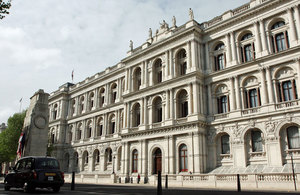


Foreign Secretary to visit Poland to call for tougher action to tackle Russian aggression

Press release

Liz Truss will travel to Poland today (Monday, 4 April) to see Ukrainian and Polish Foreign Ministers ahead of G7 and NATO talks in Brussels later this week.

  • She will call for tougher sanctions against Russia to cripple its war machine and to support Ukraine including in peace negotiations.

  • Foreign Secretary will also announce support for Ukrainian organisations working with women and girls, including those affected by conflict-related violence.

The Foreign Secretary will use a trip to Poland this week to call for tougher sanctions against Russia ahead of talks with NATO and G7 allies later in the week.

Liz Truss is due to meet her Ukrainian counterpart Minister of Foreign Affairs Dmytro Kuleba in Warsaw this evening (Monday, April 4) and her Polish counterpart Zbigniew Rau in the Polish capital tomorrow.

She will call for even tougher action from allies against Russia to strengthen Ukraine’s negotiating position in peace talks.

Truss will also announce support for organisations working with survivors of sexual violence in Ukraine, following reports of incidents of rape by Russian forces in the country.

The £10million civil society fund will support inspiring organisations in Ukraine, including those helping women and girls and people affected by conflict-related sexual violence.

Foreign Secretary Liz Truss said:

Putin is yet to show he is serious about diplomacy. A tough approach from the UK and our allies is vital to strengthen Ukraine’s hand in negotiations.

Britain has helped lead the way with sanctions to cripple the Putin war machine. We will do more to ramp up the pressure on Russia and we will keep pushing others to do more.

We will continue to support those who are suffering as a result of Putin’s illegal invasion of Ukraine, including the victims of sexual violence and those in need of humanitarian support.

While in Poland, the Foreign Secretary is due to visit aid organisations supporting Ukrainian refugees.

The Foreign Secretary will travel to NATO in Brussels later in the week to further strengthen the resolve of the international community against Russia as it works to end the conflict in Ukraine.

Background

  • The UK has already pledged nearly £400 million (£394m) of aid or Official Development Assistance to Ukraine. This includes £220m of humanitarian support, with more than 5 million medical items donated.

Published 4 April 2022


9-year bankruptcy order for Cardiff independent financial adviser

Marc Jones, 42, from Cardiff, was self-employed as an independent financial advisor from January 2012 until October 2018. From 2018 to 2019 he worked on behalf of a financial institution selling various financial products.

Jones received commission payments totalling several hundred thousand pounds on the sale of insurance policies that he knew, or ought to have known, would be cancelled.

In addition, he received payment for services that he then failed to supply to his customers. As a result, at the point of bankruptcy, he owed over £350,000.

The Secretary of State for Business, Energy and Industrial Strategy accepted a nine-year bankruptcy restrictions undertaking from Marc Jones, which commences on 21 February 2022.

As a result, he is under a number of restrictions, including not being able to borrow more than £500 without disclosing his bankrupt status, and he cannot act as a company director without the court’s permission.

Alan Draycott, Deputy Official Receiver at the Insolvency Service, said:

Marc Jones benefitted by several hundred thousand pounds through his behaviour and that is why he has received such a lengthy ban.

Notes to editors

Marc Jones is of Cardiff and his date of birth is July 1979.

Details of Marc Jones’ undertaking is available on the Individual Insolvency Register

Bankruptcy restrictions are wide ranging. The effects are the same whether you are subject to a bankruptcy restrictions order or to an undertaking. Guidance on the main statutory consequences flowing from a bankruptcy restrictions order or undertaking.

Information about the work of the Insolvency Service, and how to complain about financial misconduct.

Contact Press Office

You can also follow the Insolvency Service on:


9-year bankruptcy order for Cardiff independent financial adviser

Marc Jones, 42, from Cardiff, was self-employed as an independent financial advisor from January 2012 until October 2018. From 2018 to 2019 he worked on behalf of a financial institution selling various financial products.

Jones received commission payments totalling several hundred thousand pounds on the sale of insurance policies that he knew, or ought to have known, would be cancelled.

In addition, he received payment for services that he then failed to supply to his customers. As a result, at the point of bankruptcy, he owed over £350,000.

The Secretary of State for Business, Energy and Industrial Strategy accepted a nine-year bankruptcy restrictions undertaking from Marc Jones, which commences on 21 February 2022.

As a result, he is under a number of restrictions, including not being able to borrow more than £500 without disclosing his bankrupt status, and he cannot act as a company director without the court’s permission.

Alan Draycott, Deputy Official Receiver at the Insolvency Service, said:

Marc Jones benefitted by several hundred thousand pounds through his behaviour and that is why he has received such a lengthy ban.

Notes to editors

Marc Jones is of Cardiff and his date of birth is July 1979.

Details of Marc Jones’ undertaking is available on the Individual Insolvency Register

Bankruptcy restrictions are wide ranging. The effects are the same whether you are subject to a bankruptcy restrictions order or to an undertaking. Guidance on the main statutory consequences flowing from a bankruptcy restrictions order or undertaking.

Information about the work of the Insolvency Service, and how to complain about financial misconduct.

Contact Press Office

You can also follow the Insolvency Service on:


Prime Minister appoints Mr David Quarrey CMG as the UK’s new Permanent Representative to NATO

Press release

The Prime Minister is today (Monday 04 April) appointing a top diplomat to be the UK’s Permanent Representative to NATO – a clear demonstration of the organisation’s crucial global role.

The Prime Minister is today appointing a top diplomat to be the UK’s Permanent Representative to NATO – a clear demonstration of the organisation’s crucial global role.

The United Kingdom’s joint delegation to this vital Alliance will now be led by Mr David Quarrey CMG, currently the Prime Minister’s International Affairs Adviser and Deputy National Security Adviser.

Mr Quarrey’s appointment is a clear sign of how the UK values its membership of NATO, an organisation whose thirty Allies come together every day to ensure the security of Europe and North America.

The Prime Minister approved the successful candidate on the recommendation from the Foreign Secretary.

Mr Quarrey is one of the UK’s most experienced senior diplomats. Before his current role he served as UK Ambassador to Israel, Director for the Middle East and North Africa at the Foreign and Commonwealth Office (FCDO), and Director for Foreign Policy in the National Security Secretariat in the Cabinet Office.

He also completed postings in India and Zimbabwe, and at the UK’s Permanent Representation to the United Nations in New York.

He takes over from Dame Sarah MacIntosh DCMG, who will be transferring to another Diplomatic Service appointment. Dame Sarah successfully led the UK delegation at NATO through a crucial period for the Alliance which saw significant increases in Allies’ defence investment, the 70th anniversary summit in London and most recently the deployment of UK troops to the eastern flank as part of NATO’s unified response to Russia’s illegal invasion of Ukraine.

Foreign Secretary Liz Truss said:

NATO is vital for European and global security. We will work to strengthen the alliance in the face of Russian aggression.

I am pleased to appoint David who is an experienced diplomat and will lead the UK’s efforts working with our NATO Allies. I congratulate him on his appointment.

David Quarrey CMG said:

I am honoured to take up the position of UK Permanent Representative to NATO. I look forward to leading the excellent joint FCDO and MOD team as we work with our Allies to keep our country and citizens safe.

Mr Quarrey will take up his appointment during April 2022.

Published 4 April 2022