UK Defence Ministers host Ukrainian government to plan future military aid

UK Defence Ministers hosted a Ukrainian government delegation to Salisbury Plain Training Area this week to consider their equipment requirements and options for further military support, as they continue their defence against Russia’s unprovoked and illegal invasion.

Minister for Defence Procurement Jeremy Quin MP and Armed Forces Minister James Heappey MP were joined by Deputy Defence Minister Volodymyr Havrylov and senior Ukrainian military officers, who visited the UK on behalf of President Zelenskyy.

The UK Ministers held talks with their Ukrainian counterparts to understand the challenges they are facing on the ground to ensure military aid is targeted to their requirements and is able to integrate into existing systems.

During the visit the British Army’s 3rd Division and Royal Marines demonstrated a range of equipment and options for further military support, including defensive missile systems and protected mobility vehicles.

The Ukrainian delegation observed the Starstreak air defence system, which the UK has already provided and trained Ukrainian Armed Forces to use, so they can better defend their airspace from Russian aggression.

Armed Forces Minister James Heappey said:

Ukraine’s Armed Forces continue to put up a tenacious fight against the illegal and unprovoked invasion by Putin’s forces. We’re proud that they’re doing so with weapons provided by and through the United Kingdom.

But the Ukrainian job is far from done and the Prime Minister has directed that the UK provides even more in support of this next phase of the conflict. It was an honour to show Minister Havrylov and his generals the kit the UK hopes to provide next and to discuss some new weapons that have been trialled recently with UK forces.

Defence Procurement Minister Jeremy Quin said:

The UK has been clear of our support for Ukraine’s defence against Russia’s invasion.

We are exploring options for future military support, including working with the UK Defence industry and our Ukrainian counterparts into the longer term to ensure the equipment supplied continues to be both effective and sustainable for their heroic armed forces.

The UK has a deep and longstanding bilateral defence relationship with Ukraine and since 2015 has trained over 22,000 personnel as part of Operation Orbital and the UK-led Maritime Training Initiative. This training has included medical skills, logistics, countering improvised explosive devices (C-IED), leadership, planning, and infantry tactics.

The support was stepped-up in 2021 with the UK and Ukraine signing a bilateral treaty, which released £1.7bn of financing in support of the Ukrainian Naval Capabilities Enhancement Programme.

Since the Russian invasion the UK has been leading efforts to coordinate international donations, hosting two donor conferences to encourage further donations and support their delivery, as well as running the International Donor Coordination Centre in Stuttgart to ensure the international community’s military aid to Ukraine is as coordinated and effective as possible.


Alisdair Gilchrist MBE: saving lives at sea

It is almost 40 years since the ship Alasdair Gilchrist was aboard sank after being hit by an anti-ship missile during the Falklands conflict.

Four decades on he brings his experience and expertise to bear at the Defence, Science and Technology Laboratory (Dstl) by making the lives of those serving at sea safer.

As Above Water Systems Programme Manager he has pioneered work in artificial intelligence (AI) and machine learning, autonomy in uncrewed vessels, and threat detection.

Alasdair, who has been made an MBE, said:

I survived HMS Sheffield sinking on the 4th of May 1982. It was quite personal. I lost 20 good friends and had some mental issues after that – post traumatic stress.

To come through that you need to be able to use it as a positive emotion to affect change for good. Saving sailors’ lives is what we do and I’m very proud of that.

I want to make a difference and Dstl has given me that platform to make a difference.

The People Inside: Alisdair Gilchrist

Alasdair joined the Royal Navy 45 years ago and was tasked with the most menial jobs on the ship but now he is helping shape the future of naval warfare.

He added:

I joined the Navy in 1977 as a young junior seaman operator – mainly scrubbing decks and cleaning toilets at the age of 16, but learning from the bottom up which was just a wonderful experience. They sent me around the world.

He served with the Royal Navy for 28 years. He has worked at Dstl more than 16 years and recently been involved in projects such as the uncrewed vessel MAST-13 and exercise Formidable Shield.

Alasdair – who is known as Gilly – said:

My role is predominantly looking after the science and technology advancement of the Royal Navy’s technical goals on its major warships.

The exciting thing is to see the technology go on to the ships. We just can’t sit on our laurels.

Technology is going at a pace and we just have to keep up with it – and shape it for good.


CMA appoints new Senior Director of Mergers

Press release

The CMA has appointed Sorcha O’Carroll as its new Senior Director of Mergers.

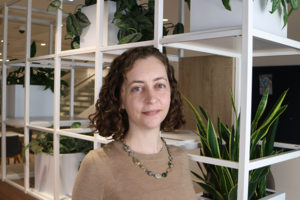
Headshot of Sorcha O'Carroll

Sorcha has worked as a Director of Mergers at the Competition and Markets Authority (CMA) since 2019 and replaces Joel Bamford who left in February. Her appointment follows an open recruitment process that attracted applications from a strong field of candidates.

As Senior Director of Mergers, Sorcha will be the decision-maker on complex Phase 1 merger cases, as well as overseeing the merger team’s work across both Phase 1 and 2 inquiries. Following the UK’s exit from the EU, the CMA has taken on responsibility for merger cases that were previously reserved for the European Commission, which are typically larger and more complex.

Sorcha will work alongside Colin Raftery, who is also a Senior Director in the mergers team, and report to David Stewart, Executive Director for Markets and Mergers.

David Stewart, Executive Director for Markets and Mergers at the CMA, said:

It’s a pleasure to welcome someone of Sorcha’s experience and acumen to the CMA’s senior leadership team. Everyone who works with Sorcha knows that she brings enormous strengths to our mergers work. Her analytical skill and strategic judgment will be vital in this critical role, as the CMA continues to build on its strong track record as a world-class competition authority.

On her appointment, Sorcha said:

I’m delighted to accept this role at a time when the CMA is taking on more complex merger inquiries than ever before.

Competition has an important role in delivering the best possible outcomes for people across the UK; this is especially important as the cost of living rises.

I look forward to working closely with Colin, David and the rest of the CMA’s renowned mergers team as we investigate deals to ensure that they do not undermine competition and leave people worse off.

Sorcha took up her appointment on 1 April 2022. Before joining the CMA, she worked in private practice in the UK and Canada.

  1. This appointment was managed by a Civil Service Commissioner to ensure a fair, merit-based, and open process, in keeping with the Civil Service Recruitment Principles.
  2. The role was advertised publicly with applicants being asked to submit an application form and cover letter detailing their suitability for the role, as measured against a published role profile with a set of required skills and experience.
  3. For media queries, please contact the press office via press@cma.gov.uk or on 020 3738 6460.
Published 7 April 2022
Last updated 7 April 2022 + show all updates

  1. First published.


Horrifying evidence of Russia’s atrocities in Ukraine: UK statement to the OSCE, 7 April 2022

Thank you, Mr Chair. I would like to thank you for Poland’s leadership as chair of our organisation in the wake of Russia’s premeditated and unjustified invasion of Ukraine. In particular, I am grateful to you for calling a Special Permanent Council on Tuesday. It gave all delegations an important opportunity to discuss the latest horrifying evidence of Russia’s atrocities in Bucha, and other towns in the Kyiv region, and to pay our respects to the victims.

On Tuesday, the UK also chaired an important discussion of the United Nations Security Council, where Council members heard directly from President Zelenskyy about the barbarity of Russian forces. His report on the torture of Ukrainian civilians by Russian forces was harrowing. He told the Council of people shot in the streets, of limbs cut off and tongues removed, and of women raped in front of their children.

Horrifyingly, more and more reports are emerging of rape and sexual violence committed by Russian forces in Ukraine. Let me be very clear – the perpetration of sexual violence in armed conflict is a war crime.

I commend the immense courage of those speaking out after experiencing sexual violence at the hands of the Russian armed forces. Earlier this week on a visit to Poland, my Foreign Minister was clear that the UK stands ready to support those affected by such violence.

Mr, Chair, I would like to pay tribute to the Ukrainian Prosecutor General for her determination and for her team’s work to prepare the necessary legal evidence to ensure accountability. The UK will do all we can to bring the perpetrators of all war crimes to justice. That is why the UK will provide military, policing and financial support to help to uncover evidence of such crimes and ultimately seek justice. On 24 March, we announced an additional £1 million of funding for the ICC to help to uncover evidence of war crimes and we are providing UK experts to support the investigation.

I would also like to pay tribute to the professionalism and bravery of journalists who are working in Ukraine to expose the truth about President Putin’s war and the barbaric treatment of civilians. The United Kingdom is a proud member of the OSCE Group of Friends on Safety of Journalists and I fully subscribe to the joint statement being delivered on behalf of that group today. Last week we also heard important testimony from Kakhovka journalist Oleg Baturin, who shared his story of being abducted and tortured by Russian forces. His captors told him that this was in revenge for his journalistic activity. Sadly, Mr Baturin’s case is far from unique, as Russia attempts to hide evidence of its crimes from the world.

On this note, I would like to address the Russian delegation. The atrocities we have seen in Bucha, in Irpin, in Borodyanka and throughout Ukraine are appalling. They will forever be a moral stain upon the Russian army. But they will forever too be a moral stain on the Russian diplomatic service, whose denial and attempted justification of crimes by the Russian armed forces enables them. Look at what is being done in your name. Look at what it is you are unsuccessfully attempting to justify.

Mr Chair, human rights are being grossly violated in areas that remain under the control of Russian forces. We continue to be deeply concerned at reports of abductions, killings, torture and forced deportation of Ukrainian civilians. We also deplore the latest round of conscription of residents of Crimea into the Russian Armed Forces – drawing them into war against their compatriots.

Mr Chair, President Putin will never be able to break the spirit of Ukraine’s people or conquer their homeland. His continued war of choice can achieve nothing but further suffering. We call on Russia in the strongest possible terms to end its attacks on civilians in all their forms, to pull back their troops from the entire territory of Ukraine and to stop this war. The United Kingdom will remain resolute in our support for Ukraine’s sovereignty, territorial integrity, independence and unity within its internationally recognised borders.

Thank you Mr Chair, and I request that this statement be attached to the journal of the day.


Journalists in Ukraine are not safe from attacks by Russia’s army: Informal OSCE Group of Friends on Safety of Journalists statement, 7 April 2022

I am speaking on behalf of the informal OSCE Group of Friends on Safety of Journalists, composed of the following participating States: Austria, Canada, Denmark, Estonia, Finland, France, Germany, Greece, Latvia, Lithuania, Montenegro, the Netherlands, Norway, Sweden, the United Kingdom, and the United States of America.

Last week, at the funeral of cameraman Pierre Zakrzewski in Dublin, Father Kieran Dunne told the congregation “Truth telling is a work of love, and love always comes at a price, and what a terrible price.” Mr Zakrzewski is one of at least six journalists who have been killed since 24 February in the course of their journalistic work, whilst covering Russia’s invasion of Ukraine. Unfortunately, their numbers keep growing. Only recently, we learnt of the death of well-known photojournalist Maksim (Maks) Levin who had gone missing on 13 March, after he had last been seen in the Vyshgorod district near Kyiv, where he went to photograph the frontline. A Lithuanian documentary filmmaker, Mantas Kvedaravičius, was killed in Mariupol, a city he had documented for years. We offer our heartfelt condolences to the family and friends of all journalists who have been killed in Russia’s premeditated and unjustified war.

In times of war, the work of free, independent and professional journalists and media actors is of critical importance for providing objective information to the international community. This has been tragically underlined by recent reports on atrocities committed by the Russian armed forces in a number of occupied Ukrainian towns that have now been liberated. Russia, however, wants to stop journalists and foreign correspondents from providing fact-based coverage of the war and from shining a light on the human suffering caused by their military aggression against Ukraine. Because Russia knows, as we do, that facts matter.

Mr Chair,

The Group of Friends on Safety of Journalists welcomes the recent statements by Ms Teresa Ribeiro, the Representative on Freedom of the Media (RFoM), including her powerful statement of 3 March. In that statement, Ms Ribeiro condemned strongly Russia’s military attack and stressed that “first and foremost, journalists should never be targets” and that participating States should adopt all feasible measures to protect media workers. Additionally, in her 25 March video statement to journalists working in Ukraine, Ms Ribeiro said “Journalists are to be considered civilians and therefore cannot be attacked or abducted. This includes their equipment. It also includes a duty to respect their professional independence.”

Unfortunately, journalists in Ukraine are not safe from attacks by the invading army. On the contrary, there are reports of the Russian military targeting journalists. There are reports of at least 148 cases of journalists being targeted in the first month of the Russian invasion. As highlighted by the RFoM in her 24 March statement, there has been a growing number of reports on cases of disappearance and abduction of Ukrainian journalists and hostage taking of their relatives. There was the attack on a Sky News team, recorded on camera. Reporters Without Borders (RSF) reported the case of a fixer for Radio France who was kidnapped by Russian soldiers and, during nine days of captivity, was beaten with an iron bar, subjected to electric shocks, and faced a mock execution.

Mr Chair,

We strongly condemn all attacks on journalists and media workers. We urgently call on Russia to immediately end their attacks on independent media and to respect the rights of journalists and media workers in accordance with international human rights law, international humanitarian law and OSCE commitments. We stand with journalists and media workers who, at great personal risk and sacrifice, continue to report the facts and bring Russia’s human rights violations and abuses, as well as war crimes, to light. We commend their professionalism and resilience to ensure the free flow of independent information despite the most challenging circumstances.

Mr Chair,

We call on Russia to end its war on Ukraine and withdraw all troops without delay.

I ask, Mr Chair, that this statement be attached to the journal of the day.