Call for project bids 2022: open societies, climate change and accessible education in Panama

The deadline for proposals is 11:59pm (Panama time) on 15 May 2022.

The British Embassy in Panama City is now accepting proposals for projects between April 2022 and March 2023. We encourage civil society, non-profit and multilateral organisations to submit proposals that directly support the following thematic areas:

  1. Open societies

    a. Open data and access to information

    b. Democracy

    c. Human rights (LGBT+, afrodescendants, indigenous communities, resocialisation strategies)

    d. Media freedom

  2. Climate change

    a. Waste management and recycling

    b. Implementation of nationally-determined contributions (NDCs) and COP26 commitments, nature-based solutions

    c. Energy transition, clean growth, tackling deforestation

    d. Links between climate change and academia

    e. Adaptation in indigenous communities

  3. Accessible education

    a. Bilingualism

    b. Creative industries development, cultural, software, artificial intelligence (AI), IoT

    c. Technologies for virtual learning

    d. STEM education

Funding terms

  • projects cannot last longer than 9 months
  • the total cost of a project should be between $10,000 and $30,000 USD (or the equivalent in other currencies). Proposals must be submitted in the currency in which the organisation operates
  • administration costs for delivering a project must not exceed 10% of the total project budget
  • payments to implementing partners during the project will be made in arrears (i.e. for actual costs incurred by the implementing partner after project activities take place). The embassy cannot accept proposals that include advance payments
  • activities can only start once there is an agreement officially in place with the British embassy
  • the call for proposals is not intended for individuals, for-profit or government organisations
  • we cannot consider projects that include the purchase of equipment and IT devices
  • ensure projects have clear, tangible, and achievable deliverables within the funding period
  • the embassy will conduct a Due Diligence Assessment (DDA) to determine if a selected implementing partner has the capacity and capability to manage the funds and deliver project objectives. The embassy will save the right to decide whether it should maintain or reject a project depending on DDA outcomes
  • project proposals must be aligned with the FCDO´s priorities and thematic areas above
  • project proposals should identify the key beneficiaries and reflect the change they will bring
  • project proposals should state the issues they will address and why the UK should fund them
  • projects must qualify as Official Development Assistance (ODA). ODA is a term created by the Development Assistance Committee (DAC) of the Organisation for Economic Co-operation and Development (OECD). ODA projects have, as a primary objective, the promotion of economic development and welfare in developing countries. Read more about how the UK government uses ODA

Milestones

The embassy will hold a Q&A session via Microsoft Teams on Thursday 21 April 2022 at 11am (Panama time) to provide information about the bidding process and funding objectives.

Access the session

Date Activity
21 April 2022 (11am Panama time) Q&A session
15 May 2022 (11:59pm Panama time) Call for bids closes
December 2022 85% progress on projects
February 2023 100% progress on projects

Submission:

To submit a proposal, email the following documents to Panama.Prosperity@fcdo.gov.uk with the subject line ‘Organisation name: Project title’:

  1. Project Proposal Form for projects up to USD 15,000 (ODT, 65 KB)
  2. Project Proposal Form for projects over USD 15,000 (ODT, 73.5 KB)
  3. Activity Based Budget Form (ODS, 9.66 KB)
  4. Climate change and inclusion statement (ODT, 5.73 KB)

Ensure the submitted documents have the organisation name at the beginning of the file name (e.g. Organisation Name – Project Proposal Form).

You must include a point of contact in the body of the email. All documents must be submitted in English.

Both successful and rejected bids will receive notice in due course. Implementing partners will be expected to sign a standard grant agreement with the embassy. The terms are non-negotiable. All implementers must also commit to a consistent financial management, regular monitoring and reporting back when requested; including discussing and updating any changes to the activity based budget with the assigned projects officer.

About the International Programme Fund (IPF)

The International Programme Fund (IPF) of the United Kingdom was launched in 2015 as a responsive, agile fund to support the strategic objectives of the Foreign, Commonwealth and Development Office (FCDO). The IPF supports adaptive, short-term projects which also influence local policies and create networks that open opportunities for further engagement and diplomacy.

Projects must qualify as Official Development Assistance (ODA). ODA is a term created by the Development Assistance Committee of the Organisation for Economic Co-operation and Development. ODA projects have, as a primary objective, the promotion of economic development and welfare, while ensuring gender equality, inclusion, and compliance with Paris Agreement objectives. Read more about how the UK Government uses ODA.

The Panama Prosperity mailbox will only receive proposal applications. You can email Anibal.Castillo@fcdo.gov.uk if you have general inquiries.

Published 12 April 2022
Last updated 29 April 2022 + show all updates

  1. Change of date for submissions

  2. Date for proposals’ deadline

  3. Added translation


Colombia’s experience shows the importance of holistic and inclusive approaches to sustaining peace

My thanks to Special Representative Ruiz Massieu for your detailed briefing and insights.

I would like, once again, to extend a particularly warm welcome to President Duque and thank him also for his very detailed remarks and insights on the situation in Colombia. Your Excellency, Mr President, your presence here today testifies to the importance you place on the role of the UN, and the Security Council, in supporting Colombia on its journey towards lasting and sustainable peace.

It has been a privilege for the UK to work alongside Colombia, and I offer my congratulations to you Mr President, to the parties, and to the Colombian people, for the progress that has been achieved, just over five years since the signing of the peace agreement. We recognise the investment the Government has made during this time to support the reintegration of former combatants into civilian life.

Colombia serves as an important example, that an enduring resolution of differences is only possible through peaceful dialogue.

During the past quarter, as we have heard again today, we have continued to see some significant progress in the implementation of the Peace Accord.

As the report notes, this year is a real turning point for the transitional justice system, and its three components continue to advance in their crucial work.

We look forward to seeing the final report from the Truth Commission in June, and the first sentences being handed down by the Special Jurisdiction for Peace. We recognise the fundamental importance, as part of this process, of perpetrators acknowledging their crimes before the victims themselves. And we share the Secretary-General’s confidence in the fortitude Colombians will continue to show, as they confront a painful past in order to move towards healing and reconciliation.

Notwithstanding the important progress made, our concerns remain for groups that continue to be disproportionately affected by violence, displacement and confinement. In this regard, as we’ve heard from SRSG Massieu today, we continue to be alarmed by the increase in violent incidents and insecurity in several areas, which has claimed the lives of former combatants, social and environmental leaders, human rights defenders, women leaders and those from indigenous and Afro-Colombian communities.

In my capacity as the UK’s Special Representative for Preventing Sexual Violence in Conflict, I saw directly when I engaged with the representatives of these groups in a virtual visit in late 2020, the powerful insights they provided in this respect.

I am sure I speak for all colleagues when we say we were shocked and saddened by the murder of Jorge Santofimio in Putumayo. His commitment to environmental protection and peace had made him a real example of the benefits that come through successful reintegration.

To address this violence, we urge the Government to continue to expand its efforts to provide adequate protection and security, improve state presence in conflict-affected areas, as we’ve heard today, and strengthen the institutions that can investigate and prosecute those responsible for these crimes.

While challenges to full implementation remain, as we heard from His Excellency President Duque, there has been progress. The election of 16 victims into special ‘peace seats’ in Colombia’s House of Representatives really does represent a historic step forward. It presents an opportunity to widen the democratic participation of victims and the communities most affected by conflict. We also welcome the restorative justice mechanisms that have been introduced.

As Colombia looks ahead to the Presidential elections next month, we again call on all political stakeholders to ensure that these elections will be peaceful and inclusive, and that elected parties maintain their commitment to the full implementation of the peace agreement.

In conclusion, Colombia’s experience shows us the importance of holistic and inclusive approaches to building and sustaining peace, as well as the real value of engaging the UN’s full peacebuilding architecture, including the Peacebuilding Commission and the Peacebuilding Fund to catalyse international support.

For our part, the UK remains fully committed to supporting the Peace Process in Colombia, as all parties continue on their path to lasting peace. We will continue to look to consolidate, to strengthen and to build upon the gains achieved thus far.


Professor Dame Carol Black has been reappointed as Chair of the British Library

News story

The Secretary of State has reappointed Professor Dame Carol Black as Chair of the British Library for a second term of four years, commencing on 01 September 2022.

Professor Dame Carol Black is currently Chair of the British Library, the Centre for Ageing Better, and Think Ahead, the Government’s fast-stream training programme for Mental Health Social Workers. She co-chairs NHS England/Improvement’s Expert Advisory Group on Employee Health and Wellbeing.

She is a member of RAND Europe’s Council of Advisers, and of the Boards of the Institute for Employment Studies and UKActive. In 2022 she was appointed Independent Adviser to the Government on combating the misuse of drugs. In 2019 she completed a seven-year term as Principal of Newnham College in Cambridge University, where she was a Deputy Vice-Chancellor.

Dame Carol has completed four independent reviews for the UK Government: of the health of the working-age population in 2008, of sickness absence in Britain in 2011 as co-chair; of employment outcomes of addiction to drugs or alcohol, or obesity, in 2016; and on illicit drugs, demand, supply and treatment (Part I published in February 2020; Part 2 published on 8 July 2021).

Dame Carol is a past-President of the Royal College of Physicians, of the Academy of Medical Royal Colleges, and past-Chair of the Nuffield Trust for health policy. The Centre she established at the Royal Free Hospital in London is internationally renowned for research and treatment of connective tissue diseases such as scleroderma. She has been a Trustee of the National Portrait Gallery.

The Chair of the British Library receives £35,180 per annum. This reappointment has been made in accordance with the Cabinet Office’s Governance Code on Public Appointments. The process is regulated by the Commissioner for Public Appointments. The Government’s Governance Code requires that any significant political activity undertaken by an appointee in the last five years is declared. This is defined as including holding office, public speaking, making a recordable donation or candidature for election. Dame Carol has declared no such activity.

Published 12 April 2022


Scottish Secretary responds to April Labour Market Statistics

News story

As the latest employment figures are published, Scottish Secretary Alister Jack says the resilience of the UK economy is benefitting every part of the country.

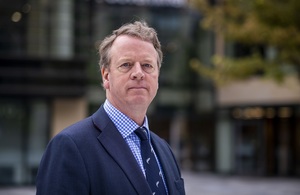
Scottish Secretary Alister Jack
Scottish Secretary Alister Jack said:

Today’s figures show how the resilience of the UK economy is benefitting every part of the country. While we should continue to keep a close eye on the jobs market, Scotland’s unemployment rate is now down to where it was in February 2020 and more people are in paid employment than before the pandemic.

As we level up opportunities right across the country, we’re taking steps to ensure everyone benefits from a thriving jobs market. Our Energy Security Strategy will help create over 40,000 more jobs in clean industries across the whole UK.

Through our extensive jobcentre network, we’re working to match people with jobs in the sectors that need them most and providing tailored support to help even more Scots back into employment.

Background

Figures from the ONS show Scotland’s unemployment rate decreased by 0.3 p.p. to 3.6 per cent over the quarter. The employment rate decreased slightly to 74.7 per cent between December and February 2022.

Published 12 April 2022


Fine wine investment scheme wound-up

Global Wine Exchange Limited has been wound up in the public interest in the High Court on 22 March 2022 before Deputy Judge Shaffer. The Official Receiver has been appointed Liquidator of the company.

The court heard that Global Wine Exchange offered members of the public the opportunity to invest in fine wines with the promise of significant returns.

The Insolvency Service, however, commenced confidential investigations into Global Wine Exchange’s activities after complaints were received.

Investigators uncovered that the company would cold-call potential clients, using high-pressure sales techniques. Several customers were vulnerable or elderly and one was reportedly suffering from Alzheimer’s.

Global Wine Exchange also targeted people who previously invested in a separate wine scheme with Management & Consulting Partners Unlimited, trading as the Bordeaux Wine Company, which had entered liquidation in August 2021.

Global Wine Exchange would tell former customers of the Bordeaux Wine Company that they could help recover their funds in return for a fee.

But returns were never made, and some customers reported they were asked to falsify records so Global Wine Exchange could make a false claim to the liquidator of Bordeaux Wine Company.

Further misconduct caused by the company included vague ownership certificates and customers often did not receive their wine or were misinformed where it was being stored. Two of the three bonded warehouses, in which the company claimed customers’ wines was stored, never had a contractual relationship with the company at any time.

Customers often paid more than the retail value of the wines and paid funds into a series of different bank accounts, including some of which were not in the company’s name.

Investigators have only been able to identify wine stock purchases of just over £770,000 compared with income of more than £1.9 million between January 2019 and March 2021.

Furthermore, investigators identified that during a 9-month period between July 2019 and May 2020, the company received more than £1 million in payments. But while close to £600,000 was paid out to the director and sales consultants, only £333,000 was used to purchase wine.

Edna.Okhiria, Chief Investigator for the Insolvency Service, said:

During our investigations, we found that the Global Wine Exchange carried out unscrupulous acts of misconduct. The company misled many investors, some who were elderly or vulnerable, who did not receive the high returns they were promised.

The courts have recognised the severity of Global Wine Exchange’s action and put a stop to anyone else becoming a victim of their investment scheme.

For questions about the liquidation, contact the Official Receiver: piu.or@insolvency.gov.uk.

GLOBAL WINE EXCHANGE LIMITED (Company Reg No 11312862)

The petition was presented under s124A of the Insolvency Act 1986 on 26 January 2022 at the High Court in London.

Company Investigations, part of the Insolvency Service, uses powers under the Companies Act 1985 to conduct confidential fact-finding investigations into the activities of live limited companies in the UK on behalf of the Secretary of State for Business, Energy & Industrial Strategy (BEIS). Information about how to complain about a live company.

Information about the work of the Insolvency Service.

You can also follow the Insolvency Service on: