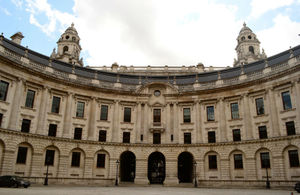
Blake Shorthouse has been appointed as a Trustee of the National Portrait Gallery.

News story

The Prime Minister has appointed Blake Shorthouse as a Trustee of the National Portrait Gallery for a term of four years commencing on 1 April 2022 until 31 March 2026.

Blake Shorthouse has worked in finance for approximately 30 years. He joined KKR, a global investment manager with a focus on alternative asset classes, in 2014 where he led the firm’s work with Family Capital in Europe and the Middle East. Prior to KKR he worked in London & Zurich at Merrill Lynch, UBS, and Credit Suisse. Blake holds a joint honours degree in History & Politics from Exeter University, UK.

National Portrait Gallery Trustees are not remunerated. These reappointments have been made in accordance with the Cabinet Office’s Governance Code on Public Appointments. The process is regulated by the Commissioner for Public Appointments. The Government’s Governance Code requires that any significant political activity undertaken by an appointee in the last five years is declared. This is defined as including holding office, public speaking, making a recordable donation or candidature for election. Blake Shorthouse has declared no activity.

Published 18 April 2022


New internet laws return to Parliament for second reading this week

  • Online safety legislation protecting children will be debated in the Commons
  • Comes as new plans to support vulnerable people and fight falsities online are launched
  • Funding boost will help people’s critical thinking online through a new expert Media Literacy Taskforce alongside proposals to pay for training for teachers and library workers

Parliamentarians will debate the government’s groundbreaking Online Safety Bill which requires social media platforms, search engines and other apps and websites allowing people to post content to improve the way they protect their users. 

Ofcom, the regulator, will have the power to fine companies failing to comply with the laws up to ten per cent of their annual global turnover, force them to improve their practices and block non-compliant sites. Crucially, the laws have strong measures to safeguard children from harmful content such as pornography and child sexual abuse.

Ahead of Tuesday’s debate, the government is launching the next phase of its Online Media Literacy Strategy. It aims to help vulnerable and ‘hard-to-reach’ people, such as those who are digitally excluded or from lower socio-economic backgrounds, navigate the internet safely and teach them to spot falsities online. 

The Department for Digital, Culture, Media and Sport (DCMS) will spend £2.5 million to advance the plan through the next year including on training, research and providing expert advice. This includes a new Media Literacy Taskforce featuring experts from a range of disciplines and a boost to the Media Literacy Fund, which gives teachers and local service providers the skills they need to teach people to improve their critical thinking of what they see online.

Digital Secretary Nadine Dorries said:

The time has come to properly protect people online and this week MPs will debate the most important legislation in the internet age.

Our groundbreaking Online Safety Bill will make the UK the safest place to surf the web. It has been significantly strengthened following a lengthy period of engagement with people in politics, wider society and industry.

We want to arm everyone with the skills to navigate the internet safely, so today we’re also announcing a funding boost and plans for experts to join forces with the government to help people spot dodgy information online.

Thinking critically online has never been more important. There was a rise in misinformation and disinformation on social media and other online platforms during the global pandemic and the Kremlin continues to use disinformation to target UK and international audiences to justify its actions in Ukraine.

Ofcom research shows adults are often overconfident in their ability to detect disinformation and only 32 per cent of children aged 12 to 17 know how to use online flagging or reporting functions.

Forty per cent of adult internet users do not have the skills to assess online content critically and children up to the age of 15 are particularly vulnerable.

A new Media Literacy Taskforce with 18 experts from a range of relevant organisations, including Meta, TikTok, Google, Twitter, Ofcom and the Telegraph as well as universities and charities, will work with the government as part of its strategy to tackle disinformation and help hard-to-reach and vulnerable groups in society think about what they see on the web, including improving their ability to protect their data and privacy.

The taskforce will look at new ways to identify and reach people most in need of education. This could include working through local authorities or coordinating support offered by local services to roll out training.

The Media Literacy Fund will expand a pilot ‘Train the Trainer’ programme which ran last year to give teachers, library workers and youth workers more skills to help boost people’s critical thinking skills.

New research will be commissioned to understand the root causes of poor media literacy and on the effectiveness of different methods which aim to build people’s resilience to misinformation and disinformation.

The fund will have a broader scope including a focus on improving media literacy provision for people who are particularly vulnerable online – such as children or people suffering with mental health issues.

Since it launched in July 2021, the Online Media Literacy Strategy has provided £256,000 in grant funding to five organisations to adapt media literacy resources for teachers working with disabled children, run a successful awareness campaign to promote Safer Internet Day and empower LGBTQ+ young people with tools to deal with online abuse.

Nick Poole, Chief Executive of the Chartered Institute of Library and Information Professionals (CILIP) said:

Media literacy is the key to helping people lead healthier, happier and safer lives online, particularly the most vulnerable and hardest-to-reach in our society. As a member of the DCMS Media Literacy Taskforce, I welcome the breadth and ambition of this new Action Plan, which demonstrates the government’s commitment to this important agenda. As librarians and information professionals, we look forward to playing our part in bringing it to fruition.

Will Gardner OBE, CEO of Childnet International and a Director of the UK Safer Internet Centre said:

Media literacy is a core part of Childnet’s work with children, young people, parents and carers, and we fully support the Media Literacy focus and work of the DCMS. This work has never been as important as it is now.

There is a great deal of work being done in this space in the UK. The government is playing an important role in helping to identify where there are gaps and where focus or learning is needed, and then supporting responses to that.

As part of the UK Safer Internet Centre, in February 2022 we worked closely with the DCMS in helping to promote the Safer Internet Day campaign to LGBTQ+ young people. We fully support the continued focus of the Action Plan, including ensuring that ‘hard-to-reach’ groups are supported as well as those who are particularly vulnerable online.

ENDS

Notes to editors

  • The £2.5 million announced in the Action Plan today will be used to fund three projects in the media literacy programme: the Media Literacy Taskforce, the Media Literacy Fund, and a research programme. Further details about the fund and how organisations can apply will be announced in the summer.
  • The Media Literacy Action Plan will complement the UK government’s range of counter-disinformation measures which includes the Online Safety Bill and DCMS’s Counter-Disinformation Unit, which monitors harmful misinformation and disinformation and works with social media platforms to ensure action to address it.
  • The Media Literacy Taskforce will meet approximately every two months and report to DCMS ministers. The Taskforce will operate over the next three years but the composition of members will be subject to change. The members of the taskforce are:

Media Literacy Taskforce: Steering Board Members

Organisation Representative
Chartered Institute of Library and Information Professionals (CILIP) Nick Poole (CEO)
Goldsmiths University and Liverpool John Moores University Kate Morris (Programme Convenor for Journalism) and Fran Yeoman (Programme Leader for Journalism)
Good Things Foundation Emma Stone (Director of Evidence and Engagement)
Google Rosie Luff (Public Policy Manager)
Internet Matters Simone Vibert (Head of Policy)
Libraries Connected Dave Lloyd (Service Development Manager)
Meta Sophie England (Policy Programmes Manager
Parent Zone Vicki Shotbolt (Founder and CEO)
PSHE Association Jonathan Baggaley (CEO)
Social Founders Network and Together TV Caroline Diehl (Founder)
South West Grid for Learning Ken Corish (Online Safety Director)
The Telegraph Ian MacGregor (Editor Emeritus)
TikTok Ben Bradley (Public Policy Manager)
Twitter Katy Minshall (Head of Public Policy)
University of Liverpool Simeon Yates (Professor of Digital Culture)


PM to visit India to advance partnership for peace and prosperity

  • The Prime Minister will visit Gujarat and New Delhi this week for the first time as PM – as part of the UK’s Indo-Pacific tilt
  • Visit is expected to secure major new investment deals, supporting UK businesses, jobs and growth
  • Meeting with Prime Minister Modi will focus on boosting economic, defence, security and technology co-operation in the face of shared global challenges

The Prime Minister will visit India this week to deepen our long-term partnership for peace and prosperity with a fellow leading democracy, in the face of global economic challenges and threats from autocratic states.

The visit will begin in Ahmedabad on Thursday [21st April] to meet with leading businesses and discuss the UK and India’s thriving commercial, trade and people links. This will be the first time a UK Prime Minister has visited Gujarat, India’s fifth largest state and the ancestral home of around half of the British-Indian population in the UK.

The Prime Minister will then travel to New Delhi to meet Prime Minister Modi on Friday [22nd April]. The leaders will hold in-depth talks on the UK and India’s strategic defence, diplomatic and economic partnership, aimed at bolstering our close partnership and stepping up security co-operation in the Indo-Pacific.

In Gujarat, the Prime Minister is expected to announce major investment in key industries in both the UK and India, boosting jobs and growth at home, as well as new collaboration on cutting-edge science, health and technology.

He will use the visit to drive progress in the Free Trade Agreement negotiations launched earlier this year – a deal with India is predicted to boost our total trade by up to £28 billion annually by 2035 and increase incomes across the UK by up to £3 billion.

Speaking ahead of the visit, Prime Minister Boris Johnson said:

As we face threats to our peace and prosperity from autocratic states, it is vital that democracies and friends stick together. India, as a major economic power and the world’s largest democracy, is a highly valued strategic partner for the UK in these uncertain times.

My visit to India will deliver on the things that really matter to the people of both our nations – from job creation and economic growth, to energy security and defence.

Last year, the Prime Minister and Prime Minister Modi agreed a UK-India Comprehensive Strategic Partnership, announcing more than £530m in investment into the UK and committing to a deeper bilateral relationship across trade, health, climate, defence and security, and connecting our people.

India was identified as a priority relationship for the UK in the 2021 Integrated Review and was invited by the UK as a guest to last year’s G7 in Carbis Bay.

The UK is leveraging post-Brexit trade opportunities with India’s growing economy to drive down prices in key commodities for consumers, open opportunities for UK businesses in areas like green tech and services, and create high-wage, high-skill jobs.

Investment from Indian companies already supports 95,000 jobs across the UK, which is expected to be boosted by upcoming announcements and a future free trade deal.


UK music execs hail benefits of UK-New Zealand trade deal 

  • UK performers and labels praise benefits of the UK-New Zealand trade agreement.
  • UK music producers and performers to make money from certain rights they own over an extra twenty years
  • Builds on existing government support for UK’s creative industries, including the Music Export Growth Scheme, which received £330,000 in funding last year.

Six-months on from agreeing our ambitious new trade deal with New Zealand, the UK’s music industry praise the trade agreement as it will help to “support British music and artists and grow exciting opportunities for our thriving music industry.”

The UK-New Zealand Free Trade Agreement is set to benefit the entire music industry as the deal will give UK music producers and performers an extra twenty years to make money from certain rights they own, so British talent can reap the rewards of their hard work for longer in New Zealand. 

Top executives from Universal Music, Sony and the British Phonographic Industry (BPI) have welcomed the extended protections given to the UK music industry. 

International Trade Secretary, Anne-Marie Trevelyan, said:

The UK and New Zealand are linked through shared culture, and the music scene is a glowing example of that.

This new trade agreement cuts red tape, creates new digital marketplaces and increases investment opportunities for both the UK and New Zealand.

It will be hugely welcome news to the thousands of businesses both big and small who are looking to grow and thrive by exporting internationally”. 

Instrument makers are also championing the deal as guitar manufacturer George Lowden who has created a new acoustic guitar range “Sheeran with Lowden” alongside Ed Sheeran, have seen significant growth in exports in New Zealand.

Lowden’s business has seen significant growth since the launch of the “Sheeran with Lowden” range with exports on the rise worldwide and 40 new jobs created in the UK in the past three years.

George Lowden, Chairman and Founder of Lowden Guitars says:

I have been so pleased to see our recent export growth to New Zealand in partnership with our local retailer. I applaud the efforts of government to support musicians and businesses such as ours to deliver world class creativity and quality to the global stage.

When I started building guitars nearly fifty years ago, at the forefront of my mind was the two hands of the player – that individual musician who would take my guitar in their hands and, very often, rely on that guitar for their livelihood. The guitar must be a dependable companion to them. The same principle is true in business, it is about building relationships with a reliable partner.

As a small business that has grown to work with musicians and other small businesses around the world, it is essential that we are reliable and can deliver the very best. This support of government enhances our capability to do this and sets the stage for further export growth, with creative collaboration which benefits everyone.

Other benefits of the trade deal to musicians and artists include:

  1. A commitment from New Zealand to extend the term of copyright and rights in performances which will align New Zealand’s terms of protection with the UK’s.
  2. New income stream for visual artists through a right to royalties when their works are re-sold in New Zealand.
  3. A commitment to discuss adequate remuneration for producers and performers when their works are published for commercial purposes.

New Zealand was ranked as the third largest music streaming market for UK artists in 2020 with a 17% market share and the enhanced protections secured in this forward-looking trade agreement will strengthen this creative cultural relationship.  

  The enhanced protections follow a long history of British musical success in New Zealand; with The Beatles holding the country’s chart record for most ever number ones, Dire Straits ‘Brother in Arms’ album going 24 times Platinum, and recent BRIT award winner Dua Lipa touring her ‘future nostalgia’ album in New Zealand after the record topped the country’s weekly chart as soon as it was released.  

  New Zealand artists have historically enjoyed success in the UK too, with Auckland native Lorde achieving a range of UK music accolades including two BRIT awards for International Female Solo Artist in 2014 and 2018.

Geoff Taylor, Chief Executive BPI, BRIT Awards and Mercury Prize said:

The BPI welcomes improvements to IP and copyright in this deal which will help to support British music and artists and grow exporting opportunities for our thriving music industry.  

We are grateful to the Government for their dedication to promoting our world-leading IP standards and hope that this will continue to be a priority in further negotiations taking place around the world.”     

Nickie Owen, President, International Marketing, Universal Music UK said:

As well as music scenes that ‘punch far above our weight’, our countries share a deep passion for culture and the arts. These are two incredible music communities with some of the most talented artists, songwriters and composers you’ll find anywhere – let alone great and knowledgeable fans who adore artists of every genre, from the biggest superstars to newer artists.  

Building on a legacy of shared music, today British bands like Oxford’s Glass Animals and Kiwi stars like Lorde, both enjoy great success across the two countries. We welcome the promise of this agreement to connect the UK and New Zealand, and their artists and fans, even more closely through music.”      

Carina Grace, VP of UK International, Sony Music UK said:

Music exports are a driving force behind the UK’s international reputation as a cultural powerhouse, so Sony Music welcomes the new opportunities this deal will create to connect more artists and fans in New Zealand and Britain.” 

Background:

  • The UK-New Zealand trade agreement was signed in London on Monday 28 February by International Trade Secretary Anne-Marie Trevelyan and New Zealand Minister for Trade and Export Growth Damien O’Connor.
  • The UK-New Zealand trade relationship was worth £2.3 billion in 2020. 
  • The UK-New Zealand deal is expected to increase trade by almost 60%, boost the economy by £800 million and add £200 million to household wages in the long-run. 
  • These new protections in music and arts follow continued Government support for the UK’s creative industries, which includes £330,000 worth of funding for the music industry via the Music Export Growth Scheme (MEGS) in joint partnership with DCMS and the International Showcase Fund (ISF), announced last September.
  • With consultation and support from the Alliance for Intellectual Property and the UK’s world-leading music industry in the lead up to the deal, the UK government achieved agreement from New Zealand to extend the duration of protection for certain rights owned by UK music producers and performers in New Zealand.  This brings New Zealand into line with the UK’s terms of protection. 
  • This means that UK music producers and performers who own certain rights in original works, performances, and sound recordings, will be able to make money for an additional twenty years when their work is used in New Zealand. Without this, they would have stopped receiving an important revenue stream sooner. This goes well beyond existing New Zealand copyright legislation and is a testament to the support this government is committed to providing the UK’s creative industries.
  • Thanks to the new seventy-year term, beneficiaries of recording artists who have found success in New Zealand, including the likes of Ed Sheeran and Robbie Williams, could be entitled to claim royalties for longer.


PM call with President Zelenskyy of Ukraine: 16 April 2022

Press release

Prime Minister Boris Johnson spoke to Ukrainian President Volodymyr Zelenskyy this afternoon.

The Prime Minister spoke to Ukrainian President Volodymyr Zelenskyy this afternoon.

The Prime Minister paid tribute to the bravery of Ukrainian forces who continue to valiantly defend their country’s freedom.

President Zelenskyy updated the Prime Minister on the situation in Mariupol, and the Prime Minister said he saluted Ukrainian resistance in the city.

The pair discussed the need for a long-term security solution for Ukraine, and the Prime Minister said he would continue to work closely with allies and partners to ensure Ukraine could defend its sovereignty in the weeks and months to come.

The Prime Minister updated President Zelenskyy on new sanctions from the UK that came into force last week, and said the UK would continue to provide the means for Ukraine to defend itself, including armoured vehicles in the coming days.

The Prime Minister said international support for Ukraine only grew stronger and that he remained convinced Ukraine would succeed and Putin would fail.

Published 16 April 2022