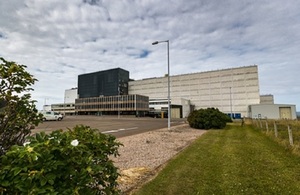
Prototype Fast Reactor sodium tanks

News story

At approximately 8:00pm on 20 April, site emergency personnel responded to a call at the sodium storage tanks at the Prototype Fast Reactor complex.

A planned reaction of material inside a tank resulted in an excursion, causing the release of a small amount of caustic liquor.

No-one was injured and damage was confined to components in the tank. We believe the environmental impact is low. Emergency personnel kept the tank under observation as a precaution.

SEPA and ONR have been informed of the occurrence, and DSRL today is commencing its own investigation of the circumstances.

Published 21 April 2022


G7 Finance Minister and Central Bank Governors Statement on Russia´s war of aggression against Ukraine

We, the G7 Finance Ministers and Central Bank Governors, met in Washington D.C. on 20 April 2022 to discuss Russia´s war of aggression against Ukraine, the tragic loss of life resulting from the war, as well as its global economic impact.

We are united in our resolve to restore peace and stability and uphold international law as well as in our unwavering commitment to international cooperation and multilateralism. We strongly condemn Russia’s unprovoked and unjustifiable war of aggression against Ukraine, which is a blatant violation of the fundamental principles of sovereignty, territorial integrity and international peace and security. This condemnation is shared by 141 countries at the United Nations and was emphasised by most G20 members this morning. Russia must immediately comply with the legally binding order of the International Court of Justice to suspend the military aggression that it commenced against Ukraine on 24 February 2022. Further, we urge Russia to withdraw completely its military forces and equipment from the entire territory of Ukraine within its internationally recognised borders. We join our Leaders and Foreign Ministers in their statements of 7 April 2022 in condemning in the strongest terms the appalling atrocities perpetrated by Russian armed forces.

International organisations and multilateral fora should no longer conduct their activities with Russia in a business-as-usual manner. We will work closely with our partners to act as appropriate, based on shared interests, as well as rules and regulations of respective institutions. As such, we regret participation by Russia in international fora, including G20, International Monetary Fund and World Bank meetings this week.

In the presence of Ukrainian Finance Minister Sergii Marchenko, we expressed our unwavering support for and heartfelt solidarity with the Ukrainian people and government. We continue to stand with Ukraine.

Building on the G7 Finance Ministers´ statement of 14 February 2022, together with the international community we have provided and pledged considerable additional support exceeding 24 billion US dollars for 2022 and beyond, both in financial and material terms. This comes on top of the economic support provided since 2014 until 2021, which exceeds 60 billion US dollars. Against the background of the ongoing brutal Russian aggression, the accompanying suffering of the Ukrainian population, and the continued destruction of the country itself, we are prepared to do more as needed. It is also essential that we continue to closely coordinate our support to Ukraine and its neighbouring countries. We commend the international financial institutions, including the International Monetary Fund and the World Bank, for the provision of critical, urgent financial assistance to Ukraine. We call on all countries and international organisations to join our efforts to ensure adequate support for Ukraine in meeting its immediate needs and rebuilding its future. In this regard, we welcome the establishment of the International Monetary Fund’s Multi-Donor Administered Account for Ukraine and the European Union announcement to develop a Ukraine Solidarity Trust Fund. We support the World Bank Group´s support package to Ukraine and the European Bank for Reconstruction and Development´s Resilience Package.

We have acted in close coordination and alongside other partners to increase Russia´s costs of its war by isolating Russia from the global economy. As evidenced by the G7 Leaders Statement of 7 April 2022, we continue to take coordinated action, including with our partners across the world, responding to the ongoing escalation to further raise the cost of this war for Russia. We will sustain and increase our coordinated pressure for as long as necessary and continue to urge other countries to support our efforts.

We imposed significant sanctions on Russia in direct response to its invasion of Ukraine and will fully implement and enforce the economic and financial measures taken as a result. Our sanctions are already having the intended massive impact on the Russian economy, which is likely to contract significantly this year. The Russian stock market has lost over a quarter of its value and had to remain shut for almost a month; hundreds of international companies are withdrawing from Russia and investment is drying up; inflation in Russia has increased; and Russian imports are declining with a knock-on impact on Russia´s long-term growth prospects. The significant long-term hit to the Russian economy will become even clearer over time. We will continue to closely monitor the effects of sanctions. We will also continue to work closely together and with our partners to enforce our sanctions and prevent any attempts to evade, circumvent or backfill sanctions.

President Putin, his government and supporters, and the enabling Belarusian regime, bear full responsibility for the social and economic consequences of the war. We designed our sanctions in a targeted way to minimise harm for third countries and the global economy and we have excluded key agricultural products and humanitarian necessities from sanctions, ensuring the availability of food stuffs, medicines and medical devices as well as enabling telecommunication services to support the flow of information.

The multilateral Russian Elites, Proxies, and Oligarchs (REPO) Task Force has taken up its work to coordinate and support our action to find, restrain, freeze without delay and, where appropriate and possible, seize, confiscate or forfeit the assets and economic resources of those individuals and entities who have been sanctioned in connection with Russia’s unjustified and unprovoked invasion of Ukraine.

All G7 economies have undertaken concrete steps to reduce imports of Russian energy supplies. We will continue to coordinate closely to enhance our energy security and to secure a stable and sustainable energy supply. This crisis reinforces our determination to meet the goals of the Paris Agreement and of the Glasgow Climate Pact, including by accelerating the reduction of our overall reliance on fossil fuels and our transition to clean energy.

We are strongly committed to not conducting government-to-government financial transactions with Russia, including voluntary trading in Special Drawing Rights, and call upon other countries to join us in further limiting Russia’s ability to finance its unprovoked and unjustifiable war of choice against Ukraine. Russia must not obtain financing from the international financial institutions, including the International Monetary Fund and the World Bank. We welcome the decision by the European Bank for Reconstruction and Development to suspend the access by Russia and Belarus to its resources.

We, together with like-minded partners, remain committed to addressing the economic challenges caused by Russia´s war of aggression against Ukraine. Russia’s ruthless actions are causing substantial increases in commodity and food prices and are disrupting the global economy more broadly at a time when we were already facing the challenges of an uneven recovery, elevated levels of inflation and reduced policy space. The war is directly undermining Ukraine´s economy and ability to export, in particular agricultural products, is disrupting key supply chains and transport links and is impeding Russia´s own exports. The longer Russia and those enabling Russia allow the aggression to continue, the higher the global economic cost will be.

The economic costs of Russia´s military aggression will be felt disproportionately by vulnerable groups across all economies and particularly by the most vulnerable countries, given already elevated debt levels following the pandemic. Higher food prices as a result of the war are leading to rising food insecurity. A further tightening of global financial conditions could exacerbate financial vulnerabilities, particularly in emerging and developing economies.

We stand in solidarity with all those across the world who are having to bear the rising price of President Putin’s war of choice against Ukraine. The global community has worked very hard to develop and maintain the global financial safety net. We support the use of all available instruments to the benefit of vulnerable countries that suffer from a crisis not of their own making. As requested by our Leaders, we will work with our partners to address the consequences of the current crisis on food security through a joint G7 effort. We call on the international financial institutions to urgently bolster support for food security and agricultural production and provide support to the most vulnerable countries. We are committed to addressing food insecurity, keeping markets open, and enhancing the resilience of the global economy, notably including agricultural and energy markets in line with climate and environmental goals. We are closely monitoring developments in global financial markets, including those for commodities, which have been volatile as a consequence of uncertainty created by Russia´s war against Ukraine. We will continue to stay vigilant to global economic risks and stand ready to act jointly where appropriate to support resilience, ensure financial stability and mitigate spillovers.


Bumper awards for Dstl’s world-leading science

The Ministry of Defence’s (MOD) Chief Scientific Advisor (CSA) Professor Dame Angela McLean has awarded the latest CSA Commendations at a special ceremony which took place at the MOD’s headquarters, in London.

The awards recognise exceptional contributions made by individuals and teams working in science and engineering across defence.

While there were numerous awards across the MOD, the Defence Science and Technology Laboratory (Dstl) was presented a significant number of awards for 2020 and 2021, with a special Organisational Award recognising hundreds of individuals across Dstl who had been involved in supporting the COVID-19 pandemic effort.

Colleagues provided support to defence, the health services, and partners across government who sought out Dstl’s scientific expertise and advice to lead and help combat coronavirus and protect the health of UK citizens.

Dstl’s Chief Executive Paul Hollinshead said:

I’m so proud that Dstl’s support has been recognised in this way. Dstl’s scientific excellence helped to maintain defence outputs, support the nation’s health response and the government’s decision-making, as well as increase the fundamental scientific understanding of the virus itself.

More than 350 scientists worked specifically on a wide variety of projects to support the fight against COVID-19, from home, on-site, or deployed into partner organisations across the UK.

MOD’s CSA Professor Dame Angela McLean said:

I’m delighted to see Dstl so well represented at the CSA awards both this year and last year. I was particularly pleased that Dstl’s many important contributions to the COVID response were recognised. It was my own personal experience that their work was essential.

There were a number of individual presentations including to Dstl’s Sally Davies who received an award for her work in diversity and inclusion, and Dstl’s Jim Maltby for his work in communicating science and engineering.

Sally’s citation highlighted how she worked tirelessly with others to create a diverse and inclusive environment and remains determined to make change happen, remaining professional and committed to the cause of acceptance for all.

Jim initiated and led the delivery of the Virtual Reality Museum of the Future and other tools, from having the bright idea in the first place, to working closely with industrial partners and games designers to make it a reality.

Dstl represents one of the most significant sources of science and engineering expertise in the UK. Our science and engineering community is a significant asset to MOD and provides vital contributions to UK defence and security in supporting operations, UK prosperity and developing affordable, winning-edge capability.

Find out more about Dstl and our science and technology capabilities, as well as opportunities to join our outstanding workforce.


Get finance flowing for greater climate action – COP President

  • COP President Alok Sharma will attend World Bank and IMF Spring Meetings in Washington DC

  • He will highlight the vital role of finance and energy transition partnerships in tackling climate change and delivery of commitments made at COP26

  • While in the US, Mr Sharma will also speak to students and climate activists at Tufts University in Boston on the vital role of youth activists in global efforts to tackle climate change

Countries must get finance flowing for greater climate action to keep 1.5C in sight, COP26 President Alok Sharma will urge leaders at this week’s World Bank and International Monetary Fund Spring Meetings.

The COP26 President is in the United States for the Spring Meetings, a key moment for the development finance community and one of the pivotal events for the UK’s COP Presidency finance work ahead of COP27 in Egypt.

To do this, Mr Sharma will argue the international community must move towards an energy secure and net zero future which avoids the worst impacts of climate change.

Russia’s illegal and brutal invasion of Ukraine has added renewed urgency to the need for shared global action to phase out fossil fuels and accelerate the low carbon transition.

In meetings with finance ministers, including ministers from India, Indonesia and South Africa, Mr Sharma will outline the role developed countries have to play to urgently meet the $100 billion previously pledged as well as doubling the finance for adaptation to enhance financial support from the effects of climate change for the most climate vulnerable countries.

Mr Sharma will meet leaders from Multilateral Development Banks (MDBs) and the US Special Presidential Envoy for Climate John Kerry to outline why a coherent approach is needed between governments, MDBs, and the private sector to avoid unnecessary disbursement delays and bureaucracy so finance can reach those that need it most quicker.

He will also promote the South Africa Just Energy Transition Partnership, announced at COP26, as an example of a new track to deliver climate and development finance globally, accelerating the energy transition in the highest emitting countries, expanding low carbon opportunities in emerging economies and protecting the vulnerable by reducing emissions.

Mr Sharma said:

The Russian President’s illegal and brutal war has been a wake up call to the world, demonstrating to countries the vital importance of making the transition to homegrown green energy and embracing the economic opportunities it offers.

Across the world we see renewables creating good, green jobs and connecting people to reliable low cost power for the first time.

What we now need to do is support developing countries to make this transition. The South Africa Just Energy Transition partnership is a great example of this.

I am here in Washington DC to push further to see whether we can get further such deals announced by COP27. If we want to make the goal of limiting global warming to 1.5C a reality, we have to get finance flowing and push developed countries, MDBs and private finance to deliver on their finance commitments.

Following the Spring meetings, Mr Sharma will travel to Boston to speak with students and climate leaders at The Fletcher School at Tufts University on the vital role youth and climate activists played in CO26 and how the young leaders of tomorrow are vital in global efforts to tackle climate change.

  • COP26 President Alok Sharma will speak to an audience of climate leaders, students, faculty, and the community at The Fletcher School at Tufts University, Boston in a conversation with Dean Rachel Kyte. This will be at 1200 Boston Time (1700 BST) on Saturday April 23, 2022 and broadcast via Fletcher’s YouTube channel


PM announces £1bn new commercial deals on landmark India visit

  • PM welcomes more than 11,000 new jobs created through huge new UK-India trade and investment deals as he begins two-day visit
  • PM will visit a new factory, university and cultural sites in Gujarat and announce new collaboration in AI and technology
  • On Friday, he will travel to New Delhi for talks with Prime Minister Modi on economic, security and defence collaboration

Prime Minister Boris Johnson will announce a raft of commercial agreements and hail a new era in the UK and India’s trade, investment and technology partnership, as he arrives in Gujarat today [Thursday] for the start of a two-day visit to India.

The Prime Minister will use his visit to India to boost our collaboration with one of the world’s fastest growing economies, slashing trade barriers for UK businesses and driving jobs and growth at home.

UK and Indian businesses will confirm more than £1 billion in new investments and export deals today in areas from software engineering to health, creating almost 11,000 jobs across the UK. That includes:

  • A new Switch Mobility electric bus R&D centre in the UK and the opening of their Asia Pacific Headquarters in Chennai, generating over 1000 jobs in the UK in India;
  • Investment from leading Indian manufacturer Bharat Forge and electric truck maker Tevva Motors to expand to a new site in the south-east and create 500 new jobs;
  • Indian software company Mastek investing £79mn to create 1600 jobs over the next three years all over the UK;
  • Business consultancy FirstSource opening new offices in South Wales, the Midlands and cities in the North-East and North-West.
  • Hertfordshire-based firm Smith & Nephew agreeing a major export deal to sell robotic surgical systems in India, and Northamptonshire business Scott Bader opening a new resins factory to supply top renewable energy companies in south-east Asia.

The Prime Minister will also welcome OneWeb signing a historic contract for satellite launches with New Space India Limited, the commercial arm of the Indian Space Research Organisation. OneWeb is an innovative UK-based satellite communications company, which the Government has invested in put the UK at the forefront of rapidly evolving space technologies. This agreement with India is a significant development for the company’s operations.

Prime Minister Boris Johnson said:

As I arrive in India today, I see vast possibilities for what our two great nations can achieve together. From next-generation 5G telecoms and AI to new partnerships in health research and renewable energy – the UK and India are leading the world.

Our powerhouse partnership is delivering jobs, growth and opportunities for our people, and it will only go from strength-to-strength in the coming years.

The Prime Minister will visit a new factory being opened by a top British firm in Gujarat, as well as a biotechnology university working in collaboration with the University of Edinburgh.

The UK will confirm major new science and tech collaboration, including a Digital Health partnership and a joint investment fund for Indian deep-tech and AI start-ups, supported by the UK and Indian governments; new AI scholarships for Indian students jointly funded by the UK Government’s Chevening programme and India’s Adani Group; and a £6m investment from AI healthcare specialists Qure-ai to open a Centre of Excellence in the UK.

As he moves on to New Delhi on Friday, the Prime Minister will also use this week’s visit to drive progress in negotiations on the landmark UK-India free trade agreement, which is expected to help double our trade and investment by 2030. Negotiating teams will hold their third round of formal talks in India next week.

Work is already progressing on cutting red tape for businesses following the UK-India Enhanced Trade Partnership launched by both Prime Ministers last year, and today our governments will announce new measures to make it easier to export UK-made medical devices to India. This will support UK jobs and create opportunities for British med-tech companies like Redcar-based Micropore Technologies to sell their lifesaving products in India, an import market worth £2.4bn.