News story: £20 million for D-Day landings memorial

The British servicemen and women who gave their lives in the D-Day landings and in the Normandy Campaign will be commemorated with a new memorial, supported by £20 million, the Prime Minister and Chancellor today announced.

The monument will be built at the site of the fierce fighting during and after D-Day. For the first time, a memorial will carry the names of the estimated 21,000 members of the British Armed Forces and Merchant Navy, plus those from other nations who fought directly alongside them, who lost their lives in the D-Day landings and the Normandy campaign.

As well as commemorating those who died in Normandy, the memorial will also pay tribute to several thousand sailors and airmen who were lost at sea, and those who died from their wounds after being brought back to the UK for treatment.

The memorial will be unveiled in Normandy on 6th June 2019 – the 75th anniversary of D-Day – and many of the remaining veterans, and the families of those who fought, are expected to be present for a parade at the D-Day landing grounds.

The Normandy Memorial Trust, supported by The Royal British Legion, has been the driving force behind the project and will now launch a fundraising appeal to build on the government’s contribution.

The £20 million government funding will come from LIBOR fines levied on the banking industry.

The Chancellor is planning to meet many of the Veterans on the eve of their departure at Southwick Park, outside Portsmouth, in June before they return to the Normandy Beaches to pay their respects to those who did not return home. Southwick Park is home to the historic D-Day Map Room and was the Supreme Headquarters Allied Expeditionary Force, from where the operation was planned and coordinated by General Montgomery and General Eisenhower.

The design and location of the memorial will be confirmed in due course by the Trust.

George Batts MBE, Legion d’Honneur, former National Secretary of the Normandy Veterans’ Association said:

It has been the dream of Normandy Veterans for many years for there to be a British memorial in Normandy dedicated to all those from the British Armed Forces who lost their lives in the D-Day Landings and in the Normandy Campaign which followed. This generous commitment by Her Majesty’s government will finally enable us to realise this ambition in time for the 75th anniversary of D-Day in June 2019.

Prime Minister Theresa May said:

We must never forget the courage, sacrifice and selflessness of the British servicemen and women who gave their lives in the D-Day landings. Located close by the beaches where they began the liberation of Europe, the Normandy Memorial will be a fitting tribute to them and a place where people can gather to reflect on their extraordinary achievements. Its unveiling on the 75th anniversary of the D-Day landings in 2019 will provide a timely reminder that we should never take our freedom for granted.

Chancellor Philip Hammond said:

This will be a fitting reminder of the ultimate sacrifice made by British men and women on D-Day for the freedoms we enjoy today. We have a duty to ensure their names will be remembered for generations to come. It is only right we support this project as we look forward to the 75th anniversary of the D-Day landings in 2019.


Press release: Northern Ireland Assembly election

Secretary of State for Northern Ireland, Rt Hon James Brokenshire MP said:

This election has demonstrated the clear desire by the overwhelming majority of people in Northern Ireland for inclusive devolved government. I congratulate all of those who have been elected.

Everyone now has a shared responsibility to engage intensively in the short period of time that is available to us, to ensure that a strong and stable administration is established.

Northern Ireland has made great strides forward over the past two decades. All of us must continue the work of building a stable, peaceful and prosperous Northern Ireland that works for everyone, based on the strong foundations of the Belfast Agreement and its successors.

It is with this positive intent that the UK Government approaches the days ahead. I will be speaking to party leaders during the course of today and remaining in contact with the Irish Government.


News story: Foreign Secretary to visit Russia

The Foreign Secretary has accepted an invitation from Russian Foreign Minister Sergey Lavrov to visit Moscow in the coming weeks.

The Prime Minister and the Foreign Secretary have made clear that our policy towards Russia is to ‘engage but beware’ and the visit is entirely consistent with this approach.

Discussions will focus on the UK-Russia relationship and current international issues including Syria and Ukraine, where we continue to have significant differences. This is not a return to business as usual and the Foreign Secretary will continue to be robust on those issues where we differ.

We have always been clear that the UK will engage with Russia where it is in our national interest to do so.

Details of precise timings will be confirmed in due course. A potential visit has been in the pipeline for some time, with the Prime Minister and President Putin discussing this when they met in China in September 2016.


GCSE 9 to 1 grades

The new GCSE 9 to 1 grades

The new 9 to 1 GCSE grades

The vast majority of students taking GCSEs in England in 2019 will receive grades from 9 to 1. Students taking 5 lesser-taught GCSE subjects (Biblical Hebrew, Gujarati, Persian, Portuguese and Turkish) will receive letter grades in 2019 before they become numerical (9 to 1) in 2020.

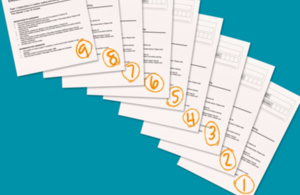
9 things to know about the new GCSE grades

  1. GCSEs in England have been reformed and are graded with from 9 to 1, with 9 being the highest grade.
  2. GCSE content is more challenging.
  3. Fewer grade 9s are be awarded than A*s.
  4. The new grades are being brought in to signal that GCSEs have been reformed and to better differentiate between students of different abilities.
  5. In the first year each new GCSE subject has been introduced, broadly the same proportion of students get a grade 4 or above as would have got a grade C or above in the old system.
  6. These changes are only happening in England. Wales and Northern Ireland are not introducing the new 9 to 1 grading scale as part of their changes to GCSEs.
  7. English language, English literature and maths were the first to be graded from 9 to 1 in 2017.
  8. Another 20 subjects had 9 to 1 grading in 2018, with most others following in 2019. During this transition, students received a mixture of letter and number grades.
  9. You can see how the 9 to 1 grades compare with the A* to G scale in our GCSE grading postcard.

GCSE science

GCSEs for science have changed in England. Students taking separate science GCSEs now get a grade from 9 to 1 in each subject. Combined science draws content from all three subjects and students receive an award worth two GCSEs, consisting of two equal or adjacent grades.

5 things to know about combined science GCSEs

  1. Students taking separate science GCSEs get a grade from 9 to 1 for each subject, with 9 being the highest grade.
  2. Students studying combined science receive an award worth two GCSEs, consisting of two equal or adjacent grades from 9 to 1 (9-9, 9-8, 8-8, 8-7, 7-7…to 1-1).
  3. If the numbers are different, the highest number will always be reported on the left.
  4. Students do at least 8 practical activities (16 for combined science) covering specific apparatus and techniques.
  5. Exam questions about practical work make up at least 15% of the total marks for the qualification.

More information

We’ve got lots of information to help students, parents, teachers and businesses understand the changes. You can:

And if you’ve got any questions, drop us an email at public.enquiries@ofqual.gov.uk or give us a call on 0300 303 3344.

Published 3 March 2017
Last updated 6 August 2019 + show all updates

  1. Updated to reflect that we are in the third year of GCSE reforms.
  2. Article now shows the updated video.
  3. Added results day guides for students and parents.
  4. First published.


News story: Ofqual conference 2017 – presentations from the day

The annual Ofqual conference is for awarding organisations we regulate, these are the presentations from the day.

Don’t include personal or financial information like your National Insurance number or credit card details.