‘Holistic thinking’ needed for peace, development in Lake Chad region – Deputy UN chief Mohammed

9 March 2017 – Highlighting the multifaceted nature of the crisis in Africa’s Lake Chad Basin, the deputy United Nations chief underlined the need for a holistic approach that includes responding to the Boko Haram as well as closing the gap between humanitarian assistance and development interventions.

&#8220Lasting recovery will entail supporting reconstruction of schools, health centres, and reviving essential infrastructure […] that support the necessary livelihoods,&#8221 Amina Mohammed, the UN Deputy Secretary-General, told the Security Council today.

&#8220Effective prevention of future radicalization and violence will also entail comprehensive responses that benefit all members of society,&#8221 she added.

Ms. Mohammed’s briefing follows last week’s visit of the Security Council to the region and a global UN-backed conference to raise funding to sustain critical aid operations in the region, held on 24 February.

According to estimates, more than 10 million people in the Lake Chad Basin are in need of humanitarian assistance, including more than seven million needing food support, with 515,000 children affected by severe acute malnutrition.

Noting the response by UN agencies to support the local populations and the contributions pledged by countries at the Oslo Humanitarian Conference, the Deputy Secretary-General said that the needs outstripped the resources and urged UN Member States to ensure that the $1.5 billion humanitarian appeal is funded fully.

Speaking on the region’s security challenges and the activities of Boko Haram, Ms. Mohammed informed the Council of UN’s work to document information on human rights abuses, as well as its assistance to affected countries to ensure that their counter-terrorism efforts fully complied with international human rights, humanitarian and refugee laws.

In particular, she spoke of the plight of women affected by Boko Haram, many of whom are still displaced in camps, detained by the authorities, or are struggling to reintegrate into their communities.

&#8220We also need to scale up efforts to provide access to sexual and reproductive health and psychosocial support and livelihood support for female-headed households,&#8221 she said, noting the need to ensure that women have key roles in the response &#8211 from food distribution and camp management to all efforts to counter violent extremism, restore state authority and build peace.

Further in her remarks, Ms. Mohammed also underlined the need to address the root causes of the crisis to achieve durable peace and of the importance of the 2030 Agenda for Sustainable Development for the region.

&#8220My single clear message today is that the solution lies in holistic thinking,&#8221 she noted, hailing the role of the African Union and the continent’s regional organizations to peace, security and the integrated implementation of the 2030 Agenda for sustainable development and Africa’s own Agenda 2063.


Cliff walkway decorated with 3D images

Photo taken on March 7, 2017 shows 3D images created on the walkway encircling the vertical cliffs in Shiniuzhai National Geological Park in Pingjiang County, Central China’s Hunan province. Seven painters worked to complete the drawing on a 106-meter-long walkway. [Photo/Ecns.cn]


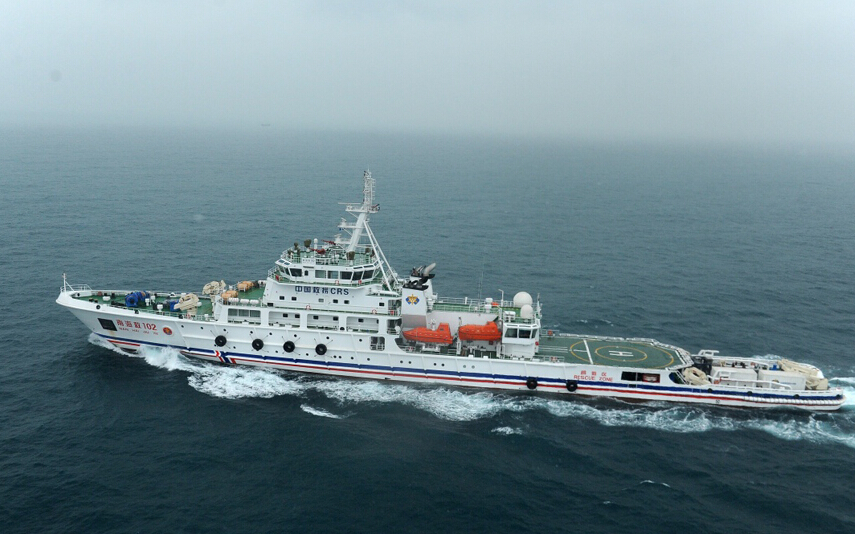
Most advanced rescue ship put into use in S. China Sea


Nanhaijiu 102, China’s most advanced rescue vessel put into service on Wednesday in the South China Sea. [Xinhua photo]

China’s first vessel capable of conducting rescue in deep, open water was delivered and put into service on Wednesday in the South China Sea.

The ship, Nanhaijiu 102, is the most advanced rescue vessel in the area and will play a role in emergencies, said the Ministry of Transport.

An all-weather, high-powered rescue ship designed and built by China, is 127 meters long and 16 meters wide, with displacement of 7,300 tonnes and range of 16,000 nautical miles.

Carrying a towing system and autonomous underwater vehicle that can dive as deep as 6,000 meters, the ship is the country’s first rescue ship that can conduct air, sea and underwater searches at the same time.

The ministry said Nanhaijiu 102, which can rescue 200 people at a time, is designed for bad sea conditions including 12th grade waves and is suitable for the refueling and landing of helicopters.

China has 74 special rescue ships, among which 31 are in southern sea areas. In addition, the country has 20 rescue helicopters, according to the ministry.


News story: Midlands Engine to roar ahead with ambitious new strategy

The strategy is published today (9 March 2016), as the Chancellor Philip Hammond visits the region the day after delivering his first Budget.

The Midlands Engine Strategy includes significant investment in skills, connectivity and local growth, while it sets out how the government plans to drive the region’s huge potential and promote it to the world.

This builds on plans set out in the government’s modern Industrial Strategy which includes the offer of additional support for industries – including those in the Midlands – through sector deals. The government has also set out a series of reforms to technical education, backed by an investment of more than £500 million, to ensure young people receive the training they need to take on the high-paid, high-skilled jobs of the future.

This new strategy sets out how the government will:

  • Invest £392 million in the Midlands from the Local Growth Fund. This cash will support innovative projects including creating a global hub for space technology in Leicester and it will also be spent on transport improvements including £25 million to tackle congestion and improve major employment sites in the Black Country and £12 million to improve road connections around Loughborough. This is in addition to the £1.5 billion of Local Growth Fund investments in the Midlands that have already been announced.
  • Invest £20 million in a flagship Midlands Skills Challenge to improve employment prospects for people living and working in the region. This will include providing additional work coaches, language training and testing innovative approaches to lifelong learning.
  • Commit an additional £4 million to support the operation of the Midlands Engine Partnership over the next two years. The Midlands Engine Partnership brings together Local Enterprise Partnerships, local authorities, businesses, academic institutions and others into a voluntary, regional partnership that will support growth across the Midlands.

The government is also welcoming today the strategy being published by Midlands Connect and has already confirmed £17 million of funding to develop its proposals, which include the potential for up to ten additional trains per hour into central Birmingham.

Today’s announcements are all part of plans to make the Midlands an engine for economic growth for the whole country. The Midlands already has huge economic potential – home to more than ten million people with an economy worth £217.7 billion – 13% of the UK’s annual output. The government believes there are huge opportunities to build on this.

From May this year, Birmingham and the wider West Midlands Combined Authority area will benefit from a directly elected Mayor able to use powers over skills, transport and planning to drive local growth and HS2 will place the Midlands at the heart of England’s high speed rail network.

The strategy also focuses on promoting the Midlands to the world and today’s strategy includes the formation of a Midlands Trade and Investment Programme, which will include events in Europe, North America, Asia, Africa and the Middle East. Coinciding with this, the Department for International Trade is today hosting the inaugural Midlands Engine Trade Summit bringing together up to 400 delegates from businesses from across the region to help them seize global opportunities and grow their businesses.

Quality of life is also placed at the heart of today’s plans with the Local Growth Fund investing £8 million to create a new world class teaching University in Hereford, £12 million to develop Black Country Garden City, offering new locations for high quality housing development and £6 million to catalyse the regeneration of Derby City Centre.

Chancellor Philip Hammond said:

The Midlands has enormous economic potential and it is more important than ever that we now build on its existing strengths to make sure it fulfils it.

The Midlands Engine Strategy is an important milestone, setting out the concrete actions we are taking, where we are not only investing in what it does well but also tackling some of the long standing productivity barriers in the region including skills and connectivity.

The Midlands has enormous economic potential and as we lay the foundations of a stronger, fairer Britain outside the EU it is more important than ever that we now build on its existing strengths to make sure it fulfils it.

The Midlands Engine Strategy is an important milestone, setting out the concrete actions we are taking, where we are not only investing in what it does well but also tackling some of the long standing productivity barriers in the region including skills and connectivity.

It is a vital part of the government’s work to create an economy that works for everyone, and all parts of the country.

Communities Secretary and Midlands Engine Ministerial Champion Sajid Javid said:

Backed by millions in investment, this new strategy will help create more jobs and boost skills in the region. It will also showcase to investors here and abroad everything the Midlands Engine has to offer.

Midlands Engine Partnership chairman Sir John Peace said:

All parts of the Midlands already do a great job energising growth, creating jobs, investing in infrastructure, helping people to acquire valuable skills, and promoting their particular assets to attract investment and visitors.

This strategy represents a clear footprint for the Midlands Engine empowering us to think bigger, and work even closer together, across local economies and on a scale that makes sense in global markets.

Later this year, we will respond to the government’s strategy by publishing an ambitious vision and action plan so we, together with government, succeed in unlocking the Midlands’ great potential.


£32million to reduce flood risk to over 2,000 homes

The funding, which is allocated for 2017-18, is the largest capital budget for flood risk management  in recent years and demonstrates the priority the Welsh Government places on supporting communities.

Later today, the Cabinet Secretary will update the National Learning to Live with Flooding in Wales conference on the Welsh Government’s work to support those living at risk of flooding.

During her speech the Cabinet Secretary will also confirm over £144million capital funding for flood risk management, in addition to the £150million coastal programme, over the five year Government term. Of this, £5million will support design and development work for coastal risk management projects.

The Cabinet Secretary will also use the speech to announce that £1million of the flood budget will be ring-fenced each year for the next four years to support smaller scale works and maintenance to be carried out by Local Authorities.

This follows the successful trial of a grant scheme to support smaller works, which provided funding for 73 projects to reduce risk to 700 properties across Wales. This demonstrates it is not just big expensive flood schemes which make a difference to communities.

Speaking ahead of today’s conference, the Cabinet Secretary said:

“Flooding can have a devastating impact on the lives of those affected. We know that climate and weather patterns are continuing to change and as a result flooding is likely to become more frequent. We therefore need to do all we can to reduce the risk to our communities while helping them to adapt to the risks they face which are beyond control.

“I am pleased to confirm we will be providing £32million in 2017-18, our largest capital budget in recent years, to help reduce the risk of flooding to thousands of homes and businesses. This highlights the priority we place on protecting and strengthening communities against flooding.”

Changes will also be made to make sure focus and funding is going to the areas most at risk. Future flood programmes will be prioritised by making use of the Communities at Risk Register alongside local knowledge and data of historical flood events.