The devastating impact of Putin’s war of choice on the children of Ukraine: UK statement to the OSCE

Thank you, Mr Chair. Earlier this week the esteemed Norwegian Ambassador hosted an important Human Dimension Committee meeting on children and armed conflict. We heard from varied speakers and delegations about the appalling suffering of Ukraine’s children as a result of President Putin’s war of choice. This is what I would like to focus on today.

Since we last met, we have been horrified by the ongoing atrocities perpetrated Russia on Ukrainian soil, including recent attacks on Odesa resulting in civilian casualties. This includes the reported death of a three-month old baby, killed by a missile attack in Odesa. Sadly this is just one example among far too many, including the horrors seen in Irpin and Bucha.

The ongoing impact of Russia’s illegal and unprovoked war on Ukraine’s 7.5 million children – on their health, education and family life – is harrowing. On 24 March, UNICEF reported that in one month of war, 4.3 million children had been displaced; this represents more than half of the estimated child population of Ukraine. In that month, according to OHCHR, at least 78 children were killed and 105 injured. The true toll was likely far higher. On 22 April, Ukraine’s Prosecutor General’s Office stated that 208 children had been killed and 386 children injured since the war began. We are grateful to Prosecutor General Venediktova for her efforts to raise the profile of how children have been affected by the war.

Russia continues to launch its indiscriminate attacks on critical civilian infrastructure, children’s homes, schools, hospitals, and the water systems and power plants they rely on. The places where children and civilians shelter from Russia’s onslaught of violence continue to be damaged and destroyed.

Ukraine’s Ministry of Education and Science has reported that nearly 1,500 education institutions have suffered bombing and shelling, and 102 of them have been destroyed completely. According to Save the Children, this amounts to an average of 22 schools a day coming under attack in Ukraine since the start of the war, with military operations disrupting the education of 5.5 million children remaining in the country. In areas temporarily under the control of Russian armed forces there are worrying reports of Russian troops interfering in the education of Ukrainian children – putting pressure on teachers to teach in Russian and according to the Russian curriculum.

Russia’s actions have harmed families’ livelihoods and economic opportunities, leaving many parents without sufficient income to meet their basic needs and unable to provide adequate support for their children. As we raised last week, many Ukrainians – including children – have been forcibly deported against their will to Russia. The social and psychological trauma experienced by children will be felt for years to come.

The UK is proud to be playing a leading role in the humanitarian effort in Ukraine, delivering vital equipment and life-saving medical aid to those most in need, including a focus on children. The total offer of humanitarian and economic support to the current Ukraine crisis is around £400 million. We are matching pound for pound the public’s first £25 million for the DEC Ukraine Humanitarian Appeal. And the Prime Minister announced earlier in the week that we are providing new ambulances, fire engines and funding for health experts and life-saving medical supplies.

Mr Chair, the facts are clear: President Putin’s war is a war that children are paying the price for. The international community must come together and act together to hold Russia to account for its crimes. The Russian government must be held responsible for its actions and end this suffering. It must end its attack on civilians in all their forms, pull back their troops from the entire territory of Ukraine and stop this war. The UK remains unwavering in our support for Ukraine’s sovereignty and territorial integrity, within its internationally recognised borders. We will not rest until President Putin’s aggression fails in Ukraine. We stand with Ukraine.

Thank you. I kindly request that you attach this statement to the journal of the day.


Head of OSCE Mission to Moldova: UK response, 28 April 2022

Thank you Mr Chair and welcome, Dr. Neukirch to the Council. I join other speakers in thanking you and your team in Moldova for your work during this turbulent time. Russia’s unprovoked and unjustified invasion of Ukraine has had an impact on all of us, but particularly on Ukraine’s neighbours. We applaud all those in Moldova who have supported over 400,000 Ukrainian refugees who have crossed the border since the commencement of Russian aggression in Ukraine. Thank you also for your assistance and that of your team to Special Monitoring Mission (SMM) colleagues evacuating from Ukraine. In addition, we welcome the Mission’s excellent response to the invasion, including significantly increasing monitoring visits to the security zone.

Thank you also for your update on the four incidents in Transnistria on 25th, 26th and 27th of April. We share your deep concern and look forward to a full, transparent explanation. We condemn any deliberate destabilisation of the security situation in the security zone and we call on sides use their influence to help maintain peace and stability. It is critical to prevent escalation.

We welcome the visits last month to the Republic of Moldova by the Polish Chair in Office Foreign Minister Rau and OSCE Secretary General Helga Schmid and the upcoming visit by the OSCE Polish Chair’s Special Envoy Dmochowski and Special Representative Mayr-Harting.

Although much of our attention is focused on the impact of the war in Ukraine, it is important not forget the needs of the Moldovan people and the government’s reform agenda. In April during the Moldova Support Platform Conference, the UK along with Romania committed to co-lead on the anti-corruption theme, while the UK pledged £12 million in Good Governance Funding over the next three years to support Moldova. We are pleased to see that the OSCE Co-ordinator for Economic and Environmental Activities, Mr Igli Hasani, will work with us on that initiative.

We welcome continued discussions at working group level, including through the online format, and between the Chief Negotiators. Such ongoing co-operation builds trust and can lead to positive progress in other areas, including implementation of outstanding Berlin-plus package measures.

Dr Neukirch, we applaud your efforts to implement the Women, Peace and Security Agenda through initiating a capacity building project for female members of the Joint Expert Working Groups and with UN Women on the establishment of an information Women Advisory Board- featuring women’s voices and perspectives from across Moldova. The UK is delighted that our Embassy in Chisinau played a part in the initial analysis which contributed to development of this important project.

Whilst recognising that the current situation makes progress on the political “third basket” impossible, the United Kingdom continues to support the Permanent Conference on Political Issues (“5+2”) as the mechanism most conducive to a comprehensive, peaceful and sustainable settlement of the Transnistrian conflict based on the sovereignty and territorial integrity of the Republic of Moldova, within its internationally recognised borders, and with a special status for Transnistria.

The UK has regularly expressed its concern at the ongoing presence of the Operational Group of Russian Forces (OGRF) on the territory of the Republic of Moldova. Following attacks on Ukrainian sovereignty, we repeat and emphasise that concern today. We also take this opportunity to call on the Russian Federation to urgently formulate a proposal for resumption of the process of removal and destruction of ammunition from the Cobasna site. The UK affirms that this process must include the OSCE, in accordance with the 1999 Istanbul Declaration and subsequent extension of the mandate of the Mission to Moldova.

We are concerned at the legislative initiative taken by the de facto Transnistrian authorities which would make it a criminal offence for a resident of the Transnistrian region to petition Moldovan or international courts on alleged human rights abuses suffered in Transnistria. This measure goes against all human rights norms and should not be enacted.

Finally, I’d like to thank you, Dr. Neukirch for the professionalism and skill you have shown in leading the Mission during these extremely turbulent and times. We wish you all the very best in your future endeavours.

Thank you Mr. Chair.


New approach to import controls to help ease cost of living

The remaining import controls on EU goods will no longer be introduced this year, the government has announced today.

Instead, traders will continue to move their goods from the European Union to Great Britain as they do now.

Russia’s illegal invasion of Ukraine, and the recent rise in global energy costs, have had a significant effect on supply chains that are still recovering from the pandemic.

The government has therefore concluded that it would be wrong to impose new administrative requirements on businesses who may pass-on the associated costs to consumers already facing pressures on their finances.

The change in approach is expected to save British importers at least £1 billion in annual costs.

The Government will now review how to implement these remaining controls in an improved way. The new Target Operating Model will be based on a better assessment of risk and will harness the power of data and technology. It will be published in the Autumn and the new controls regime will come into force at the end of 2023.

This process will build on existing work already taking place as part of the 2025 Border Strategy, including on the UK Single Trade Window – a new digital platform that will help traders to more easily move goods globally. Our goal is to create a seamless new ‘digital’ border, where technologies and real-time data will cut queues and smooth trade.

The controls introduced in January 2021 on the highest risk imports of animals, animal products, plants and plant products will continue to apply alongside the customs controls which have already been introduced.

Minister for Brexit Opportunities, Jacob Rees-Mogg said:

Today’s decision will allow British businesses to focus on their recovery from the pandemic, navigate global supply chain issues and ensure that new costs are not passed on to consumers.

It’s vital that we have the right import controls regime in place, so we’ll now be working with industry to review these remaining controls so that they best suit the UK’s own interests.

We want the process for importing goods from the EU to be safe, secure and efficient and we want to harness innovative new technologies to streamline processes and reduce frictions. It’s precisely because of Brexit that we’re able to build this UK-focussed system

The UK Government is committed to ensuring the process for importing goods remains safe, secure and efficient and will harness innovative new technologies to streamline future processes and reduce frictions.

Our engagement with industry will be guided by these objectives, and will build on existing work already taking place, including on the UK Single Trade Window – a new digital gateway that will help traders to more easily move goods globally.

John Keefe, Director of Public Affairs. Eurotunnel said:

Eurotunnel supports this decision which will keep goods flowing seamlessly into the UK. It is good for traders as it reduces import declaration paperwork on food and perishables.

It is good for transporters as it increases fluidity at the border and it is good for consumers as it keeps the cost of living down.

Michael Schymik, International Director of SEF Langdon’s said:

The current paper-based SPS processes and procedures are unsuitable in a 21st century digital world.

This change in policy towards a smarter digital border by the UK Government will allow the free flow of safe food products into Great Britain.

The decision may lead to a return of more EU companies exporting to the GB market, increasing competition and ultimately lowering prices for the consumer.

Notes to editors:


PM meeting with President Ignazio Cassis of Switzerland: 28 April 2022

Press release

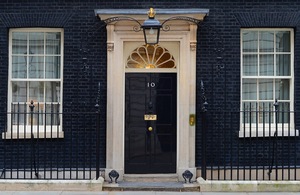
Prime Minister Boris Johnson hosted President Ignazio Cassis at Downing Street.

The Prime Minister hosted President Ignazio Cassis at Downing Street this morning to sign a new joint statement between the UK and Switzerland.

Discussing the two countries’ strong ties, the leaders agreed that the UK and Switzerland were science, trade and financial superpowers together, and pledged to accelerate work across all sectors.

The pair also agreed to work towards in-depth negotiations on an ambitious and enhanced Free Trade Agreement, and agreed to explore ways to simplify entry requirements between the two countries.

The leaders also discussed the ruthless invasion of Ukraine by President Putin’s forces, and how the UK and Switzerland could continue to apply financial pressure on the Russian regime.

The Prime Minister thanked President Cassis for his country’s support on sanctions against those associated with the Putin regime, and said the international community had to continue to support Ukraine during the protracted conflict.

The leaders agreed to stay in close touch in the coming months.

Published 28 April 2022


UK kickstarts work on new trade deal with Switzerland

  • UK working to negotiate new enhanced free trade agreement with fellow ‘services superpower’ Switzerland
  • Government launches eight-week consultation on new UK-Swiss FTA to seek views of UK businesses and public and shape negotiating objectives
  • New deal will take our relationship to the next level in industries of the future such as digital trade and innovative services

The UK has today (28 April 2022) kickstarted work for a new enhanced trade deal with Switzerland, after Prime Minister Boris Johnson hosted Swiss President Ignazio Cassis for bilateral talks in London.

The enhanced deal aims to boost two-way trade between two of the world’s biggest services superpowers through measures including breaking down barriers and opening up access for U.K. firms to the Swiss market.

The Department for International Trade is launching an eight-week consultation calling on businesses and the public for their views ahead of the start of negotiations.

Switzerland is already an important partner for the UK, with bilateral trade worth nearly £35 billion annually. Many UK businesses benefit from tariff free trade on most goods under our existing trade agreement rolled over from the EU, but the current deal does not cover services, which account for over half of our bilateral relationship.

As two services powerhouses globally renowned for their expertise, both the UK and Switzerland are keen to negotiate an ambitious, unprecedented free trade agreement that will boost both our economies and show the world what is possible between two like-minded and innovative democracies.

International Trade Secretary Anne-Marie Trevelyan said:

A new enhanced trade agreement with Switzerland is a huge opportunity to liberalise trade with our 10th largest trading partner and unlock new opportunities for our world-leading services sector.

As two services superpowers, we have a huge opportunity to negotiate a modern, ambitious, unprecedented deal that will boost both our economies and show the world what is possible between two like-minded and innovative nations who are firmly within Europe but outside of the EU.

In 2020, the United Kingdom was the second-largest exporter of services to the world, with exports worth £266.8 billion. Switzerland was 12th largest, with £89.6 billion.

This deal will help take our relationship to the next level in industries of the future such as digital trade, innovative services, and green growth – delivering higher-paying jobs across the country. It will support trade in vital industries of the UK economy, including finance, legal services, consultancy, the tech sector, and the creative industries, helping contribute to setting new rules and standards for digital trade in the 21st century.

CBI President Lord Bilimoria said:

That DIT is seeking inputs into enhancing the UK-Swiss FTA is to be welcomed, and the CBI looks forward to responding. The CBI-driven Joint UK-Swiss Bilateral Trade & Investment Council launched earlier this year identified significant opportunities to deepen the existing trading relationship, primarily by enhancing digital and services trade.

Alongside the ongoing dialogue on Financial Services, this consultation presents an opportunity to increase cooperation on issues ranging from customs, reducing complexity in short-term mobility and building cooperation on innovation through our world-class research institutions.

Managing Director, International Trade and Investment, TheCityUK Nicola Watkinson said:

As the first and third largest net exporters of financial and related professional services globally, the UK and Switzerland have a great deal to gain by setting a new gold standard for services trade between two sovereign nations.

In the UK, nearly half of these exports are generated outside London, in towns and cities right across the UK, so making progress with this agreement can deliver real benefits to local jobs and prosperity. In the long term, a free trade deal with Switzerland will complement wider progress towards mutual recognition, and can be used as the model for new-generation trade deals with other partners worldwide.

Background:

*The consultation can be accessed on the gov.uk website.