Minister Mordaunt speech to Belgian Trade Delegation led by HRH Princess Astrid

It’s an honour to welcome Her Royal Highness Princess Astrid, Her Excellency the Minister, and the Belgian delegation here to London.

I would like to thank the Federation of Enterprises in Belgium and the CBI for all the good work you are doing and for inviting me today.

Our nations are longstanding allies with a partnership built upon our shared values of free trade, security, and democracy.

We are both founding members of NATO, and now more than ever we must be united in our commitment to European security.

But security is more than just defence, ensuring our economic stability is vital.

The ability for our nations to capitalise and seize new opportunities is one which cannot be taken for granted. We must work together to protect our businesses, consumers, and sectors.

I appreciate that for many businesses the last few years have caused difficulty and uncertainty. I want to reassure you that the UK is as open as ever and committed to supporting your firms.

While I appreciate Brexit was not to everyone’s liking, it does highlight certain qualities that are helpful to business. Knowing that the government does what the people tell it to do. Whatever you think of Brexit, it helped to reinforce the belief that governments are the servants of the people. Never the other way around.

So change has come to our trading relationships. It has happened and we are adjusting. Change offers unprecedented opportunities for fresh thinking in business. Change is the fuel that entrepreneurial companies need.

Whilst the UK has set a new path, we’re committed to close trading ties with Belgium and the rest of Europe. We remain strong friends and allies. After the Ukrainian war, now more than ever, we respect each other’s commitment to democracy.

A relationship based on zero tariffs and zero quotas under the Trade and Cooperation Agreement.

A relationship we are building on through meaningful engagement to make sure the deal delivers on its promise of free, fair, and plentiful trade.

The £900 million that Belgian firms invested in the UK over the past year alone, is testament to the work we have already done.

However, we must not be complacent.

The UK is committed to the continued modernisation of its relationship with the EU, ensuring we maximise our collective potential – as evidenced through the UK’s £180 million investment to build a Single Trade Window; streamlining traders’ interactions with border agencies.

A second opportunity I would like to speak to is shared priorities…

We have never been closer in our common purpose.

Both our nations are rising to the existential challenge of our age – climate change in the long-term, and rising energy costs in the short-term. I believe these two challenges are two sides of the same coin. Reducing carbon and reducing costs walk hand in hand. When we re-use, re-cycle and reduce we save money as well as protect our environment.

Of course, this will take close cooperation. But I believe we, in partnership, can be successful.

Belgium and the UK are world leaders in this regard with you committing to increasing offshore wind generation to 8 Gigawatts by 2030 and the UK setting an ambitious target to quadruple our solar and wind power generation over the next decade.

I also welcome the current joint ventures in wind technology between our countries and recognise there are many further opportunities for collaboration including in hydrogen, carbon capture and electric cars.

But to guarantee success, our governments must continue to provide the connections and infrastructure that enables world-class talent to deliver.

The MoU on energy cooperation signed earlier this year is working towards exactly that.

The final point I want to highlight is the UK’s role as a gateway to the world.

Belgium can and should see the UK as a means to access global opportunities – from the US to the Indo-Pacific.

By operating in the UK, Belgian businesses will be able to benefit from the network of Free Trade Agreements we are now signing outside of the EU.

The UK has already agreed deals with Australia and New Zealand. One of the Bills announced in the Queens speech today will bring those deals into effect.

We are on track to join the Comprehensive and Progressive Trans-Pacific Partnership by the end of year. And I’m driving forward trade talks between the UK and 20 individual US states, slashing bureaucracy, and strengthening our ties with the world’s largest economy.

All these agreements will benefit Belgian businesses who invest in, and trade with, the UK.

As economic competition intensifies worldwide, we must clear the path to trade between our nations. We must remove unnecessary obstacles to growth and ensure we provide our businesses with the necessary tools to succeed.

Because it is businesses, not governments, that deliver prosperity.

It is businesses, not governments, that create sustainable jobs and drive innovation.

And it is businesses, not governments, that forge the trade and investment ties which bring nations together.

So, let’s set more innovative British and Belgian firms free to trade and invest between our markets.

Change can be the opportunity they’ve been waiting for.

Thank you.


Organised crime group members jailed

Following an extensive collaborative investigation between the Ministry of Defence Police (MDP), Merseyside Police and Police Scotland, six men have been sentenced to a total of 68 years and 8 months in prison.

Two former Royal Marines, Stuart Bryant and Grant Broadfoot, were group members and used their access to MOD stores and vehicles to steal ammunition and transport illicit drugs, with Broadfoot’s father also involved in supply of the drugs.

At the High Court in Glasgow today, Broadfoot, 29, was jailed for 5 years 3 months, Bryant, 31, for 3 years 9 months, and Ian Broadfoot, 62, received a Community Payback Order for 225 hours unpaid work, to be completed within 12 months, and a supervision requirement for 27 months.

In June 2020, as serving Royal Marines at the time, Broadfoot and Bryant, along with Broadfoot’s father, were arrested by Police Scotland, as they transferred items from a military fleet vehicle to Ian Broadfoot’s van in a car park in Glasgow. The vehicles were searched and almost £50,000 in cash and 30kg of cannabis, with an estimated street value of £300,000, were recovered.

Later evidence identified that Broadfoot had stolen ammunition, seeking to supply this to organised criminals, and Broadfoot’s father was concerned in the supply of cannabis.

Further investigation by MDP Crime Command revealed the former Royal Marines’ drug supplier to be Jacob Bullen, who was subsequently arrested by MDP Detectives while in possession of £75,000 worth of cocaine. Evidence proved that he had been involved in the supply of at least 5kg of cocaine, 5kg of heroin and 33kg of cannabis, including the 30kg of cannabis possessed by Broadfoot and Bryant, over a considerable length of time.

MDP Crime Command Detectives went on to discover evidence provided to Merseyside Police, and collaborative working led to the arrest of Jonathan McKeown, 36, who along with Bullen, Ashley Moorcroft, 33, and Craig Murray, 41, was selling Class A and B controlled drugs on an industrial scale.

On Tuesday 19 April, at Liverpool Crown Court, McKeown pleaded guilty to supplying 60kg of cocaine and heroin, and 56kg of amphetamine and cannabis. Moorcroft and Murray also pleaded guilty to similar offences. McKeown was sentenced to 20 years imprisonment, Moorcroft to 19 years and 6 months and Murray to 8 years and 6 months. Earlier in the month, on 1 April, Bullen had also pleaded guilty to the overwhelming evidence on the extent of his involvement in the supply of drugs, and his original sentence of 6 years and 8 months was increased to 11 years and 8 months.

Kilo of cocaine, images from Merseyside offenders: Crown Copyright.

Intelligence about the Organised Crime Group members’ activity was obtained as part of Operation Venetic – a significant international operation, targeting criminals who used encrypted mobile devices to try and evade detection. Their sentences have been welcomed by police and prosecutors.

Raffaele D’Orsi, MDP Head of Investigations and Intelligence said:

The sentencing of each of these criminals is testament to the exceptional, complicated and meticulous investigation undertaken by MDP Crime Command Detectives, in collaboration with Merseyside Police and Police Scotland, whilst working in partnership with the Crown Office Procurator Fiscal and Crown Prosecution Service colleagues. Delivering prison sentences totalling 68 years and 8 months, demonstrates how serious the courts viewed this criminality and sends a clear deterrent message.

This organised criminality posed a significant risk to the safety of our communities, and I am very proud of all the dedicated officers and staff involved.

The Ministry of Defence Police will continue to identify anyone who is a threat to the MOD’s people, assets or estates and we will reach out into the communities to mitigate such threats and bring all involved to justice, whether they are Defence employees or not and wherever they may be.


New Deputy Chief Constable appointed

Press release

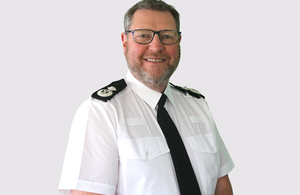
The CNC is pleased to announce the appointment of Stephen Martin as our new Deputy Chief Constable (DCC).

Stephen joined us on Monday (9/5) and has almost 34 years of experience as a police officer in Northern Ireland, including holding three separate Assistant Chief Constable portfolios throughout his career.

In his most recent role as T/Deputy Chief Constable, Stephen was responsible for corporate governance, professional standards, organisational change and performance.

Outside of policing, Stephen is also the non-executive Chair of the Irish Football Association and sits on the Prince’s Trust Northern Ireland advisory committee.

DCC Martin said: “I am delighted to be appointed as the Deputy Chief Constable of the Civil Nuclear Constabulary. I very much look forward to working with all my new colleagues around Great Britain in their critical mission of safeguarding the nation’s nuclear interests. I can see already that this is a progressive police service with an ambitious workforce and an exciting future.”

Chief Constable Simon Chesterman said: “Stephen’s wealth of experience in armed policing, and his ability to engage with a broad range of stakeholders to achieve organisational objectives will enable him to hit the ground running in his new role. He will be a tremendous asset to the CNC as we pursue our ambitions for the future of the organisation.”

Published 10 May 2022


Northern Ireland Secretary Brandon Lewis – Statement following Queen’s Speech 2022

The Northern Ireland Office has today (Tuesday 10 May) outlined two Bills as part of its legislative programme for the next parliamentary session.

In the 2022 State Opening of Parliament, the UK Government confirmed it will introduce a Northern Ireland Troubles (Legacy and Reconciliation) Bill and an Identity and Language (Northern Ireland) Bill.

The Northern Ireland Troubles (Legacy and Reconciliation) Bill will address the legacy of Northern Ireland’s past by focusing on information recovery and reconciliation and will provide better outcomes for victims, survivors and their families.

It will also deliver on our commitment to veterans who served in Northern Ireland, and help society to look forward. The Bill will further develop proposals set out in a Command Paper last year to ensure they better meet the needs of people most impacted by the Troubles.

A new approach will be taken to immunity for those involved in Troubles-related incidents. An independent body will now only grant immunity from prosecution on a case-by-case basis, based on an individual’s cooperation with the body’s inquiries.

The Identity and Language (Northern Ireland) Bill will deliver a carefully balanced package of identity and language measures as negotiated by the Northern Ireland parties under the New Decade, New Approach agreement. This includes the creation of a new Office of Identity and Cultural Expression that will provide guidance for public authorities on a series of national and cultural identity principles.

The Secretary of State for Northern Ireland, Rt Hon Brandon Lewis MP, said:

“The legislative agenda set out by the Government today is focused on strengthening the economy, easing the cost of living, and levelling up the whole of the UK.

“My immediate post-election priority in Northern Ireland remains working with party leaders to ensure they come together to form an Executive as soon as possible. This is crucial to delivering in the best interests of all the people of Northern Ireland.

“Today’s State Opening of Parliament offers an opportunity to drive forward crucial pieces of legislation that will aid reconciliation and support a fairer, more tolerant society.

“We will deliver an improved approach to addressing the legacy of the Troubles in Northern Ireland, focused on information recovery and reconciliation. The Government is confident that forthcoming legislation will better support those most impacted by the Troubles.

“The Identity and Language (Northern Ireland) Bill will also recognise and celebrate Northern Ireland’s rich heritage with a balanced package of identity and culture measures previously agreed by the Northern Ireland parties.”


Smuggling gang sentenced after locking migrants into wardrobe ‘hides’

Five men who smuggled 35 people to the UK, including children as young as two years old and an individual with physical disabilities, have been sentenced to a total of 24 years and two months.

Following a trial at Reading Crown Court yesterday, Monday 9 May, the court heard that between August and October 2019, Paramjeet Singh Baweja, 50, and Viljit Singh Khurana, 45, organised the smuggling of 35 Afghan migrants into the country through six separate events. Individuals were screwed into purpose-built hides made from wardrobes, which were surrounded by furniture items in the rear of the vans. The vans were driven through Europe to Southern UK ports, including Dover and Portsmouth.

The coffin-like hides, from which the migrants had no way of escaping without the assistance of the organised crime group, were used to conceal up to seven people each journey. Many were only discovered after they had endured travel from Belgium and France, through the ports and across the Channel. One group were discovered while shouting for their lives at the point of being loaded onto a recovery vehicle.

Following a two-year investigation by Home Office’s Criminal Financial Investigations (CFI) unit, Baweja and Khurana pleaded guilty to the purchasing of vans and furniture, communicating between the ‘minders’, the migrants and Romanian drivers and paying money to the ‘minders’. Baweja was sentenced to six years and nine months’ imprisonment. Khurana received a six-year sentence.

The ‘minders’ were found to be Harmohan Singh, 41, and Manmohan Singh Wadhwa, 57. Both admitted to escorting the vans and drivers during the facilitation events and providing progress updates to other members of the crime group and drivers. Both Singh and Wadhwa were sentenced to three years and four months in jail.

Forensic evidence indicated that Harmohan Singh was also involved in the screwing of the migrants into the hides in the wardrobes.

The final individual sentenced was Dumitru Bacelan, 29, a Romanian national, believed to be of higher ‘rank’ than the minders and drivers. Bacelan pleaded guilty to his part of the recruitment and the organising of drivers. This included booking hotels and travel around the UK and Europe with other gang members.

He also pleaded guilty to fraud by false representation in relation to an EUSS application he submitted to the Home Office. He has been sentenced to three years and nine months’ imprisonment for immigration offences, and 12 months for fraud offences to run concurrently.

Minister for Justice and Tackling Illegal Migration, Tom Pursglove MP said:

These life-threatening attempts to smuggle people, including very young children, into the UK in the back of vehicles with room to barely move or breathe, is quite frankly, horrific.

I would like to praise the officers on the case in their efforts working round the clock to prevent this illegal activity which put people’s lives in extreme danger.

The Nationality and Borders Act will support our criminal investigations teams by making it easier to prosecute people smugglers and introducing a maximum sentence of life imprisonment for those who facilitate illegal entry into our country.

Deputy Director for Immigration Enforcement’s Criminal Financial Investigations, Ben Thomas said:

Criminal gangs should be in no doubt of our determination to investigate, catch and pursue anyone attempting to bring people here unlawfully and in such atrocious conditions.

The operation run by this criminal group put children and vulnerable people’s lives in danger for the sake of making a profit. I hope these sentencings send a powerful message that breaking the law and putting individuals’ lives at risk will not go unpunished.

Our CFI teams along with wider Immigration Enforcement, Border Force officials and key partners including the police, NCA and European counterparts, work 24/7 to catch those putting people lives at risk through people smuggling.

Since 2020, CFI have secured over 140 convictions relating to people smuggling cases involving vehicles such as vans, lorries, cars and yachts, as well as 49 small boats-related prosecutions. This equates to a combined total of nearly 400 years in prosecutions since 2020.

To anonymously report suspicious or suspect people smuggling activity contact CrimeStoppers on 0800 555 111, or in an emergency, by dialling 999. Find out more on the Crimestoppers website.