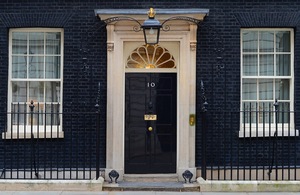
Cabinet visits Staffordshire to set out Queen’s Speech benefits

  • Minsters to visit the West of England, Midlands and Wales to hear from communities and businesses on how new bills will help them prosper
  • Comes as government sets out landmark legislative agenda to drive economic growth and level up opportunities across the country
  • The Prime Minister and cabinet ministers will today meet with communities, businesses and organisations across the West of England, Midlands and Wales which will benefit from the new legislative agenda.

In a meeting of Cabinet, ministers will discuss how the Queen’s Speech will deliver for people by boosting our economic growth and recovery, improve living standards and level up opportunities across the country – with Stoke-on-Trent being a prime example of levelling up in action. They will also discuss the upcoming major events for this year, including the Queen’s Platinum Jubilee and Commonwealth games which will provide a tremendous opportunity to boost pride in Britishness and serve an important role in the economic renewal and recovery in this country.

The Queen’s Speech has been designed to deliver direct benefits for communities like Stoke, for example, with a new bill that will improve the planning system to give residents a louder voice, making sure developments are beautiful, green and accompanied by new infrastructure and affordable housing. The Levelling Up and Regeneration Bill will help spread opportunities by creating more of the jobs, homes and high streets that people want, as well as empower local leaders to regenerate their areas and ensure everyone can share in the United Kingdom’s success.

The Government will also continue to deliver improvements to transport networks across the UK through our Transport Bill, providing for reliable services, reducing journey times and spreading economic growth to all regions. And the Handsacre Link which will connect HS2 to the West Coast will allow compatible trains to stop at Stoke-on-Trent helping to relieve congestion, improve reliability and speed up journey time.

Prime Minister Boris Johnson said:

I’m delighted to bring Cabinet to Stoke-on-Trent today – a city which is the beating heart of the ceramics industry and an example of the high skilled jobs that investment can bring to communities.

This government is getting on with delivering the people’s priorities and tackling the issues that matter most to the public.

This week we’ve set out how we’ll use new landmark legislation to grow our economy to address the cost of living, and level up opportunities for communities across the country.

The Government has injected £56 million into Stoke-on-Trent from the first round of the Levelling up Fund which will go towards boosting the supply of quality housing in the city, as well as attracting visitors to the new arena in the City Centre Regeneration Area and putting heritage assets to good use for now and the future.

Stoke-on-Trent also received six successful Community Renewal Fund bids totalling over £3.5 million for projects supporting education, jobs and boosting skills. This includes Discover: Boosting Digital Inclusion in Stoke-on-Trent (£616,520), SHARP – Sector Hub Action Research Project (£516,787) and Stoke-on-Trent Digital Innovation and Education Hub.

The Prime Minister has called on cabinet colleagues and departments to double down on exploring innovative ways to ease pressures on household finances, promoting the support that is available but not widely taken up, and helping people into high-quality, well-paid jobs across the UK.

Over the coming months we will continue examining what more we can do to ease the pressures on hard-working people and families on top of the existing £22 billion package, which includes boosting the incomes of the lowest paid through a rise in the National Living Wage, saving a typical employee over £330 a year by increasing National Insurance thresholds, and providing millions of households with up to £350 to help with rising energy bills.


New protections for rape victims available at more Crown Courts

  • pre-recorded evidence now available in North-East and South of England
  • measure aims to reduce trauma for victims and witnesses to help them give better evidence
  • 24/7 Rape Support Helpline moves step closer as operator selected

The scheme, which has already been successful in 12 Crown Courts,  allows victims and witnesses of crimes such as rape and modern slavery to have their cross-examination video-recorded and played later during trial.

The recording takes place as close to the time of the offence as possible, while memories remain fresh, and helps victims avoid the stress of giving evidence in a courtroom setting, which many find traumatic.

From today (12 May 2022), the measure will be available immediately at Crown Courts in:

  • Sheffield
  • Doncaster
  • Newcastle
  • Portsmouth
  • Southampton
  • Isle of Wight
  • Winchester
  • Bournemouth
  • Bristol
  • Exeter
  • Gloucester
  • Plymouth
  • Salisbury
  • Truro

This extension means it is now available for victims of rape at 26 Crown Courts, with the government committed to rolling it out nationwide by September.

The move follows the successful implementation for vulnerable victims, such as children or those who have limited mental capacity, to all Crown Courts in England and Wales – with more than 2,500 witnesses having already benefitted from the technology since August 2020.

Victoria Atkins MP, Minister for Tackling Violence against Women and Girls, said:

This measure is a key part of our plan to overhaul the justice system’s response to rape – minimising stress for victims and helping them to provide the best possible evidence.

Alongside this, we’re recruiting more independent sexual violence advisers, launching a new 24/7 helpline and improving collaboration between police and prosecutors to ensure victims get the support and justice they deserve.

While there is still much more to do, convictions have increased by 15 percent over the last quarter and these measures will drive improvements further.

The measure is also designed to maintain a defendant’s right to a fair trial and any decision to pre-record evidence is made by a judge on a case-by case basis.

Today’s update comes as the government announces that Rape Crisis England and Wales (RCEW) will operate a new 24/7 helpline service – providing free telephone and online support to victims of rape and sexual violence at any time of the day. The service will be launched in June and will ensure help is available to victims whenever they need it. 

Jayne Butler, CEO of Rape Crisis England & Wales, said:

This service will be a vital support provision for victims and survivors of sexual violence and abuse.

We are pleased to be delivering a specialist, trauma-informed support service: one that puts survivor needs at its heart.

The funding of this service is a welcome contribution to the government’s commitment of increasing support for victims and survivors of rape and sexual assault.

Both the helpline and the extension of pre-recorded evidence are key pledges within the Government’s Rape Review Action Plan. The plan sets out clear actions for the police, prosecutors and courts. These include a new approach to investigations, reducing the number of victims withdrawing from the process, increasing the volume of trials being heard, protecting the public and putting more rapists behind bars.

On the extension of pre-recorded evidence to Newcastle Crown Court, Elaine Langshaw, Chief Executive Officer of Newcastle Women’s Aid, said:

We welcome this move and strongly believe it should be available in every Crown Court as soon as possible, to ensure every survivor or witness can expect the same service.

Survivors and witness should be made to feel safe, protected and supported. In our experience survivors of sexual crimes are often reluctant to progress prosecutions as they cannot face further trauma in the courtroom.

We feel if this barrier is removed it will encourage survivors to report to the police and to seek justice.

The government has also announced it will fund victim support services on a multi-year basis – with at least £147 million per year up to 2025. This investment will enable charities and service providers to plan for the future, build capacity and help even more victims.

Today’s announcement builds on recent government action to increase confidence in the justice system including bringing forward a new Victims’ Bill, ensuring violent and sexual offenders spend longer in prison and investing nearly half a billion pounds to deliver swifter justice through the courts.

Guidance:

  • Both the defence and prosecution lawyers will be present in court during the pre-recording as will the judge and the defendant.
  • The independent judiciary will be responsible for overseeing the use of pre-recorded evidence and will have discretion to ensure that the interests of justice are served.
  • Pre-recording cross-examination preserves a defendant’s right to a fair trial.
  • Vulnerable witnesses and victims are defined as all child witnesses under 18 and any witness whose quality of evidence is likely to be diminished because they are suffering from a mental disorder or physical disability or has significant impairment of intelligence and social functioning.
  • Intimidated witnesses and victims for the purposes of this pilot are defined as complainants or witnesses of sexual offences and modern slavery offences.
  • The courts already operating pre-recorded evidence for intimidated victims are: Liverpool, Leeds, Kingston-Upon-Thames, Harrow, Isleworth, Wood Green, Durham, York, Grimsby, Hull, Bradford and Teesside Crown Courts.
  • Rape convictions are increasing –  there has been a 15 percent increase in the number of people convicted for rape offences in the last three months. There were 467 convictions last quarter (October to December 2021), compared to 407, 398 and 376 in the quarters before.
  • Total completed prosecutions for rape cases have increased by 10 percent from 600 (July – September 2021) to 661 (October-December 2021).
  • The average number of days for adult rape from CPS charge to the case being completed continued to fall, down by 38 days (8.3 percent) since the peak in June 2021 – down from 457 days to 419 in October – December 2021.


Condemning North Korea’s ballistic missile launches: UK Statement at the UN Security Council

Thank you, Madam President, and I thank Assistant-Secretary-General Khiari for his briefing.

Once again, this Council is meeting to condemn ballistic missile launches by North Korea. This year alone, as we’ve heard, North Korea has launched 17 ballistic missiles – each in violation of UN Security Council resolutions. In the whole of 2021, North Korea conducted eight missile tests. So, let’s make no mistake about the escalation in tempo and missile capability that these 17 launches represent.

And, North Korea has been quite clear that it intends to continue to develop prohibited programmes, including Inter Continental Ballistic Missiles. These actions are a threat to regional peace and security.

So, the UK condemns unequivocally the ballistic missile launches by North Korea on 4 and 7 May.

We urge Council members to meet these violations with a firm and united response. We, again, call on all Member States to implement existing Security Council resolutions, in full. These are an essential part of the efforts to curtail the continued development of DPRK’s prohibited programmes. We fully support US-led efforts to update sanctions in the context of the evolving threat that North Korea’s actions present.

We are particularly concerned by North Korea’s cyber activity, through which it evades sanctions, and raises funds to support its nuclear and ballistic missile programmes. This includes the recent cryptocurrency theft by North Korean cyber actors of $620 million dollars. The international community should work together to detect and mitigate such activity, and hold those committing malicious cyber activity to account.

The Council’s sanctions are not targeted at the people of North Korea, and we fully support the delivery of humanitarian support to the most vulnerable. We call on North Korea to allow humanitarian workers into the country to carry out an independent assessment of the humanitarian situation, and to allow aid to flow freely into the country. North Korea’s continued channelling of its resources into proscribed weapons programmes is responsible for worsening the dire humanitarian situation in North Korea.

Madam President,

We reaffirm our full commitment to non-proliferation obligations, and we call on North Korea to refrain from further provocations, to engage meaningfully in dialogue with the United States and to take concrete steps towards denuclearisation in a complete, verifiable and irreversible manner.

I thank you.


PM call with NATO Secretary General Jens Stoltenberg: 11 May 2022

Press release

The Prime Minister spoke to NATO Secretary General Jens Stoltenberg by phone from Helsinki this evening.

The Prime Minister spoke to NATO Secretary General Jens Stoltenberg by phone from Helsinki this evening.

The Prime Minister updated the Secretary General on his visits to Sweden and Finland earlier in the day.

The Prime Minister praised the Secretary General for his leadership in such challenging times and the Secretary General thanked the Prime Minister for his decisive support for Ukraine.

Foreign and Defence ministers would be meeting in the coming weeks to work through how NATO should evolve and accelerate its work across the Euro Atlantic area, and the Prime Minister said he looked forward to discussing those proposals in Madrid next month.

Published 11 May 2022


COP26 President keynote address at Society of Editors conference

Ladies and gentlemen, thank you so much for having me here today.

They say that only two things in life are certain, death and taxes.

But to that list, I would add the tenacity and the rigour of the British press.

Whether it is war, or corruption, or injustice, or hypocrisy, or indeed a desire for greater transparency, you are unrelenting, uncompromising, and fearless in your pursuit of the truth, and in your determination to hold those in power to account.

I can tell you, from personal experience, being under the magnifying glass of the British press can be mildly uncomfortable.

Anyone remember “Air Miles Alok”?

Anyone from the Daily Mail here? Ok let’s move on.

But however much it makes those under scrutiny squirm, I hope that you will never change.

Over the past year, I have been in 35 countries to persuade governments to up their climate commitments.

Because as you all know, better I think than anyone, you rarely land a story, or in my case a commitment, on the phone.

It needs to be face-to-face.

And on those visits I have been in very many newsrooms, I have been interviewed by your peers from Berlin to Brasilia, from Nairobi to New Delhi.

But rarely does anything evoke greater trepidation in politicians than walking into Milbank or indeed taking a call from a Fleet Street journalist.

And I have to say I think that is a credit to your industry, and the press freedom this country holds so dearly.

The question I really want to address today is what a future shaped by a changing climate means for reporting, and holding to account, by the British press.

Because that unfortunately is the future that we face.

Now you will be aware of this, but I think it’s worth saying that scientific report after scientific report demonstrates that unless we get to grips with climate change, the effects will be catastrophic for people and nature.

Last year, we had a seminal report by the UN climate science body, the IPCC, the Intergovernmental Panel on Climate Change, noted that average global temperatures have risen by 1.1 degrees above preindustrial levels.

The report also concluded that human activity is unequivocally responsible for global warming.

This report was agreed by 195 countries, and its findings were based on the distillation of 14,000 scientific papers.

I can tell you from my own personal experience, getting almost 200 countries to agree on something this substantive is far from easy.

Now, there will be those who will say that 1.1 degrees does not sound like very much, but we see the impacts around the world.

Last year saw devastating floods across Europe and Asia.

Wildfires raged in North America and Australia.

And already this year India and Pakistan have been experiencing extreme heat waves, with some of the hottest months since records began.

Floods have killed hundreds in South Africa.

And the IPCC’s latest reports published this year, tell us that due to climate change, ecosystems are being irreversibly destroyed, people are being forced from their homes, human health is being damaged, and water and food insecurity have increased.

I have seen this first hand.

I’ve met mountain communities in Nepal that have been forced to flee from their homes because of a combination of floods and droughts caused by the changing climate.

I’ve witnessed the effects of Hurricane Irma four years on in Barbuda.

Buildings lying derelict, roofs still blown off, walls crumbling, and people forced from their island homes due to climate change.

And talking to those affected is heartbreaking.

Because you get to not just see but you get to hear the human cost of a changing climate.

The reality is that climate change does not respect borders.

It impacts us all.

Here in the UK each of our top ten warmest years since 1884, have occurred since 2002.

Climate change is not a stand alone issue to be mitigated.

Unfortunately it exacerbates other existing risks.

These are what respected think tanks, like Chatham House, call the “systemic cascading risks” of global warming; the knock-on-effects resulting from climate change, such as food and water insecurity, pests, diseases, the loss of lives, livelihoods and infrastructure.

Indeed in one of its recent reports, Chatham House makes the case that such factors could, ultimately, displace people, disrupt markets, undermine political stability, and exacerbate conflict.

And, frankly, where people’s ability to feed their families becomes precarious and extreme weather and disease wipe out livelihoods, people may be forced from their homes, and civil unrest may foment,

events that can undermine fragile governments, and then ultimately reverberate around the globe.

It is because climate is central to geopolitics, that the UK’s Integrated Review established tackling climate change and biodiversity loss as the UK’s top international priority.

These impacts are happening today, and we know that in the future, they will become more severe.

Because unfortunately further temperature rises are now inevitable.

Even if we limit the rise in global temperature to 1.5 degrees celsius, the effects will be significant.

Yet there is still everything to play for, because the higher temperatures rise, the more extreme the effects become.

And every fraction of a degree makes a difference.

At 1.5 degrees warming, 700million people will be exposed to extreme heat around the world.

At 2 degrees it’s 2 billion people.

At 1.5 degrees, 70 percent of all coral reefs around the world would be destroyed.

At 2 degrees they are just about all gone.

But to keep that 1.5 degree limit alive we are going to have to halve global emissions by 2030.

And I think it’s worth saying that the cost of inaction is far, far greater than the cost of taking action now.

The Office for Budget Responsibility projects that unchecked climate change could lead to UK public debt reaching a staggering 289 percent of GDP by the end of the century.

But just as the science has become starker, the environmental and economic opportunities presented by tackling climate change have become clearer.

When the UK took on the role of hosting COP26, less than 30 percent of the global economy was covered by a net zero target.

By the time we got to COP26, with like minded partners around the world, we had persuaded 90 percent of the global economy to sign up to net zero.

So I would say that where the UK has led, others have followed.

Net zero is one of the clearest economic trends.

It encompasses just about every country and every sector.

As journalists, you are used to following the money.

So there is a reason why more than 7000 international companies have signed up to rigorous net zero targets.

There is a reason why, at COP26, financial institutions with over $130 trillion dollars of assets on their balance sheets were signed up to net zero.

There is a reason why earlier this year Larry Fink, who as you know runs Black Rock, one of the biggest fund managers in the world, wrote to the CEOs of Black Rock’s investee companies, and he noted:

that climate risk is investment risk, that there is a tectonic shift of capital underway, that sustainable investments have now reached $4trillion, and that every company and every industry will be transformed by the transition to a net zero world.

Mr Fink went on to ask these investee companies whether they would lead this transition or whether they would be led.

And the reason for all of this is because businesses around the world can see the economic dividend from the pursuit of net zero.

It is clear to governments and businesses that the future of the global economy is clean.

And we must embrace the opportunities that presents.

But whether we do so fast enough or not, one thing is clear.

Climate change will define the future.

So it is rightly commanding increasing media attention.

Years ago, climate was a side issue for journalists specialising in international development or the environment.

Now it runs through many areas, from business, to culture, to sport, to economics, to fashion, and of course politics.

Analysis by Carbon Brief, which focuses on climate, shows that the number of editorials in UK newspapers calling for more action to tackle climate change has quadrupled in three years.

And yes, scepticism has diminished.

That same analysis found that in 2011, right-leaning newspapers ran one editorial in favour of climate action for every five against.

By 2021, those same newspapers were publishing nine positive editorials for every one against.

Now, from my perspective, this focus is extremely welcome, but of course this year, climate is no longer in the spotlight.

COP26 is over, although of course our presidency year continues until November.

The headlines are understandably dominated by the other immense and immediate challenges facing the world.

Vladimir Putin’s illegal and brutal invasion of Ukraine will define 2022.

And that is rightly the focus of the media and the international community.

And I understand that you’ve just had a discussion panel on Ukraine and reflected on the journalists who have very sadly lost their lives, and of course I pay tribute to all of them.

And of course, governments must also address the global crisis in energy markets and increasing inflation and its attendant impacts.

And again, the media is naturally focusing on this.

And actually it is quite interesting that, the current crisis has also made clear to governments that homegrown renewables and clean energy,

the price of which cannot be manipulated from afar, are the best option for domestic energy security.

Climate security has become synonymous with energy security.

And the chronic threat of climate change is unfortunately not going away.

And so journalists are vital to ensure it continues to receive the column inches and the air time that it deserves, and that leaders are held to account.

Because world leaders have committed to tackle climate change.

Almost seven years ago, countries forged the Paris Agreement.

And in this they committed to limit the average rise in global temperature to well below two degrees, pursuing efforts towards 1.5.

Last year at COP26, nations agreed the historic Glasgow Climate Pact that showed how we will deliver this.

And countries agreed to revisit and strengthen their 2030 emissions reduction targets this year, to align them with the Paris temperature goals.

They agreed to phasedown coal power and phase out fossil fuel subsidies.

And they agreed that the developed countries would provide more finance to support developing nations to deal with climate change.

Alongside the Glasgow Climate Pact, companies and countries made commitments at COP26 to clean up critical sectors, to halt deforestation, and to work together to accelerate green technologies.

In short, the world has agreed what it needs to do. Our task now is to deliver.

And to achieve that, we need you to do what you do best, and hold governments and businesses to account.

The British media has significant international clout.

Editorials written here are read with keen interest in capitals around the globe.

You help focus the eyes of the world on those in positions of responsibility,

to scrutinise whether or not they deliver on their commitments.

And if they do not, you have the tools to hold them to account.

We also need you to help people understand the reality of climate impacts.

And help them make informed choices.

And of course, we need you to interrogate objectively the benefits of the move to clean economies.

Ladies and gentleman, I believe that the chronic threat of climate change, and its expansive impact, will increasingly be the biggest story of the twenty-first century.

I will go further.

I would argue it will ultimately be the biggest story in many of our lifetimes.

And we need you to tell it.

And we need you to shape it.

By continuing to do what you do best.

Speak truth to power.

Report on the reality of the world around us.

These are the finest qualities of the British press.

So whatever the future of news, they must endure.

Thank you.