Northern Irish start-up beats established competitors to win transformative export contract

Press release

Northern Ireland-based Circular Group used the General Export Facility from UK Export Finance to secure a major £4m competitive contract

  • The finance from UK Export Finance and HSBC UK helped them secure a £4m contract beating off competition from larger, more established businesses.
  • The Northern Irish start-up is now looking to expand to new markets in North America, Europe and Asia, with exports expected to soar to 75% over the next 36 months.
  • Circular Group’s wet processing systems are environmentally friendly, maximising natural resources such as natural sand & aggregates – helping to extend reserves of this finite material for future generations

A Northern Irish-based start-up has secured a major recycling contract, on the back of a £2.1m support package from HSBC UK with an 80% guarantee from UK Export Finance (UKEF). The business is now seeking to expand across North America, Europe and Asia and create extra jobs in Northern Ireland and key export markets.

Circular Group designs, manufactures, delivers and installs systems for the sand, aggregates and construction and demolition waste recycling sectors – with the latter re-directing significant volumes of waste from landfill and reprocessing into valuable sand and aggregates for commercial resale. Launching in March 2020, just as the pandemic took hold, Circular Group was given the opportunity to tender for a £4 million contract.

Up against three established companies, Circular Group’s innovative approach, coupled with the most advanced technology on the market put them in pole position. As part of the tender process the end customer required advance payment guarantees to form part of the purchase contract. Circular Group quickly approached HSBC and UKEF for support, given the company’s limited trading history. Circular Group was able to secure the contract with the support of UKEF’s General Export Facility (GEF). The Group is now looking to new global export markets and expects the export portion of its revenue to grow to 75% in the next 36 months.

Sand is the world’s second most-used raw material after water – the UN estimates as much as 40 billion tonnes is extracted and consumed globally per year in the construction industry alone. However, sand mining is having a major impact on rivers, and coastal and marine ecosystems. Wet processing construction waste that is currently directed to landfill produces commercial grade sand from construction waste, thus protecting the natural reserves of this resource for future generations.

Liz McCrory, UKEF Export Finance Manager for Northern Ireland said:

Highly advanced, innovative systems like that produced by Circular Group are crucial in protecting our planet’s natural reserves for future generations.

The fact that it could stand its ground in a highly competitive market demonstrates the strength of its proposition. With GEF support it’s incredible to see this start-up now ready to expand around the world and help more countries in their efforts to drive a more sustainable future.

Eoin Heron, co-owner of Circular Group said:

We are passionate about promoting a circular economy and protecting our environment for future generations. The support from UKEF and the GEF facility has been a genuine game-changer. By ensuring we could be a serious contender for a major project, it helped our business unlock multi-million-pound contracts, grow exponentially in a relatively short time, and create more jobs in the process.

Published 13 May 2022



Work of Strategic Command personnel recognised in Operational Awards List

News story

Members of Strategic Command have been recognised in the Operational Awards List for their services to defence.

Photo showing Strategic Command Headquarters in Northwood

Strategic Command Headquarters, Northwood

Members of Strategic Command have been recognised in the Operational Awards List for their services to defence. The list recognises the bravery, commitment and commendable service of armed forces personnel.

The following individuals have been recognised:

Officer of the Order of the British Empire (OBE)

  • Royal Air Force Wing Commander (now Acting Group Captain) T L Stevenson MBE

Member of the Order of the British Empire (MBE)

  • British Army Warrant Officer Class 2 T A Whitehead

Air Force Cross (AFC)

  • Royal Air Force Wing Commander K H T Latchman

Queen’s Commendation for Valuable Service (QCVS)

  • British Army Lieutenant Colonel C O’Brien

US Bronze Star Medal

  • Royal Air Force Wing Commander M A Kroyer

NATO Meritorious Service Medal

  • British Army Major A S Campbell

Joint Commander’s Commendations

  • British Army Colonel P Driver
  • British Army Lieutenant Colonel R Castro
  • British Army Lieutenant Colonel J Pattinson
  • British Army Lieutenant Colonel J Winfield
  • Royal Air Force Wing Commander S M N Bloomer
  • British Army Major C Brindley
  • Royal Air Force Squadron Leader N S Clark
  • British Army Captain J Boyce
  • British Army Captain G Edwards
  • British Army Captain J Wilkinson
  • British Army Private L Kinnersley
  • Civil Service D Hodge

Team Commendations

  • Team Award – 906 Expeditionary Air Wing
  • Team Award – Force Movements Control Cell
  • Team Award – J8 S2O Team
  • Team Award – PJHQ DSTL Operational Analyst Team for Op PITTING

Published 13 May 2022


Pakistani activist receives Commonwealth Points of Light Award

World news story

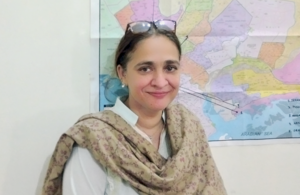
Pakistani lawyer and activist Tahera Hasan received the Commonwealth Points of Light Award for her efforts promoting the wellbeing of orphaned, abandoned and stateless children.

Points of Light Awards are given to outstanding individual volunteers who are making a positive change in their community.

Having been a strong supporter of adoption, Hasan specialises in family law and custody cases. She founded the Imkaan Welfare Organisation in 2012, which now runs a shelter and recreational centre for orphaned and abandoned children in Karachi’s Machar Colony, a squatter settlement home to nearly 700,000 people. Hasan has also set up a mother and child healthcare centre there.

In addition, Hasan helps in the adoption of orphans and stateless children, helping reduce both infanticide and child abandonment. Imkaan, she says, was found on the principle that “each and every child not only has the right to live but to thrive”.

Tahera Hasan said:

It is an honour and privilege to receive the Points of Light Award. It is a recognition for the work of all those involved on a day-to-day basis, highlighting and fighting for the rights of stateless and marginalised communities in Pakistan. The right to citizenship, identity and more specifically children’s rights, is a neglected subject. This award goes a step forward in bringing these issues to the forefront.

UK High Commissioner to Pakistan Dr Christian Turner said:

Tahera is making a big impact on the lives of some of the most vulnerable children in Pakistan. This recognition of her work is a testimony to the long-standing and deep ties that UK, Pakistan and other Commonwealth nations share.

Notes to editors:

  1. The Commonwealth Points of Light Award runs in parallel with the UK Points of Light Award which has been in place since 2014 (the British Prime Minister makes an award and sends a letter to the recipient).

  2. In the run up to the 2018 Commonwealth Heads of Government Meeting, one outstanding volunteer from each of the Commonwealth nations was recognised with an award. Following the success of the programme, The Queen continues to award one volunteer from each country every week and sign a certificate for each winner. Awards are recommended by British High Commissioners in collaboration with Commonwealth nations.

  3. In June 2020, the British High Commissioner Dr Christian Turner briefed The Queen on Pakistan’s Commonwealth Point of Light award winners, Huzaifa Ahmed and Hassaan Shah of the organisation Rizq to celebrate Volunteers’ Week.

  4. For more information, visit Points of Light website

  5. More information about Imkaan Welfare Trust can be found here

For updates on the British High Commission, please follow our social media channels:

Contact
British High Commission
Islamabad
tel. 0300 500 5306

Published 13 May 2022


Call for proposals under Small Projects Fund 2022 to 2023 in Ukraine

The British Embassy Kyiv invites proposals for project work under the Small Projects Fund for the period from 15 July 2022 to 15 March 2023.

The deadline for submitting proposals is 5pm (Kyiv time) on 15 June 2022.

The British Embassy Kyiv uses its Small Projects Fund (SPF) to complement work funded by the large-scale programmes in Ukraine via funding small-scale quick-win projects or activities aimed at leveraging bigger funding, at providing unique UK expertise in areas of top priority for the Ukrainian government or at obtaining insights into new areas of activity for future interventions.

The programme will focus on the following areas:

  • support to local self-government in certain oblasts or territorial communities to effectively rebuild their areas after the war, focusing on various areas from pilot awareness campaigns on keeping safe from unexploded remnants of war, to education and social support, working with local civil society organisations and think tanks, therefore building better networks at the sub-national level and reaching out to particular parts of Ukraine where larger CSSF programmes are less likely to operate

  • support to civil society and think tanks focusing on planning reconstruction of Ukraine in line with its reform agenda, working in close cooperation with the key domestic and international stakeholders, therefore ensuring that civil society views are taken into consideration and reflected in the plan; as well as focusing on other specific areas working with IDPs and other vulnerable groups which need quick support, with projects can serve as pilots to inform larger-scale work, policy and programming decisions, providing a framework for understanding developments in Ukraine for the wider international community and keeping Ukraine prominent on the international agenda

Notes

Successful projects should have sustainable outcomes and should clearly identify the change that will be brought about. They may also build on projects by other organisations, complementing their efforts. All bids should make clear how they complement existing activities supported by other donors and international partners, and how work in the regions complements national level activity.

The minimum indicative funding for projects is £20,000 and maximum £50,000. This may be in addition to co-funding and self-funding contributions; indeed this will be considered a merit. Our funding is for the UK financial year 2022 to 2023 only (projects must be implemented and all payments made by 15 March 2023). Where appropriate, bidders are encouraged to describe how their project could be further scaled-up if additional funding became available.

Administrative costs (office rent, project management and bookkeeper rates, utilities, communications, stationery, bank charges etc) must not exceed 8% of the total project budget. We are unable to fund academic courses or research, English language courses, the purchase of IT or other equipment.

The British Embassy Kyiv will carry out due diligence of potential grantees, including seeking references, as part of the selection process.

Bidding is competitive and only selected projects will receive funding. The Embassy reserves the right to accept or reject any or all bids without incurring any obligation to inform the affected applicant(s) of the grounds of such acceptance or rejection. Due to the volume of bids expected we will not be able to provide feedback on unsuccessful bids.

Bidding process

Bidders should fill in the standard Project Proposal Form (ODT, 44 KB) and include a breakdown of project costs in the Activity-Based Budget (ODS, 20.3 KB). We will not consider proposals submitted in other formats. Budgets must be Activity Based Budgets (ABB), all costs should be indicated in GBP (not UAH).

Successful bids must demonstrate Gender Equality Minimum Score 1 (according to the OECD DAC Definition and minimum recommended criteria for gender equality policy marker), have a gender equality objective explicit in the project documentation and an explanation of a positive impact of the project on advancing gender equality. If the project is designed with the principal intention of advancing gender equality, it must have outcomes on gender equality and outputs that contribute to these outcomes.

All projects or activities must align with the Paris Agreement on Climate Change and assess climate and environmental impact and risks, taking steps to ensure that no environmental harm is done and, where relevant, support adaptation.

Successful implementers should be able to receive project funding in GBP (UK pound sterling) and open a GBP bank account for the project.

Proposals should be sent to the British Embassy Kyiv at Kyiv.Projects@fco.gov.uk by 5pm (Kyiv time) on 15 June 2022. In the subject line, please indicate the name of the bidder. We aim to evaluate proposals by the end of June. Approved projects will commence in July 2022.

Evaluation criteria

Proposals will be evaluated against the following criteria:

  • fit to programme objectives: the extent to which the proposal addresses the issues
  • quality of project: how well defined and relevant the outcome is and how outputs will deliver this change; ability to leverage bigger funding would be an advantage
  • value for money: the value of the expected project outcomes, the level of funding requested and institutional contribution
  • previous experience: evidence of the project team’s understanding of the issue and of its regional activities, ability to manage and deliver a successful project, through work done to date in the area or in related fields
  • gender-sensitive approach and alignment with the Paris Agreement on Climate Change – as indicated above; the proposals will be assessed by a mixed gender panel


State-of-the-art tree health laboratory opens to help protect UK forests

A state-of-the-art laboratory conducting innovative research into tree pests and diseases has been officially opened today (Friday 13 May) by Defra and the Forestry Commission, as part of National Plant Health Week.

The £5.8 million Forest Research Holt Laboratory, located within the Alice Holt Forest in Surrey, will bring together leading scientists to undertake research on pests and pathogens which could be detrimental or seriously damaging to our forests. This will inform UK-wide efforts to combat ongoing pest and disease outbreaks, including from Oak processionary moth, Ips typographus and Phytophthora pluvialis, as well as emerging potential threats from abroad as a result of our warming climate, such as Emerald ash borer and Citrus longhorn beetle.

The launch of the Holt Laboratory and the Centre for Forest Protection represents a significant expansion of the UK’s capacity and capability to combat tree pests and diseases and manage emerging threats, including climate change. By assessing the pests and pathogens in a contained laboratory, scientists from Forest Research – Great Britain’s principal organisation for forestry and tree-related research – will be able to study them in a safe and controlled manner using cutting-edge technology and equipment.

New statistics released by Forest Research today show a record number of tree pests and diseases are being reported. The TreeAlert service received 3790 reports from the public over the past year (April 2021 –- March 2022) – a nearly 25% increase on the previous year. The most commonly reported pest and disease were Oak processionary moth and Ash dieback, respectively.

Minister for Biosecurity, Lord Benyon said:

This is a significant moment and important expansion of the UK’s capacity to overcome tree pests and diseases – and protect our forests.

Six months on from COP26 and Royal Assent of our Environment Act, it is fitting to be bringing forward cutting-edge research that will be central to keeping our trees healthy and resilient as we deliver on our ambitious commitment to treble tree planting rates by the end of this Parliament.

Chair of the Forestry Commission, Sir William Worsley said:

The threat to the health of our trees from pests and diseases is real and increasing. Trees are vital economic, environmental and social assets and so it is imperative that we do all we can to reduce these threats.

The opening of this new laboratory demonstrates the significant investment that the Government and the Forestry Commission are making to ensure the long-term resilience of our trees.

Forest Research Chief Executive, James Pendlebury said:

Pests and diseases pose an existential threat to our treescapes. The research conducted at the Holt Laboratory as part of the Centre for Forest Protection will be pivotal in our long-term ability to combat these threats and safeguard our treescapes for future generations.

This state-of-the-art facility builds on a long-term programme to protect our trees and forests from existing threats and ensures that we are at the forefront of defence against future risks.

Professor Richard Buggs, Royal Botanic Gardens, Kew, said:

Kew and Forest Research have been collaborating together on tree health issues for some time now, so it’s great to be coming together into a formal partnership for the Centre for Forest Protection.

Together, we can devise new ways to protect our trees and enhance their resilience. Ash dieback, acute oak decline, Dutch elm disease, here we come!

The Centre for Forest Protection, a new collaborative, virtual research network led jointly by Forest Research and Royal Botanic Gardens Kew also launches today with a mission to protect forests, woodlands and trees from environmental and socioeconomic threats now and in the future. This will involve innovative science, interdisciplinary research, expert advice, and training – supporting scientists across the UK and around the world. The broad remit of research and knowledge sharing will include investigations into understanding the genetic basis for resistance to high impact pests like ash dieback, which could inform future breeding programmes or reintroduction strategies for vulnerable species like ash and elm. Many of the forward-thinking research projects undertaken as part of the Centre for Forest Protection will be conducted at the Holt Laboratory. The successful launch of the Centre for Forest Protection delivers on a key commitment outlined in the England Trees Action Plan, which sets out the Government’s long-term plan for England’s trees, woodlands and forests.

Today’s announcement also comes ahead of the publication in summer this year of the new GB Plant Biosecurity Strategy, which will set out a biosecurity vision for the UK for the next five years. Building upon work achieved under the existing strategy published in 2014, the Strategy aims to deliver a step change in our plant health protections, actions and behaviours.

Public vigilance is a key part of the fight against tree disease. You can look out for any unusual symptoms – like leaf discolouration or ‘bleeding’ lesions – on trees and report any sightings via TreeAlert, the Forestry Commission’s online tree pest and disease reporting tool. The call to report diseases is being made as part of the third annual National Plant Health Week (9-15th May).