Press release: Countryside Stewardship Woodland Creation Grant opens for applications

From today (Tuesday 2 January 2018), applicants can apply for the Countryside Stewardship Woodland Creation Grant – a scheme to help landowners reap the environmental and financial benefits of woodland creation.

The grant is open to all qualifying land managers. Successful applicants will receive a two-year capital grant of up to £6,800 per hectare, as well as an opportunity to apply for annual maintenance payments for ten years.

Environment Minister Thérèse Coffey said:

Planting trees is one of the best ways we can invest in our environment for future generations. They provide a haven for wildlife, reduce flood risk and improve water quality – making them some of our most cherished assets.

I have seen first-hand how planting trees can really make a difference at places such as the Lowther Estate in Cumbria, so I would urge landowners to apply to this scheme.

Richard Greenhous, Forest Services Director for the Forestry Commission, said:

Aside from the environmental benefits, planting trees on your land can offer an alternative source of income.

Your local Woodland Officer can provide advice and support throughout the application process.

Guidance and application forms for the scheme were made available in September to give potential applicants more time to develop their plans. The process has now been streamlined to make it easier to apply.

Alongside the Woodland Creation Grant, landowners can also apply for the Woodland Creation Planning Grant to help with planning and proposals. This grant has already supported two large-scale planting schemes in England this autumn: Doddington North Moor in Northumberland and the Lowther Estate in Cumbria.

The Forestry Commission has appointed a new team of specialised woodland creation officers to assist landowners through the application process for large scale projects.

More information on the funding options available is available here and applicants can contact the Forestry Commission for further advice and assistance.

Case study

Mr Hugh Davis, the owner of Treworder Barton Farm in Cornwall, has received funding from the Countryside Stewardship Woodland Creation Grant to plant a new productive woodland that enables him to quickly produce a crop of timber for wood markets. The grant has covered 80 per cent of the planting costs with an ongoing payment of £200 per hectare for the next 10 years.

Speaking about his application, Mr Davis said:

Planting is relatively straight forward. For the first two years, you need to keep weeds under control and protect young trees from other threats, for example pests, frost or drought. Once they are established, looking after the trees is relatively low maintenance.

The thing with forestry is that you can’t play catch up. You need to plan ahead and invest sooner rather than later. I’m very pleased I’ve done it.


Press release: November 2017 Price Paid Data

This month’s Price Paid Data includes details of more than 106,000 sales of land and property in England and Wales that HM Land Registry received for registration in November 2017.

In the dataset, you can find the date of sale for each property, its full address and sale price, its category (residential or commercial) and type (detached, semi-detached, terraced, flat or maisonette and other), whether it is new build or not and whether it is freehold or leasehold.

The number of sales received for registration by property type and month

Property type November 2017 October 2017 September 2017
Detached 24,767 22,849 22,377
Semi-detached 27,093 25,558 24,911
Terraced 27,890 26,394 25,829
Flat/maisonette 19,635 19,048 17,958
Other 7,027 7,159 6,027
Total 106,412 101,008 97,102

Of the 106,412 sales received for registration in November 2017:

  • 79,133 were freehold, a 10.3% increase on November 2016

  • 13,095 were newly built, a 5.2% increase on November 2016

There is a time difference between the sale of a property and its registration at HM Land Registry.

Of the 106,142 sales received for registration, 30,458 took place in November 2017 of which:

  • 489 were of residential properties in England and Wales for £1 million and over

  • 293 were of residential properties in Greater London for £1 million and over

  • four were of residential properties in Greater Manchester for £1 million and over

  • one was of a residential property in Cardiff for £1 million

The most expensive residential sale in November 2017 was a semi-detached property in the London Borough of Kensington and Chelsea for £13m. The cheapest residential sale in November 2017 was of a terraced property in Burnley, Lancashire for £15,000.

The most expensive commercial sale in November 2017 was in Solihull, West Midlands for £73,900,000. The cheapest commercial sales in November 2017 were in Islington, Cambridge, Fenland, Redbridge and Southend on Sea, each for £100.

Access the full dataset.

Notes to editors

  1. Price Paid Data is published at 11 am on the 20th working day of each month. The December dataset will be published on 29 January 2018.

  2. A total of 65,000 duplicate cancelled sales transactions (less than 0.003% of the total) have been removed from the October 2003 – February 2005 data. We are committed to the accuracy of our data and will continue to respond to customer feedback.

  3. Price Paid Data is property price data for all residential and commercial property sales in England and Wales that are lodged with HM Land Registry for registration in that month, subject to exclusions.

  4. The amount of time between the sale of a property and the registration of this information with HM Land Registry varies. It typically ranges between 2 weeks and 2 months. Data for the two most recent months is therefore incomplete and does not give an indication of final monthly volumes. Occasionally the interval between sale and registration is longer than 2 months. The small number of sales affected cannot be updated for publication until the sales are lodged for registration.

  5. Price Paid Data categories are either Category A (Standard entries) which includes single residential properties sold for full market value or Category B (Additional entries) for example sales to a company, buy-to-lets where they can be identified by a mortgage and repossessions.

  6. HM Land Registry has been collecting information on Category A sales from January 1995 and on Category B sales from October 2013.

  7. Price Paid Data can be downloaded in txt, csv format and in a machine-readable format as linked data and is released under Open Government Licence (OGL). Under the OGL, HM Land Registry permits the use of Price Paid Data for commercial or non-commercial purposes. However, the OGL does not cover the use of third party rights, which HM Land Registry is not authorised to license.

  8. The Price Paid Data report builder allows users to build bespoke reports using the data. Reports can be based on location, estate type, price paid or property type over a defined period of time.

  9. HM Land Registry is a government department created in 1862. It operates as an executive agency and a trading fund and its running costs are covered by the fees paid by the users of its services. Its ambition is to become the world’s leading land registry for speed, simplicity and an open approach to data.

  10. HM Land Registry safeguards land and property ownership worth more than £4 trillion, including more than £1 trillion of mortgages. The Land Register contains more than 25 million titles, which show evidence of ownership, covering more than 85% of the land mass.

  11. For further information about HM Land Registry visit www.gov.uk/land-registry.

  12. Follow us on:

Contact


News story: Saving energy with data from smart meters: apply for contracts

Multi-storey building lit up at night. Credit: Chim at Shutterstock.com.

The Department for Business, Energy and Industrial Strategy (BEIS) has up to £8.8 million to invest in new ideas for products and services that use smart meter data to reduce energy demand in small, non-domestic buildings. This includes shops, restaurants and schools.

Smart management solutions

Smart meters are being rolled out across the country and should be in most homes and businesses by the end of 2020. They will help consumers to manage their energy and promote more efficient use.

BEIS research suggests that data from smart meters could be used to encourage organisations to take action and reduce their energy use if they get the right prompts.

This competition is looking for projects that develop software tools from smart meter data that are then used to encourage organisations to save energy. This could be through:

  • information such as estimates of financial costs or savings
  • information and advice on actions that can reduce energy demand and costs such as heating controls and lighting
  • tailored messages designed to encourage the uptake of advice and sustained behaviour

Funding for the competition is under SBRI (Small Business Research Initiative).

Funding available

Up to £1.8 million in contracts is available for feasibility studies in a first phase. Up to £675,000 is available in a second phase for feasibility testing. A further £4.825 million is available to develop ideas further in a third phase.

BEIS also has up to £1.5 million to fund a research and evaluation contractor to work with competition participants.

Competition information

  • the competition is open, and the deadline for applications is at midday on 9 February 2018
  • it is open to any organisation that can demonstrate a route to market for its idea
  • we expect contracts to be worth up to £200,000 in phase 1 and £100,000 in phase 2
  • successful projects will attract 100% funded development contracts


News story: MDP Officer awarded MBE in New Year Honours

Constable Claire Batt, appointed MBE in New Years Honours, photo: Crown copyright. All rights reserved.

Constable Claire Batt, appointed MBE in New Years Honours, photo: Crown copyright. All rights reserved.

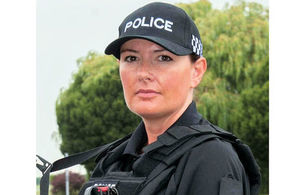
Claire has been appointed awarded her MBE for services to defence and policing and in recognition of her work as the Defence Police Federation Welfare Officer.

Claire has been with our organisation since 1992 and in 2009 became a member of the Defence Police Federation, acting as the Welfare Officer.

Her contribution to the MDP through her role as a Constable and her engagement as a Welfare Officer has been of valuable assistance to the Force, as well as supporting colleagues at times of need following organisational change, bereavement or ill-health. She has thrown herself whole-heartedly into this work, forging a role which is now recognised as a valuable element of the MDP structure. In doing so, she has balanced the organisational need with her DPF position to ensure that both are appropriately represented.

T/Chief Constable Andy Adams comments:

I am sure that many people will want to congratulate Claire individually but, I offer her many congratulations on behalf of the force.

Published 2 January 2018


Press release: Nationwide search begins for young space entrepreneurs

Artist’s impression of a Galileo satellite. Credit: ESA–J. Huart, 2014.

The SatelLife Challenge, now in its second year, is looking for innovative proposals from those aged 11 to 22 which have the potential to use data collected from space to benefit our economy, health or the environment. Ideas from last year’s competition ranged from solutions to help increase the survival rate of heart attack victims by using GPS trackers in fitness devices, to an app that warns people about impending natural disasters, guides them safely away and alerts emergency services.

Satellites support the economy and everyday life, and this competition gives young people the chance to test their ideas with industry experts and perhaps one day become part of the fastest growing sector of the UK economy. The UK space industry builds 40% of the world’s small satellites and 25% of the world’s telecommunications satellites. It supports 40,000 jobs and generates £14 billion in revenue across the country.

Science minister Jo Johnson said:

“Satellites are shaping our society and increasingly important for our economy. Every second they send information around the world, keep shipping lanes and flightpaths clear and help us get to where we want to be.

“Young people today will be an integral part of our mission to grow the UK’s share of the global space market to 10% by 2030, as set out in our industrial strategy. We need to ensure the potential benefits of space are felt across the whole economy and encourage young British entrepreneurs to develop ideas that rival the best in the world.”

The overall winner in 2017 was James Pearson from Lincolnshire, who came up with an app to provide information on coastal flood risks, went on to meet British ESA astronaut Tim Peake and is using his prize money to develop his idea.

James Pearson, 14, said:

“The competition was absolutely amazing for me. It has opened my eyes to the opportunities that are around us. I have really had to push myself to learn new things. The highlights included meeting Tim Peake but also the industry experts. So far I have continued to get my website operational, I’ve been scanning the satellites for more images and I’ve increased my computing power. I will continue to work hard until the website is complete. I have really enjoyed this competition as it has developed my confidence, I was thrilled to win and just to learn about the space industry and technology.”

The competition, which aims to support the development of science, data handling and technological skills, is split into three age groups, with overall prizes of £7,500 for the best individual and best team. A further seven entries from across the age categories will win £5,000, making a total prize fund of £50,000. The judging panel will be made up of experts including representatives from the UK Space Agency, the European Space Agency, the Satellite Applications Catapult in Harwell and industry.

Adina Gillespie, Head of Applications for Earth Observation and Science, at Surrey Satellite Technology Ltd (SSTL), one of the expert judges, said:

“The SatelLife competition is a great initiative to encourage young people to think about satellite applications and consider future careers in the space industry – and we have a lot of fun along the way.”

Entries can be as teams or individuals and all prize winners will be able to pitch their idea to a panel of ‘dragons’ from the space sector who will offer prizes. In 2017 the competition winners were offered a mix of support including an offer to build a prototype, thousands of pounds worth of space on Amazon Cloud Services, access to data, business development advice and a visit to a satellite factory.

The competition closes on 25th February. Visit the SatelLife Challenge entry page for more information.