Press release: New Charity Investigation: Croydon Tabernacle

The Charity Commission, the independent regulator of charities in England and Wales, has opened a statutory inquiry into Croydon Tabernacle (1070276). The inquiry was opened on 14 March 2018.

The charity’s objects include advancing the Christian faith, relieving people who are in conditions of vulnerability or hardship and promoting charitable purposes which might benefit the areas of Surrey, Greater London and other parts of the United Kingdom or the world.

The Commission examined the charity’s financial information and found cause for serious regulatory concern. This included substantial unexplained expenditure and potentially conflicted payments to people connected with the charity. As a result of its concerns, the Commission has frozen a bank account controlled by the charity.

The Commission has been engaging with the charity since November 2016 to examine its concerns; this included a meeting with the charity in February 2017. However the engagement did not resolve the regulatory concerns so a statutory inquiry has been opened.

The inquiry will examine the extent of risks to charity property and whether:

  • there has been misconduct or mismanagement in the administration of the charity and/or breaches of trust or non-compliance with charity law
  • potential conflicts of interest have been adequately identified or managed
  • connected party payments or transactions have been properly authorised

It is the Commission’s policy, after it has concluded an inquiry, to publish a report detailing what issues the inquiry looked at, what actions were undertaken as part of the inquiry and what the outcomes were. Reports of previous inquiries by the Commission are available on GOV.UK.

Ends

Notes to editors

  1. The Charity Commission is the regulator of charities in England and Wales. To find out more about our work see the about us page on GOV.UK.
  2. Search for charities on our check charity tool.
  3. Section 46 of the Charities Act 2011 gives the commission the power to institute inquiries. The opening of an inquiry gives the commission access to a range of investigative, protective and remedial legal powers.


News story: Fidel develops new way for consumers to be rewarded for loyalty

Customer loyalty schemes, such as Tesco Club Card, Boots Advantage Card and Nectar, are popular with shoppers and proven to encourage customer retention and increase sales, yet only 20% of offline retailers have a loyalty scheme.

With 280,000 retailers in the UK generating £300 billion in revenue every year, London-based startup, Fidel, saw an opportunity to rethink the way shoppers can be rewarded for their custom.

Fidel’s goal was to make loyalty and retention marketing simple for both merchants and consumers, and to enable retailers to increase revenues. The company developed a platform that makes it easier for consumers to receive rewards for their purchases. Instead of having to carry different loyalty cards or coupons for each store, they can use their normal debit or credit cards and rewards are allocated automatically at the point of sale.

Turning a vision into global sales

Subrata Dev, Fidel’s founder and CEO, said:

When Fidel applied for the Innovate UK grant, we had little more than a vision. We were operating a customer engagement platform for SMEs and wanted to find a seamless way for customers to collect points and rewards without having to scan cards, key rings or mobile apps.

I’m very excited about the progress we’ve made and where this is heading. The demand has been phenomenal and beyond our expectations. We had so much interest in the platform we were building, before the project had even ended, that we managed to secure further capital from one of the largest venture capital firms in the world, Horizons Ventures.

This additional capital will now help us grow and commercialise the service in UK and internationally.

The platform Fidel created makes it easy for developers to build innovative loyalty applications and services that are linked with payment cards, without having to integrate directly with each payment network (Visa, Mastercard and Amex). Fidel’s mission is to speed up the adoption of ‘card-linked loyalty’ by making the technology more accessible.

Subrata Dev added:

We take care of all the heavy-lifting in the background whilst our partners can focus on building cool products that will ultimately drive transaction volumes and contribute towards the growth of the ecosystem.

A steady increase in customers

Today, the Fidel API is powering several businesses, including Avios (British Airways). Customers will soon be able to earn Avios points automatically while shopping at their local supermarkets, restaurants, airports and coffee shops using any bank card.

Other customers include TopCashBack, Perkbox, Airtime and Percent. Some of the merchants who are already connected to the platform include household names such as Debenhams, Gap, Burger King, House of Fraser, Cafe Nero and Subway.

Fidel has also been invited by Japan’s 3 biggest banks to support the Japanese government’s aim of increasing card usage from 18% to 40% by 2020. By introducing Fidel’s technology platform, the banks hope to encourage more of their customers to take up cashless shopping.

Fidel is expanding the service globally to Ireland, Sweden, Norway, Finland, Australia and the US, and has doubled the size of its team since completing the grant project in November 2017.

Providing a secure interface for users

The company has been careful to build in safeguards for consumers. It is PCI DSS (Payment Card Industry Data Security Standard) level 1 certified. The company handles and transmits all sensitive data via secure bank-level encryption methods.

No personal information, such as a card number, is ever stored. The company cannot monitor transactions without explicit opt-in consent from cardholders and they monitor qualified transactions at participating merchant locations only to fulfil rewards. All data is stored on an anonymised and aggregated basis and the company never analyses or shares this data with third parties.


Speech: A revitalised and relevant Commonwealth: article by HMA James Dauris

46 Heads of Government, over 50 Ministers and 15,000 delegates attended. Heads of delegations met in London and at Windsor Castle, while Ministers and other participants took part in forums for women, youth, civil society and business, and dozens of side events and multilateral and bilateral meetings.

Discussions focused on the theme “Towards a Common Future” for the citizens of the Commonwealth and considered how the organisation needs to change and grow in order to remain relevant to their aspirations.

The Commonwealth is a unique institution built on deep partnerships. CHOGM 2018 reconfirmed the value of the Commonwealth as a modern forward-looking organisation, responsive to the global challenges we all face today, and will face in the future. The meeting showed how effectively the Commonwealth can unite its 53 Member States around issues of common concern, issues like equal access to education and environmental sustainability, both of them tremendously important to the billion young people who live in Commonwealth countries as they look to the future.

Commonwealth members used the opportunity to give further substance to commitments on limiting climate change with the launch of the ‘Commonwealth Blue Charter’ to protect the oceans, supported by a ‘Clean Oceans Alliance’ to tackle plastic pollution, which Sri Lanka joined. Sri Lanka will lead work on the conservation of mangroves in Commonwealth countries.

The Commonwealth’s uniqueness lies in its human networks. People-to-people links define the institution and we need to recognise and nurture them. President Sirisena in his address to the Commonwealth Business Forum highlighted how the government’s “Blue-Green” economic plan will aim to advance the full utilization of the ocean and the other natural resources of Sri Lanka in an environmentally-friendly and sustainable way. In his address to business leaders he commented on the importance of finding solutions to common problems: “There is no standard approach for implementing the Sustainable Development Goals, and each country decides its own path. However the approach led by our countries should be people centred”, he said.

Leaders discussed the need for increasing cooperation across security challenges and committed to implementing global programmes that will facilitate better coordination of efforts. Agreement on the ‘Commonwealth Cyber Declaration’, the world’s most geographically diverse intergovernmental commitment on cyber-security co-operation, illustrated the opportunity for the Commonwealth to bring its members together to meet emerging challenges and threats to the security of all our countries. Commitments relevant to the provisions of the Chemical Weapons Convention also illustrated how the Commonwealth can bring members together behind approaches to common global security problems.

The Summit also provided the opportunity for discussions on boosting trade and investment within the Commonwealth. The Commonwealth contains some of the world’s fastest growing economies and its members account for one-fifth of global trade. Part of its strength lies in so many of its members shared instincts about the importance of open societies and open economies.

Sri Lanka pledged financial support as an anchor investor in the Commonwealth Small States Trade Financial Facility which will help small, vulnerable countries access global markets. Commonwealth small states are expected to have access to USD 300 million of incremental trade finance over a three-year period from this programme.

Sri Lanka leading the way in this endeavour demonstrates another truth of the Commonwealth – that the size of a country is not a limit to ambition and impact. In thanking Her Majesty The Queen for her years of dedicated and unfailing support the British Prime Minister, Theresa May, summarised this. The Commonwealth is a grouping in which “the voice of the smallest member country is worth precisely as much as that of the largest; [in which] the wealthiest and the most vulnerable stand shoulder to shoulder”. In the many outcomes of CHOGM 2018 we saw this reaffirmed.


Press release: New Housing Secretary appointed

New Housing Secretary appointed – GOV.UK

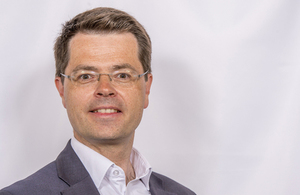
James Brokenshire has today been appointed as Secretary of State for Housing, Communities and Local Government.

James Brokenshire

James Brokenshire has today been appointed as Secretary of State for Housing, Communities and Local Government.

James Brokenshire said:

I am honoured to have been asked by the Prime Minister to serve as Secretary of State for Housing Communities and Local Government. I am determined to get Britain building the homes our country needs so everyone can afford a place to call their own.

One of my top priorities is going to be ensuring everyone affected by the Grenfell Tower fire gets the support they need and we learn lessons from the tragedy so something like this can never happen again.

As the son of a former chief executive of a council local government is in the blood for me. So I look forward to working with councils across the country by supporting them to deliver quality public services and build strong integrated communities.

Published 30 April 2018


Statement to Parliament: Syria update: Penny Mordaunt statement to Parliament

Mr Speaker, I would like to get on record that the aid workers who have been attacked in South Sudan are very much in our thoughts. Aid workers should never be a target. The whole house will want to join me in sending our support to them and to their families.

Mr Speaker, I would like to update the House on the United Kingdom’s support for the people of Syria. I am keenly aware that Honourable Members are deeply concerned about the level of suffering experienced by millions of Syrians. The United Kingdom has shown, and will continue to show, leadership in the international humanitarian response.

In the eighth year of the conflict the plight of the Syrian people remains grave. The Syrian regime appears to have no intention of ending the suffering of its own people, despite the opposition placing no conditions on peace negotiations.

The barbaric attack in Douma on innocent civilians, including young children, was yet another example of the regime’s disregard for its responsibility to protect civilians. Some may seek to cast doubt over the attack and who was responsible, but intelligence and first-hand accounts from NGOs and aid workers are clear: the World Health Organisation received reports that hundreds of patients arrived at Syrian heath facilities on the night of 7 April with “signs and symptoms consistent with exposure to toxic chemicals.”

Regime helicopters were seen over Douma on that evening: the Opposition does not operate helicopters or use barrel bombs.

Asad and his backers, Russia and Iran, will attempt to block every diplomatic effort to hold the Regime accountable for these reprehensible and illegal tactics. That is why the United Kingdom, together with our US and French allies took co-ordinated, limited and targeted action against the Regime’s chemical weapons’ capabilities to alleviate humanitarian suffering.

Britain is clear: we must defend the global rules based system that keeps all of us safe. And I welcome the support we have had from members of this house and from the international community.

We will work with the UN and the Organisation for the Prohibition of Chemical Weapons to create a new independent mechanism to attribute responsibility for chemical weapons attacks.

We will work with France on the International Partnership against Impunity, and with the EU to establish a new sanctions regime against those responsible for chemical weapons use.

In wielding its UN veto twelve times, Russia has given a green light to Asad to perpetrate human rights atrocities against his own people – a regime that has used nearly seventy thousand barrel bombs on civilian targets.

A regime that tries to starve its people into submission, despite the UN Security Council calling for unhindered humanitarian access.

A regime that has continued to obstruct aid to Eastern Ghouta and removes medical supplies from the rare aid convoys that do get in.

A regime that deploys rape as a weapon of war, with nearly eight out of ten people detained by the regime reported to have suffered sexual violence.

A regime that deliberately bombs schools and hospitals, and targets aid workers and emergency responders as they race to the scene to help.

We must support the innocent victims of these atrocities. All warring parties must comply with the Geneva Conventions on the protected status of civilians and other non-combatants. There must be an immediate ceasefire and safe access for aid workers and medical staff to do their job.

We also want to adapt what we do to the new reality of this war. That is why I have announced the new ‘Creating Hope in Conflict’ fund with USAID to work with the private sector to find new technology to save lives in conflict zones, and Britain will establish a humanitarian innovation hub to develop new capabilities to hinder regimes who appear determined to slay innocent men women and children.

Our aid has made a difference. Despite the horrific violence meted out by Asad, we have been able to prevent mass starvation, and large scale disease outbreaks. When we are able to reach people who need our help, our aid works.

We are the second largest bilateral donor to the humanitarian response in Syria. Since 2012, our support has provided over 22 million monthly food rations, almost 10 million medical consultations, and over 9 million relief packages.

But the suffering continues.

13.1 million people are now in need of humanitarian assistance. Over half of Syria’s population has been displaced by violence, with nearly 6 million seeking refuge in neighbouring countries.

In north-west Syria, an intensification of hostilities and the arrival of an additional 60,000 people from Eastern Ghouta is stretching scarce resources. Today, 65% of the population of Idleb – over 1.2 million people – have been forced from their homes.

At last week’s Conference [“Supporting the future of Syria and the Region” in Brussels], I announced that the UK will provide at least £450 million this year, and £300 million next year to alleviate the extreme suffering in Syria and provide vital support in neighbouring countries. This will be in addition to our support for the second EU Facility for Refugees in Turkey. We have now committed £2.71 billion since 2012, our largest ever response to a single humanitarian crisis.

Our pledge will help keep medical facilities open to save lives. We will deploy protective equipment to keep medics and rescue workers safe. We will deploy antidote stocks to treat any further victims of chemical weapons use. We will train doctors and nurses to treat trauma wounds.

We will focus on education, making sure that every child in the region has access to quality education even in the most trying of circumstances; and on steps to protect civilians and ensure that those responsible for attacks will face justice. And we will help support the millions of Syrian refugees sheltering in neighbouring countries.

Our friends in the region, Jordan, Lebanon and Turkey in particular, continue to demonstrate extraordinary generosity in opening their doors to millions fleeing the conflict in Syria.

We must continue to offer them our fullest support. Last week I announced that the UK will host an international conference with Jordan in London later this year. It will showcase Jordan’s economic reform plans, its aspiration to build a thriving private sector, and mobilise international investment.

There are refugees who can’t be supported in the region: people requiring urgent medical treatment, survivors of violence and torture, and women and children at risk of exploitation. We will work closely with the UN High Commissioner for Refugees to identify those most at risk and bring them to the UK.

We are helping. But, with Russian support, Asad continues to bomb his own people – that is why so many continue to die and so many have fled their homes.

There can be no military solution to the Syrian civil war. As UN Special Representative, Staffan de Mistura, said in Brussels last week, the Asad regime risks a pyrrhic victory unless they and their backers engage in a genuine political process. Only this can deliver reconciliation and the restoration of Syria as a prosperous, secure and stable state.

The UK will continue to support the efforts of the UN, under the Geneva process, to this end. The obstacles remain serious – the regime has shown no inclination to engage seriously so far, and the Security Council remains divided.

But the international community cannot and should not resign themselves to failure. The costs for Syria, for the region, and for the wider international rules based system are too great. The Foreign Secretary was in Paris last Thursday to discuss with key partners how we should intensify our efforts to bring this conflict – and its causes – to an end.

Whilst we actively work to find a political solution, the UK will continue to stand alongside the people of Syria and the region; to do what we can to alleviate human suffering; and to demand immediate access for aid workers to all those who need our help.

I commend this statement to the house.