News story: Draft Withdrawal Agreement and Outline Political Declaration


News story: Grappling with digital disclosures

The Head of the National Police Chiefs’ Council has been meeting with senior stakeholders from across Government including the Police, Crown Prosecution Service and Home Office to understand the current and future challenges posed by digital disclosures within the criminal justice system in order to understand how technology might help to solve them.

The workshop chaired by Chief Constable Sara Thornton was a partnership event between the Defence and Security Accelerator (DASA) and the Ditchley Foundation, which brings together influential and expert people to help redefine and renew our society, democracy and alliances.

Law enforcement agencies throughout the world have been wrestling with the problem of how to manage the vast quantities and types of digital data now associated with most criminal investigations, in accordance with proper application of disclosure principles.

While more data brings new opportunities to leverage information for successful prosecutions, there is the challenge of collecting, processing and using this data in a proportionate and targeted way. In addition, the use of connected and internet enabled digital devices is likely to increase meaning that the already overwhelming quantity of data involved is likely to continue reaching new orders of magnitude.

DASA will use the outcomes of the workshop to identify and accelerate innovative technologies to help address the priority challenges, utilising its wide access to the supply base.


Press release: Parole Board Chief Executive’s Blog – 4th Edition – November 2018

Working to improve victims’ experience of parole

The Parole Board makes thousands of decisions each year. The majority of those decisions have the potential to cause anxiety and sometimes upset to victims. Even though the Parole Board’s job is focused not on punishment, but on the potential risk if the prisoner is released, we always take careful account of any victim personal statements and should ensure that we treat victims with humanity and sensitivity.

While we can sometimes make unpopular decisions, we should always be prepared to listen and learn. Therefore, I regularly meet with the Victim’s Commissioner and with individual victims who have experienced the parole process to consider how we might improve.

Restorative Justice Guides

I am delighted that we have now published some really helpful guides about Restorative Justice (RJ), produced in collaboration with Why me? Victims for Restorative Justice. My thanks go to Lucy Jaffé and her team at Why me? for leading this work.

The initiative for this work came from two very brave women, who were the victims of serious offences. Through RJ, they had both met the men who had been convicted of the offences, and had found the process helpful. They wanted to meet me because they were keen to discuss whether Parole Board members understood RJ and how it works, so that members could make well-informed decisions about the potential relevance RJ may have on parole decisions.

I listened very carefully to these two very courageous ladies and made a commitment to them and the Victims’ Commissioner that we would carry out this work. The publication of these leaflets is a great step forward in this work and I am glad that we have delivered on this promise. This was a great piece of work that will undoubtedly help Parole Board members understand more about RJ, and will also help people working in RJ learn about the Parole Board.

For more detailed information about restorative justice and parole, please take a look at the leaflets or go to the Why me? website.

This file may not be suitable for users of assistive technology. Request an accessible format.

If you use assistive technology (such as a screen reader) and need a version of this document in a more accessible format, please email info@paroleboard.gov.uk. Please tell us what format you need. It will help us if you say what assistive technology you use.

This file may not be suitable for users of assistive technology. Request an accessible format.

If you use assistive technology (such as a screen reader) and need a version of this document in a more accessible format, please email info@paroleboard.gov.uk. Please tell us what format you need. It will help us if you say what assistive technology you use.

#RJ Week 18-25 November

The publication of these leaflets ties in nicely with Restorative Justice Week, which is taking place all over Europe, and beyond, this week.

Presumption that a victim can attend an oral hearing

We have already delivered on a recommendation made in the Government’s recent victim strategy that we move to a presumption that a victim can attend an oral hearing to read out their personal statement. This removes the anxious period victims had whilst waiting for a decision from the Parole Board. It is only in very rare occasions that it will be considered inappropriate for a victim to attend, and this will be based on safety or security matters. Even in such cases, victims can still deliver their statement via video-link or other means.

Continuing to reimburse victims for expenses

We continue to reimburse victims for expenses incurred when attending a prison and I hope that this removes some of the barriers and allows victims to contribute as much as possible.

Victim Liaison Events

During October and November, members and staff of the Board have been participating in Victim Liaison Officer briefing events around the country, listening to their concerns and providing advice and guidance. I will be attending the last one of these events in London next week and look forward to meeting VLOs, who are crucial links when victims are engaged in the parole process.

Next steps

I am carefully reviewing the progress made with providing summary decision letters to victims and am grateful for all those who have provided feedback. We are continually developing our thinking in this area and looking to improve the process as much as possible.

I am also keen to see how the plans for a mechanism to reconsider Parole Board decisions develops, and am working with officials within the Ministry of Justice to see how this could be best implemented.

We welcome the plans to improve the Victim Contact Scheme to ensure that victims are kept fully informed of their roles and are able to effectively participate in these evolving processes, which the Victim Commissioner has rightly highlighted as a key part of improving victim experience of the parole process overall.

And finally, we look forward to working with colleagues across the Ministry of Justice to review the Code of Practice for Victims of Crime to make it more accessible to victims whilst providing a clear mandate to those agencies delivering services to victims of crime.



Keep an eye on your vision for driving

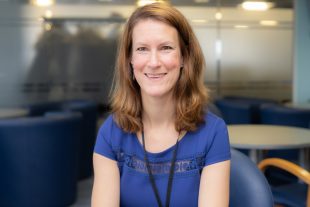
New Vision Panel Secretary Dr Cathy Armstrong shares her professional advice on getting your eyesight checked for driving, and the extra challenges of driving in winter.

I was recently appointed joint DVLA Vision Panel Secretary alongside Dr Gareth Rees, and I’ve worked at DVLA for 2 and a half years. As it’s Road Safety Week, I thought it would be a good time to blog about eyesight and driving.

As drivers we often forget just how complex driving is, and being able to meet the vision standards for this complex activity is extremely important for road safety. It’s particularly important that if someone has been prescribed glasses or contact lenses for driving, they must wear them every time they drive to stay legal on the road.

Many of us wear glasses; maybe just for reading, maybe for all aspects of daily life – or a bit of both. However many people are prescribed glasses to make sure their eyesight meets the vision standards required by law for driving. Unfortunately, forgetfulness, vanity and difficulty tolerating glasses can result in unloved spectacles cluttering up car gloveboxes and handbags. But if they’re not worn, drivers are risking their own and other road users’ safety.

All drivers must be able to meet these eyesight standards as a legal requirement. They test both visual field and acuity – that is, the area your sight covers and how clearly you can see. A defect in your visual field may mean you struggle to see approaching hazards without having to look away from the road ahead. A reduction in your visual acuity could give you difficulty in reading road signs and signals. It’s also important to remember that those who drive for a living and have a group 2 (vocational) licence must meet higher standards for vision. This is because of the size and type of vehicles they drive, and the longer time spent behind the wheel.

Winter sky

Driving during the winter months can be particularly challenging, since weather conditions can make it difficult to see clearly. There are the darker mornings, glare from the low setting winter sun, reduced visibility in rain and fog, as well as wet and icy weather and shorter daylight hours… All of these factors can make driving conditions more hazardous at this time of year, particularly if you have any problems with your eyesight.

Eyesight deteriorates over time and this can happen at any age. Some drivers may be noticing some of the tell-tale signs that their eyesight is not as good as it used to be. You might be finding it harder to judge distances, struggling to read a newspaper, or maybe it’s getting more difficult for you to drive at night. That’s why we recommend that all drivers have their vision tested at least every 2 years. If you notice any change in your eyesight, go and see your optician straightaway – don’t wait until your next check-up or when your driving licence is due for renewal.

If you don’t meet the eyesight standards, stop driving immediately and tell DVLA. It’s better to be safe than sorry.

Let’s block ads! (Why?)


Speech: DFID Ghana Social Sector Team Leader’s speech at Adolescent and Youth Pre-Summit to African Union Second Girl Summit

Honourable Minister of Gender, Children & Social Protection,

H.E. The Second Lady of the Republic of Ghana,

UN Resident Coordinator,

Representative from the Canadian High Commission,

Regional Director of the International Planned Parenthood Federation.

Thank you to the African Union and the Government of Ghana for hosting this important conference.

Yesterday marked the anniversary of the Declaration and the Convention of Children’s Rights, the most widely-ratified human rights treaty in history which Ghana was the first country to ratify. So it is a time for celebrating children’s rights, to continue to press for action that will improve the lives of children and youth around the world, and to recognise that the future belongs to them– not us.

So I am delighted to be here. The UK government is committed to empowering young people and giving them the chance to have their voices heard, especially on issues that affect them specifically.

This includes the crucially important issue of child marriage, which we know is incredibly widespread. Over 650 million women alive today were married during their adolescent years. And every day, 20,000 adolescent girls become pregnant. I look forward to this Summit’s discussions and decisions on how to tackle this.

We know that young people have enormous potential to shape the future of their countries when given the right opportunities and support. Without the active participation of young people, we will not be successful in achieving the Sustainable Development Goals. This is why DFID provides support to youth programming and policy development that enables productive employment; develops future leaders and active citizens; protects young people from harm; and raises awareness of development issues.

And if I may speak specifically on Ghana for a moment.

The UK Government’s International Citizen Service programme brings together young people form the UK and young Ghanaians. Working in Eastern region and Upper West, these young volunteers build their own skills, confidence and job prospects as well as working to promote gender equality, adult literacy and help to support education for children with disabilities. To date, this UK Aid programme has supported 35,000 young people across the globe.

I also want to note His Excellency the President’s vision for a self-reliant Ghana. This vision is truly inspiring and is applauded by the UK and all development partners. In the long term, economic development and investment in human capital, which means an investment in young people’s health, education and tackling barriers that block their potential, is the sustainable pathway to self-reliance.

The summit…

It is fantastic to be part of the adolescent and youth pre-summit, and to see so many impressive young people represented here today. To the young people – I would urge you all to raise your voice and use this forum to share your expertise and knowledge of the issues that are affecting your generation. And to the not-so-young… I would encourage you to listen openly to what young people are telling us.

This final point is summed up by the #ourlivesourleadership, #enoughwiththesilence and #endchildmarriagenow hashtag that will be circulating Twitter to tie in with the summit. These issues affect young people, and we should be empowering young people to speak out and end the silence.