Press release: Carlsberg pollution leads to restorative charity donations

Carlsberg Supply Company UK Ltd (Carlsberg) has paid £120,000 to environmental charities as part of an Enforcement Undertaking (EU).

The EU was offered to the Environment Agency after the company admitted causing two similar diesel pollution incidents in the River Nene in July and October 2017.

Benefit to environment

Enforcement Undertakings (EUs) enable firms and individuals who have damaged the environment to offer to complete actions which will address the cause and effect of their offending, including making a payment to an appropriate environmental project.

EUs can be offered for offences including polluting rivers, breaching permit conditions designed to protect communities, or failing to comply with recycling/recovery obligations. The Environment Agency then carefully considers whether the actions offered by the offender are acceptable.

In July 2017, around 230 litres of diesel escaped into the River Nene. This followed a diesel spill the previous week that ran into the site’s surface water drain. Heavy rain in the days leading up to pollution incident is believed to have washed the diesel out of the drain and into the River Nene. The Environment Agency was able to contain most of the spill by ensuring the lock downstream at the marina remained closed until the diesel was cleared up by the Environment Agency and Carlsberg personnel.

In October 2017, an estimated 200 litres of diesel escaped into the same river following similar circumstances. The diesel took the same path as the previous incident and due to a faulty valve flowed straight into the River Nene.

The EU offer was accepted by the Environment Agency in August 2018 and payments to the charities have already been received. Carlsberg made donations totalling £120,000, made up of £80,000 to the Wildlife Trust – Bedfordshire, Cambridgeshire and Northamptonshire, and £40,000 to the River Nene Regional Park Community Interest Company.

This money will be used to fund environmental improvements including coir rolls along the river at Foot Meadow Island on the River Nene in Northampton.

The company also paid the Environment Agency’s incident response and enforcement costs in full. In response to both incidents Carlsberg introduced site based improvements, including incident training and exercising, installation of preventative measures to the draining system and the revision of relevant processes and procedures to reduce the likelihood of this happening again.

Tim Lowe, a Regulatory Officer with the Environment Agency, said:

Enforcement Undertakings allow polluters to positively address and restore the harm caused to the environment and prevent repeat incidents.

The Environment Agency is increasingly using this method of enforcement for suitable cases to swiftly restore the environment, improve practices of the offending company and avoid longer criminal court cases. However prosecutions will still be taken in appropriate cases.

Please report any environmental issues to the Environment Agency’s 24 hour Incident Hotline on 0800 80 70 60.

John Comont, Conservation Director for the Wildlife Trust for Bedfordshire, Cambridgeshire and Northamptonshire, said:

We have ambitious goals to increase wetland diversity along the river Nene and around Northampton, not just on our treasured wildlife sites in the area, but equally in the connecting corridors and neighbouring areas that can help form a vital ‘network for nature.

We urgently need more funds in order to achieve this ambition and the money we have received will contribute towards these goals, which we believe will improve the area for people as well as wildlife.

Kathryn Hardcastle, Chief Executive Officer, River Nene Regional Park, said:

This contribution has allowed us to complete a £140,000 project at the Foot Meadow Island in the town centre which has improved the environment for people and for nature.

This is our second Enforcement Undertaking contribution and is an excellent way of funding environmental improvements and building awareness.

Notes to editors

The River Nene Regional Park Community Interest Company has used the money to improve river habitat with the installation of planted coir rolls along the river at Foot Meadow Island on the River Nene in Northampton.

Coir rolls are a great way to create riverside habitat opportunities on rivers with concrete edging, without compromising the water flow. As well as the aesthetic appeal, coir rolls benefit a wide range of species, from native invertebrates, water voles, aquatic birds as well as providing cover for young fish and a place for species such as bream to lay their eggs. The root systems from the plants in the coir roll can also assist with water purification through the absorption of nutrients.

For more information about the River Nene Regional Park Community Interest Company project please contact kathryn@rnrp.org, or call 07551311528.

For more information on the Wildlife Trust – Bedfordshire, Cambridgeshire and Northamptonshire – please contact Caroline.Fitton@wildlifebcn.org or call 01954 713567.
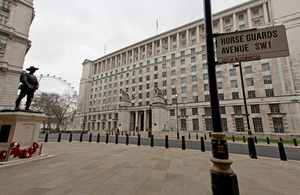


News story: Joint Forces Command Operational Honours Announced

placeholder

The following individuals from Joint Forces Command have been recognised;

Commander of the Order of the British Empire (CBE)

  • Brig Nicholas Stpehen Pond MBE, Operation Shader

Officer of the Order of the British Empire (OBE)

  • Lt Col Charles Grist MBE, Standing Joint Force Headquarters

Member of the Order of the British Empire (MBE)

  • Sqn Ldr Christopher Wright, Royal Air Force, Joint Services Command and Staff College

Queen’s Commendation for Valuable Service (QCVS)

  • Lt Amy Gilmore, Royal Navy, Development, Concepts and Doctrince Centre, Shrivenham
  • Sqn Ldr Edward Sellers, Royal Air Force, Joint Service Signals Organisation

Published 23 November 2018


Precious Cells International: information for donors, creditors and employees

On Friday 23 November 2018, a winding up order was made against Precious Cells International (company number 07210233), a private tissue bank concerned with storing cord blood samples.

The court appointed the Official Receiver as the liquidator.

Information for donors

Storage facilities continue to safely store cord blood samples since Precious Cells International entered into administration on 28 March 2018 and the Official Receiver is engaging with them to ensure they continue to do so in the liquidation period.

The Official Receiver is still working to recover the company’s records and is working with donors to help access their samples.

Accessing your sample

Each cord blood sample has a unique code, beginning with ‘PCI’ and you will need to know your code to help the storage facility locate your sample.

If your code falls between PCI000004 and PCI004880, you will need to contact: Future Health Technologies Limited, 10 Faraday Building, Nottingham Science & Technology Park, University Boulevard, Nottingham, NG7 2QP

  • BOC UK and Ireland Cryobank previously held samples on behalf of Precious Cells International but closed its UK Cryobank facility on 15 December 2019, moving all samples to Future Health Technologies
  • BOC will continue to act as the point of contact for Precious Cells International Limited’s clients going forward. Contact via Hannah.Harris@boc.com

If your donor sample number is issued after PCI004881, you will need to contact Biovault Technical Ltd: Plymouth International Medical & Technology Park, 24 Brest Road, Derriford, Plymouth, PL6 5XP; Tel 01752 753720

If you cannot locate your samples please email the Official Receiver via preciouscells@insolvency.gov.uk with the following details:

  1. PCI reference
  2. date the sample was taken
  3. Name of the donor

Information for Pharmacells donors

Pharmacells is a separate company registered and based in Scotland and not under the Official Receiver’s jurisdiction. If you have contracted Pharmacells Limited to store your cord blood samples, the company was dissolved on 5 July 2019 after going into Administration on 13 April 2018.

We do hold the records of the company’s donors, for those who wish to collect them.

Information for Precious Cells International employees

Former staff working for Precious Cells International were made redundant during the administration.

If you have specific enquiries about your redundancy payments, contact CCW Recovery Solutions on 01892 700200 or via info@ccwrecoverysolutions.co.uk.

Anyone worried about their pension situation can ring The Pension Advisory Service (TPAS) on 0300 123 1047 for free and impartial guidance and JobCentre Plus is ready to support any employee find new employment.

Information for creditors

To register as a creditor you will need to complete a Proof of Debt form and email this to the Official Receiver via preciouscells@insolvency.gsi.gov.uk.

Once you have registered and the Official Receiver receives your proof of debt form they will add you to the list of creditors and include you on future correspondence about the case.

This page is being regularly updated

As the liquidation proceeds we will continue to update this page. Please check back regularly for updates.


News story: Commercial vehicle operators using old tyres to face investigations

From today (23 November 2018), if the Driver and Vehicle Standards Agency (DVSA) finds a tyre more than 10 years old as part of its routine heavy vehicle enforcement work, it will carry out follow-up investigations on the vehicle operator.

If the operator cannot give an adequate explanation for using an old tyre, or their tyre management systems are not up to standard, DVSA may refer them to the Office of the Traffic Commissioner for potential regulatory action.

Updated guidance for operators

DVSA has updated its guide to maintaining roadworthiness as part of Road Safety Week. It builds on previous guidance issued by the Department for Transport (DfT) in 2013 which strongly discouraged the use of tyres older than 10 years on coaches.

Jesse Norman, Roads Minister, said:

I asked the DVSA to consider this measure as a means to tighten enforcement against the use of older and potentially dangerous tyres.

This is an important step forward in our efforts to improve tyre safety. The Department for Transport is continuing to work with experts to collect robust evidence on older tyres. This research will report back in the spring.

Gareth Llewellyn, DVSA Chief Executive, said:

DVSA’s priority is to protect everyone from unsafe drivers and vehicles.

Tyre safety is vital and DVSA has always taken strong action to protect the public from unsafe tyres of all ages.

By changing our approach, we’re sending the message that no one should use tyres more than 10 years old.

Roadside checks

DVSA has also updated its categorisation of defects guide to include tyres aged more than 10 years old fitted to any heavy vehicle or trailer.

The guide, which is for DVSA enforcement staff, sets out what action they can take when they find roadworthiness defects on vehicles.

From April 2016 to March 2017, DVSA enforcement staff carried out:

  • 64,690 mechanical safety checks on heavy goods vehicles and issued 17,405 prohibitions
  • 9,787 mechanical safety checks on light goods vehicles and issued 5,434 prohibitions
  • 11,324 mechanical safety checks on buses and coaches, and issued 1,760 prohibitions

A prohibition prevents you from driving until you get a problem with your vehicle fixed.

Tyre research

Earlier this year, DfT announced a study into the safety of ageing tyres – the first publicly funded research of its kind in the UK.

In 2013, DfT issued guidance to all operators setting out that tyres that have reached the age of 10 years should not be used on a steering axle, and stipulating strict conditions if they’re to be used at all.

Since then, DVSA vehicle standard standards assessors and vehicle examiners have routinely checked the age of tyres on these vehicles every year, as well as in fleet and roadside inspections.

Helping operators keep their vehicles safe to drive

The ‘guide to maintaining roadworthiness’ has also been updated to help resolve bridge strikes. These cause significant disruption for the rail network and are often caused by drivers failing to appreciate the height of their vehicle.

It gives guidance for drivers to help make sure they record the height of their vehicle during their daily walkaround checks, which are part of an effective maintenance system. By improving guidance in this area, DVSA aims to see a reduction in disruption to travellers.


Press release: Environmental charities receive over £2.2 million from businesses which broke environmental laws

Companies and individuals will make the payments for environmental offences including pollution of rivers or the sea, not meeting permit conditions or not taking reasonable steps to recover packaging waste.

A total of 15 charities and projects will benefit from the £2,223,121.54 with the money to be spent by local groups on projects that benefit the environment including cleaning up and enhancing parks, rivers and beaches.

The latest list includes the Environment Agency’s largest ever financial contribution of £975,000 offered by Wessex Water Services Limited for an environmental offence involving sewage spills at Swanage in Dorset. The funds will benefit Dorset Waste Partnership (£400,000), Dorset Litter Free Coast and Sea Project (£100,000), Purbeck District Council/Swanage Town Council (£400,000) and Durlston Country Park and Nature Reserve (£75,000).

There are another 14 Enforcement Undertakings with payments ranging from £5,000 – £232,000, including:

  • United Utilities Water Limited – £232,000 benefitting Mersey Rivers Trust (£90,000) and Community Forest Trust (£142,000) for discharging sewage into a brook

  • Yorkshire Water Services Limited – £200,000 benefitting Yorkshire Wildlife Trust for polluting a river.

  • Northumbrian Water Limited – £135,000 benefitting Durham Wildlife Trust (£45,000), Wear Rivers Trust (£45,000), Marine Conservation Society (£45,000) for polluting a stream.

  • Carlsberg Supply Company UK Limited – £120,000 benefitting the Wildlife Trust for Bedfordshire, Cambridgeshire, and Northamptonshire (£80,000) and River Nene Regional Park Community Interest Company (£40,000) for polluting a river.

  • Tesco Distribution Limited – £100,000 benefitting Yorkshire Wildlife Trust for discharging diesel into a watercourse and ponds.

  • Angel Springs Holdings Limited – £24,329 benefitting Marine Conservation Society for not taking reasonable steps to recover and recycle packaging waste.

As well as making a payment to an appropriate charity or project, these companies have accepted liability, demonstrated restoration of harm and will make improvements to avoid future offences.

Peter Kellett Director of Legal Services from the Environment Agency said:

When companies damage the environment whether it is through polluting our waters or breaching permit conditions, we will take enforcement action against them including civil sanctions.

We take these environmental incidents very seriously and these payments of more than £2.2 million direct to charities will help them carry out vital projects to improve our environment right across England.

Ellie Brodie, Senior Policy Manager, The Wildlife Trusts said:

Obviously, we would have been happier if these incidents hadn’t occurred at all. However, it’s a good principle that polluters should offer redress for the damage they cause. The money will enable work which will benefit wildlife and wild places, and which otherwise wouldn’t be funded. We hope these payments serve as a reminder to business of its responsibility towards a clean and healthy environment; and also have a deterrent effect as it’s clearly cheaper to do things cleanly, rather than risk creating pollution.

Companies or members of the public are urged report pollution to the Environment Agency’s 24/7 hotline on 0800 80 70 60. Environment Agency officers respond to limit damage to the environment and protect people and wildlife.

The Environment Agency is increasingly using enforcement undertakings for suitable cases to restore or enhance the environment, improve practices of the offending business and ensure future compliance with environmental requirements. However prosecutions will still be taken, particularly in the most serious cases.

The full list of Enforcement Undertakings is now available.