Press release: 26,000 new businesses set up by entrepreneurial jobseekers

Entrepreneurial jobseekers have set up more than 26,000 new businesses thanks to a government scheme that helps unemployed people turn their dreams of becoming their own boss into a reality, new figures published today (21 August 2013) show.

From gourmet chocolate companies to internet games designers, the New Enterprise Allowance (NEA) has been behind a wide range of new ventures since it was introduced in 2011, with the most recent statistics showing around 2,000 new businesses being set up every month.

The NEA offers expert mentoring and financial support to jobseekers who want to start up their own business, helping people who have previously been on benefits turn their business ideas into successful enterprises.

Today’s figures also show that beneficiaries of the scheme come from all ages, with more than 6,000 businesses started by people aged 50 or over – challenging the idea that entrepreneurial zeal is solely a youthful attribute.

Almost 4,000 disabled people were also helped by the scheme to become their own boss.

Minister for Employment Mark Hoban said:

The New Enterprise Allowance is a great example of the aspiration nation in action: government offering support to people with ideas, as well as the ‘can-do’ attitude to turn them into successful enterprises.

Every month, we are successfully supporting around 2,000 jobseekers to get off benefits and start their own business so that they can fulfill their aspiration to look after themselves and their families.

Welcoming the announcement, entrepreneurship ambassador, Levi Roots said:

I am a big fan of the New Enterprise Allowance – it’s a great scheme, which helps people with ideas make the most of their talent.

By offering expert mentoring support and start up funds it sends a message to those thinking about starting their own business: ‘you’re not alone’.

Case studies

Luke Boulton-Major

Luke Boulton-Major, 26, set up a martial arts and fitness centre in Bristol through the NEA scheme. Luke spent 4 years training and studying taekwondo in South Korea in his early twenties. On his return to the UK he couldn’t find work or anywhere to continue his martial arts training.

After being unemployed for 6 months he took part in the NEA scheme and decided to open up his own gym and martial arts centre in Bristol which is now the biggest purpose-built martial arts centre in the country.

Simon Short

A Grimsby entrepreneur, who spent 16 years in and out of prison, has set up his own business through the NEA.

Simon Short, who set up education and training social enterprise, The Intelligence Project, says:

Self-employment is the quickest way for offenders to be employed, if their risk-taking nature and money-oriented traits can be channelled positively. Those entrepreneurial attributes are essential in business.

The Intelligence Project delivers education and training to ex-offenders to help reintroduce them to life outside of prison. Through self-referrals and those from the government’s Work Programme, Simon and his team assess an individual’s social capital before assigning them with a mentor, who has had similar life experiences. The mentor then helps build a personal development plan, to help that person overcome issues such as housing or mental health, so they can become more self-sufficient.

More information

From April 2011 to May 2013 (inclusive) there have been:

  • 54,410 starts with a New Enterprise Allowance business mentor

  • 26,160 starts to the New Enterprise Allowance weekly allowance

The NEA, launched in April 2011, aims to help unemployed people who want to start their own business. NEA is available to Jobseeker’s Allowance (JSA) claimants aged 18 and over.

Participants receive access to a volunteer business mentor who will provide them with guidance and support as they develop their business plan and through the first 6 months of trading. Once participants have demonstrated they have a viable business proposition with the potential for growth in the future, they are able to access financial support.

This consists of:

  • a weekly allowance worth £1,274 over 26 weeks, paid at £65 a week for the first 13 weeks and £33 a week for a further 13 weeks

  • if they need start-up capital, they may also be able to access a loan up to £1,000 to help with their start-up costs

The total package of support is worth up to £2,274 to each participant who starts their own business.

Visit the New Enterprise Allowance scheme webpage for full details.

Media enquiries for this press release 020 3267 5137

Follow us on Twitter www.twitter.com/dwppressoffice


Press release: New Charity Inquiry: Rigpa Fellowship

The Charity Commission, the independent regulator of charities in England and Wales, is today announcing that it has opened a statutory inquiry into Rigpa Fellowship (279315). The inquiry was opened on 8 November 2018.

The charity, which is based in London, has objects to advance the Buddhist religion, and provides religious education, training and activities.

The Commission has been engaging with the charity since August 2017 over serious concerns about adult safeguarding. The regulator’s concerns have escalated in the course of this engagement, prompting the opening of a statutory inquiry.

The inquiry will examine the charity’s governance, policies and practices with regard to adult safeguarding, particularly in relation to:

  • its response, general handling and disclosure to the Commission and other agencies in relation to serious adult safeguarding incidents
  • its responsibility to provide a safe environment for its beneficiaries, staff and other charity workers in the delivery of its programmes

More generally the inquiry will examine the charity’s:

  • recruitment and supervision of its employees, volunteers and other charity workers
  • financial controls and their application
  • responsibility to maintain its reputation as a charity which can be entrusted with public support and the confidence of its beneficiaries, staff and volunteers

It is the Commission’s policy, after an inquiry has concluded, to publish a report detailing what issues the inquiry looked at, what actions were undertaken as part of the inquiry and what the outcomes were.

Reports of previous inquiries by the Commission are available on GOV.UK.

Ends

Notes to editors

  1. The Charity Commission is the independent regulator of charities in England and Wales. To find out more about our work see the about us page on GOV.UK.
  2. Search for charities on our check charity tool.
  3. Section 46 of the Charities Act 2011 gives the Commission the power to institute inquiries. The opening of an inquiry gives the commission access to a range of investigative, protective and remedial legal powers.


Statement to parliament: Prison operator services framework competition

At the Justice Select Committee on 26 June, I reaffirmed the Government’s commitment to building up to 10,000 modern and decent prison places to replace old, expensive and unsuitable accommodation, modernising parts of our prison estate.

Also at the Committee, I confirmed the intention to launch a competition to appoint a framework of prison operators from which we could select the operator for the new prisons including further prisons following expiry of current private sector contracts.

Today I can announce the launch of the Prison Operator Services framework competition through a notice which will be published in the Official Journal of the European Union (OJEU) within the coming days.

Securing a framework of operators should reinvigorate the prison market by encouraging new providers to enter the custodial arena. It will also enable MoJ to more effectively and efficiently manage a pipeline of competition over the next decade. Once part of the framework, operators can choose to compete in shorter ‘call off’ competitions for the operation of individual prisons.

The first of these call-off competitions will be for the operation of the new build resettlement prisons at Wellingborough and then Glen Parva. These are being built using public capital, with construction expected to begin in late 2018 and late 2019 respectively.

HMPPS will not bid in the competition but will provide a ‘public sector benchmark’ against which operators’ bids will be rigorously assessed. If bids do not meet our expectations in terms of quality and cost, HMPPS will act as the provider.

This competition is not about the difference between the public and private sector. It is about driving quality and innovation across the system. I am clear that through this competition we expect bidders to provide high quality, value for money bids that deliver effective regimes to meet the specific needs of prisoners. Our aim being to help them turn their lives around to prevent reoffending.

This Government remains committed to a role for the private sector in operating custodial services. The competition launched today will seek to build on the innovation and different ways of working that the private sector has previously introduced to the system. The sector has an important role to play, and currently runs some high-performing prisons, as part of a decent and secure prison estate.

We will ensure, through the procurement and contract management processes, that we have sufficient measures in place to have confidence in the delivery and maintenance of the contracted prisons over their lifetime.

A balanced approach to custodial services provision, which includes a mix of public, voluntary and private sector involvement has been shown to introduce improvements and deliver value for money for taxpayers.

The launch of the Prison Operator Services Framework underlines this Government’s commitment to reform the prison estate, build much-needed prison places, improve standards of decency across the estate, and reduce reoffending.


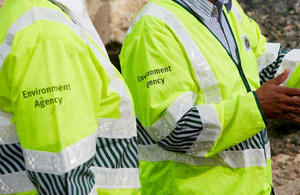
Press release: Environment Agency issues Brockham oil site permits

placeholder

The new permits bring the site into line with the current regulations for oil and gas sites to provide a high level of protection to the environment. This is part of the Environment Agency’s review of all oil and gas permits granted prior to October 2013.

The permits issued set out the stringent conditions that the site operator must comply with to ensure that the environment and local people are protected.

An Environment Agency spokesperson said:

Before we issue an environmental permit we need to be satisfied that the environmental risks associated with exploring for onshore oil and gas are managed and controlled through proper design and management of the drilling and exploration site.

As with all decisions on issuing environmental permits, we assess a company’s proposals to ensure they meet strict requirements. If an activity poses an unacceptable risk to the environment, the activity will not be permitted.

Further information on our decision and the permits can be found on GOV.UK.

Published 29 November 2018


Press release: New statistics show number of new homes continues to rise

Between 1 April and 30 September 2018, programmes managed by Homes England* started building 15,766 homes on site and completed a total of 15,704 homes. These figures represent 15 per cent and 31 per cent increases on the first half of 2017-18.

Affordable homes represented 63 percent of the housing starts (9,909 homes) – a 42 per cent increase on the same period last year – and 71 per cent of the housing completions (11,091 homes), a 19 per cent increase on the number of affordable homes completed in the first half of last year.

A total of 5,857 homes for market sale were started in the six months to 30 September 2018 – a 13 per cent decrease on the same time last year – however, the number of market sale homes completed in this period was up 69 per cent to 4,613, compared to 2,737 last year.

Of the affordable homes started, 5,714 were for Affordable Rent – a 26 per cent increase on the 4,526 started in the same period last year. A further 3,702 were for Intermediate Affordable Housing schemes (including Shared Ownership and Rent to Buy), representing a 71 per cent increase on the same period last year. The remaining 493 affordable homes started were for Social Rent, an increase of 68 per cent on the 294 started in the first six months of last year.

Of the affordable homes completed, 7,943 were for Affordable Rent – a 10 per cent increase on the 7,219 completed in the same period last year. A further 2,841 were for Intermediate Affordable Housing schemes – an increase of 50 per cent on the 1,900 completed in the same period last year. The remaining 307 affordable homes completed were for Social Rent, an increase of 76 per cent on the 174 completed in the first six months of last year.

Nick Walkley, Chief Executive of Homes England, said:

“These latest figures show the overall number of homes being built continues to rise, reflecting the hard work being carried out by the housing industry to build better homes faster.

“However, while they are encouraging to see, we cannot be complacent. We know there is more work to be done to meet the Government’s ambition to deliver 300,000 new homes a year, so we will continue to intervene in the housing market and use our land, powers and influence to make homes happen.”

ENDS

For further media information please contact:

Sarah Tucker, PR and Media Officer, Tel: 020 7393 2261 or 07970973134 Email: sarah.tucker@homesengland.gov.uk

Patsy Cusworth, PR and Media Manager, Tel: 020 7393 2201 or 0796772328 Email: patsy.cusworth@homesengland.gov.uk

Notes:

*The figures published today reflect the latest set of official statistics in relation to housing starts and completions for England (excluding London for all programmes except those administered by Homes England on behalf of the Greater London Authority (GLA)). Since April 2012, the Mayor of London has had oversight of strategic housing, regeneration and economic development in London.

The list of programmes included in these totals are detailed in the official housing statistics report, which can be found here.

Homes England manages London delivery relating to Get Britain Building, Build to Rent, Builders Finance Fund and The Home Building Fund – Short Term Fund, which are reported in these statistics.

Homes England also manages the Help to Buy equity loan scheme in England (including in London on behalf of the GLA). However, the completions are reported by the Department for Communities and Local Government and, therefore, are excluded from these statistics.

About Homes England

Homes England is the Government’s housing accelerator. We have the appetite, influence, expertise and resources to drive positive market change.

By releasing more land to developers who want to make a difference, and investing in places of greatest need, to deliver new homes. Homes England welcomes partners who share their ambition to challenge the traditional norms and build better homes faster.

For more information click here or follow us on Twitter.