Press release: PM meeting with President Erdogan of Turkey: 1 December 2018

placeholder

A Downing Street spokesperson said:

This afternoon at the G20 in Argentina, the Prime Minister had discussions with President Erdogan of Turkey.

The leaders agreed that the relationship between the UK and Turkey continues to strengthen.

They discussed modern slavery and agreed it was important to work together globally to stop this awful crime.

The Prime Minister and President Erdogan also discussed the developing trade relationship between the two countries, and agreed there will be opportunity to strengthen this still further when the UK leaves the European Union.

They discussed increasing our defence industry co-operation, in particular through the TFX fighter jet project.

The PM stressed the importance of ensuring that those responsible for the appalling murder of Jamal Khashoggi are held to account, and said that Saudi Arabia should take action to build confidence that such a deplorable incident could not happen again.

Published 3 December 2018


Press release: PM meeting with Crown Prince Mohammed bin Salman: 30 November 2018

placeholder

A Downing Street spokesperson said:

The Prime Minister met with Crown Prince Mohammed bin Salman today (30 November) during the G20 summit in Buenos Aires.

The Prime Minister stressed the importance of ensuring that those responsible for the appalling murder of Jamal Khashoggi are held to account, and that Saudi Arabia takes action to build confidence that such a deplorable incident could not happen again.

Noting the steps taken by the Saudi investigation since the Foreign Secretary had met with the Crown Prince and King Salman on 12 November, she encouraged the Crown Prince to ensure that Saudi Arabia co-operated fully with the Turkish authorities and worked to bring both investigations to an acceptable close. To ensure full accountability there needed to be full transparency about exactly what had happened and who was responsible, in line with the commitments made by King Salman when she spoke to him on 24 October.

On Yemen the Prime Minister set out the urgent need to bring an end to the conflict and bring relief to millions threatened by famine. She urged concrete Saudi support for UN Special Envoy Martin Griffiths and for progress at the upcoming Stockholm talks.

The Prime Minister stressed that the humanitarian situation remained dire and reaffirmed UK commitment to making progress on improving the situation, including through a UN Security Council Resolution.

The Prime Minister reiterated UK support for Saudi Arabia’s security, including the very real threats posed by Iranian interference in Yemen.

Published 3 December 2018


Press release: Fine wine investment scheme shut down by courts

Intercontinental Wines Limited was wound up in the public interest at the High Court on 23 November 2018, with the Official Receiver appointed as liquidator. The company’s sole appointed director since incorporation in 2011 has been David Angel.

The court heard that the company claimed to be a wine broker and used high-pressure cold calling to target members of the public.

Representatives would emphasise that investments in wine were secure and resulted in profitable returns. Customers were also told that the cases of fine wine would be stored in bonded warehouses under personal accounts.

However, customers began to complain about various matters, including a complete failure by the company to respond to queries, such as information about the safe holding of wines supposedly purchased on their behalf.

Complaints were made to the Insolvency Service, with the following investigation discovering that Intercontinental Wines only made purchases for a small percentage of paid customers on an apparently ad hoc basis and not according to its contractual requirements to do so on behalf of each customer.

And only around 10% of customers had cases of fine wine stored in bonded warehouses under personal accounts.

Further enquiries found that Intercontinental Wines’ bank records and financial statements showed wine purchased by the company was only worth a fraction of their sales by value.

In a two-year period between March 2015 and February 2017 the company made sales of over £460,000, while purchasing just only £100,000 worth of stock. This meant that without knowing it, customers would need the value of the wine to increase by more than 400% to at least break-even.

The company failed to provide records of customers’ purchases and it was only later when investigators obtained the banking records, were they able to evidence that only a small proportion of sales proceeds were used to purchase wine. Instead, the company’s bank accounts were used for personal expenditure.

And the company vacated its joint trading and registered premises in Southampton in March 2018 but failed to disclose this to customers or to the Registrar of Companies.

Irshard Mohammed, Senior Investigator & Case Manager at the Insolvency Service, said:

Intercontinental Wines enticed customers with the promise of attractive returns from building a portfolio of fine wines, entrusting the company to make purchases and store wines at bonded warehouses on their behalf. However, the company blatantly failed to do so in the vast majority of sales made and instead took customers’ funds on face value, frittering it away on unexplained or personal expenditure.

These winding-up proceedings show that we will take firm action against companies that operate in such an unscrupulous way.

By virtue of the appointment of the Official Receiver all public enquiries concerning the affairs of the company should be made to: The Official Receiver, Public Interest Unit, 2nd Floor, 4 Abbey Orchard Street, London SW1P 2HT. Email: piu.south@insolvency.gsi.gov.uk.

Intercontinental Wines Limited, company registration number 7672315, was incorporated on 16 June 2011. The company’s registered office is at Threefield House, Threefield Lane, Southampton, England, SO14 3LP, that of a serviced office provider.

The petition to wind-up Intercontinental Wines Limited was presented under s124A of the Insolvency Act 1986 on 12 October 2018. The company was wound up on 23 November 2018 and the Official Receiver has been appointed as liquidator.

Company Investigations, part of the Insolvency Service, uses powers under the Companies Act 1985 to conduct confidential fact-finding investigations into the activities of live limited companies in the UK on behalf of the Secretary of State for Business, Energy & Industrial Strategy (BEIS). Further information about live company investigations is available here.

The Insolvency Service, an executive agency sponsored by the Department for Business, Energy and Industrial Strategy (BEIS), administers the insolvency regime, and aims to deliver and promote a range of investigation and enforcement activities both civil and criminal in nature, to support fair and open markets. We do this by effectively enforcing the statutory company and insolvency regimes, maintaining public confidence in those regimes and reducing the harm caused to victims of fraudulent activity and to the business community, including dealing with the disqualification of directors in corporate failures.

Further information about the work of the Insolvency Service, and how to complain about financial misconduct, is available.

Media enquiries for this press release – 020 7637 6498

You can also follow the Insolvency Service on:


News story: Experienced nuclear leader for new Magnox role

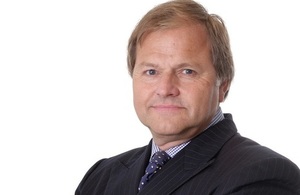
Lawrie Haynes OBE
Lawrie Haynes OBE

The new subsidiary will come into being on 1 September 2019 when the current Parent Body Organisation, the Cavendish Fluor Partnership, hands over to the NDA.

Lawrie has extensive experience in senior executive and non-executive roles across a range of major private sector companies and high profile public sector organisations, with a strong track record in the nuclear sector. These include his roles as President of Rolls-Royce Land and Sea Division, Chief Executive of British Nuclear Group and Non-Executive Director at Network Rail.

David Peattie said:

I am delighted to welcome Lawrie as Chair Designate of the new Magnox Ltd Board. His contribution will be invaluable in establishing the new leadership team as it takes over from the outgoing team.

His unique blend of experience in both the private and public sector, and particularly his extensive knowledge of the nuclear industry, will greatly enhance the Magnox leadership team as they get to grips with the challenges of dealing with the nuclear legacy. The focus of the new company’s leadership, with Lawrie at its head, will be to ensure safe decommissioning progress while delivering value for the UK taxpayer.

Lawrie Haynes said:

It is a privilege to be given this opportunity to lead and help shape the new organisation as it becomes a subsidiary of the NDA later next year. I am really looking forward to working with the Board and new executive team to support the workforce in carrying out this important clean-up programme on behalf of the nation.

Published 3 December 2018


Press release: New crew and UK experiment head to the International Space Station

The crew includes two new astronauts, Anne McClain (USA), who studied at the University of Bath and the University of Bristol, and David Saint-Jacques (Canada), who studied at Cambridge University. They join veteran cosmonaut Oleg Kononenko in blasting off to space on a Russian Soyuz crew ship from the Baikonur Cosmodrome in Kazakhstan at 11.31am (GMT) on 3 December.

Their six-and-a-half-month mission involves the first launch of a Soyuz rocket since the emergency landing of a capsule just after launch on 11 October 2018.

The following day (Tuesday 4 December) at 6.38pm GMT, SpaceX will launch its Dragon cargo craft from the Kennedy Space Center at Cape Canaveral on a Falcon 9 rocket. On board will be the first UK-led experiment to head to the ISS, which uses worms to look at muscle loss in space and could lead to new treatments for muscular conditions for people on Earth.

The team of scientists from Exeter, Nottingham and Lancaster universities involved in this project hope to discover more about muscle loss in space, which in turn could lead to developing effective therapies and new treatments for muscular dystrophies. The research could also help boost our understanding of ageing muscle loss and even help improve treatments for diabetes.

Libby Jackson, Human Spaceflight and Microgravity Programme Manager at the UK Space Agency, said:

The launch of the Soyuz means crews will continue to work on the unique science taking place on the ISS, which recently celebrated its 20th anniversary. It is also exciting to see the first of many UK-led experiments heading to the space station. I look forward to seeing the results which will benefit our understanding of muscle loss and help to improve life on Earth.

Spaceflight is an extreme environment that causes many negative health changes to the body and astronauts can lose up to 40 per cent of their muscle after 6 months in space. These changes are regarded as an excellent model for the ageing process in the body, and scientists are able to use the knowledge gained from studying changes in astronauts to better understand the ageing human body.

The University of Nottingham’s Professor of Space Biology, Nate Szewczyk, who is at Cape Canaveral for the launch, said:

We are hugely excited to be coordinating the first UK-led experiment on the International Space Station.

The Molecular Muscle Experiment is the first experiment to try to establish the precise molecular causes of neuromuscular decline in space. We will be using a combination of gene manipulations and drugs to pinpoint these causes.

This work is part of a broader investment in space by both the UK government and the University of Nottingham and could lead to real-life improvements to human health, both in space and on Earth.

The microscopic worms being used in the experiment, known as C. elegans, share many of the essential biological characteristics as humans and are affected by biological changes in space, including alterations to muscle and the ability to use energy.

Melanie Welham, Executive Chair of Biotechnology and Biological Sciences Research Council, BBSRC, is also enthusiastic about the mission, said:

We are all very excited to be supporting the innovative research that forms the first UK experiment to take place on the International Space Station.

Sending worms into space sounds wonderfully futuristic but this is real research that could help provide new solutions to health problems being faced here on earth. We will all be watching the launch with excitement and wish the team every success with the experiment.

The Molecular Muscle Experiment is the first UK-led experiment to take place on the International Space Station. UK scientists are able to carry out this research thanks to the UK Space Agency’s subscriptions to the European Space Agency’s exploration programme, which contributes to the costs of the International Space Station, which the UK joined in 2012.

The project is supported by the UK Space Agency, European Space Agency, UKRI, and Arthritis Research UK and the launch is currently scheduled to take place between November 2018 and February 2019.

A year since the launch of the government’s modern Industrial Strategy, the UK space sector is also set to benefit from the development of the £99m National Satellite Test Facility at Harwell and the proposed commercial spaceport in Sutherland, Scotland.

Both launches will be streamed live at https://www.nasa.gov/nasalive