News story: Foreign Secretary statement on Yemen Peace Talks

placeholder

Today Foreign Secretary Jeremy Hunt was in Stockholm to attend the UN-led peace talks on Yemen. Mr Hunt met the UN Special Envoy, Martin Griffiths, and the delegations of both the Government of Yemen and the Houthis. This included Yemeni Foreign Minister Khalid Al Yemeni and Houthi Spokesperson Mohammed Abdulsalam.

Following his visit to Stockholm, Foreign Secretary Jeremy Hunt said:

Today’s agreement in Stockholm between the Yemeni Government and the Houthis is an important step towards ending the conflict in Yemen – the worst humanitarian crisis in the world today.

We have been working with the United Nations to bring the two sides in this terrible conflict together for the first time in years, including through constructive talks with key Saudis and Emiratis during my recent visits, and regular discussions with Oman.

Today in Stockholm, I urged both sides to seize this opportunity and reach agreements which can alleviate the dreadful suffering of the Yemeni people and bring us closer to ending this horrific war.

It is now vital that the parties act in good faith and take urgent steps to implement these agreements. We will also discuss with our partners in New York the actions the Security Council needs to take to build on the progress achieved in Stockholm.

Published 13 December 2018


Press release: James Brokenshire sets out funding measures for councils

Councils in England are to share an extra £1.3 billion under funding plans published by Communities Secretary Rt Hon James Brokenshire MP today (13 December 2018).

The provisional local government finance settlement gives councils a real-terms increase in core spending power for 2019 to 2020 – up from £45.1 billion in this financial year to £46.4 billion.

The funding allows councils to deliver the services residents need while protecting taxpayers from excessive increases in bills.

Measures will help the most vulnerable in society, support and reward local economic growth while setting out a more sustainable path to future funding.

This forms the final year of the multi-year funding settlement accepted by 97% of councils in return for publishing efficiency plans.

Communities Secretary Rt Hon James Brokenshire MP said:

I’m delivering a settlement which paves the way for a fairer, more self-sufficient and resilient future for local government and a brighter future for the people and places they serve.

This settlement delivers a real-terms increase in spending for local authorities in 2019 to 2020 and gives them more control over the money they raise too, while protecting residents against excessive council tax rises.

What the financial settlement includes

Additional support for social care

The Autumn Budget committed £650 million more for social care for 2019 to 2020. This includes £240 million towards easing winter care pressures on adult social care, with local authorities able to use the remaining £410 million on adults or children’s social care, and, where necessary, to relieve demand on the NHS.

This additional funding, alongside the adult social care precept and the improved Better Care Fund, means the Government will have given councils access to £10 billion in dedicated funding which can be used for adult social care in the 3-year period from 2017-18 to 2019-20.

The Budget also confirmed that £84 million is available, over five years, to drive improvements in social work practice and decision-making in children’s social care. The additional funding is part of the government’s measures to address pressures in services helping society’s most vulnerable.

Future of business rates retention

The government is aiming to increase the level of business rates retention from the current 50% to 75% from 2020 in a way that is fiscally neutral. It is also intending to implement reforms to the business rates retention system to ensure local councils have the levers and incentives they need to grow their local economies.

A consultation seeking views on the proposed reforms has also been launched today. The consultation seeks views on how the business rates system can be reformed to continue to provide a strong incentive for local authorities to grow their business rates bases. It proposes a change in how the system is administered to mitigate the volatility business rates appeals have on local authorities’ income and to help minimise complexity in the system.

Business rates pilots

To test out aspects of proposed business rates reforms in a wide range of areas across the country, the selection of 15 areas as 75% retention pilots for the 2019-20 financial year has also been announced.

Communities Secretary the Rt Hon James Brokenshire MP also confirmed that London would be piloting 75% rates retention in 2019 to 2020.

And as previously confirmed, pilots originally launched in 2017 in devolution deal areas will continue on the existing basis in 2019 to 2020.

The pilots will inform the government’s proposed reforms ahead of a renewed business rates retention system being introduced in 2020 to 2o21.

Business rates levy account surplus to be redistributed to councils

Local authorities play a key role in supporting economic growth.

The current business rates retention scheme is performing well, with local authorities estimating in 2018 to 2019 they will keep around £2.4 billion in business rates growth.

As a result of increased growth in business rates income, the government has announced it is intending to distribute £180 million of the levy surplus to all local authorities and proposes to share it on the basis of need.

A consultation on this has been launched as part of the provisional settlement.

Negative Revenue Support Grant

Negative RSG is where changes in the way in which Revenue Support Grant is calculated from 2016 to 2017 have led to a downward adjustment of some local authorities’ business rates top-up or tariff for 2019 to 2020.

For many less grant-dependent authorities the required reduction of core funding exceeds their available Revenue Support Grant. This means that for next year, in some cases, this would result in a downwards adjustment to a local authority’s business rates tariffs and top ups.

Having listened to the views of local authorities, government has announced it intends to directly eliminate the £152.9 million of Negative Revenue Support Grant in 2019 to 2020 through the use of foregone business rates. This will prevent any local authority from being subject to a downward adjustment to their business rates tariffs and top-ups which could act as a disincentive for growth.

New Homes Bonus

An additional £20 million in funding will be provided for the New Homes Bonus and the baseline for growth, below which new allocations of the Bonus are not paid, will stay the same at 0.4%.

This housing growth baseline provides a further incentive to local authorities to welcome housing growth and build more homes to relieve housing need. This strikes the right balance between supporting local authorities and ensuring they work to give more people the opportunity to have a place to call home.

Rural support

Communities Secretary Rt Hon James Brokenshire MP has responded to a number of councils’ concerns over rural services funding by announcing the level of Rural Services Delivery Grant in 2019 to 2020 will increase by £16 million to £81 million, in line with the levels of grant funding provided in 2018 to 2019. This recognises the extra costs of providing services in rural communities.

Review of relative needs and resources

Having consulted last year on a review of local authorities’ relative needs and resources, the next stage of consultation ahead of the Review’s planned implementation in 2020 was announced today.

This continues the government’s work to address concerns about the fairness of current funding distributions by determining a robust and effective funding formula.

Maintenance of Council Tax referendums thresholds, aside from further flexibility offered on the police precept level

The threshold at which a referendum is triggered for rises in council tax will stay at 3%.

Further flexibility is also available for certain local authorities, such as those with responsibility for Adult Social Care services. The provisional settlement has also announced extended precept flexibility for Police and Crime Commissioners, in recognition of changing demand facing police forces. This strikes the right balance between local authorities having the power to raise income while protecting council tax payers from excessive rises.

Fire funding for pensions

Around £97 million of funding has been announced to cover fire pensions liabilities. This responds to concerns raised by the sector over increased pensions liabilities for Fire and Rescue Authorities.

Further information

This relates to England only.

The provisional settlement gives councils a 2.8% cash-terms increase, and a 1% real-terms increase in core spending power in the 2019 to 2020 financial year – up from £45.1 billion in this financial year to £46.4 billion.

The areas selected for business rates pilots are:

  • Berkshire
  • Buckinghamshire
  • East Sussex
  • Hertfordshire
  • Lancashire
  • Leicester and Leicestershire
  • Norfolk
  • Northamptonshire
  • North and West Yorkshire
  • North of Tyne
  • Solent Authorities
  • Somerset
  • Staffordshire and Stoke-on-Trent
  • West Sussex
  • Worcestershire

Following negotiations with London authorities, the Greater London Authority, the City of London and all London boroughs will also be forming a 75% business rates pilot pool. Existing pilots in devolution deal areas will continue on their existing basis.


Press release: Prison term increased for Gateshead rapist

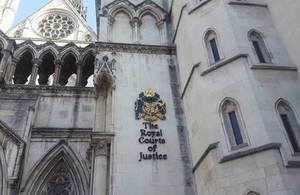
Royal Courts of Justice

A rapist will spend longer in prison after Solicitor General, Robert Buckland QC MP, referred his original sentence to the Court of Appeal as unduly lenient.

Raymond Paternoster, 58, raped and violently assaulted a woman in November last year. On one occasion he stood on her and then smashed her head against a wall. The victim suffered numerous blunt force trauma injuries during the assaults.

Paternoster was originally sentenced in September at Newcastle Crown Court to 10 and a half years in prison. The Court of Appeal has today increased his sentence to 13 years imprisonment.

Speaking after the hearing, the Solicitor General said:

“Paternoster carried out violent and sexual attacks against a woman, leaving her with horrific injuries. I hope the sentence increase can bring some comfort to the victim and provide some closure.”

Published 13 December 2018


Press release: Dstl staff shortlisted for The Sun Military Awards

Work carried out at the lab by Diagnostics Fellow Dr Roman Lukaszewski and his team has been nominated in the Innovation category of the awards, for breakthrough work on treatment for sepsis.

A new test, which can identify patients most likely to develop sepsis, was developed following ten years of work by Dstl and its partners, including the US Department of Defense. The test could one day be used on the frontline to save the lives of troops, and in hospitals in the UK and beyond.

The test diagnoses the condition before people become ill by identifying a ‘signature’ for sepsis.

Dr Lukaszewski said:

It’s a real honour for the team to be shortlisted for a Millie. We have been working on this project for more than a decade and it’s fantastic to be able to have a result which could one day save so many lives.

Infection is a huge issue for soldiers injured on operational tour. This breakthrough could identify troops who are likely to develop sepsis and start treatment early. The work is unique as only Dstl has found biomarkers indicating patients who will go on to develop sepsis. It’s a new way of looking at how to tackle cases.

It’s a condition which affects people across the world – it’s estimated that more people die of sepsis than breast cancer, bowel cancer and prostate cancer combined each year, and projects like this are vital to help us move forward with solutions.

Dstl has also been nominated for its role in the procurement of the Carbonite-2 demonstrator satellite, which is able to capture colour and full HD still imagery and full-motion video from space.

Sean Murphy, a Principal Scientist in Dstl’s Space Programme, said:

It’s a tremendous feeling to be invited to the awards ceremony and great to be given an opportunity to highlight our work at events like this and a privilege to represent Dstl and the whole of the space programme team.

The Millies are awarded each year for those who have made a significant contribution to the support of our troops. A special ceremony in central London will bring together shortlisted nominees for the awards night, along with celebrities and military chiefs.

Gary Aitkenhead, Chief Executive of Dstl, said:

Both of these projects are fantastic examples of the huge impact of Dstl’s work and I’m delighted they have been nominated in the innovation category for the Millies. The Sepsis breakthrough has potential benefits – not only to our troops but for the population as a whole. It requires investment and foresight for long-term studies like this but it’s been so worthwhile.

The event will be broadcast on Forces TV on December 13, when the winners will be announced.


Press release: Gap between disadvantaged pupils and their peers narrows

New statistics published today (13 December) show that disadvantaged primary school pupils are closing in on their better off peers as the disadvantage gap index falls for the seventh year in a row.

School Standards Minister Nick Gibb welcomed the news and praised the impact of academies in supporting this improvement. The figures show the disadvantage gap index has shrunk by 13% since 2011 and 3% in the last year alone.

In addition the statistics show that in multi-academy trusts disadvantaged pupils did significantly better than the national average in writing and maths.

School Standards Minister Nick Gibb said:

Standards are rising in our schools, with 86% of schools now rated good or outstanding as of August 2018, compared to 68% in 2010 and these statistics show that the gap between disadvantaged pupils and their peers has closed by 13% since 2011.

Every child, regardless of their background, deserves a high quality education and opportunity to fulfil their potential. Headteachers are using the freedoms afforded by academy and free school status to make this a reality, as illustrated by the progress disadvantaged pupils in multi-academy trusts are making in writing and maths.

Statistics released today show:

  • The gap between disadvantaged and non-disadvantaged pupils is smaller in MATs than the national average in each progress measure (reading, writing and maths);

  • 88% of pupils who met the phonics standard in year 1 reached the expected standard in reading at the end of key stage 2; and

  • The attainment gap between girls and boys has remained stable with 61% of boys meeting the expected standard compared to 68% of girls

This release follows statistics published earlier this year that showed 64% of pupils met the expected standard in all of reading, writing and maths this year.

The data is part of a number of publications from the Department today that show how our primary schools are performing. It includes the performance tables, which help parents make informed choices about schools in their areas, and how individual multi academy trusts are performing.

The tables show that Dilkes Academy Trust (now known as Catalyst Academies Trust), Yorkshire Collaborative Academy Trust and Hull Collaborative Academy Trust all rank in the top ten trusts in the country for attainment in reading, writing and maths.

The department collects and publish more information about MATs than we do about local authority schools – including new information about how we are tackling high pay and late filing of accounts. Publications like today’s Key Stage 2 performance measures, which now include around 240 trusts, show the important role MATs play in our improving system.

New research also published today highlights the approaches trusts take to supporting their schools to succeed.

We continue to strengthen the accountability regime across the academies sector. In recent months, we have strengthened financial accountability, including new rules on related party transactions, which local authority schools do not have to publish at all. Ofsted is today publishing its improved approach to Summary Evaluations which bring together the inspections of individual schools in a MAT to give a picture of its contribution to education quality.

We will continue to make information about trusts more visible. As we do this, we will also consider how this compares to the transparency of local authority schools.