News story: Activity ‘passport’ to inspire schoolchildren and boost resilience

Primary school children will be challenged to go on a nature trail, visit a local landmark or make a treasure map through a new ‘passport’ of activities launched by the Education Secretary to encourage more family time and help build children’s character and resilience.

Endorsed by organisations including the Scouts, Girlguiding and the National Trust – as well as children’s charity Action for Children – the list of activities is intended to support parents and schools in introducing children to a wide variety of experiences and fulfilling activities like flying a kite, learning something new about the local area or putting on a performance.

The list of activities was inspired by the Education Secretary’s visit to St Werburgh’s Primary School, in Bristol, where every child is encouraged to take part in a list of tasks and experiences, with key achievements for each school year to tick off. The list will be sent to schools in January for teachers to adapt to meet the needs of their pupils and local communities, helping young people to build their personal skills and qualities during the school day and at home.

Education Secretary Damian Hinds said:

When I first became Education Secretary, almost a year ago, I went around asking everyone I met what they wanted for their children. The instinctive answer that came back was never about the curriculum or qualifications, vital as these are – what they wanted first and foremost was for their child to be happy and healthy. As a father that’s what I want for my children and as Education Secretary that’s what I want for all children in this country.

I regularly hear from teachers that it’s important that children have the chance to try things out, to get a taste of the world around them, to see and do things that they wouldn’t normally do, or go to places they wouldn’t normally go. Experience is a great teacher and can equip children with valuable skills that prepare for any challenges life may throw at them. What’s on the inside – someone’s character, drive, resilience, and the ability to stick to a goal – is just as important as their academic achievements.

As the New Year approaches, we inevitably think about our resolutions for the year ahead – getting fit, spending more time with our families, or taking up a new hobby. Within this list of activities children may find something they want to come back to again and again, but I hope that, whatever they do, they will enjoy and learn from them.

The ‘My Activity Passport’ list is part of the Education Secretary’s vision for every child to have the opportunity to enjoy new and varied experiences, no matter their background – comprising of key areas: drive and tenacity; sticking at the task at hand; understanding how to work towards long term goals when reward might be a long way off in the future; and being able to pick yourself up and bounce back from life’s challenges.

Matt Hyde, Chief Executive of the Scouts, said:

We know how much young people get out of enrichment activities like these: broadening their experiences, having fun and developing skills for life. Not everything can be taught in a classroom, so it’s great to see DfE recognising the value of extra-curricular activities and encouraging young people to build confidence, resilience and get involved in their communities as well.

These activities will inspire children’s ability to problem-solve, provide opportunities to see or visit new places and develop wide interests in new subjects.

The activities are designed to be accessible so that every child and family can get involved and include milestones for each primary school year group. Tasks that schools and families can set children include:

  • Painting a self portrait
  • Posting a letter
  • Looking at the stars on a clear night
  • Playing a board game
  • Writing and performing a poem
  • Going hiking
  • Planning and cooking a meal
  • Interviewing someone

Among the list of activities will be opportunities for children to engage in social action that helps them make positive changes for themselves and others. Schools will also be able to adapt the list to meet the needs of its pupils and local communities.

Hilary McGrady, Director-General of the National Trust, said:

Connecting children to nature and the great outdoors is at the heart of the National Trust’s mission. We know those first experiences such as skimming a stone or watching butterflies encourages an early love for nature which is more likely to stay with them into adulthood. Our 50 things to do before you are 11 and three quarters has been enjoyed by thousands of children across the country already, and we support the Department for Education’s efforts to engage even more children with our amazing natural world.

Emma Dixon, member of the Girlguiding Advocate panel, made up of members aged 14 to 25, said:

We believe all young people should have opportunities to build their confidence, raise their aspirations and have adventures, both inside and outside the classroom. The activities in our new programme, launched in July, already benefit hundreds of thousands of girls each week, and we hope even more young people will be able to enjoy and learn from the activities included in the new passport.

Julie Bentley, Chief Executive of Action for Children, said:

Every day at Action for Children, we see families struggling with the ups-and-downs of everyday life. Parents want to do everything they can to help their child feel ready to cope with life’s challenges when they arise.

Through programmes such as the Department for Education’s ‘passport’ of activities and our Build Sound Minds campaign where we provide advice and activities, parents can find ways to improve their child’s resilience and emotional well-being.

Anna Feuchtwang, Chief Executive of the National Children’s Bureau, said:

Our research has shown that significant numbers of children grow up suffering poor mental health. Part of the remedy lies in developing a firm foundation of wellbeing and resilience in children and young people, both at home and at school. We welcome this effort to immerse children and young people in activities that can build their confidence, develop their curiosity and support their growth beyond academic attainment, so they can enjoy emotional wellbeing throughout their lives.


Press release: Exporters recognised in New Year’s Honours list

  • Business leaders recognised in New Year’s Honours for services to international trade.
  • Recipients will be honoured at investiture ceremonies held at Buckingham Palace.
  • Total UK exports are at record high, rising 2% to £626 billion in the year to October 2018.

International Trade Secretary Dr Liam Fox MP congratulates business leaders and exporters being recognised with Honours for truly exceptional and outstanding service to international trade and exporting.

Those recognised in the New Year’s Honours list include:

  • Stephen Edwards, Managing Director of engineering firm Flamgard – who earlier this year were presented with a Board of Trade Award (BOFTA)
  • Dairy Crest’s CEO Mark Allen, for services to the UK’s dairy sector
  • Utterberry Managing Director, Heba Bevan
  • Paul Flanagan, Secretary General of UKspace Trade Association
  • Entrepreneur and founder of Ella’s Kitchen, Paul Lindley
  • Chipside Managing Director, Paul Moorby

Also being recognised in this Honours round are:

  • Harper’s Bazaar US Editor-in-Chief Glenda Bailey for services to the GREAT Britain campaign
  • Chair of the British Business Group in the UAE, Richard Oliver

Long-serving Department for International Trade colleague Adam Thomas is also being recognised with an MBE.

These Honours recipients have shown exceptional service to the UK economy and British prosperity, through UK export promotion across sectors from space and technology to fashion, and food and drink.

The investiture ceremonies will take place at Buckingham Palace in the new year.

International Trade Secretary Dr Liam Fox MP congratulated the recipients, saying:

I am delighted that leading business people are being recognised for their exceptional contribution and service to international trade and exporting in this New Year’s Honours round. I congratulate everyone receiving an honour and thank them for their hard work in putting the UK on the global stage.

As an international economic department, we are committed to recognising the excellence of UK exporters and ensuring we continue to help businesses succeed in new, global markets.

The New Year’s Honours list recognises the achievements and service of extraordinary people from across the UK and beyond.

UK exports are at a record high after rising 2% (£12 billion) to £626.4 billion in the year to October 2018.

Notes to Editors

International trade and exporting recipients in the 2019 New Year’s Honours list:

  • DBE: Glenda Bailey – Editor in Chief, Harper’s Bazaar US. For services to the GREAT Britain campaign and UK prosperity, charity, fashion and journalism.
  • CBE: Paul Flanagan – Secretary General, UKspace Trade Association. For services to the UK space sector.
  • OBE: Mark Allen – Chief Executive, Dairy Crest. For services to the dairy sector.
  • OBE: Heba Bevan – Managing Director, UtterBerry Ltd. For services to innovation, technology and STEM education.
  • OBE: Paul Lindley – Entrepreneur and founder, Ella’s Kitchen. For services to exports in the food and drink sector and for children’s welfare.
  • OBE: Paul Moorby – Managing Director, Chipside. For services to promoting the UK’s technology sector abroad.
  • OBE: Oliver Richard – Chair of the British Business Group and Abu Dhabi Treasurer of the British School Al Khubairat. For services to the British community and British business in the UAE.
  • MBE: Stephen Edwards – Managing Director, Flamgard Engineering. For services to the British economy and exports.
  • MBE: Adam Thomas – Senior Press Officer and spokesman, Defence and Security Organisation, Department for International Trade. For services to UK defence and industry exports.

About the Department for International Trade

The Department for International Trade (DIT) helps businesses export, drives inward and outward investment, negotiates market access and trade deals, and champions free trade.

We are an international economic department, responsible for:

  • supporting and encouraging UK businesses to drive sustainable international growth
  • ensuring the UK remains a leading destination for international investment and maintains its number one position for international investment stock in Europe
  • opening markets, building a trade framework with new and existing partners which is free and fair
  • using trade and investment to underpin the government’s agenda for a Global Britain and its ambitions for prosperity, stability and security worldwide

About the Export Strategy

The Export Strategy sets out how the government will support businesses of all sizes to make the most of the opportunities presented by markets around the world.

A government-led collaboration with business, developed after extensive engagement with a range of UK firms, the Strategy sets a new ambition from government to increase exports as a proportion of UK GDP to 35%.

It presents a streamlined and targeted offer for businesses of all sizes, set to raise productivity, boost wages and protect employment across the UK.

This is just the start – in the months ahead DIT will lead work across government to assess what more we can do to support UK business to achieve a step change in their exporting performance.


Press release: Out of this world innovations forge ahead in 2018 thanks to Local Growth Fund

  • Multi-billion-pound Local Growth Fund backs world-leading programmes as the government builds a Britain fit for the future
  • Goonhilly Space Exploration Station in Cornwall and the National Graphene Innovation Centre in Manchester among winners of grants in 2018

A cancer research laboratory in Southampton, a Centre of Excellence for degree apprenticeships in Sheffield and the roll out of superfast broadband to Cumbria are several innovative projects across the country which have received backing from the government’s £9.1 billion Local Growth Fund (LGF) in 2018.

Communities across Britain are benefitting from large, pioneering programmes made possible from the LGF and are defending Britain’s place as a world leader for innovation.

Managed by Local Enterprise Partnerships, LGF-backed projects, like a new aerodynamic vehicle testing hub in Northamptonshire, are not only putting communities on the map but also creating high skilled jobs and paving the way for further investment into their areas.

The Northern Powerhouse and Midlands Engine are the greatest beneficiaries of LGF grants with £3.4 billion being invested across the North and £1.9 billion supporting a wide range of projects in the Midlands, respectively.

Minister for the Northern Powerhouse and Local Growth, Jake Berry MP, said:

When we say we are building a country that works for everyone, we mean it. Over the course of this year I have been privileged to visit many of the projects supported by the Local Growth Fund.

I’ve seen first-hand how our modern Industrial Strategy is making a difference to local communities, businesses and people’s daily lives.

From supporting world-leading manufacturing in the Northern Powerhouse and training engineers of the future in the Midlands Engine to investing in future space missions and pioneering cancer research in the South of England, the Local Growth Fund shows the government’s commitment to boost economic growth and build an economy which is fit for the future.

Some of the most pioneering projects the LGF has supported this year include:

Goonhilly Earth Station for deep space missions

In February, Goonhilly Earth Station in Cornwall received a £8.5 million LGF investment to help create the world’s first commercial deep-space communications station. It will be capable of tracking future missions to the Moon and Mars. Once the upgrade work is complete, Goonhilly will have the ability to track and control forthcoming robotic and human missions to the Moon and Mars – making a significant technical and economic contribution to European efforts in global space exploration.

The Graphene Engineering Innovation Centre, Manchester

Manchester University’s Graphene Engineering Innovation Centre (GEIC) has received £5 million from the LGF to support the opening of their new centre for exploiting the potential of graphene advanced materials. The world-class multi-million-pound centre will help to accelerate the commercial impact of graphene, which is the strongest material ever created.

Liverpool City Centre Connectivity Scheme

A £38.4 million LGF investment is supporting the Liverpool City Centre Connectivity Scheme, which aims to reduce congestion and create a new gateway to Liverpool’s historic Lime Street. This is part of a wider £45 million programme to improve connectivity around Liverpool City Centre – by foot, bike, car, coach and bus.

Boeing, Sheffield

A total of £4 million from the LGF scheme supported the new Boeing Fabrication Factory in Sheffield, which opened in October. The new facility, spanning just over 6,000 square meters, makes components for the 737 and 767 passenger jets from raw materials sourced in the UK. It employs 52 people including 25 high-valued apprentices. The number of jobs and apprenticeships is set to grow over the coming year.

National Centre of Excellence for Degree Apprenticeships

Approximately £500,000 from the LGF supported the opening of Sheffield Hallam University’s brand new National Centre of Excellence for Degree Apprenticeships. It is providing a bespoke teaching space and IT equipment for hundreds of learners seeking degree apprenticeships.

Connecting Cumbria project

The LGF contributed £3.6 million to extend the availability of superfast broadband across Cumbria through the Connecting Cumbria project. It will extend broadband coverage to approximately 95%, and encourage more rapid business growth and more job opportunities in rural areas.

Kenilworth Railway Station project

In April, Kenilworth train station was re-opened after 50 years thanks to a combination of £3.49 million from the LGF, funding from Warwickshire County Council and the Department for Transport’s New Stations Fund. This is part of a major rail investment scheme to boost economic regeneration between Nuneaton and Leamington Spa and support sustainable travel, including more reliable signalling between Coventry and Nuneaton, and new stations at Bermuda Park and Coventry Arena.

Northampton College Advanced Engineering Centre

An investment of £2.25 million from the LGF has supported the construction of an Advanced Construction Engineering Centre in Northampton which is due to be completed in the summer of 2019. The state-of-the-art facility will support learners to develop the skills needed for the most up-to-date construction and engineering technologies.

Catesby Aerodynamic Research Facility

A £4.2 million LGF investment helped build an aerodynamic testing facility in a disused Victorian railway tunnel in Northamptonshire. The project to convert the 1.7 mile long tunnel into an indoor, fully controllable vehicle testing facility to include wind and simulated weather impact, aerodynamics and emissions enhancing the capability of the UK vehicle industry and leading to the creation of a 4.5 acre science park with offices, workshops and a research facility as well as creating new jobs.

Centre for Cancer Immunology

A Local Growth Fund investment of £4.5 million supported the opening a world-leading centre for Cancer Immunology at University Hospital Southampton. The development of the UK’s first dedicated Centre for Cancer Immunology will place the Solent firmly on the map as a global centre of excellence for the development and delivery of new therapies to cure cancer.

The government has committed £9.1 billion of the Local Growth Fund to Local Enterprise Partnerships through 3 rounds of competitive Growth Deals.

This investment consists of £3.4 billion for the Northern Powerhouse, £1.9 billion for the Midlands, £700 million for the East of England, £2.1 billion for London and the South East, and £970 million for the South West.

The rest of the £12 billion Local Growth Fund is allocated separately from Growth Deals, with the most significant other streams consisting of the £2 billion Home Building Fund and £475 million Local Transport Majors.


News story: Scots Prominent in New Year Honours

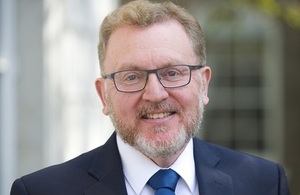
Secretary of State for Scotland David Mundell

Secretary of State for Scotland David Mundell

From sportspeople to academics to community champions, more than 100 Scots appear on her Majesty’s 2019 New Year Honours list.

Welcoming the Honours, Scottish Secretary David Mundell said:

I’m delighted and very proud that so many Scots who have made an immense contribution in such a diverse range of fields have been honoured.

They have made an outstanding contribution in a wide range of areas, from charity to business and sport to science. They help our communities thrive and inspire future generations.

For his important research in life sciences at the University of Dundee, Mike Ferguson adds ‘Sir’ to his title Professor.

Ann Gloag, a tireless philanthropist and hugely successful businesswoman, is an inspiration.

The incomparably brilliant Nicola Benedetti is recognised for her services to music, while Doddie Weir, Kate Caithness and Louise Martin are honoured for their tremendous contribution to Scottish sport.

I am pleased so many Scots are recognised for their tireless work in their communities – from Desley Stickle in Shetland, to David Turnbull and Allan Beveridge in Peebles, and many more in-between. ‎ I offer my heartfelt congratulations to all those who have been honoured this year.

The full honours list can be found here: http://www.gov.uk/honours/honours-lists.

Published 28 December 2018


News story: New Year’s Honours List 2019

MBE Lynette Adjei Lately Marketing and Promotions Officer, Birmingham City Council. For services to Adoption and Fostering Recruitment. MBE Frances Bell Teacher, Newport Primary School. For services to the Arts in Devon. MBE Elizabeth Booth Lately Headteacher, Dalmain Primary School. For services to Education and the Arts in the London Borough of Lewisham. MBE Christopher Bridge Chairman, Corporation Board, Colchester Institute. For services to Further Education and Skills. MBE James Cliffe Manager, No Wrong Door, Stepney Road Children’s Centre, North Yorkshire County Council. For services to Children and Young People. MBE Joan Duncan Foster Carer, Lambeth Council. For services to Fostering. MBE Valerie Dunsford Lately Headteacher, Sheffield High School for Girls. For services to Education. MBE Peter Edgar Executive Member for Education, Hampshire County Council. For services to Education and the community in Gosport. MBE David Hughes Chair, The East Midlands Apprenticeship Ambassador Network. For services to Education. MBE Paul Irons Chair of Governors, Fernwood School, Nottingham. For services to Education. MBE Karen Kaufman Head of External Affairs, Busy Bees Childcare. For services to Children and Families. MBE Elaine Koerner Foster Carer, Somerset County Council. For services to Fostering. MBE Valsa Koshy Emeritus Professor, Brunel University London. For services to Education. MBE Carol Lyndon Childline Counsellor, NSPCC. For services to Vulnerable Children. MBE Angela Middleton Founder and Chief Executive Officer, MiddletonMurray Group. For services to Apprenticeship Training, Youth Employment and Business. MBE Vivienne Morgan Founder and Proprietor, Northleigh House School. For services to Education. MBE Claire Paul Director, Leadership Development and New Talent, BBC. For services to Apprenticeships and Education. MBE Elizabeth Perry Organiser, The Innovation Project, Twynham School. For services to Children in Christchurch, Dorset. MBE Rachel Pilling Head of Safeguarding, The Manchester College. For services to Further Education and Safeguarding. MBE Judith Poole Head of Student Support and Wellbeing, Blackpool and The Fylde College. For services to Education. MBE Louise Purser ASYE Practice Assessor, Central Bedfordshire Council and Volunteer, British Association of Social Workers and Learn to Care. For services to Children’s Social Care. MBE Derek Randall Chair of Governors, Bridgwater and Taunton College. For services to Further Education. MBE Victoria Rodney Community Champion, Mercy Foundation Centre. For voluntary service to the community in Battersea. MBE Gail Rothnie Head of Outreach, University of Birmingham. For services to Widening Participation in Higher Education. MBE Lucinda Rumsey Senior Tutor, Mansfield College, University of Oxford. For services to Widening Participation in Higher Education. MBE Douglas Seymour Chair of Governors, Frank Wise School Banbury. For services to Education and the community in Oxfordshire and North Devon. MBE Jacqueline Stevenson Sociologist and Head of Research, Sheffield Institute of Education, Sheffield Hallam University. For services to Education. MBE Michael Terrell Foster Carer, Plymouth City Council. For services to Fostering. MBE Mandy Terrell Foster Carer, Plymouth City Council. For services to Fostering. MBE Ann Turner Lately Principal and Chief Executive Officer, Myerscough College. For services to Land Based Education and Training. MBE Aileen Vassie Governor, Chelsfield Primary School. For services to Education. MBE Jashu Vekaria Deputy Headteacher, Uxendon Manor Primary School. For services to Primary Education. MBE Louise Walker Head of Social Work and Professional Standards, Redcar and Cleveland Borough Council. For services to Adult and Children’s Social Care. MBE Helen Wood Foster Carer, Derbyshire City Council. For services to Fostering. MBE Colin Wood Foster Carer, Derbyshire City Council. For services to Fostering. MBE Andria Zafirakou Associate Deputy Head, Alperton Community School. For services to Education and Young People in Brent.