News story: Defence Secretary sets sights on next century of British air power

Defence Secretary Gavin Williamson has today revealed that Britain’s combat air power has reached new heights whilst speaking in a brand-new hangar displaying one-hundred years of fighter jets.

Speaking at RAF Marham, the Defence Secretary announced the UK now has nine F-35 Lightning jets ready to be deployed on operations around the world.

The F-35 Lightnings will form the backbone of the UK’s combat air fleet alongside the Typhoon jets, which the Defence Secretary also announced have now been fitted with a state-of-the-art complex weapons suite to vastly increase its capability.

Under ‘Project Centurion’, worth £425m over the past three years, the Typhoon now has deep strike cruise missile Storm Shadow, air-to-air missile Meteor and the precision attack missile Brimstone at their disposal.

It means the jets have boosted capabilities to intercept airborne missiles and strike ground based targets, seamlessly taking over from the Tornado’s attack role as it nears retirement.

Completed on-time and to budget, the upgrades transform the fleet into a world-leading multi-role combat air platform for decades to come.

Military engineers and personnel have worked together with hundreds of UK workers from British defence firms including BAE Systems, MBDA and Leonardo to reach the milestone.

The Defence Secretary made the announcement in front of four different aircraft, in a brand-new maintenance hangar at RAF Marham, which he opened today along with a state-of-the-art new training centre.

These facilities, along with resurfaced runways and new landing pads to accommodate the jet’s ability to land vertically, are a key part of the £550m being invested in the Norfolk base.

Defence Secretary Gavin Williamson said:

As we bid farewell to the RAF’s first century, we are setting our sights on the next 100 years. Our nation is moving into a new era outside the EU, and our huge achievements in air capability make our commitment to a role on the world stage clear to both our allies and our enemies.

The incredible F-35 jets are ready for operations, a transformed Typhoon has the power to dominate the skies into the 2040s and we continue to look even further into an ambitious future. The RAF has long shown Britain at its great and global best, and today it lifts our nation to even greater heights.

The year ahead will see the F-35 Lightning pilots and ground crew continue learning how to operate and maintain the jets in the new centre, which features state-of-the-art simulators, classrooms, and physical aircraft mock-ups.

The facility provides a real-life training environment replicating the challenges that both pilots and crew will face in supporting and operating the F-35 Lightning.

Pilots from 617 Squadron, who are already based at RAF Marham, will practice flying the next generation aircraft from four full mission simulators.

Having the F-35s ready for operations on time is a huge landmark in what is the biggest defence project in history, which the UK has been a leading partner in for almost 25 years.

Around 150 UK personnel had been working with the jets in the US before the first batch of aircraft came to the UK last summer.

Not only does the programme offer the UK a game-changing military capability, but with British industry manufacturing 15% of a global orderbook of over 3,000 jets, it supports around 25,000 UK jobs and is projected to be worth around £35bn to the national economy.

The Defence Secretary made the announcement in front of four aircraft, which represent the past and future of British fighter jets.

They included the Tornado, which has been in-service since 1979, making its combat debut in the 1991 Gulf War, and which will be retired later this year.

Its unique capabilities have now been transferred to the Typhoon.

In addition to the Typhoon and F-35, the Tempest concept fighter jet model was also on show.

The model, which represents an example of what the UK’s future capability might look like, was unveiled last Summer at Farnborough International Air Show, when the Defence Secretary launched the nation’s Combat Air Strategy to ensure the UK remains a world-leader in the sector for years to come.

The aim is then for a next-generation capability to have initial operational capability by 2035.

Chief of the Air Staff Air Chief Marshal Sir Stephen Hillier said:

I am proud to confirm that the RAF’s Combat Air capability has taken yet another significant step towards the realisation of our Next Generation Air Force. With its cutting-edge stealth technology, our F-35s are now ready to deploy on operations and, alongside our combat-proven Typhoon, offer a step-change in our ability to employ air power around the world.

Furthermore, the successful integration of Stormshadow, Brimstone and Meteor on Typhoon completes and enhances the transition of world-class capabilities from Tornado and allows a stalwart of the RAF’s Combat Air inventory to retire from service.

The successful attainment of these milestones and the potential offered by Project TEMPEST will continue to assure the RAF’s ability to protect the nation, defend the United Kingdom’s interests and support the national prosperity agenda now and well into the future.

The RAF has already trialled its Typhoon and F-35 Forces’ interoperability.

In a series of operational trials, the evidence clearly demonstrates the effectiveness of both platforms when operating alongside one another.

With its larger payload and increased agility and range, the Typhoon will operate in concert with the stealthy F-35 and its next-generation sensors, making the RAF one of the few air forces with the ability to exploit the synergy of 4th and 5th generation combat aircraft and delivering the UK a potent force equipped to counter evolving threats in the global environment.

The UK is a world-leader in the combat air sector, which supports over 18,000 highly skilled jobs with a mix of skills and technologies unique in Europe.

The sector delivers a turnover in excess of £6bn a year and has made up over 80% of defence exports from the UK over the last ten years.


Press release: Change of Her Majesty’s Ambassador to Belgium during Summer 2019

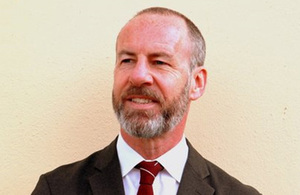
r Martin Shearman CVO has been appointed Her Majesty's Ambassador to the Kingdom of Belgium

Mr Martin Shearman CVO has been appointed Her Majesty’s Ambassador to the Kingdom of Belgium during Summer 2019.

Mr Martin Shearman CVO has been appointed Her Majesty’s Ambassador to the Kingdom of Belgium in succession to Ms Alison Rose. Mr Shearman will take up his appointment in summer 2019.

CURRICULUM VITAE

Full name: Martin Shearman

Married to: Miriam Shearman

Children: Two

2018 Full-time language training
2013 to 2017 UK Mission to the UN in New York, Head, Development and Human Rights
2008 to 2012 Uganda, British High Commissioner
2006 to 2008 FCO, European Correspondent, and Head, EU External Department, Europe Directorate
2003 to 2006 Nigeria, Deputy High Commissioner
2000 to 2002 FCO, Deputy European Correspondent, Europe Directorate
1997 to 1999 FCO, Head, NATO Section, Security Policy Department, including a secondment to the NATO International Secretariat
1997 Secondment to Cabinet Office, Review of Government Trade Promotion
1996 to 1997 Secondment to Department of Trade and Industry
1993 to 1996 Japan, Second later First Secretary
1991 to 1993 Japanese Language Training
1989 to 1991 European Community Department (External)

Further information

Published 10 January 2019


Press release: Japan opens market to British lamb and beef

UK exporters are set to benefit from a multimillion pound boost as Japan today opened its market to imports of UK lamb and beef.

The agreement, signed during Prime Minister Abe’s visit to the UK, is estimated to be worth a total of nearly £130 million over the first five years of access – approximately £75 million for beef and £52 million for lamb.

Japan, a major importer of beef with a growing demand for high quality lamb, lifted its two-decade long ban on imports of these products with immediate effect.

The deal follows a year of global successes for UK exporters, which included China lifting its ban on UK beef, Taiwan opening its market to pork and India preparing to import UK sheep meat.

The market opening for lamb will also be good news for farmers in Wales, where the meat accounts for a third of total food and drink exports – worth £110 million.

Secretary of State for Wales Alun Cairns said:

Welsh lamb has a great reputation across the globe and is a symbol for quality.

Today’s announcement brings even greater opportunities for Welsh farmers to market their produce around the world, demonstrating the UK Government’s commitment to forging important global partnerships to support our vital industries in Wales.

Food Minister George Eustice said:

The opening of the Japanese market is an excellent result for beef and lamb producers across the UK and demonstrates confidence in our high standards of food and drink.

As we enter a new era as a global exporter, unlocking this market marks a major step for future trading relationships and signals our commitment to supporting our food and drink industry to export more British food.

The lifting of the ban follows a series of visits and negotiations between UK and Japanese officials, which culminated in an inspection of UK beef and lamb production systems in 2018, successfully hosted by Defra and the Animal and Plant Health Agency, the Food Standards Agency, Food Standards Scotland, DAERA, the Agriculture and Horticulture Development Board (AHDB) and the UK Export Certification Partnership.

Japan is renowned for its stringent food safety and import controls regime and opening this market is expected to send a positive signals to other countries, particularly in Asia, regarding the safety of UK exports.

Wyn Evans, NFU Cymru Livestock Board Chairman said:

I am delighted that a potential new premium market is opening up for our world leading PGI Welsh Beef and Lamb. Securing new and maintaining current export markets are crucial to our ambition within NFU Cymru, so that we can continue to grow the £6.9 billion Welsh food and drink sector and secure the long term viability of the Welsh red meat industry. We look forward to working with supply chain partners to ensure that Japanese consumers have the chance to enjoy the finest beef and lamb in the world, produced in Wales.

AHDB International Market Development Director Dr Phil Hadley said:

Today’s announcement is fantastic news for our farmers and producers and it follows years of hard work by government, AHDB and key industry stakeholders.

Access to this lucrative new market is a testament to the high quality produce and world-renowned standards we have here in the UK. We are confident this new deal to export beef and lamb to Japan, alongside our existing pork trade, will create some exciting opportunities for our beef and sheep producers.

Farmers and food producers can begin exporting as soon as the administrative listing process is completed.


News story: Near miss with a track worker, Gatwick

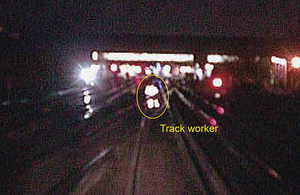
Image from forward facing CCTV camera on approaching train (courtesy of Govia Thameslink Railway)

Image from forward facing CCTV camera on approaching train (courtesy of Govia Thameslink Railway)

At around 23:25 hrs on 2 December 2018, a track worker moved out of the way of an approaching passenger train less than two seconds before the train passed him travelling at 51 mph (82 km/h). He did not suffer any injuries.

The track worker was removing cables (short circuiting straps) which had been temporarily attached to rails near Gatwick Airport station in connection with engineering work on the railway.

Our investigation will establish the sequence of events and consider:

  • factors influencing the actions of the track worker and other staff involved in the work
  • relevant rules and procedures applicable to the planning, acceptance and implementation of safe systems of work
  • any relevant underlying management factors

Our investigation is independent of any investigation by the railway industry or by the industry’s regulator, the Office of Rail and Road.

We will publish our findings, including any recommendations to improve safety, at the conclusion of our investigation. This report will be available on our website.

You can subscribe to automated emails notifying you when we publish our reports.

Published 10 January 2019


News story: Competition for young space entrepreneurs lifts off

The SatelLife Competition, now in its third year, is looking for innovative proposals that have the potential to use data collected from space to benefit our economy, health or the environment.

Ideas from last year’s competition included a wristband that uses satellite location data and communications services to identify the locations of swimmers and surfers in the sea and a tool that would map change in urban areas using satellites and algorithms, identifying where building is taking place and potential sites for development.

Satellites support the economy and everyday life, and this competition gives young people the chance to test their ideas with industry experts and perhaps one day become part of the fastest growing sector of the UK economy. The UK space industry is a success story – it supports 38,000 jobs and generates just under £14 billion in revenue across the country.

Science minister Chris Skidmore said:

Young people are bursting with ingenious ideas and this competition offers a great opportunity for their suggestions about how best to use data collected from satellites.

I would urge young people to get involved and hopefully their ideas will become a reality in the near future, benefiting us all. The competition is a great example of how the government’s modern Industrial Strategy can inspire and engage young people in the challenges and opportunities of the future.

Last year’s individual winner was Ieuan Higgs, a student from Chippenham in Wiltshire. The group winners were four school friends – Ellie Jones, Jessica Knight, Summer Jeffery and Emily Haddrell – from Truro in Cornwall. The overall winner in 2017 was 13-year-old James Pearson from Lincolnshire, who came up with an app to provide information on coastal flood risks.

Ieuan Higgs, 21, a student at the University of Reading, who has been offered a job in the space sector when he graduates since winning last year, said:

Entering the SatelLife Competition allowed me to develop my critical thinking and problem-solving skills in an interesting, challenging way.

This has certainly helped me to push forwards on my way towards finishing university and provided me with the confidence to pursue my interests as I prepare to launch an exciting career.

The competition, which is open to those aged 11 to 22 and split into three age groups, aims to support the development of science, data handling and technological skills. There are two overall prizes of £7,500 for the best individual and best team. A further seven entries from across the age categories will win £5,000, making a total prize fund of £50,000.

Previous winners are making progress on turning their ideas into reality. Medical students Christopher Law, 20, Thomas Franchi and Hammad Jeilani, both 21, from London came up with an idea to use satellites and drones to help people in isolated areas who cannot access basic health care such as vaccines, birth control or medicine. They have now formed a company, called MEDeus Ltd, and are working with the Advanced Manufacturing Research Centre in Sheffield, whose engineers have produced early-stage drone designs. They have also been invited to join the Westcott Business Incubation Centre.

Elliot Vale, from Stourport-On-Severn, was a winner in 2017 and is developing his GeoRescue app focused at people who live in or travel to high-risk natural disaster areas. Elliott has started a business and is planning to enter a business incubator this year. While Sam Frampton, another winner from 2017, used his experience to pursue a career in the space industry and is now working for Thales Alenia Space.

The judging panel will be made up of experts including representatives from the UK Space Agency, the European Space Agency, the Satellite Applications Catapult in Harwell and industry.

Gemma Wilson, Knowledge Exchange Manager at the Satellite Applications Catapult and one of the expert judges, said:

The SatelLife Competition is a fantastic opportunity for future space entrepreneurs to showcase their innovative ideas.

This competition could be your first step to an exciting career in the space sector as you identify how satellites can provide unique solutions to the everyday challenges we face here on Earth.

Entries can be as teams or individuals and all prize winners will be able to pitch their idea to a panel of ‘dragons’ from the space sector who will offer more prizes. Over the last two years the competition winners have been offered further funding, patent advice and invitations to discuss job opportunities as well as introductions to the other relevant experts for further help.

The competition closes on 3 March 2019. Visit the SatelLife Competition entry page for more information and to apply.