Press release: Celebrities pledge to clean up their act on social media

The Competition and Markets Authority (CMA) has secured formal commitments from 16 celebrities to ensure they will now say clearly if they have been paid or received any gifts or loans of products which they endorse.

The influential celebrities, with large online followings, who have acted in response to the CMA’s concerns, include singers Ellie Goulding and Rita Ora, models Alexa Chung and Rosie Huntington-Whiteley, former Coronation Street and Our Girl actress Michelle Keegan and TV reality stars Millie Mackintosh and Megan McKenna.

Online endorsements from celebrities and influencers can help brands boost sales, as millions of fans follow their social media channels to see where they go on holiday, what they wear, which products they use and more.

However, where such stars are paid or rewarded to promote a product in their social media feeds, consumer protection law requires them to disclose that they’ve been paid or incentivised to endorse a brand. Otherwise, they risk giving a misleading impression that a post represents their personal view about a product or service.

Andrea Coscelli, Chief Executive of the CMA, said:

Influencers can have a huge impact on what their fans decide to buy. People could, quite rightly, feel misled if what they thought was a recommendation from someone they admired turns out to be a marketing ploy.

You should be able to tell as soon as you look at a post if there is some form of payment or reward involved, so you can decide whether something is really worth spending your hard-earned money on.

The enforcement action taken by the CMA has seen a number of social media stars pledge to be more transparent when posting online. It also sends a clear message to all influencers, brands and businesses that they must be open and clear with their followers. We will also continue our work to secure more improvement in this space.

Warning letters have also been sent to a number of other celebrities, urging them to review their practices where some concerns have been identified.

Further investigation work will look at the role and responsibilities of social media platforms.

The CMA has also published a quick guide for social media influencers, marketing companies, agents and brands to ensure they are aware of their obligations under consumer protection law. This is in addition to the joint guidance issued with the Committee of Advertising Practice (CAP) “An Influencer’s Guide to making clear that ads are ads” published in September 2018.

More information can be found on the CMA’s social media endorsements page

Notes to editors

  1. ‘Influencer’ refers to bloggers, vloggers, celebrities and social media personalities. The influencers who have complied with the CMA investigation and agreed to change their social media practices are: Alexa Chung, Mario Falcone, Alexandra Felstead (‘Binky’ Felstead), Ellie Goulding, Holly Hagan, Rosie Huntington-Whiteley, Michelle Keegan and Rosia Promotions Limited, Iskra Lawrence, Camilla Mackintosh (‘Millie’ Mackintosh), Megan McKenna and M McKenna Limited, Chloe Sims, Zoe Sugg, Louise Thompson and Louise Thompson Associates Limited, Dina Torkia, Rita Ora, James Chapman and Jim Chapman Limited.

  2. This investigation – which began in August 2018 – assessed whether influencers were clearly disclosing paid-for endorsements. The CMA considers payment to be any form of reward, including money, gifts of services or products, or the loan of a product. It follows earlier work in 2015 that considered online reviews and endorsements. As part of that, the CMA accepted undertakings from four companies to ensure that online advertising is clearly labelled or otherwise identified so that it is distinguishable from the opinions of bloggers or journalists.

  3. The key piece of consumer protection legislation relevant to the CMA’s investigation is the Consumer Protection from Unfair Trading Regulations 2008 (CPRs). Amongst other requirements, it is a banned practice to falsely claim or create the impression that a trader is not acting for purposes relating to his trade, business, craft or profession, or falsely representing oneself as a consumer.

  4. The CMA has not made a finding on whether the influencers’ practices have breached consumer law. All influencers co-operated with the CMA and volunteered to make changes to their practices. The provision of undertakings is not an admission of a breach of the law. As an enforcer under Part 8 of the Enterprise Act 2002, the CMA can enforce the above legislation through the courts. Ultimately, only a court can decide whether a particular term or practice infringes the law.

  5. The CMA is working closely with the Advertising Standards Authority (ASA) in this area. The ASA is the UK’s independent regulator of advertising across all media. In March 2018, the ASA issued a call for evidence to find out more about what types of labels help people to understand when the online content they see, hear and interact with is advertising.

Media enquiries should be directed to press@cma.gov.uk or 020 3738 6460.

For CMA updates, follow us on Twitter, Facebook and LinkedIn.


Announcements on GOV.UK 1970-01-01 00:00:00

[unable to retrieve full-text content]


New Communities Defeat Terrorism campaign launched

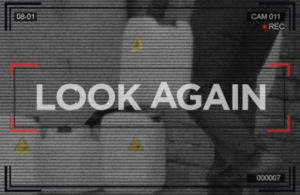
Look Again

New Communities Defeat Terrorism campaign launched

CT Policing have launched an eight-week Communities Defeat Terrorism cinema advertising campaign today timed to coincide with Oscars season. Using cinemas will allow us to deliver our messaging with fewer distractions, more impact, and to more hard to reach audiences such as young people.

We need to keep the public alert and confident enough to come forward and report their concerns. Their actions can help us save lives.

Life Has No Rewind Button

Previous national campaigns, which have been amplified at a local level, have helped increase intelligence reports by up to 50 percent. Currently over a fifth of public reports to the Anti-Terrorist Hotline and online through gov.uk/ACT result in useful intelligence for CT officers.

The spread of cinemas covers all nine CT regions For forces where there isn’t a cinema showing the advert, we will be producing bespoke social media content.

National lead for CT Policing, Assistant Commissioner Neil Basu, says:

Since launching the ACT: Action Counters Terrorism campaign, all forces have worked to show communities how they can make a difference. This, along with innovative collaborations with key sectors like retail, vehicle industry, sport and entertainment, has contributed to a steady increase in the number of intelligence reports that have been of help to CT Policing.

Please share the campaign’s key messages with all your contacts. This is not a campaign for CT specialists only or just for big cities. Any attack carried out impacts on the resources of policing across the board so we are urging all forces and our partners to play their part.

Remember, terrorists across the globe continue to show interest in police targets. We cannot afford to relax our efforts. Always be mindful of your own and your colleagues’ security.

Home Secretary Sajid Javid said:

The threat from terrorism is one of the starkest we face and we have all seen the horrific consequences of a terrorist incident.

With the support of the public, our police and intelligence agencies work tirelessly to keep our communities safe. We all have a role to play in confronting those who seek to do us harm.

Life really doesn’t have a rewind button so, if something doesn’t feel right, trust your instincts and report any suspicious activity or behaviour as soon as you can.

Published 23 January 2019
Last updated 11 September 2020 + show all updates

  1. Document reviewed. No updates.

  2. First published.


News story: IT issues across Ministry of Justice: update

During the past week we have experienced major IT network issues. We apologise to those who have been affected. We know how deeply frustrating this has been for our staff and people who use and work across the justice system.

As of 25 January, all Ministry of Justice (MoJ) sites are operational with IT network connectivity restored. We are continuing to carefully monitor the situation and will work with individual users where any issues arise.

What happens now?

Work continues with our main suppliers Atos and Microsoft to ensure ongoing stability across the network. We are in contact with MoJ sites across the estate to ensure things are working as they should be.

It will take time for all aspects of the service to fully return to normal, as there is a backlog of work created by the disruption. We are working hard with teams across the estate to resolve this backlog as quickly as possible.

We are extremely grateful to all our staff and users for their patience through this period and we apologise again to those affected by the disruptions.

What caused the IT issues?

The network issues were not the result of a cyber attack and there was no loss of data.

The issues were also unrelated to our £1 billion modernisation of the courts system. The disruption was to the existing MoJ network. The Common Platform system is still in testing phase so was not affected.

Together with our suppliers Atos and Microsoft, we are continuing to work hard to identify the root cause of the issues. The MoJ Permanent Secretary, Sir Richard Heaton, met with the Chief Executive of Atos UK & Ireland to express his disappointment and to agree how we learn from what went wrong and make changes.

What was the impact?

The network disruption initially affected devices connecting to the main MoJ network. This network is also used by HMCTS and other MoJ agencies and a number of arms-length bodies. The prison estate was unaffected.

Email and internet access continued to work across the estate via Wi-Fi and on mobile devices. Reformed online services such as divorce and probate also continued to work.

Hearings continued to progress in our courts (though we appreciate the extra burden placed on court users without network access). The issues did not lead to detaining defendants or freeing criminals unlawfully.

Criminal Justice secure email system (CJSM)

The separate and unrelated issue affecting 12.5 per cent of users of the Criminal Justice secure email system (CJSM) has also been resolved.

All users can currently send and receive secure emails and we have restored the email history of all inboxes affected.

Keeping up-to-date

We will continue to update this news story.


Speech: Durable Peace in the Middle East

Thank you, Mr President. Can I also join others in welcoming the Indonesian Foreign Minister, who is a very good friend of the United Nations, and also join the American representative in expressing our deepest condolences to Chad for the loss of their peacekeepers and we send our condolences to the victims’ families.

Mr President, as other speakers have noted, there a range of issues in the Middle East today that deserve the Council’s concern but as Mr Mladenov was our briefer, I will confine my remarks today to the issues that he covered. And I want to start by echoing the German Representative that Israel’s security shouldn’t be put in doubt. We condemn unreservedly the rocket launches from Syria and Gaza into Israel.

I thank Mr Mladenov for his briefing. As he set out the situation in Israel and the Occupied Palestinian Territories remains deeply concerning. Mr Mladenov’s statement about the erosion of prospects for establishing a Palestinian state – the erosion because the facts on the ground really should guide the Council’s consideration. I think what he said about 25 years from Oslo is also a very salutary reminder that we do not have the luxury of time in which to find progress on the MEPP.

Turning to the situation on the ground, Mr President, and again as others have noted, the last three months of 2018 saw a dreadful increase in violence in the West Bank. Three Israelis – including a baby – were killed in Palestinian terror attacks, for which Hamas has claimed responsibility. And there is no justification for such acts of violence. During the same time in the West Bank and Gaza, 70 Palestinians were killed. On the 14th of January, a 14 year old Palestinian boy died as a result of injuries sustained from live fire following a protest at the Gaza fence. Mr President, we fully support Israel’s right to defend herself but Israeli security forces should refrain from the use of excessive force against unarmed civilians. Lethal use of force should be exercised with maximum restraint and only as a last resort to protect life.

Turning to Gaza, the situation on security remains precarious. Sporadic rocket attacks by militants continue and a miscalculation could easily lead to renewed confrontation. We need to do everything we can to avoid another devastating war which would compound the already dire humanitarian and security conditions in Gaza and would threaten the security of Israeli border communities.

I wanted to draw the Council’s attention to Gaza’s health sector which remains under significant strain and to the problems with shortage of essential drugs and limited access to clean water. And Israel’s movement restrictions, we believe, continue to affect the health of the population. In the longer term, renewed political resolve is required to improve the situation. Several speakers today, Mr President, have drawn attention to the reconciliation process begun under Egyptian auspices between the Palestinian Authority and others. And we were very concerned by the Palestinian Authority’s decision to withdraw their guards from the Rafah crossing point. And it is vital Mr President that the Council impress upon the Palestinian factions that they need to work together to break the deadlock. And we welcome continued Egyptian efforts in this regard.

On the West Bank, recent developments continue to undermine the achievements of the Oslo Accords and they jeopardize the prospects for a two-state solution. Following the violent attacks in the West Bank there have been a large number of incursions by Israeli security forces into Area A and Palestinian movement in the West Bank has been significantly restricted and disrupted. Full security cooperation between the Palestinian Authority and Israel remains crucial for the safety of both parties.

I wanted to express our disappointment, Mr President, that on 27 December – just days after the Council discussed the implementation of Resolution 2324 – Israel advanced plans for the construction of nearly 2,800 illegal settlement housing units. And it is doubly disappointing that over half of these units located east of the separation barrier in areas deep into the West Bank. Plans outlined by the Israeli government on 26 December to construct a new settlement, Givat Eitam, close to Bethlehem represent further threat to the territorial integrity of the future Palestinian state. If built, this new settlement would prevent the growth of Bethlehem and further fragment the West Bank.

We are closely following developments in East Jerusalem. The eviction notice served to the Sabah family in Sheikh Jarrah on 3 January places 45 people at risk of losing their home.

So Mr. President I want to encourage the Israeli government not to enforce this eviction, as we continue to urge them not to demolish the Bedouin community of Khan al-Ahmar.

Turning to Israel/Lebanon, we’re concerned by the recent rise in tensions along the Blue Line. We condemn all violations of UNSCR 1701. The United Kingdom has been clear in this Council on many occasions that we condemn Israeli violations of Lebanese sovereignty whether by land or sea or air. Such actions undermine confidence and stability and we look for all relevant Security Council resolutions – but notably 1559 and 1701 – to be respected in full.

For too long, Mr President, we have witnessed Hizbollah blatantly disregard UN resolutions. Their continued possession of weapons outside of Lebanese state control and their reported attempts to acquire dangerous new missile capabilities remain deeply alarming, as do their statements which threaten Israel. Without an end to these illegal activities by Hezbollah in Lebanon and the region, we will continue to see regional stability threatened. We condemn Hezbollah’s aggressive activities and we are clear that we should not allow them to go unchecked.

In conclusion, Mr President, the prospects for peace may seem bleak as Mr Mladenov outlined. We should not give up on the two-state solution. It remains the only viable resolution to the Israeli-Palestinian conflict. For this reason, the United Kingdom remains committed to the internationally agreed parameters for a durable peace in the Middle East. And it is critical negotiations are resumed towards an agreement leading to a safe and secure Israel living alongside a viable and sovereign Palestinian state, based on 1967 borders with agreed land swaps, Jerusalem as the shared capital of both states, and, Mr President, a just, fair, agreed and realistic settlement for refugees. Thank you.