Statement to parliament: EU Exit: road haulage

The government is making preparations to allow hauliers and other businesses to continue to transport goods between the UK and the EU, once the UK has left the EU. These include preparations for leaving the EU without a withdrawal agreement.

Accordingly, I am today (5 February 2019) laying a draft haulage statutory instrument designed to ensure that UK law continues to operate effectively in this area if the UK leaves the EU without a deal.

The government will continue to license UK hauliers to the same high safety, environmental and operating standards as at present, and will require foreign hauliers operating in this country to do the same. The legislation also provides for continued access to the UK market, after exit, for hauliers from the 27 EU member states. Over 80% of haulage between the UK and continental Europe is undertaken by EU hauliers and it is important to ensure that the UK’s supply chains are protected. The UK needs to be sure that foreign products can be imported and UK products exported as usual. Our approach of offering access at this stage aims both to provide the reassurance needed for international freight flows to continue, and also to help ensure reciprocal arrangements for UK hauliers.

On its side, the European Commission has proposed legislation that would allow UK hauliers basic rights to conduct operations to, from and through the EU for a limited period of 9 months after exit, if there is no deal. The Commission’s proposal will need to be agreed by the Council and European Parliament, and is being considered by both institutions urgently. This proposal is predicated on the UK’s granting equivalent access for EU hauliers to the UK, and the legislation laid before the House today provides for that access. Indeed, it is a more liberal offer, and we are discussing with the Commission whether there is scope for them to extend the EU’s offer so as to match ours.

Depending on the outcome of these discussions, we will review the UK’s offer to EU hauliers. Our legislation contains provision to suspend EU hauliers’ rights to undertake cabotage operations in the UK. We are putting in place measures to introduce such a suspension, which could be put into effect immediately after exit day if needed. Our expectation, however, is that such a suspension will not be necessary.

In parallel we have been considering bilateral and unilateral measures with EU member states. France is separately progressing with a unilateral measure to provide wider access to UK hauliers in the event of no deal. There are also 22 historic bilateral agreements that would come back into effect if the UK leaves the EU without a deal.

In addition, a multilateral quota of transport licences was introduced by the European Conference of Ministers of Transport (ECMT) in 1974 to support liberalised road freight transport between member states of that body. The licences, known as ECMT permits, allow for access between the 43 member states (which include all EU member states except Cyprus). The UK has an allocation of 984 annual and 2,832 short-term (valid for 30 days) ECMT permits for 2019. These levels were agreed through a long-standing formula approach before it was known that the UK would be leaving the EU. The government’s expectation is that hauliers should not need an ECMT permit to continue doing a range of business in all or much of the EU, even in the event of no deal. But it is important to continue to prepare for all possible scenarios, and if it should prove necessary to use some of these permits for UK hauliers operating to EU countries, the government has put in place a scheme to allocate these permits, as detailed under the Haulage Permits and Trailer Registration Act 2018.

UK hauliers have been applying for ECMT permits and the government expects to inform applicants of the outcome of their applications later this week. As we expect UK hauliers will have other means of ensuing market access to the EU, we will inform UK hauliers of the outcomes to provide certainty, but will allow a period of time before these need to be formally taken and paid for by successful hauliers. This approach has been agreed with road haulage stakeholders. The 2018 Act provides appropriate arrangements for distributing new permits as may be required under any future bilateral arrangements, if these are needed.

Overall, we continue to believe that reciprocal market access will be secured for UK hauliers. While continuing to plan for all eventualities, we also believe that it is right to underline the fact that the UK is taking a positive and pragmatic approach.


News story: Animal medicines improvement notice: UK Belgica Ltd Colchester Essex

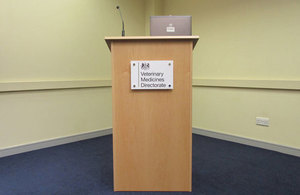
Lecturn

This notice was issued to UK Belgica Ltd, Colchester, Essex

The following contravened the Veterinary Medicines Regulation (VMR) 2013:

  • Importation, possession and supply of non-UK authorised veterinary medicinal products without the appropriate certificates granted by the secretary of state, contrary to Regulations 25, 26 & 27 of the VMR
  • All veterinary medicinal products (other than AVM-GSL & Schedule 6 products) have not been authorised individually before the product is supplied, contrary to Schedule 3, Paragraph 9 (1) of the VMR
  • Veterinary medicinal products (other than AVM-GSL & Schedule 6 products) have been supplied from trade stands at shows which were not registered premises, contrary to Schedule 3, paragraph 8(1) of the VMR

The improvements required:

  • All importations, possessions & supplies of non UK authorised products must only be in accordance with a valid SIC (which is obtained prior to importation)
  • All supplies of veterinary medicinal products (prescribed under the veterinary cascade) must be individually authorised by a veterinary surgeon prior to supply
  • Trade stands must only stock & supply veterinary medicinal products classified as AVM-GSL & Schedule 6, unless the stand has been registered/approved appropriately

Published 5 February 2019


Press release: Pension billions could be unlocked to boost economic growth and savers’ returns

Members of occupational defined contribution (DC) pension schemes may be missing out on potential benefits of long-term investments in ventures such as small firms, housing, green energy and sustainable development, according to the Minister for Pensions.

Assets in occupational DC schemes have almost tripled to £60 billion since the start of 2011 and have been boosted by the introduction of automatic enrolment into workplace pensions.

Guy Opperman – speaking at the Trade Union Congress ‘Fit for the future’ pensions conference – revealed changes are being explored that would give more than 10 million members of certain pension schemes access to more diverse, innovative investments.

The government is consulting on the reforms to occupational DC pensions – a type of pension where future benefits depend heavily on earnings from investments.

Larger DC pension schemes – for example, those with 5,000 or more members – could be required to publish their policies and report every year on how much they allocate to the types of investment the government is keen to encourage.

Guy Opperman, Minister for Pensions and Financial Inclusion, said:

Pension schemes could consider opportunities for more innovative, long-term investment offering members the potential for better returns – and the UK economy billions of pounds of funding that can boost jobs, productivity and growth.

We can do more to attract new investment into important sectors of the economy which would boost employment and help to build stronger, more sustainable communities. At the same time, this approach would give savers more pride in their pensions while delivering good returns.

Ministers are also seeking views on proposals which would encourage smaller DC schemes to merge and measures to allow performance fees within the existing charge cap.

Follow DWP on:


Press release: Making the best use of small contractors

The Coal Authority ‘went local’ for works at the remote Allerdean Mill mine water treatment scheme in the Scottish borders after it was found that the location wasn’t covered by any existing procurement framework – and no larger contractors made a bid for the work when it was put out to tender.

Simon Hall, Construction Safety, Health and Environment Advisor at the Coal Authority, said: “Small contractors should never be underestimated, and we aim to maximise their use.

“In this case, it showed that with all the necessary due diligence in place, SMEs – small to medium sized enterprises with 10 or less employees – are both a valuable resource to our organisation and a benefit to local economies.

“A local contractor, with one full time employee and 3 partners, was invited to participate in the tender, which initially attracted some interest from 7 different contractors either expressing an interest or attending the site to view the requirement.

“However, the local contractor was the only one that submitted a bid, with feedback from the others revealing that a combination of the size of the project, its location and the timescale stopped them bidding for the work.”

After due diligence was completed, the bid was deemed to be commercially acceptable and the contractor was visited by a member of the Coal Authority’s health and safety team.

The work was carried out to alleviate flooding of land surrounding the Allerdean Mills pumping station, located near Berwick-upon-Tweed. During periods of heavy rainfall the flows from the land drain overwhelmed the pump capacity resulting in adjacent land drains backing up and subsequent flooding upstream.

The aim of the project was to locate and disconnect the land drains from the pumping station’s wet well and divert the surface water flows to the nearby Allerdean Burn. Other minor works were also carried out as part of the project, including installation of drainage at the entrance to the site and the replacement of the access track fence.

The work, which was completed last year, has seen the installation of large diameter twin-walled pipes, manhole chambers and a pre-cast headwall. Together these divert surface water flows from the adjacent farmland into the brook, by-passing the wet-well at the pumping station. This is preventing flooding of the access track to the scheme as well as land owned by 2 landowners.

New dry stone walling was also built to match the existing walling, using skilled local tradesmen.

Since the removal of the surface water, flows from the pumping station’s wet well has seen on average, a monthly decrease in pumping electricity costs of 37% in comparison to the previous year.

“The successful completion of this project has shown that it is possible to be both flexible and compliant when it comes to the procurement regulations we have to work within,” said Simon.

“And that with guidance SMEs can be a valuable resource to the Coal Authority, and we aim to maximise their use when possible in the future.”


Press release: UK Government to support safe maritime trade and economic growth across Overseas Territories

The UK Hydrographic Office (UKHO) have today launched a five-day capacity building seminar to help UK Overseas Territories support safe maritime trade.

The seminar, delivered as part of the government’s Overseas Territories Seabed Mapping Programme, will focus on international regulations, with sessions on maritime safety information training, best practice governance and maritime law. This guidance, given by experts at both the UKHO and MCA, will help each of the 10 participating territories to comply with international obligations and share their own maritime safety information with ships operating in their waters.

For these ships, this information, including up-to-date bathymetry (seabed mapping data), navigational warnings and observations, is essential to safe navigation. And with the global ocean economy expected to double from $1.5 trillion in 2010 to $3 trillion in 2030, it’s vital that these Overseas Territories develop their capability to not only support maritime safety, but create opportunities to increase seaborne trade and tourism. This is particularly important for the many Overseas Territories where these sources of income make up a significant part of their GDP.

Advice and support given through the seminar will also complement additional work carried out by the UKHO in collecting marine geospatial data – including bathymetry, tidal and a range of seabed features– in each territory’s ocean environment. The data, which has been collected through 11 surveys in 6 territories, will not only support navigation through the creation of charts but give authorities the information they need to support disaster planning and resilience, coastal infrastructure and environmental protection.

This activity, including both the seminar and surveying, has been carried out under the UK the Conflict, Stability and Security Fund Programme funded by the UK Government.

Commenting on the seminar, Kerrie Howard, Hydrographic Programme Manager, UKHO, said:

This hydrographic seminar provides a unique opportunity to assemble an array of delegates from across the world, with a shared vision for using marine geospatial data to unlock safety, prosperity and sustainability.

Work that has been undertaken as part of the Overseas Territories Seabed Mapping Programme to date has shown the benefits of marine geospatial data. The next step, in terms of implementation, will see tangible returns on hydrographic investment. In the short and medium term, we expect new charts to be created with a higher level of detail than ever before, ensuring safety for mariners and providing businesses within OTs to begin planning for increased import/exports and even infrastructure development and coastal protection.

In the long term, however, what this work will foster – spurred by this week’s session – is a shared culture of hydrographic excellence across the Overseas Territories, unlocking a marine geospatial-led future that maximises the potential of these territories’ blue economies.

Those in attendance at the seminar will include representatives from Anguilla, Bermuda, British Virgin Islands, Cayman Islands, Falkland Islands, Gibraltar, Montserrat, South Georgia and South Sandwich Islands, St Helena and Turks and Caicos Islands.