Press release: Charity Commission issues Official Warning to trustee of housing charity

The Charity Commission, the independent regulator of charities in England and Wales, has today (5 February 2019) issued an Official Warning to a trustee of Expectations (UK) (registered charity number 1152491) due to a breach of trust and legal duties.

The charity, which operates in Birmingham to provide social housing accommodation and assistance, has been subject to a regulatory compliance case since August 2017 due to concerns about its governance and the viability of the charity.

The Official Warning, issued under section 75A of the Charities Act 2011 comes after the trustee, Mr Blanchette, failed to cooperate with the Commission and failed to comply with two formal Action Plans previously issued.

The Commission is concerned by serious governance issues within the charity and has advised of the need to strengthen the board to bring additional skills and expertise into the charity.

The Commission’s previous advice required the trustee to provide a business plan as evidence of its short and long term financial viability to provide the service and manage debts. Despite several requests, that plan was not provided until the Commission took steps to impose the Official Warning.

The regulator is also concerned about decision-making around an emergency loan provided by a company whose director is an associate of a former trustee. The decision to accept the loan was not documented, and so it is unclear whether the conflict of interest and/or loyalty was identified and properly managed.

The charity is also in breach of its statutory duty to file an annual return and accounts for the financial years ending March 2016 and March 2017. It has also provided the Commission with information that was inconsistent with that provided to another regulator also engaged with the charity.

The Commission is encouraged to see that steps have been taken to address its governance concerns, and that 5 new trustees have recently been appointed to the charity’s board.

Tracy Howarth, Head of Regulatory Compliance at the Charity Commission said:

The public, and those that rely on the vital support of charities, expect high standards of integrity and accountability from those that run charities. This trustee has failed to live up to those standards, exposing their charity to serious uncertainty and risk. This warning should serve as a reminder to all charity trustees that their work is of high importance, and that they will be held to account for compliance with their legal duties and regulatory advice.

In issuing the warning, the Commission has set out action that should be taken to address its regulatory concerns, including carrying out a governance review, filing the outstanding accounts; submitting a business plan to the Commission.

The Commission expects the newly appointed trustees to address its concerns as a matter of priority.

Tracy Howarth added:

We want to see all charities thrive, so I welcome the arrival of new trustees at Expectations UK. This should signal a watershed moment for the charity, and I expect the new board to take swift steps towards tightening its governance and management. Charity trustees should at all times consider the needs of their beneficiaries, and be driven by their charitable purpose and mission in everything they do.

The regulator will be engaging with the new trustees, as well as Mr Blanchette, as part of its ongoing case. Any further breaches of charity law or regulatory advice would be of serious concern to the Commission.

The Official Warning is published in full here.

Ends.

Notes to editors:

  1. The power to issue charities or individuals with an Official Warning was granted by the Charities Act 2016. It is designed to ensure a charity or its trustees know that a breach, misconduct or mismanagement has taken place and that it needs to be rectified.
  2. An official warning is not a statutory direction. The Commission cannot use an official warning to direct trustees to take specific action. However, it must specify any action it considers the trustees or the charity should take to rectify the breach, misconduct or mismanagement. Furthermore, failure to remedy any breach specified in a warning can be used as evidence of misconduct or mismanagement including when considering whether to exercise other specified powers.
  3. Section 15(2) of the Charities Act 2011 gives the Commission the power to issue formal regulatory advice, including Action Plans, to trustees.


News story: Government announces plans to tackle illegal traveller sites

Sajid Javid set out draft measures aimed at making it easier for officers to intervene and remove travellers from land they should not be on.

The Home Secretary will also consider making it a criminal offence to set up such camps. It is currently defined in law as trespassing, a civil matter.

In addition, the Ministry for Housing, Communities and Local Government (MHCLG) announced it will provide local authorities with practical and financial support to handle unauthorised encampments.

Home Secretary Sajid Javid said:

The vast majority of travellers are law-abiding citizens – but illegal sites often give an unfair, negative image of their community and cause distress and misery to those who live nearby.

There is a widespread perception that the law does not apply to travellers and that is deeply troubling.

The result of our initial consultation was clear – people want to see greater protection for local communities and for the police to be given greater power to crack down on trespassers.

Communities Secretary Rt Hon James Brokenshire MP said:

During our consultation, we have heard accounts of needless and unacceptable noise, abusive and threatening behaviour and extensive litter and waste from illegal traveller sites.

Only a small minority of people are causing this distress, but it’s right that police are given extra powers to step in.

We are committed to working with councils to help them deal with these challenging cases, while also ensuring travellers have good access to legal sites.

The plans follow an initial consultation by the government to look at how to strengthen the response from police and local authorities, following calls for robust measures to protect landowners and those living close by.

The consultation response was clear problems are caused for communities by travellers moving from place to place – so councils will be reminded of their existing obligation to provide enough “transit sites” to reduce the risk of communities seeing illegal sites set-up on their doorstep and to identify suitable sites, so problems are not simply shifted on to neighbouring areas.

MHCLG has committed to give councils up to £1.5 million of extra funding to help them enforce planning rules and tackle unauthorised sites, with funding also available under the £9 billion Affordable Homes Programme to help pay for legal pitches.

Alongside this, the department has given £250,000 to support projects working with Gypsy, Traveller and Roma communities to tackle discrimination, improve integration, healthcare and education.

As part of the measures announced today, ministers will consider making data available on where legal sites are so it is clear which authorities are not offering their fair share of traveller facilities. Under new guidance to be published, the Communities Secretary will step in and review cases where there are concerns raised there are too many authorised traveller sites in one location.

Additionally, the Home Office will launch a review into whether it should criminalise the act of trespassing when setting up an encampment. A change in the law may allow the police to respond quicker and take tougher action.

The Home Office will also consult on proposals to amend the Criminal Justice and Public Order Act 1994 to:

  • lower the number of vehicles needed to be involved in an illegal camp before police can act from 6 to 2
  • give the police powers to direct travellers to sites in neighbouring local authorities. Currently they can only direct trespassers to sites in the same area
  • allow officers to remove trespassers from camping on or beside a road
  • increase the time – from 3 months to a year – during which travellers are not allowed to return to a site they have already been removed from


News story: UK-Canada collaborations to boost productivity: apply for funding

The UK and Canada are committed to working together to advance science, engineering, research and innovation and strengthen industry, to the benefit of both countries.

Innovate UK has up to £5 million for UK businesses to partner with Canadian organisations to develop innovative products, processes or services for overseas markets.

The competition will fund developments that either advance enabling technologies or enhance industrial productivity.

Projects that could attract funding include those in the fields of automation and artificial intelligence, advanced manufacturing and food and drink processing.

Joint working agreement

This is the latest phase of a joint working agreement between the National Research Council of Canada and UK Research and Innovation.

Funding on the Canadian side will be provided through the National Research Council of Canada’s Industrial Research Assistance Program.

It is part of the EUREKA network, which promotes co-operation by member countries for market-focused research and development.

Enabling technologies

Under the theme of enabling technologies, projects can look at applying artificial intelligence to accelerate the design of materials, devices or processes in advanced manufacturing or food production.

Projects within this theme can be led by a UK-based small to medium-sized enterprise (SME) or a research and technology organisation, working with at least one Canadian business and one Canadian research organisation.

Enhanced productivity

The theme of enhanced productivity includes improving existing products or processes through technologies such as the Internet of Things, blockchain and cybersecurity.

A UK SME needs to be the lead for projects under this theme, collaborating with a Canadian business with fewer than 500 employees.

Competition information

  • the competition opens on 11 February 2019, and the deadline for registration is at midday on 2 May 2019
  • we expect total projects costs to be up to £1 million. For UK applicants the maximum grant they can get is £200,000, with up to $300,000 CAD for Canadian applicants
  • projects must start by 1 October 2019 and can last up to 2 years


News story: Tony Juniper announced as preferred Natural England Chair candidate

The Secretary of State for Environment, Food and Rural Affairs, Michael Gove, is pleased to announce that Tony Juniper has been selected as the Government’s preferred candidate to take up the post of Chair of Natural England, the Government’s advisor for the natural environment in England.

Tony Juniper has been selected following a rigorous process which was conducted in accordance with the Ministerial Governance Code on Public Appointments.

The Secretary of State has invited the Environment, Food and Rural Affairs Select Committee to hold a pre-appointment hearing and to report on Tony’s suitability for the post. Pre-appointment scrutiny is an important part of the appointment process for some of the most significant public appointments made by Ministers. It is designed to provide an added level of scrutiny to verify that the recruitment meets the principles set out in the Governance Code on Public Appointments.

Pre-appointment hearings are held in public and allow a Select Committee to take evidence from a Minister’s preferred candidate before they are appointed. The Select Committee will publish a report setting out their views on the candidate’s suitability for the post. Ministers consider the Committee’s views before deciding whether to proceed with the appointment.

All appointments are made on merit and political activity plays no part in the selection process. However, in accordance with the original Nolan recommendations, there is a requirement for appointees’ political activity (if any declared) to be made public. Tony has not declared any significant political activity in the past five years.

Natural England

  • Natural England plays a key role in delivering the environmental priorities of central government.
  • Its general purpose is to ensure that the natural environment is conserved, enhanced and managed for the benefit of present and future generations, thereby contributing to sustainable development.
  • Natural England is a non-departmental public body, set up under the Natural Environment and Rural Communities Act 2006.

Biographical details of Tony Juniper

  • Tony Juniper CBE is currently Executive Director for Advocacy and Campaigns at WWF-UK, President of Royal Society of Wildlife Trusts, Fellow of the University of Cambridge Institute for Sustainability Leadership and former advisor to the Prince of Wales.
  • He began his career working as an ornithologist with Birdlife International and for many years worked with Friends of the Earth, most recently as Executive Director and Vice Chair of Friends of the Earth International.
  • He is a prolific author publishing many books, including the award-winning best seller ‘What has Nature Ever Done for Us?’
  • In 2017 Tony was recognised for his services to conservation with a CBE in the Queen’s Birthday Honours.


Press release: Ex-West Yorkshire police officer has rape sentence increased

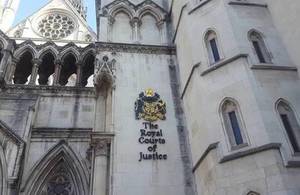
Royal Courts of Justice

An ex-police officer who raped a woman 40 years ago while on duty has today had his sentence increased after the Solicitor General, Robert Buckland QC MP, referred it for being too low.

David Lomax was a 43 year old serving with the West Yorkshire Police at the time of offending, and responsible for arresting those who had failed to pay court-ordered fines. In October 1978, Lomax was sent to arrest his victim, but instead he told her that she would have to perform a sexual favour for him to avoid being arrested and going to prison. Lomax then raped the victim.

When the victim was later arrested for non-payment of the fine, she told the arresting officers about the rape. While DNA testing was able to identify a specimen as not belonging to the victim’s partner, and possibly belonging to Lomax; it was not able to identify Lomax conclusively.

The case was reopened in 2016, and modern DNA testing was able to prove that the specimen belonged to Lomax, leading to his arrest.

Lomax, now 84, was originally sentenced in October 2018 to 4 years and 9 months imprisonment at Leeds Crown Court. Today, the Court of Appeal has increased his sentence to 8 years in prison.

Commenting on the increase, the Solicitor General said:

“Lomax abused his position of trust as a police officer, and got away with his crime for too long. Thanks to modern forensic science, he was brought to book. It is only right that it is now made clear to him that his actions have not been forgotten and will be met with the full force of the law.”

Published 6 February 2019
Last updated 6 February 2019 + show all updates

  1. Offender’s age amended to 84.
  2. First published.