Press release: New Charity Inquiry: Birmingham Diocesan Trust

The Charity Commission, the independent regulator of charities in England and Wales, has opened a statutory inquiry into The Birmingham Diocesan Trust (234216). The inquiry is focused on the charity’s safeguarding governance and the adequacy of its response to recent reviews. The inquiry was opened on 21 December 2018.

The charity’s objects include the provision of religious services and education across Birmingham, Coventry, Dudley, Oxfordshire, Sandwell, Solihull, Staffordshire, Walsall, Warwickshire and Wolverhampton.

In February 2018 the charity notified the Commission that the Independent Inquiry into Child Sexual Abuse (IICSA) had selected them as a case study and had listed a hearing into historic safeguarding issues at the charity for November 2018.

During the summer of 2018, as part of the charity’s preparation for the hearing it proactively commissioned a number of reviews of its safeguarding policies, procedures and practices. In late October and November the charity provided the Commission with copies of the results of these independent audit reviews, which highlighted some serious failings and concerns over how the charity was handling safeguarding matters.

The Commission’s role includes holding charities to account for their actions and/or inactions. The Commission requested further information from the charity via its solicitors about its response to the results of the reviews, to assess its management of any live risks, if the charity had adequate procedures on safeguarding in place and its response about the areas in need of improvement. The responses supplied during November and December were not sufficiently timely or adequate to satisfy the Commission, given the gravity of the issues raised by the reports nor did it provide adequate reassurance that the key risks were being swiftly and effectively managed.

Part of the charity’s response to the review findings was to recruit a new interim head of safeguarding. His first report, three weeks in, emphasised the need to address the governance failures and ensure that the charity was taking sufficiently timely action and applying sufficient resource to respond to the concerns.

As a result, the Commission opened a statutory inquiry to examine and provide assurance about the charity’s governance, operational management and its policies and practices with regard to safeguarding and people protection issues, particularly in relation to:

  • Its risk management procedures, and handling of incidents reported since 2016
  • Its responsibility to provide a safe environment for its beneficiaries, staff and other charity workers
  • Vetting and following of DBS procedures in relation to its employees, volunteers and other charity workers
  • Its response to and actions in relation to the audit report review
  • Sufficient steps are being taken to ensure public trust and confidence in the charity.

Safeguarding procedures in the schools that come under the oversight of the diocese are not, at this time, within the scope of the inquiry.

Harvey Grenville, Head of Investigations and Enforcement said:

The public rightly expect charities to ensure safeguarding is an absolute priority, so when anyone comes into contact with people representing a charity, they are protected and the risks managed.

The Birmingham Diocesan Trust is a large charity, providing services accessed weekly by some 60,000 people and has a wide scope; it works across many different regions and has a wide range of beneficiaries. The beneficiaries quite rightly expect to be confident and assured that the charity’s safeguarding governance is fit for purpose, and any areas identified for improvement are swiftly and properly addressed.

We have opened a statutory inquiry into the charity to ensure it addresses these specific concerns as a matter of urgency. We are in liaison with, and working with the relevant statutory agencies to, ensure that any safeguarding risks are being managed appropriately.

After the opening of the inquiry, the Commission immediately met with the trustees. They are fully cooperating with the inquiry, and have confirmed that they are committed to resolving matters as soon as possible. They have taken some further actions to respond to the reports issues, including the appointment of two additional assistant safeguarding coordinators, a reorganisation of how safeguarding matters are reported to the trustees and the commissioning of external consultants to work with statutory agencies to ensure all live safeguarding risks are being managed appropriately. These will be relevant when considering our next regulatory steps.

Anyone who wishes to discuss safeguarding and the Archdiocese’s work can contact the charity on 0121 230 6240. Alternatively, to contact the National Association for People Abused in Childhood (NAPAC), the number is 0808 801 0331 or the IICSA Truth Project can be contacted via its website www.truthproject.org.uk to discuss historic issues. For current safeguarding concerns that are of a criminal nature please contact your local police force on 101.

It is the Commission’s policy, after it has concluded an inquiry, to publish a report detailing what issues the inquiry looked at, what actions were undertaken as part of the inquiry and what the outcomes were. Reports of previous inquiries by the Commission are available on GOV.UK.

Ends

Notes to Editors

  1. The Charity Commission is the regulator of charities in England and Wales. To find out more about our work see the about us page on GOV.UK.
  2. Search for charities on our check charity tool.
  3. Section 46 of the Charities Act 2011 gives the Commission the power to institute inquiries. The opening of an inquiry gives the Commission access to a range of investigative, protective and remedial legal powers. The Commission is not a statutory safeguarding agency. Further information on the Commission’s remit in relation to safeguarding can be found in our guidance.
News story: Animal medicines improvement notice: APG Supplies and Services, County Fermanagh, Northern Ireland.

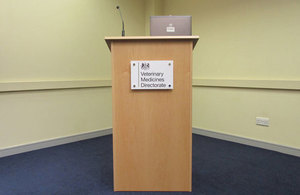
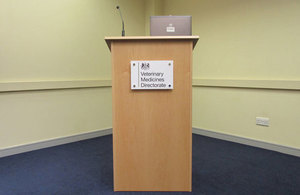
Lecturn

This notice was issued to APG Supplies and Services.

The following contravened the Veterinary Medicines Regulation (VMR) 2013:

  • The advertising and placing on the market of an unauthorised veterinary medicine (Parakill), both online and instore, contrary to Regulation 4 of the Veterinary Medicines Regulations 2013

The improvements required are:

  • All medicinal claims to be removed from all AGP Supplies and Services online platforms, including any pictures of Parakill
  • All stock with medicinal claims to be removed from sale
  • All literature/banners/adverts with medicinal claims are to be removed from customer/public access

Published 12 February 2019


News story: Animal medicines improvement notice: Aurivo (NI) Ltd , Omagh, County Tyrone

Lecturn

This notice was issued to Aurivo (NI) Ltd

The following contravened the Veterinary Medicines Regulation (VMR) 2013:

  • Failure to keep proper records for the supply of veterinary medicinal products classified as POM-VPS, contrary to Regulation 23 of the Veterinary Medicines Regulations 2013.

The improvements required:

  • All POM-VPS supplies must be prescribed by a SQP and full records kept of purchaser, product, date of supply, quantity and batch number. Records must be maintained for at least 5 years.

Published 12 February 2019


Press release: Change of British High Commissioner to Australia: March 2019

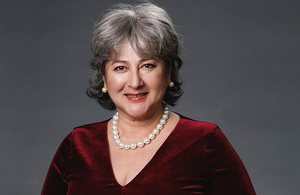
Mrs Vicki Treadell CMG MVO has been appointed British High Commissioner to Australia

Mrs Vicki Treadell CMG MVO has been appointed British High Commissioner to Australia

Mrs Vicki Treadell CMG MVO has been appointed British High Commissioner to Australia in succession to Mrs Menna Rawlings CMG who will be transferring to another Diplomatic Service appointment. Mrs Treadell will take up her appointment in March 2019.

CURRICULUM VITAE

Full name: Victoria Marguerite Treadell

Married to: Alan Treadell

2014 to Present Kuala Lumpur, British High Commissioner
2010 to 2014 Wellington, British High Commissioner
2006 to 2010 Mumbai, Deputy High Commissioner
2002 to 2005 UKTI, Director, North West of England
1999 to 2002 BTI, Deputy Director, Corporate Resources Group
1998 to 1999 FCO/DTI, Head of Professionalism in Trade Unit
1996 to 1998 FCO, Desk Officer, Latin America Department
1993 to 1996 FCO/DTI, Deputy Head of Export Services Section
1992 to 1993 FCO, British Council Quinquennial Review Team
1990 to 1992 FCO, Assistant Desk Officer, Resource Policy Department
1989 to 1990 Kuala Lumpur, CHOGM and State Visits Officer
1986 to 1989 Kuala Lumpur, Assistant Management Officer
1985 FCO, Desk Officer, Western Europe Department
1983 to 1985 FCO, Diary Secretary, Permanent Under Secretary’s Office
1981 to 1983 Islamabad, Visa Support Officer
1979 to 1981 FCO, Economic Relations Department

Further information

Published 12 February 2019


Statement to parliament: Government response and consultation on taxi and private hire vehicle licensing

I am today announcing to the House the launching of a consultation on statutory guidance to be issued to taxi and private hire vehicle (PHV) licensing authorities and that the government has issued its response to the report of the Task and Finish Group on taxi and private hire vehicle licensing.

The draft statutory guidance proposes a range of robust measures to protect taxi and PHV passengers, particularly those most vulnerable. Government and licensing authorities must work together to ensure that, above all else, the taxi and PHV services the public use are safe. The consultation on this guidance will run until 22 April 2019.

The taxi and PHV trade has experienced significant and rapid changes in recent years which have brought with them benefits but have exacerbated concerns over the existing structure of the industry and the environment in which it operates. In particular, many of these changes have highlighted inconsistencies in the licencing standards, and in the rigour with which these standards are applied by some licencing authorities.

The recommendations proposed in the draft statutory guidance are a result of extensive consultation, and in particular learning from the best practice of exemplary licensing authorities.

Consulting on statutory guidance is an important first step to reforming the way the taxi and PHV sector is regulated.

In addition to the statutory guidance consultation, the government is today publishing its response to the report of the Chair of the Task and Finish Group. The government has set out its plans to introduce legislation and bring forward the urgent reforms necessary. I would like to take this opportunity to thank the Chair, Professor Mohammed Abdel-Haq, for his report, and the members of the group for their dedication in considering the issues facing the trade and their potential remedies.

Government will when time allows bring forward legislation to introduce national minimum standards for taxi and PHV licensing, reinforcing the consistently high standards that the statutory guidance will bring to the sector. To ensure that drivers are under the same level of scrutiny when operating away from their licensing area we will legislate to enable enforcement and compliance checks to be conducted by any licensing officer against any vehicle regardless of where they have been licensed. Where drivers or vehicles fail to meet the national minimum standards, they will be able to take appropriate action to protect the public. Underpinning these measures will be the introduction of a national licensing database to assist the sharing of relevant information between licensing authorities and other bodies necessary to ensure that all those in the trade are ‘fit and proper’ and warrant the trust that is placed in them by the public. This database will build on the work of the Local Government Association and the National Anti-Fraud Network in establishing the National Register of Revocation and Refusals.

Taxis and PHVs provide a vital community service which is used by many people; helping them get to the shops, see their friends, or go to work or school. We will work with the trade, drivers and regulators as well as passenger groups to meet the challenges the sector is expected to face in the future and ensure that change is not at the expense of a safe and well-functioning market.

This work is already underway thorough the Future of Mobility Grand Challenge and the Law Commission’s consideration on enabling autonomous vehicles. I would encourage all to engage on these issues and help shape a successful sector that all can be proud of.