Press release: Change of Her Majesty’s Ambassador to South Sudan: May 2019

Mr Christopher Trott has been appointed Her Majesty's Ambassador to the Republic of South Sudan.

Mr Christopher Trott has been appointed Her Majesty’s Ambassador to the Republic of South Sudan.

Mr Christopher Trott has been appointed Her Majesty’s Ambassador to the Republic of South Sudan in succession to Ms Alison Blackburne who will be transferring to another Diplomatic Service appointment. Mr Trott will take up his appointment during May 2019.

Curriculum Vitae

Full name: Christopher John Trott

Married to: Sunna Trott

Children: Two

2016 to present FCO, UK Special Representative for Sudan and South Sudan, and Head of Joint FCO/ Department for International Development (DFID) Sudan Unit
2016 Honiara, Acting High Commissioner to Solomon Islands, Vanuatu and Nauru
2011 to 2015 Cape Town, Consul General
2007 to 2011 Dakar, Her Majesty’s Ambassador to Senegal, Mali, Cape Verde and Guinea-Bissau
2004 to 2006 DFID, Deputy Head, Policy and Strategy, Post Conflict Reconstruction Unit
2003 to 2004 FCO, Deputy Head, Human Rights Policy Department
2003 Temporary Duties as Deputy Head of Mission in Kabul and Head of Consular Assistance Team in London
1999 to 2002 Tokyo, First Secretary (Political)
1996 to 1999 Tokyo, First Secretary (Commercial)

Further information

Published 19 February 2019


Government response: Government response to Honda announcement

placeholder

Business Secretary Greg Clark said:

Honda have announced, as part of a global restructuring, plans to close their Swindon plant in 2021; and instead manufacture and export the new Civic model into Europe from Japan. As Honda have said, this is a commercial decision based on unprecedented changes in the global market. Regardless, this is a devastating decision for Swindon and the UK.

This news is a particularly bitter blow to the thousands of skilled and dedicated staff who work at the factory, their families and all of those employed in the supply chain.

I will convene a taskforce in Swindon with local MPs, civic and business leaders as well as trade union representatives to ensure that the skills and expertise of the workforce is retained, and these highly valued employees move into new skilled employment.

The automotive industry is undergoing a rapid transition to new technology. The UK is one of the leaders in the development of these technologies and so it is deeply disappointing that this decision has been taken now.

Published 19 February 2019


Driving collaboration in Swansea

Andrew Falvey, DVLA’s Commercial Director, tells us all about the work he’s been doing to foster better networking relationships within the public sector in Swansea.
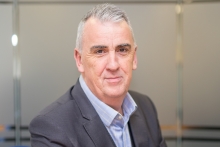
Andrew Falvey, DVLA's Commercial Director

Before I joined DVLA in 2010, I worked at Swansea Council as a Head of Service. At the time I often pondered that I knew very little about the place, even though I’m from Swansea and it was literally just up the road. I’d never been there, and I didn’t know anyone in a senior position that I could call up. I was told that there was a large commercial team there, for example, surely we’ve some things in common? Why weren’t we talking? This seemed like a missed opportunity to me.

Making the first move

Fast forward a few years, and I’m a director in DVLA, wondering if there is a way of improving communication and collaboration between Swansea’s largest public sector employers. Throughout my career I’ve always been wary of being too inward looking – I think it’s important to share best practice and learn from others, this helps organisations flex and adapt to challenges and opportunities.

So I emailed a few senior people in other local public sector bodies, some that I knew personally and some names plucked from the internet, and asked if they would be interested in forming some kind of group. Despite my cold calling, to my delight I had very positive responses and before long the Swansea Large Employers Forum was born.

Who we have on board

We’ve top level representation from ABMU Health Board, Swansea Council, Swansea University and University of Wales Trinity St David, plus of course DVLA. Between us, we employ around 40,000 staff. When you add on the local supply chains that support our organisations, it adds up to a huge impact on the working population of the Swansea area.

Why these organisations? Well, there was nothing scientific in our approach, we simply looked at public sector organisations in Swansea that employed over 1,000 people. We’ve kept it to the public sector as there are similarities in our working practices and legal frameworks that we operate under. We don’t ignore the progress and best practice that the private sector brings, so this often influences our conversations.

Given the ongoing work on the Swansea Bay City Deal, the forum provides a really useful opportunity for members to consider how we can work together in support of the Deal, for example around the skills agenda.

Taking the time to meet

We meet 4 times a year for a couple of hours – not a huge time commitment, but enough to provide a regular chance to catch up, and we always seek to take away actions that we can work on. It’s no surprise that when we meet we often have the same business challenges: skills shortages, recruitment, retention of staff, transport and parking. We also discuss how we work with local businesses, both in partnership and as part of a supply chain.

The forum has met several times, and we’re seeing the increasing value of sharing our views. We’re all from large and complex organisations to those outside, and the ability to be able to email or pick up the phone to someone who can advise, or simply help you to navigate to the correct person or team, is hugely helpful.

The group has also spawned some topical sub-groups. The ones that have already met are Cyber Security, Cloud, Human Resources, GDPR, and IT Strategy. These groups are introducing people with similar expertise to each other, often for the first time. The knowledge sharing and the willingness to co-operate has been great to see.

I’m grateful to my colleagues on the forum who continue to bring enthusiasm and ideas to our meetings. We all share a common purpose and that is to find ways we can improve public services, while supporting local people and businesses.

Keep up to date with the latest news about DVLA, including our latest vacancies.

Follow DVLA on TwitterFacebook and LinkedIn and subscribe to our Digital Services Blog.

Let’s block ads! (Why?)
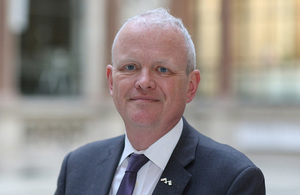


News story: UK is committed to strengthening UK-India defence ties

The UK will attend Aero India in force again this year, reflecting the importance of the UK-India defence relationship. Industry and government representatives will be present to promote some of the world’s most innovative defence and aviation technologies and strengthen relationships with Indian partners.

The UK delegation will include:

  • Air Marshal Stuart Evans Royal Air Force, Deputy Air Commander, Allied Air Command
  • Fleur Thomas, Director Export Policy, UK Ministry of Defence
  • Air Vice Marshal Nigel Maddox, Senior Military Adviser to Department for International Trade’s Defence and Security Organisation
  • Sir Dominic Asquith KCMG, British High Commissioner to India

Speaking about UK objectives for the show, Sir Dominic said:

The UK is proud to have a defence partnership with India that benefits both our countries immensely. In the last year, we have worked together in multiple areas: our services have strengthened naval and marine links through Exercises Indradhanush and Konkan; and the visit of the Indian Navy to the Queen Elizabeth – the most advanced aircraft carrier of its class in the world – gave us the opportunity to explore potential joint work on naval capabilities.

We want this strong relationship to continue. Future defence technologies are increasingly going to be delivered by collaborative programmes, in which India has the potential to take its place. Last year at Farnborough Air Show, the UK launched its Future Combat Air Strategy, which committed £1.9 biilion of Government funding to develop next-generation combat air technologies, including via international partnerships. This week, we look forward to exploring with India the potential for future collaboration, through which we could jointly build knowledge, security and prosperity.

Further information:

UK companies present at the show include:

  • Aerospace Wales
  • BAE Systems
  • Cobham plc
  • Collins Aerospace
  • Cranfield University
  • Gardner Aerospace
  • GKN
  • MBDA UK
  • Rolls-Royce
  • Sherborne Sensors
  • Strongfield Technologies Ltd
  • Techtest Ltd (HR Smith Group)
  • Thales UK

UK Defence Exports in 2017 were worth £9 billion making the UK the second highest defence exporter in the world.

The UK is the top destination in Europe for inward investment and second globally only to the US.

Media

All media are invited to visit the UK companies in Hall Stand.

20 February 2019, 1315 hrs DSO Stand/Meeting room in Hall 3- A3.2A, Air Force Station Yelahanka, Bengaluru
21 February 2019, 1000hrs (tbc) DSO Stand/Meeting room in Hall 3-A3.2A, Air Force Station Yelahanka, Bengaluru

Interested media representatives may contact, Manjunath KS at +91 72590 21102

For more information, please contact:

Sally Hedley, Head of Communications
Press and Communications, British High Commission,
Chanakyapuri, New Delhi 110021
Tel: 24192100; Fax: 24192400

Mail to: Upendra Singh

Follow us on Twitter, Facebook, Flickr, Eventbrite, Blogs, Youtube, Instagram


Press release: New UK support to help improve tax systems in developing countries

Developing countries will benefit from a new package of support aimed at improving tax systems, the Department for International Development has announced today. The move is aimed at helping end their reliance on aid.

The Organisation for Economic Co-operation and Development (OECD) estimates the average developing country generates tax revenues of around 14% of GDP. This is way below the 35% average for developed countries. Less tax revenue means less funding for public services.

This new DFID assistance will help developing countries generate greater revenues to support increased spending on essential services such as health, education and infrastructure. It will help support stronger, more transparent and more accountable governments.

The support will also contribute to economic growth by helping tackle tax avoidance and evasion and creating a more level playing field for businesses.

International Development Secretary Penny Mordaunt said:

This new UK support will help countries collect more taxes and leave them less reliant on aid. It will turbo charge their development.

Governments in the developing world want to move beyond aid and we want to help them get there faster. We are supporting their efforts to implement a fairer, more transparent tax system which is vital in helping our aid money go further.

We are helping developing countries create the right environment for foreign investment and giving British businesses the confidence to invest in them. This is a win for the developing world, as well as a win for the UK.

As part of the new package of support, additional funding will be provided for the Tax Inspectors Without Borders Initiative (TIWB). This is an Initiative by the OECD and the United Nations Development Programme. TIWB assists developing countries to implement international tax standards by sending experts overseas.

The programme has also proved to be great value for money: for every £1 spent on operating costs an additional £100 is returned in tax revenues.

DFID will continue to use the UK’s world class expertise to raise the standards of tax systems of developing countries to create a more stable environment for investment.

Notes to editors

  • The announcement is part of the Addis Tax Initiative (ATI), which the UK helped co-found, and committed donor countries to double their efforts on building tax capacity, alongside a commitment from partner countries to step up their efforts in raising taxes to support the delivery of the global goals.
  • It is a £47 million package of support broken down as follows:
  • £10.3 million to the OECD to assist Developing Countries implement International Tax Standards to tackle international tax evasion and avoidance. This includes support to Tax Inspectors Without Borders.
  • £7.4 million to the World Bank’s Global Tax Programme to work with countries to build effective tax systems.
  • £3.7 million to support the Platform for Collaboration on Tax (PCT). The PCT was launched in April 2016 by the International Monetary Fund (IMF), the OECD, the United Nations and the World Bank Group . The Platform is designed to intensify the cooperation between these organizations on tax issues. The UK’s leadership at the G20 helped to establish the PCT.
  • £4.2 million to the African Tax Administration Forum (ATAF). ATAF provides leadership of the tax reform agenda on the African continent and represents the needs of developing countries in international forums. HMRC will provide up to two tax experts for four years to help ATAF’s members states build a sustainable and impactful organisation.
  • £2.25 million to the Intergovernmental Forum for Mining, Minerals, Metals and Sustainable Development (IGF). IGF will assist Developing Countries tackle tax avoidance in the mining sector, which many developing countries rely on. This will support resource rich countries to implement international standards and unlock the opportunities to increase government revenues and economic activity in the mining sector.
  • Around £1 million to the IMF Tax Administration Diagnostic Assessment Tool (TADAT), designed to provide an objective assessment of the health of key components of a country’s system of tax administration.
  • Around £13 million of support to the IMF’s Africa Regional Technical Assistance Centres’ (AFRITACs). AFRITACs support African countries to build capacity in tax administration, public financial management, economic and financial sector management, and national statistics. Around £2.6 million of this funding will specifically support boosting tax revenue.
  • Around £5 million will be provided to the Institute for Fiscal Studies. This will deliver the development of tax policy analysis in four developing countries and a research fund. This support will help countries deliver tax policy, which will help reduce poverty and inequality.  The research fund will increase knowledge of tax collection in developing countries.