Alterations to services – patents
New patent applications and subsequently filed documents

For new patent applications and certain subsequently filed documents, you should use our online systems. Delays should be expected for any other form of filing.

Time periods for reply

We have now reverted to 2 month time periods to respond to first examination reports where the first examination report is issued 3½ years or more after the earliest date of the application. This will apply to reports issued from 9 November 2020 onwards. We will be flexible when it comes to allowing extensions if Covid-19 has caused you difficulties. There is no fee for requesting more time.

Patent applications and national security

All new patent applications where directions under section 22 of the Act (National Security) applies or could apply, are now being processed. While we continue to have limited access to our offices, these will take longer than normal.

We are aware that the process for transmitting applications abroad via the diplomatic bag service is likely to be disrupted. Applicants are encouraged to plan ahead wherever possible.

International applications (PCT)

If you have filed or are thinking of filing a new PCT application, we are doing the following to help:

  • waiving the late surcharge fee if you do not pay your fees when filing your PCT application

  • using existing PCT regulations to excuse delays in meeting deadlines due to the impact of COVID-19, e.g. rule 82 quater

  • corresponding digitally where possible as we know that many of you are working from home. WIPO are also no longer using postal services as a means of communication during this period

  • we are speaking to WIPO and other IP Offices about ways we can help customers during this difficult time.

Requests to the IPO

For some services, we have dedicated email accounts to deal with certain requests:

IPO correspondence

Patent related correspondence, both before and after publication of the patent application, continues to be emailed. It also covers correspondence relating to supplementary protection certificates. The only exception is to patent applications made subject to directions under section 22 (‘national security’) and to applications where we do not have an email address.

We will use the email address provided on the patent forms submitted with the particular application or otherwise communicated to the IPO for the purpose of receiving correspondence by email. Any queries on this should be sent to information@ipo.gov.uk

The following documents cannot be emailed out and will instead be sent out by post:

  • Grant Certificates and Late Grant letters
  • Some letters and reports, intended for someone other than the registered address for service
  • Non-patent literature (NPL) citations, where copyright and commercial agreements allow us to do so.

We are not emailing or posting published patent citations. You can get these from Espacenet, or directly from the websites of national patent offices.

Journal and publication

Publishing and granting of new patent applications will continue within usual time frames. However, customers are encouraged to view IPSUM to check the status and access post publication information on their patent applications.

The searchable journal will continue to be updated each week advertising newly filed patent applications, A Publications and Granted applications.

We will continue to update this page with any changes to services, as well as providing more details as they develop.

Published 27 March 2020
Last updated 15 January 2021 + show all updates

  1. A paragraph added on reverting to a 2 month period to reply to a first examination report

  2. Updated because of the end of interrupted days

  3. Updated information regarding new patent applications and subsequently filed documents, patent applications under section 22 of the National Security Act, international applications, time periods for reply, requests, correspondence and journal and publication.

  4. Patent applications and national security paragraph added.

  5. First published.


Appointment of the new Director General of the Security Service

Ken McCallum

Ken McCallum has been appointed as successor to Sir Andrew Parker as the head of MI5, Home Secretary Priti Patel announced today.

Currently serving as Deputy Director General, Mr McCallum has worked for the Security Service for almost 25 years.

His time included overseeing all counter-terror investigations in the run-up to, and during, the 2012 London Olympics.

There will be a handover period before Mr McCallum takes over from Sir Andrew when he retires at the end of April.

Home Secretary Priti Patel said:

Since becoming Home Secretary, I have worked closely with Ken and I’m delighted to appoint him as the new Director General.

We are facing unprecedented national security threats and I’m confident that his experience and vision will allow the UK to meet those challenges head on.

I also would like to pay tribute to Sir Andrew Parker, who has led the service through a very challenging period which saw the threat to the UK evolve rapidly. He has served his country with dedication and commitment and I thank him for his efforts.

Ken McCallum said:

MI5’s purpose is hugely motivating. Our people – with our partners – strive to keep the country safe, and they always want to go the extra mile.

Having devoted my working life to that team effort, it is a huge privilege now to be asked to lead it as Director General.

The Cabinet Secretary, Sir Mark Sedwill, said:

Ken McCallum’s expertise and leadership will be crucial to ensuring that the Security Service remains agile and creative in the face of new and emerging threats to our security. I know that he will be a fantastic Director General and I look forward to working with him.

Ken will work closely with Sir Andrew Parker ahead of his retirement. I would like to thank Sir Andrew for his many years of distinguished leadership of the women and men of the Service, and his dedication to keeping our citizens safe and our country secure.

Mr McCallum will take up his new post at the end of April.

A detailed biography of Ken McCallum can be found on the MI5 website.

Published 30 March 2020
Last updated 31 March 2020 + show all updates

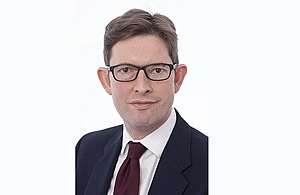
  1. Photo added of Ken McCallum.

  2. First published.


Aid charity involved in convoys to Syria “seriously mismanaged”, regulator concludes

The trustees of a humanitarian aid charity that failed to account for cash taken to Syria are responsible for misconduct and mismanagement, the charity regulator has found.

In a report published today, the Charity Commission, the regulator of charities in England and Wales, finds several serious failures in the administration of the charity, including failures to properly vet, safeguard and oversee volunteers who represented the charity, and to account for the way in which funds were spent.

The regulator’s inquiry, which launched in 2014, aimed to establish, among other things, whether the charity had been misused for, or had supported unlawful or improper activity, including facilitating military, armed, political activity, and whether the charity’s funds had been misappropriated.

In December 2013, a volunteer who was associated with this and other charities, took part in an aid convoy to Syria. While in Syria, the volunteer was reported to have been abducted and later murdered by ISIL militants.

Concerns about the charity’s involvement in aid convoys to Syria

The Commission had been engaging with the charity since April 2013 over concerns about its participation in and organisation of an aid convoy to Syria. This activity was outside Al-Fatiha Global’s charitable purposes at the time. The regulator had also issued general advice about charities’ participation in aid convoys, which it states carry “inherent risks” and are “not an effective means of delivering humanitarian aid”.

A books and records check at the time uncovered significant weaknesses in the charity’s records, such that the trustees were unable to demonstrate where and how charitable funds had been applied.

The inquiry further finds that the charity’s trustees provided “little to no” oversight of individuals to whom they had delegated responsibility, including those that managed participation in convoys to Syria. The trustees did not, the Commission finds, act reasonably to ensure the charity’s assets, including its name, were used only to support or carry out its purposes.

Cash not properly accounted for

The trustees also failed to ensure appropriate authorisation and documentation around cash carried by individuals travelling on convoys. The Commission found that individuals travelled overseas carrying between £2000-£3000 each, but that there were “insufficient records” as to how cash or aid were applied in Syria.

Failures to account for charitable funds

The inquiry report criticises the charity’s trustees for failures to account properly for donations of goods, leading to the charity’s accounts for year ended December 2013 being qualified by the charity’s auditor. The charity had undergone a period of growth, after what the Commission notes was ‘highly effective’ fundraising by the charity’s trustees and supporters. The regulator finds that Al-Fatiha Global’s internal, financial and governance controls and processes did not keep pace with that change.

Interim Manager

During its investigation, the regulator appointed an interim manager (IM) to manage and administer the charity with the trustees, including by taking full control of the charity’s finances. While in post, the IM ensured adequate due diligence, monitoring and risk management procedures were put in place, that the trustee board was expanded, and that risks to charitable assets were adequately managed.

Amy Spiller, Head of Investigation Teams at the Charity Commission, said:

Charity represents the best of human characteristics – that’s why the behaviour of charities, and those involved in charities, matters. This is especially the case where charities work to help the most vulnerable or work in areas of inherent risk for staff and volunteers. Sadly, we found that the trustees of Al-Fatiha Global failed in their legal duties and responsibilities. They put their charity – its people, assets and good name – at serious risk. I am pleased that the charity is now on a much more secure footing, with a largely new trustee board, and appropriate policies and processes in place to ensure the charity delivers on its purpose safely. I hope other trustees learn from this case – notably about the very serious risks involved in taking part in aid convoys.

The Commission says the trustees co-operated with the inquiry and that it is satisfied the charity is now operating lawfully.

The full inquiry report is available on GOV.UK.

Ends


Reckless care home bosses disqualified

Husband and wife, Darren William Lloyd (53) and Emma Lloyd (49), have been banned for a total of 8-and-a-half years, while Darren’s brother, Adrian Jeffrey Lloyd (50), has been disqualified for 5 years.

All three directors are from Wolverhampton and after signing disqualification undertakings, the trio are banned from directly or indirectly becoming involved, without the permission of the court, in the promotion, formation or management of a company.

Elysian Care Limited was incorporated in January 1997 to purchase and operate a residential care home called Knoll House in Penn, Wolverhampton. The company acquired two further care homes but sold one of them in 2011, leaving Knoll House and The Homestead, based in Stourbridge, in Elysian Care’s portfolio.

Elysian Care, however, began to struggle financially and in addition to not providing adequate services to the residents, the company failed to pay key suppliers and staff. By September 2014, Darren, Adrian, Emma Lloyd abandoned the two care homes, which led to the local authorities having to step in and make emergency payments to ensure the residents were cared for.

As part of their efforts to rescue Elysian Care, the company’s bankers’ appointed administrators, who went onto to report to the Insolvency Service that Darren, Adrian and Emma were responsible for several instances of misconduct.

Darren Lloyd instructed a member of staff to provide new bank details to the local authority responsible for paying the fees of some of the residents of Knoll House. The local authority, however, was not informed that the bank account they were paying into was in the name of Darren Lloyd.

In total, more than £500,000 of resident’s fees provided by the local authority between September 2012 and October 2014 was paid into Darren Lloyd’s personal bank account. More than £290,000 of that amount has not been accounted for nor has it been explained whether it was spent on the running of Elysian Care or the care homes’ elderly residents.

Further enquiries confirmed that the trio abandoned the two care homes and left no funds to provide services for at least 30 residents. This meant staff had to buy essential supplies out of their own pockets, while the two local authorities had to make emergency payments to support the residents.

One local authority had to step in to reimburse staff’s wages, as well as pay for food and hygiene provisions, while the second council was forced to relocate the residents.

And all three directors were remis in maintaining sufficient books and records, while also failing to supply a statement of affairs to the Administrator.

The trio contested the proceedings for over three years but elected to accept disqualification undertakings before their trial was due.

Emma Lloyd was the first to have their ban come into effect on 14 February and her disqualification lasts for 3-and-a-half years. Darren Lloyd’s 5-year ban came into effect on 19 February 2020, while his brother’s ban was effective a day later.

David Brooks, Chief Investigator for the Insolvency Service, said:

Darren, Adrian and Emma Lloyd were unscrupulous care home bosses. Not only were they culpable for diverting more than £500,000 of funds intended for the care of their residents but they abandoned the people they were responsible for and left staff and local authorities to step in and pick up the pieces.

Directors are expected to operate in the best interest of the company and by removing Darren, Adrian and Emma from the corporate arena will ensure their victims will be protected from further harm.

Darren Lloyd is from Wolverhampton and his date of birth is January 1967

Emma is from Wolverhampton and her date of birth is February 1971

Adrian Jeffrey Lloyd is from Wolverhampton and his date of birth is August 1969

ELYSIAN CARE LIMITED (Company number: 03304393)

Disqualification undertakings are the administrative equivalent of a disqualification order but do not involve court proceedings. Persons subject to a disqualification order are bound by a range of restrictions.

Further information about the work of the Insolvency Service, and how to complain about financial misconduct.

You can also follow the Insolvency Service on:


Second round of Urban Tree Challenge Fund opens today

The Forestry Commission today (Monday 30 March) opens round two of the Urban Tree Challenge Fund, which is for community and volunteer groups, town councils and individuals to apply for a share of the £10million pot to increase tree numbers in urban areas through small scale planting projects.

Launched in May 2019, the Urban Tree Challenge Fund aims to support the planting of more than 130,000 trees across England’s towns and cities.

This announcement of round two opening follows the success of round one, which saw thirteen large scale projects from local authorities and large organisations awarded grants to plant more than 50,000 trees in urban areas.

Planting more trees improves health and wellbeing, connects people with the outdoors, absorbs noise, reduces flood risk, cools temperatures through shading, and creates green spaces to help communities come together.

Successful applicants of round two will not start planting trees until the next planting season (winter 2020/21).

Forestry Minister Lord Goldsmith, said:

Our immediate priority is rightly our response to the challenges posed by the coronavirus. But, although these are unprecedented times, we want to continue to uphold the nation’s commitment to the environment.

We have made sure that the applications for round two of the Urban Challenge Tree Fund can be completed online so individuals are not putting themselves at risk, and I encourage anyone thinking of applying to do so in a safe way, using digital platforms to plan their application with colleagues if necessary.

Our manifesto sets our ambition to have every new street lined with trees – and I am dedicated to working closely with the Forestry Commission to help make this vision a reality.

The scheme is being administered by the Forestry Commission, with applications for single planting projects of between 150 and 5,000 small trees invited. Applications that contain 500 or more trees are especially encouraged. Grants will fund the planting of trees and the first three years of their care to ensure they can flourish into the future.

The grant will be delivered as a challenge fund, and therefore requires 50% match funding from those who apply, through either money or labour.

Forestry Commission Chair Sir William Worsley, said:

The value of trees in urban areas cannot be underestimated. They provide homes for birds and other wildlife, offer shade and natural cooling effects, help to reduce flood risk, and provide huge benefits for our health and wellbeing.

I’ve already visited several successful projects from round one, from the Mersey Forest to Manchester City of Trees, and have seen first-hand the great work that has been achieved so far through the Urban Tree Challenge Fund. The reopening of the fund will build on the success of round one, and will add to the 50,000 urban trees already awarded.

Community tree planting is a great passion of mine, and I greatly encourage local volunteer groups and individuals to apply.

The scheme will support projects which can provide the greatest environmental and social benefits, and applications will be processed by the Forestry Commission. A map will be available to check eligibility before applying.

Councillor Rob Anderson, Cabinet Member for Sustainable Transport and Environmental Services, Slough Borough Council, is one of the successful bidders from the first round, and said:

The Urban Tree Challenge Fund is a fantastic opportunity for Slough. Having already planted Oak, Rowan, Lime, Pine and Spruce we are eagerly awaiting the time when the plant material reaches a level of maturity so we can all enjoy the new plantations.

The new planting will mean improvements relating to air quality, greater natural flood management, temperature reduction for high density urban areas and increased carbon capture.

Earlier this month, Defra and the Forestry Commission welcomed the new £640million Nature for Climate announcement from HM Treasury which will help to deliver against the manifesto commitments to increase tree planting across the UK to 30,000 hectares per year by 2025, alongside peatland restoration and nature recovery.

The government is committed to growing woodland cover, and this spring will consult on a new English Tree Strategy looking at policies to expand, support and increase engagement with our woodlands.

Notes to editors

  • We are continuing to open this fund on 30 March 2020 and currently will close applications on 31 May, but we will keep this under review.
  • All application forms are available online and will need to discussed by your group virtually in line with latest government guidance.
  • The successful applicants of round two will not be expected to plant their trees until the next tree planting season (winter 2020/21).
  • In round 2 of the fund, an application can contain up to three planting sites. Planting sites cannot exceed half a hectare and must contain a minimum of 150 and a maximum of 5,000 small trees per site. An applicant can submit up to a total of five applications.