Ireland/Northern Ireland Specialised Committee 30 April 2020 – UK post-meeting statement

News story

UK statement following the meeting of the Ireland/Northern Ireland Specialised Committee between the UK Government and European Commission.

placeholder

The first meeting of the Ireland/Northern Ireland Specialised Committee was held today via video conference, co-chaired by officials from the UK Government and European Commission. This Committee was tasked by the first meeting of the Withdrawal Agreement Joint Committee held on 30 March, to start work on implementing the Northern Ireland Protocol.

A representative from the Northern Ireland Executive also attended as part of the UK delegation in line with the commitment made in the New Decade, New Approach deal.

The UK and the EU exchanged updates on the implementation of the Protocol and discussed the preparatory work for future decisions to be taken by the Joint Committee.

The UK was clear that our approach at all times will be focused on protecting the Belfast/Good Friday Agreement and gains of the peace process, and on preserving Northern Ireland’s place in the UK.

UK officials reaffirmed our commitment to complying with our legal obligations under the Protocol, just as we expect the EU to comply with theirs.

The two sides agreed to convene the Joint Consultative Working Group established under the Protocol which will be a further forum for discussion in relation to the Protocol.

Published 30 April 2020


Hull’s first female GP tops public vote in bridge-naming competition

As the country continues to face its biggest public health crisis in decades, it is perhaps poignant that the winning nominee is trailblazer Dr Mary Murdoch, who was House Surgeon at the Victoria Hospital for Sick Children in Park Street and founder of the Hull Women’s Suffrage Society.

Students from the Newland School for Girls and Archbishop Sentamu Academy penned essays set to the question; “The naming of the bridge – who inspires me and why?”. A judging panel then sifted around 100 essays to produce a shortlist of five iconic figures with links to the area before opening up the question to the public.

The major Highways England project, which will shape the future of Hull, will see the bridge open to the public in the summer.

Dr Murdoch, who passed away in 1916 at the age of 51, proved to be the most popular choice from a star-studded list which also included ‘headscarf revolutionary’ Lillian Bilocca, philanthropist and abolitionist William Wilberforce, Julia Lee, the first woman to officiate men’s rugby league games in the United Kingdom, and heroic World War Two veteran Thomas Ransom.

Highways England senior project manager James Leeming said:

First and foremost I would like to thank the diligent students who put so much time and effort into their fantastic essays. They put forward so many great nominations, all of whom would have been worthy winners, and they sparked a debate which captured the city’s imagination.

Now the tantalising wait is over and we know Dr Murdoch has emerged as the people’s choice from a shortlist that contained individuals of the highest calibre. She is an outstanding choice and, given the current climate, it is fitting that the bridge will be named after a pioneering doctor who did so much for Hull.

We are going to work with the students who nominated Dr Murdoch so we can establish the final name of the bridge, and this will be announced when it is opened in the summer.

The innovative competition saw five boxes placed at Hull Minster earlier this year, where members of the public could go along, read the essays and decide who to vote for by placing a token in their chosen box. An online poll was also hosted by the scheme website.

The judging panel was made up of Emma Hardy MP, Katy Duke (CEO Deep), Cllr Daren Hale (Deputy Leader of the Labour Group), Karen Oliver-Spry (Humber LEP Investment Programme Manager) and key members of the Highways England project team.

The bridge will connect the city centre to the marina, waterfront and fruit market. The structure is to cross the dual carriageway of the A63, allowing pedestrians and cyclists to safely cross the road. It will also ease congestion on the A63.

It is being part funded with a £4m contribution from the Humber Local Enterprise Partnership’s local growth fund programme, secured through its growth deals with Government and part of the Government’s commitment to the Northern Powerhouse.

For updates about the scheme visit the Highways England website and look out for the hashtag #a63hullpqbridge on the regional Twitter account, @HighwaysYORKS

General enquiries

Members of the public should contact the Highways England customer contact centre on 0300 123 5000.

Media enquiries

Journalists should contact the Highways England press office on 0844 693 1448 and use the menu to speak to the most appropriate press officer.


Secretary of State Co-Chairs Third Covid-19 Joint Ministerial Conference Call

News story

A joint statement following a COVID-19 call chaired by Secretary of State Brandon Lewis and Tanaiste Simon Coveney

placeholder

Today the Secretary of State for Northern Ireland, Brandon Lewis, and the Tánaiste, Simon Coveney, jointly chaired a third conference call with the First Minister Arlene Foster, deputy First Minister Michelle O’Neill, Health Minister Robin Swann and Minister for Health Simon Harris to discuss the ongoing response to COVID-19.

They discussed the latest developments on a North/South and East-West basis on the efforts to combat Covid-19.

They emphasised the importance of continuing the good engagement that has taken place between Health Ministers. They reaffirmed their commitment to continued close contact and work, through the process set out in the memorandum of understanding, for the benefit of all people across the island of Ireland.

They agreed that all our health and social care workers continue to show extraordinary courage, and dedication, in their efforts on the frontline to tackle this virus.

There is also no doubt that the responsibility shown by the public in adhering to social distancing has made a huge difference in controlling the spread of the virus and saving lives. With public health measures under ongoing review in both jurisdictions, it was agreed that it will be essential to maintain strong North/South collaborative arrangements and, wherever possible, consistency of approach.

Health Ministers and Chief Medical Officers will continue to work in support of these objectives through the framework of the Memorandum of Understanding and further developments in this regard will be reviewed at the next meeting in this format.

Published 30 April 2020


NHS-funded nursing care rate announced for 2020 to 2021

News story

The NHS-funded nursing care rate is being increased to £183.92 from 1 April 2020.

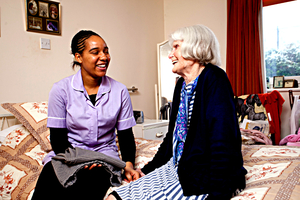
A carer chatting to an elderly woman in her room

The NHS-funded nursing care standard weekly rate per person for 2019 to 2020 will increase and be backdated to 1 April 2019. 

The current rate of £165.56 will increase by 9% to £180.31 for the 2019 to 2020 financial year.

The higher rate of NHS-funded nursing care will also increase by 9% from the current rate of £227.77 to £248.06 per week for 2019 to 2020. This is only relevant for people who were already on the higher rate in 2007 when the single band was introduced. This will also be backdated.

For the 2020 to 2021 financial year, the NHS-funded nursing care standard weekly rate per person will increase by 2% from £180.31 to £183.92. This will be backdated to 1 April 2020.

The higher rate of NHS-funded nursing care will also increase by 2% from £248.06 to £253.02 per week for 2020 to 2021. This is only relevant for people who were already on the higher rate in 2007 when the single band was introduced and will also be backdated to 1 April 2020.

Published 30 April 2020


VAT scrapped on E-publications

  • move will potentially slash the cost of e-books and newspapers making reading more accessible as people stay at home
  • newspapers to receive up to £35 million additional government advertising revenue as part of coronavirus communications campaign

Plans to scrap VAT on e-books and e-newspapers have been significantly fast-tracked in a boost to readers and publishers during the coronavirus outbreak, the Chancellor announced today.

Rishi Sunak said the zero rate of VAT will now apply to all e-publications from tomorrow (1 May 2020) – seven months ahead of schedule – potentially slashing the cost of a £12 e-book by £2 and e-newspapers subscriptions by up to £25 a year.

In support of the print newspaper industry, the government has also announced it will be spending up to £35 million on newspaper advertising over the next 3 months as part of its Covid-19 communications campaign to ensure the whole UK is aware of the latest government guidance and advice.

Chancellor of the Exchequer Rishi Sunak said:

We want to make it as easy as possible for people across the UK to get hold of the books they want whilst they are staying at home and saving lives.

That is why we have fast tracked plans to scrap VAT on all e-publications, which will make it cheaper for publishers to sell their books, magazines and newspapers.

With the nation staying in their homes during lockdown and schools closed, millions have been relying more on e-publications to pass time, home school and read the news. The Chancellor has opted to bring the zero rating forward to make entertainment more affordable for readers who are rightly staying at home during the coronavirus crisis – and are more reliant on e-publications as a result.

The price of an e-book will now be VAT-free. The e-book of Hilary Mantel’s The Mirror and The Light could be over £2 cheaper while the average tax annual saving on a typical e-newspaper or e-magazine subscription could be £25 or £20 respectively.

The move will be a boost both to readers in the form of cheaper e-books and e-newspapers, and the publishing industry who should benefit from a boost in sales.

On average publishers are reporting an increase of about a third in e-book consumption during the crisis, with some publishers reporting as much as a 50% increase. In the last seven days alone, subscriptions to TI media are up 200%, whilst Hearst’s new subscribers were up more than 100% year-on-year across the second half of March.

The £35 million extra advertising revenue will be split between local, regional and national print media, and will be a vital boost to the media industry. These plans will be constantly reviewed over the next three months to ensure the campaign is as effective as possible.

Both the e-publications measure and the increased advertising spending are UK-wide.

Notes

Readers, who rely on large print sizes or find physical books difficult to hold, are expected to particularly benefit from digital reading being more financially accessible.

At the Budget in March, the Chancellor originally announced he would be applying a zero rate of VAT to supplies of e-publications (e-books, e-newspapers, e-magazines and academic e-journals) to support reading and literacy from 1 December 2020.

Research by the National Literacy Trust indicates that 1 in 4 pupils on free school meals say they read fiction digitally compared to 1 in 6 of their peers not eligible for free school meals and that over 45% of children prefer to read on an electronic device.

Statistics on e-book consumption provided by Publishers Association.

Statistics on TI Media and Hearst subscriptions provided by Professional Publishers Association

The government recognises the vital role that media organisations, including newspapers, play in ensuring the provision of trusted, high quality information and their ability to reach isolated and harder to reach communities, such as BAME and older communities.

In light of this, the government has established advertising partnerships with the nation’s favourite and most- trusted media titles, as a way of delivering important government communications on coronavirus. This has allowed the government to leverage the powerful and familiar voices of over 600 national, regional and local titles across England, Scotland, Wales and Northern Ireland. It is estimated these partnerships will reach 34 million people every day and 92% of adults in the UK each month.