CMA blocks sports-fashion merger

Following an in-depth Phase 2 investigation, the Competition and Markets Authority (CMA) has concluded that this transaction would lead to a substantial lessening of competition nationally. This would leave shoppers with fewer discounts or receiving lower quality customer service.

It is obvious that coronavirus (COVID-19) has led to retailers facing uncertain and challenging trading conditions and the CMA has considered how this might affect the competition concerns surrounding this transaction. While it is significantly affecting the sector, the CMA has not found evidence that the impact of coronavirus would remove its competition concerns. However, the CMA does believe that the continuing uncertainty means that JD Sports should be allowed sufficient time in which to sell Footasylum, given the additional challenges associated with coronavirus.

In reaching this final decision, the CMA analysed a wide range of evidence looking at how closely these firms compete as well as competition from other retailers, whether they are online-only or also have stores, and the constraint from suppliers like Nike and adidas. This evidence included more than 2,000 of the companies’ own internal strategy and decision-making documents, which showed that JD Sports and Footasylum monitor each other’s activity closely. Additionally, the CMA conducted two large surveys of together more than 10,000 of the companies’ customers. These surveys showed that many JD Sports and Footasylum shoppers see the other firm as their next best alternative. For example, more than two thirds of Footasylum’s in-store customers said that they would shop at JD Sports if they could no longer shop at Footasylum – substantially higher than for any other retailer. The CMA also found that Footasylum store openings negatively impacted footwear and clothing sales at nearby JD Sports stores. The evidence generally showed a consistent picture: JD Sports and Footasylum are close competitors.

Although JD Sports is a larger retailer than Footasylum, they have millions of customers in a fast-growing sector. Therefore, the loss of competition between them is important. Both companies are among a small number of retailers that sell the latest sports-inspired casual footwear and clothing across the UK, typically to younger, trend-conscious consumers. Shoppers can buy footwear and clothing from other retailers and suppliers, so the CMA ensured it carefully examined the level of competition from these rivals – both now and in the foreseeable future – but found that it was not sufficient to stop shoppers being worse off after the merger.

During Phase 2 investigations, decisions are made by independent inquiry groups chosen from the CMA’s panel members who come from a variety of backgrounds, including economics, law, accountancy and business. In this case, the Group has decided that the only way to address the competition concerns is for JD Sports to sell Footasylum, in full, to an approved buyer.

Kip Meek, Chair of the CMA inquiry group, said:

Our investigation analysed a large body of evidence that shows JD Sports and Footasylum are close competitors. This deal would mean the removal of a direct competitor from the market, leaving customers worse off. Based on the evidence we have seen, blocking the deal is the only way to ensure they are protected.

This decision comes at a very difficult time for retailers and we have been careful to consider the effects of coronavirus. However, we need to make sure we think about the impact of this merger on shoppers, both now and in the foreseeable future and we do not see the effects of the current crisis changing the competitive dynamics in a way that diminishes the substantial lessening of competition which we need to remedy.

We never take decisions to block mergers lightly, but in this case the evidence has shown it is necessary for JD Sports to sell Footasylum, so that they can continue to compete against each other as independent businesses.

For more information, visit the JD Sports / Footasylum merger inquiry case page.

For media queries, contact the CMA press office on 020 3738 6460 or press@cma.gov.uk.
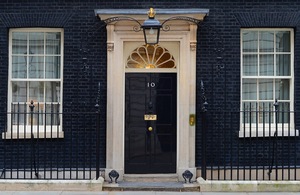


Truss opening statement, call with the US Trade Representative

The opening of formal trade talks between the United Kingdom and the United States is the beginning of something significant.

Not just a closer commercial relationship – though an accord between two of the world’s biggest economies’ is certainly that – but a key first step in building a deeper relationship across the board.

Britain and America are linked by language and law, habit and history. Our friendship is not some alliance of convenience. It rests, rather, on shared values and principles.

As Winston Churchill put it at his meeting with President Roosevelt on the deck of HMS Prince of Wales in 1941 ahead of the signing of the Atlantic Charter – “the same language, the same hymns, the same ideals”.

One of the ideals we share is that people should be free to buy and sell, sign contracts and choose their job without obstruction.

That ideal has not only elevated and enriched both our countries but produced a world order which has generated unprecedented levels of prosperity and freedom.

Every day, a million Britons turn up to work for American-owned companies; and, every day, a million Americans turn up to work for British-owned companies. Each country is the other’s main investor.

Why? Because we are a natural economic zone. We don’t just speak the same language.

We share the same values regarding the role of markets and property. We have similar accounting methods, similar regulatory objectives, similar consumer tastes.

What we have not had, until now, is a formal trade agreement. But, as Britain leaves the European Union, that can finally change.

We don’t just want any trade agreement. We want an agreement that will work for small business, an agreement that works for consumers and workers, and an agreement that will benefit all regions and nations of the UK.

Freer trade makes its participants better off: we all know that. But a free trade deal between Britain and America will also create a new force for freer trade in the world.

Coronavirus poses a serious threat to the long term health of the global economy.

Many are arguing for increased protectionism and restrictions. This free trade agreement will push in the other direction setting new standards for free trade that are balanced, transparent and advanced.

Together, we are an awesome force. And we are just getting started.


Coronavirus (COVID-19): letter to councils on the re-opening of household waste and recycling centres

  • Only go outside for food, health reasons or work (but only if you cannot work from home)
  • If you go out, stay 2 metres (6ft) away from other people at all times
  • Wash your hands as soon as you get home

Do not meet others, even friends or family.

You can spread the virus even if you don’t have symptoms.


Eastbourne Doctor wins PM award

News story

NHS Doctor from Eastbourne awarded Prime Minister Boris Johnson’s daily Point of Light.

placeholder

An NHS doctor from Eastbourne who designed digital flashcards to help healthcare workers wearing PPE communicate with their patients has been awarded Prime Minister Boris Johnson’s daily Point of Light.

Dr Rachael Grimaldi, who is currently on maternity leave, was moved to help her colleagues on the front line after hearing heart-breaking stories of how patients were unable to understand clinicians through layers of PPE. Her digital flashcards break down the barriers between carers and patients by displaying messages about the patient’s condition and treatment on mobile devices such as phones and tablets. Rachael’s pioneering technology, already available in 10 languages and in read aloud mode for visually impaired patients, is now being used in over 50 countries.

In a personal letter to Rachael, the Prime Minister said:

This pernicious disease had left many patients unable to hear the words of doctors and nurses who are compelled to speak through masks and visors. But your digital flashcards have harnessed the power of technology to restore that vital communication. Because of you, patients can once again hear critical information on their condition and benefit from those precious words of empathy and compassion which provide such care and comfort in the most difficult moments.

I am lost in admiration to hear that your innovation has already been adopted in fifty different countries and is being translated into thirty different languages, including a “read aloud” mode for blind patients. It will surely continue to assist healthcare around the world long after we have defeated this pandemic.

Reacting to the Prime Minister’s announcement, Rachael said:

I am absolutely delighted to have received this award, it is an honour to be recognised in this way. This has truly been a team effort bringing the concept to fruition and I am very grateful to friends, family, colleagues, businesses, services and organisations for donating their time, expertise and support. The dedication and commitment of all to improving patient safety and care has been tremendous.

The Prime Minister’s UK daily Point of Light award was first launched in April 2014 to recognise outstanding individuals making a difference where they live. Rachael is the 1365th person to be recognised. As Britain unites to fight the spread of coronavirus, the award is focusing exclusively on people serving their community through the pandemic.

Published 5 May 2020


Supporting primary and secondary pupils’ wellbeing at an academy

Our school has been maintaining relationships with key staff remotely or by telephone. Pupils need to know that the same staff that they trust are still there for them. Regular cards and letters to the home are also being sent.

For pupils and families who are less engaged, we use gentle persuasion by checking on engagement, but not harassing them with contact every day, acknowledging that it’s a hard time to get children to do anything, and that relationships in the home may be fragile at this time.

Pupils who are struggling to engage are being supported by staff in two-to-one sessions to check how they are feeling and what support we can offer both in and outside of the ‘class’ academically and to support their mental health and wellbeing.

Sessions including more than one member of staff may be in the context of particular safeguarding issues that have arisen from bespoke risk assessments, where another adult in the virtual space is important.

In other circumstances, it may be helpful to have two young people and one member of staff. This may be for problem solving, encouraging engagement and connecting children so that they understand they are not alone whilst isolating.

We are following the same boundaries and expectations of the code of conduct used as when the academy is open.

Key stage 4 pupils continue to follow the exam courses at this time. However, we will be moving onto programmes to prepare for post-16 and transitions after the May half term. We have ensured that we have the same support staff in lessons with teachers. This means that pupils are supported by familiar people if they need it. Two-to-one sessions are also offered outside of the classroom for additional support and scaffolded learning.

We are supporting parents and carers through regular contact with them as required to offer them advice on their role in supporting their children.

The Department for Education gathered these examples of remote education practice by consulting with schools and colleges across England. Names of individuals and schools have been removed to protect their privacy.