Recovered appeal: land at Love Lane, Woolwich (ref: 3233519 – 3 June 2020)

27 storey building comprising 1,056 square metres GIA (gross internal area) of commercial floorspace (Classes A1, A2, A3, B1 and D1) at ground and first floor, and 206 residential units at upper floors, cycle parking, refuse and recycling storage, plant and external amenity space, and external landscaping and improvements to public realm (Phase 3)

and construction of buildings between 9 and 16 storeys comprising 1,793 square metres GIA of commercial floorspace (Classes A1, A3 and B1) at ground floors of Buildings A, B, C, D and H and 598 residential units at upper floors, car and cycle parking, refuse and recycling storage, plant, external amenity space, alterations to the roof of loading bay, and external landscaping and improvements to public realm (Phase 4).


Recovered appeal: land at Wolborough Barton, Coach Road, Newton Abbot (ref: 3205558 – 3 June 2020)

[unable to retrieve full-text content]Decision letter and Inspector’s Report for a recovered appeal.


Health and Social Care Secretary’s statement on coronavirus (COVID-19): 2 June 2020

Good afternoon and welcome to Downing Street for the daily coronavirus briefing. In keeping with the new format, I’ll go through the slides now and then we’ll take questions from members of the public and from journalists.

Slide one shows the testing capacity and the number of new cases. The top chart in the slide shows the number of tests. That number of tests as of 2 June was 135,643. This is different to testing capacity which stands at just over 200,000.

As I said yesterday, this demonstrates that there is spare capacity in testing. So if you have symptoms of coronavirus, that’s a fever or a new dry cough or a change in your sense of taste or smell, then please do go and get a test from nhs.uk/coronavirus or by phoning 119. It’s incredibly important that we can trace the virus by ensuring that anybody with symptoms has a test. And of course we’re rolling out testing across care homes and making sure staff in hospitals get the opportunity to be tested as well.

The bottom chart on the slide shows the number of confirmed cases. This is 1,613 as of 2 June. This brings the total number of cases confirmed in the UK to 277,985. Although the 1,613 figure is slightly higher than yesterday we can see that the 7-day rolling average continues to fall.

The data from hospitals show that those new admissions to hospitals in England has fallen to 436. This is down from 471 on 24 May, so just over a week ago, and down from a high of 3,121 on 2 April. This figure of 436 admissions to hospitals in England with COVID-19 is the lowest figure since 20 March. It demonstrates once again that we are making progress against this disease. Again, as yesterday the proportion of mechanical ventilators, ventilated beds that are occupied by patients with coronavirus remains at 9%.

Just like yesterday, the number of people in hospital continues to fall. 7,607 are now in hospital with coronavirus and that is falling, broadly falling in each part of the country, but for a little bit of day-to-day movement in some of the areas, for instance as you can see right at the end of the chart for the North East and Yorkshire. But we keep that very closely under review. But the overriding trend, as you can see, is downwards.

The next slide is the number of deaths and sadly on the 2 June [correction: 1 June], yesterday, 324 deaths with coronavirus were recorded taking the total to 39,369. We mourn each one of these. We try to keep these data as accurate as possible, including where we find, in the past, in some cases there are deaths where we discover there has been a connection to coronavirus and we add those into those data. So again we can see that the trend is broadly down but there is still some way to go. And after the weekend effect, which we’ve seen each weekend in terms of the number of deaths recorded, because this is according to the date these are recorded, we’ve seen that rise on most Mondays and sadly the figure is 324 today.

The final slide reports on data from the Office for National Statistics which was reported this morning and reported a total of 48,106 deaths in the UK where COVID-19 was mentioned on the death certificate. You can see again that this number is falling. The top chart shows those data and where we were on the recorded daily deaths data for the period that corresponded to these data coming from the ONS. On the bottom chart we can see the place of occurrence of those deaths. You can see both the number of deaths and the proportion of deaths that are in care homes, both of those are falling. 27.3% of deaths occurred in care homes in the latest ONS data to the week of 22 May, bringing the proportion overall of deaths in care homes down to 32.5%.

We don’t capture in these charts, but we do capture in a report published by Public Health England today further data, some of which are much more troubling. The PHE investigation into the way in which the virus targets people unequally and disproportionately has been put on the website. This is a particularly timely publication because right across the world people are angry about racial injustice and I get that. Black lives matter and I want to say this to everyone who works in the NHS and in social care. I value the contribution that you make, everybody equally. And I want to say it right across society too. I want to thank you and I want you to know that our whole country cares about your wellbeing. And I value too those who come to our country to work in the NHS and in social care. And I love that this country is one of the most welcoming and tolerant and diverse. That goes for the whole country and it goes especially for the health and care system.

As I said in the House of Commons earlier, PHE’s investigation found that age is the biggest risk factor for coronavirus, next gender, living in a city is a risk and being black or from a minority ethnic background is also a significant risk factor. There is much more work to do to understand what is driving these disparities and how the different risk factors interact and we are absolutely determined to get to the bottom of this and find ways of closing that gap. I’m delighted that Kemi Badenoch, the Minister for Equalities, will be taking this work forward, working with PHE and many others.

We value the contribution from everyone to fighting this virus. Everyone has a contribution to make. Of course, the thing that every single person can do is to make their personal contribution to fighting this virus. In the first instance things as simple as washing your hands, following the social distancing rules and of course if you have symptoms please self-isolate immediately and get tested to protect your friends and family. So let’s keep going and we’ll get through this. We’ll now turn to questions.
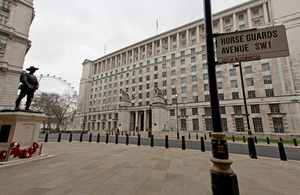


Ministry of Defence seeks to maximise Reserves contribution through new review

News story

The specialist contribution military reservists have made across society during Britain’s battle against coronavirus will help inform a review examining how defence can maximise the skills of its Reserve Forces.

placeholder

The Reserve Forces 2030 review aims to establish how best to harness the specialist knowledge and expertise of role of Reservists, with particular emphasis on how defence can unlock their potential to support wider government, business and society.

Seeking views from across defence and other government departments, as well as employers in business, and academia in the UK and internationally, the review team is considering fresh ways Reserves could contribute to defence and wider government objectives by the end of the decade.

Reserve Forces already offer a means of engaging people with specialist or niche skills, including those who helped build the Nightingale Hospitals.

The review will also examine how defence can best partner with business as well as consider utilising innovative ways of partnering across government and with the private sector to potentially share the cost, but most certainly share the skills and expertise that are vital to the UK economy.

Minister for the Armed Forces James Heappey said:

Reservists are an exceptional group of people with specialist skills and expertise in a wide range of sectors. Their integral role within our nation’s Armed Forces has been demonstrated once again in the support they have provided during the coronavirus pandemic.

It’s crucial that we look towards the future, not only to consider how best to utilise our existing talent but also how we can strengthen the role of Reserves for generations to come.

The RF30 review team look forward to engaging with you all in the coming months and hearing your views – but in the meantime – if you have ideas about how defence, Her Majesty’s Government and wider society could get greater utility from its reserves out to 2030 then we want to hear from you.

Please leave us a message at People-ReserveForces2030@mod.gov.uk.

Published 3 June 2020


Green recovery of the economy and society after COVID-19: UK statement

Mr Chair,

COVID-19 has led to an unprecedented shutdown of large parts of the global economy, with severe consequences for all countries. We recognise this immense challenge and that all countries will be developing response plans tailored to their circumstances. As you said in your opening remarks, as we recover the decisions we make today will either lay the foundation for sound, sustainable and inclusive growth, or lock-in polluting emissions for decades, and in doing so make our society and the planet more vulnerable.

As COP Presidency the UK is committed to increasing climate ambition. We will uphold the Paris Agreement and the 2030 Agenda for Sustainable Development as crucial frameworks for guiding the recovery from the COVID-19 crisis. Last week the COP Bureau agreed to our proposal to reschedule COP26 to the 1st to the 12th of November 2021, held in Glasgow. The new date gives the world the best chance of delivering an inclusive and ambitious COP. Bureau members were clear that a delayed summit, and the short-term impact, must not mean delayed action.

Coronavirus has provided a stark reminder of what happens when humanity’s relationship with nature breaks down. As we recover we have an opportunity to protect and restore nature, reducing our exposure to deadly viruses and climate impacts.

Mr Chair, Friday is World Environment Day. Since 1974, World Environment Day has been celebrated every year on 5 June – engaging governments, businesses, celebrities and citizens to focus their efforts on a single pressing environmental issue. This year’s event, hosted by Colombia in partnership with Germany, focuses on biodiversity with a campaign theme of ‘Time for Nature’.

Nature and biodiversity are central themes of our COP26 Presidency, focussing on the importance of nature-based solutions, which should be a win for livelihoods, climate, and biodiversity, which is also particularly salient in the context of COVID-19, a zoonotic disease.

UK Business Secretary and COP President-designate Mr Alok Sharma has stressed the importance of nature for achieving the goals of the Paris Agreement. And the UK will soon announce a £64 million package to support Colombia to tackle deforestation and build a cleaner and more resilient economy in areas affected by Covid-19 and conflict.

World Environment Day also sees the official launch of ‘Race to Zero’, the global COP26 campaign to mobilize leadership and support from businesses, cities, regions and investors – all committed to the goal of achieving net zero emissions by 2050 at the latest. The campaign will also serve as a multi-stakeholder reactivation of the ‘Climate Ambition Alliance’, launched by the UN Secretary General’s Climate Action Summit in 2019. This will send a resounding signal that business, cities, regions and investors are united in meeting the Paris goals and creating a more inclusive and resilient economy.

A science-led, clean and resilient recovery will create employment in the industries of the future while ensuring we address the linked challenges of public health, climate change, and biodiversity.

Thank you.