Two men given suspended prison sentences after social media posts brag about illegal salmon and sea trout fishing

Two men have been prosecuted at South Tyneside Magistrates Court today (Tuesday 16th August) after photographs and videos found both on a mobile and posted to a social media account highlighted illegal fishing activity

Connor Bell (30), of Bexhill Road, Sunderland appeared at South Tyneside Magistrates Court Magistrates’ Court on Tuesday 26th July, where he pleaded guilty to using unlicensed gill nets to catch salmon and sea trout on the River Wear, including at a location near Fatfield, in the county of Tyne and Wear. At a hearing on Tuesday 16th August, he was sentenced to 5 months imprisonment, suspended for 18 months, and ordered to do 200 hours of unpaid work.

In addition, Mr Bell was ordered to pay £1,000 costs and a victim surcharge of £128.

Michael Hutchinson (39) of Cranberry Road, Sunderland also appeared for similar offences and one other offence of handling the illegally caught fish. Hutchinson was sentenced to 2 months imprisonment, suspended for 18 months, and ordered to undertake 200 hours of unpaid work. Mr Hutchinson was also ordered to pay £1,000 costs and a victim surcharge of £128.

Gill nets are designed to catch fish by their gills and are rarely licensed in rivers, due to their ability to catch large numbers of migratory fish in a short period of time, as well as their potential for catching and killing fish indiscriminately. Gill nets are also capable of causing injury or indeed killing sea birds and mammals.

Representing the Environment Agency, lawyer Matthew Treece told the court that files on Bell’s mobile phone and Hutchinson’s social media pages had highlighted multiple weekends of illegal netting during the summers of 2020 and 2021, along with photographs of both men posing with catches of up to 14 fish at a time. Images from Hutchinson’s Facebook profile also showed a relative, with the captured fish, along with comments from Hutchinson encouraging them to become a “fine young poacher.”

On sentencing, District Judge Garland told the defendants: “You don’t know how lucky you are to avoid going on a trip to Durham this morning. I view and the law views the things you were up to as extremely serious. These weren’t boyish pranks. You were out there putting a large net across a confined space of river where it was highly likely you were going to catch fish of one sort or another. And you did. If you hadn’t gone around bragging on Facebook about what fish you were catching, you wouldn’t have been in as much trouble as you are.”

Following the case David Shears, Senior Fisheries Enforcement Officer for the Environment Agency in the North East, said:

With salmon stocks reaching crisis in many of England’s rivers, this level of illegal activity could have a serious impact on the sustainability of future stocks in the River Wear. That’s why we take reports of suspected poaching seriously and work closely with the police to take action where appropriate.

We’re committed to tackling illegal fishing of all kinds whether online or off and as this case clearly demonstrates, we will take action, especially where potentially damaging methods are used.

PC Peter Baker, Wildlife Officer at Northumbria Police, said:

We are really pleased to have been able to deliver effective justice and show the impact of illegal fishing and poaching. We are privileged to see a varied amount of marine wildlife around our area, and we should all play a part in protecting and supporting the environment. As a Force, we take all reports of this nature seriously and are committed to taking appropriate and robust action against the minority found to have been involved in such offences in the region’s waterways.

Through our co-ordinated efforts with partners, we will continue to educate the public to prevent further offences from taking place.

The latest stock assessment report, from the Centre for Environment, Fisheries and Aquaculture Science, the Environment Agency and Natural Resources Wales, shows that 37 of the 42 salmon rivers (88%) in England now categorised as being ‘at risk’ or ‘probably at risk’. In 2020, 20 salmon rivers (48%) were thought to be ‘at risk’ – meaning salmon stock are no longer at sustainable levels – but in the latest report this has now risen to 31 (74%) with rivers in the South West, North West and Wales considered to be the most affected.

A licensed, strictly regulated and managed sea trout fishery operates off the North East coast and local byelaws apply to ensure sea trout may only be taken by a limited number of licenced netsmen, during the approved season (26th March to 31st May). It is also illegal to use nets to catch salmon in the North East.

Those who operate unlicensed nets risk prosecution, with unlimited fines and possible prison sentences available to the courts, and Environment Agency officers can seize equipment and vehicles.

Information about illegal fishing can be reported to the Environment Agency’s 24-hour incident hotline on 0800 80 70 60.


Minister announces new measures to bolster UK’s resilience

Lead Minister for Resilience and Chancellor of the Duchy of Lancaster, Kit Malthouse MP, announced new measures to bolster the UK’s resilience on a visit to the Met Office yesterday (Monday 15 August).

Minister Malthouse visited the Met Office, based in Exeter, to see how their forecasting expertise feeds into government planning to tackle severe weather and how the agency worked closely with Government and other partners to give people plenty of warning and advice about staying safe in the recent extreme heat.

The Minister announced the launch of a new public emergency text alert system for the UK, as well as changes to the Civil Contingencies Secretariat – the Cabinet Office’s emergency planning and response team.

Speaking in the Operations Centre of the Met Office, the Chancellor of the Duchy of Lancaster, Kit Malthouse MP, said:

“To make sure that government continues to offer the best possible prevention and protection against threats, we are shaking up how we prepare for and respond to emergencies, strengthening the effective resilience capability we already have in place.

“We will launch a new public emergency alerts system in the Autumn which will focus on extreme weather, revolutionising our ability to ‘warn and inform’ people who are in significant and immediate danger. These alerts will be sent direct to people’s mobiles giving details of the emergency – such as local flooding – explaining what to do and how to seek help.

“Our vital COBR unit – which leads the government’s response to acute domestic and international emergencies – will be bolstered by a dedicated team helping to future-proof us from harm. This National Resilience Framework Team will take a deeper look at our approach to risk and how we mitigate it and help us take huge leaps forward in terms of collecting, analysing and using live data.”

Ian Cameron, Director of Markets at the Met Office, commented:

“The right messaging helps people take action to stay safe. It is clear that we are seeing an increase in the number of extreme weather events in the UK and overseas. Just this summer we have seen temperatures in the UK exceed 40C for the first time on record, followed closely by the heatwave which ended earlier this week. Communicating effectively is imperative so we can warn and alert people, ensuring they are aware and have more time to take action and look after themselves, their friends and family.”

Minister Malthouse spoke with a range of staff in the Met Office to learn more about their work, from the Meteorologists who lead on weather forecasts, to the Space Weather Operations team who are part of just one of three space weather prediction centres in the world, monitoring potentially disruptive solar activity for government and industry.

The emergency alerts system, which will focus on events like extreme weather and warning the public where there is a risk to life, will be launched in the autumn following a public awareness campaign. The free message will give details of the emergency – local flooding or wildfires, for example – what to do and how to seek help, and will relay urgent messages to over 85% of mobile phones in areas affected.

Changes to the Civil Contingencies Secretariat – the Cabinet Office’s emergency planning and response team – will see a COBR Unit continuing to lead the government’s response to acute emergencies, and work on longer term planning being driven forward by a separate team dedicated to strengthening the UK’s underlying resilience. This National Resilience Framework Team in the Planning and Analysis Secretariat will take a deeper look at the government’s approach to risk and how it is mitigated as well as collecting and analysing live data to improve future responses to emergencies.


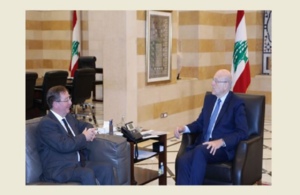
Ambassador Cowell meets PM Mikati

World news story

I committed to continuing the UK’s support to the Lebanese Armed Forces and to the most vulnerable living in Lebanon.

Ambassador Cowell meets PM Mikati

Ambassador Cowell meets PM Mikati

British Ambassador to Lebanon Hamish Cowell met with Caretaker Prime Minister Najib Mikati at the Grand Serail today.

Ambassador Cowell said after the meeting:

I had a good first meeting with Prime Minister Designate Najib Makati. Our discussion underlined the importance of strengthening the longstanding bilateral relations between our countries.

I committed to continuing the UK’s support to the Lebanese Armed Forces and to the most vulnerable living in Lebanon.

The UK wants to see stability, prosperity and security in Lebanon. This is why I urge authorities to deliver urgent reforms in order to secure a much-needed IMF deal.

This is essential:

  • To put Lebanon on the path to recovery,

  • to regain business and investor confidence and

  • to address the many and very serious difficulties the Lebanese people are facing.

The UK will support Lebanon in this regard.

Published 16 August 2022


Change of British High Commissioner to Mozambique

Press release

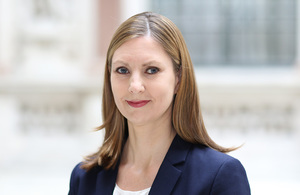
Ms Helen Lewis has been appointed British High Commissioner to the Republic of Mozambique in succession to Ms Nne Nne Iwuji-Eme.

Ms Helen Lewis has been appointed British High Commissioner to the Republic of Mozambique in succession to Ms Nne Nne Iwuji-Eme. Ms Lewis will take up her appointment during October 2022.

Curriculum Vitae

Full name: Helen Lewis

Year Role
2019 to 2021 Juba, Development Director South Sudan
2017 to 2019 Cabinet Office, Deputy Director Gulf-Iran, National Security Secretariat
2016 to 2017 Department for International Development, Gulf Team Leader, Middle East and North Africa Department
2014 to 2016 Islamabad, Head, Rule of Law Team
2013 to 2014 Islamabad, Senior Conflict Adviser
2013 Department for International Development, Senior Conflict Adviser, Conflict Humanitarian and Security Department (CHASE)
2011 to 2013 Juba, Stabilisation Adviser, UK Stabilisation Unit
2010 to 2011 Sana’a/Doha, Regional Conflict Adviser
2008 to 2010 Department for International Development, Conflict Adviser, Conflict Humanitarian and Security Department (CHASE)
2003 to 2008 Peace and security sector roles including: Policy Coordinator at Ulster University’s International Conflict Research Centre, Programme Associate at Search for Common Ground, Washington DC
2002 to 2003 Fulbright Scholar, School of Advanced International Studies at Johns Hopkins University, Washington DC

Published 16 August 2022


Would you like to be the British High Commissioner to India for a day?

To celebrate the International Day of the Girl Child, the British High Commission is offering women from across India a unique opportunity to experience a day in the life of the UK’s top diplomat in the country. The competition is open to women aged 18-23 and the deadline to apply is 2 September 2022.

Alex Ellis, British High Commissioner to India, said:

The UK and India are doing big things together, from combating climate change to agreeing a free trade deal. But, celebrating the International Day of the Girl Child together with a wonderful young Indian applicant each year is without a doubt one of my favourite things to do as High Commissioner.

I am delighted to launch the sixth edition of our High Commissioner for a Day competition, particularly during the Azadi ka Amrit Mahotsav. Empowering women and girls is one of the UK’s top priorities globally, as it is for Prime Minister Modi as well. This is an excellent opportunity for young women to show their full potential. I look forward to seeing entries from every corner of this great country.

The winner of this pan-India initiative gets a unique opportunity to head the diplomatic mission for a day – overseeing the UK’s largest overseas network, chairing meetings with diverse stakeholders, and a chance to experience the UK-India partnership in action.

To apply to be the ‘High Commissioner for a Day’, participants must record and upload a one-minute video answering ‘which woman in public life inspires you the most and why?’ The video must be shared on either Twitter, Facebook or Instagram by tagging ‘@UKinIndia’ and using the hashtag ‘#DayoftheGirl’.

Further information

The British High Commission has organised the ‘High Commissioner for a Day’ competition annually since 2017. The theme for this year’s competition is ‘Women in Leadership’.

Last year’s winner was 20-year-old Aditi Maheshwari from Chittorgarh in Rajasthan, whose day as the High Commissioner included observing the India-UK Energy for Growth Dialogue, meeting with beneficiaries of the Chevening Alumni Programme Fund, interacting with climate experts from the Council on Energy, Environment and Water (CEEW), and meeting young leaders from the not-for-profit Global Youth.

Terms and Conditions:

  • A jury at the British High Commission (BHC) will select the winner, who will be announced on @UKinIndia social media channels. Only one entry per participant will be accepted. Multiple entries from the same person will be disqualified. The High Commission’s decision is final and no correspondence relating to the above will be possible.

  • By applying to the competition, participants transfer the copyright ownership of their videos to the BHC New Delhi. BHC may use these videos to produce content for future communication on its social media channels.

  • Participants are reminded not to share personal details in their video, post or tweet. The BHC is not responsible for the data that participants make public on these platforms.

  • The High Commissioner for a Day programme will take place in-person in Delhi (unless Covid-19 advice changes).  In case the winner is not from Delhi/NCR, we will fund travel or accommodation to Delhi as part of the competition.

For media queries, please contact:

David Russell, Head of Communications
Press and Communications, British High Commission,
Chanakyapuri, New Delhi 110021. Tel: 24192100

Media queries: BHCMediaDelhi@fco.gov.uk

Follow us on Twitter, Facebook, Instagram, Flickr, Youtube and LinkedIn