OSHR Training Programme for Mexican Journalists 2022

World news story

Development programme in Mexico contributes to improved safety for journalists and human rights defenders.
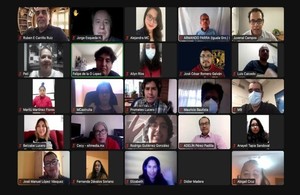
A videocall with 25 participants, most of them with their cameras on.

UNESCO estimates that an average of 12 journalists have been killed each year over the past 5 years in Mexico. Reporters Without Borders and the Committee for the Protection of Journalists have classified Mexico as one of the most dangerous countries to practice investigative journalism, and according to the 2021 report from the Global Initiative Against Transnational Organised Crime, Mexico is the fourth most crime affected country in the world – the economic impact of violent crime is estimated at 24% of GDP.

To tackle this important issue, the British Embassy in Mexico, through its Open Societies and Human Rights programme, collaborated with UNESCO and Mexico’s National Institute for Public Information in the implementation of a project to develop protection plans that identify and reduce the threats received by journalists and human rights defenders by providing trainings for journalists and promoting free speech in Mexico.

The programme consisted of five virtual courses delivered by UNESCO in April 2022. These courses lasted 25 hours and were designed to strengthen the capacity of journalists in important areas such as: media and information literacy, investigative journalism, data journalism, human rights, and security and risk management.

202 journalists completed the courses successfully – including 9 journalists from countries such as Peru, Argentina, El Salvador, Ecuador and Honduras – who are now equipped with important tools to practice journalism by taking a progressive and inclusive approach, and understand how to access protection mechanisms that will allow them to exercise their profession more safely.

Published 19 August 2022


P&O Ferries: update from the Insolvency Service (19 August 2022)

Press release

The Insolvency Service has provided an update following its urgent enquiries into the circumstances surrounding the redundancies made by P&O Ferries on 17 March 2022.

An Insolvency Service spokesperson said:

“After a full and robust criminal investigation into the circumstances surrounding the employees who were made redundant by P&O Ferries, we have concluded that we will not commence criminal proceedings.”

  • The Secretary of State for the Department of Business, Energy, and Industrial Strategy asked the Insolvency Service to investigate whether any offences had been committed in relation to P&O Ferries’ dismissal of 786 employees on 17 March 2022.
  • The offence alleged was failure to notify in accordance with section 193 of the Trade Union and Labour Relations (Consolidation) Act 1992 contrary to section 194(1) of that Act.
  • The Insolvency Service conducted a criminal investigation, which was reviewed by an independent senior prosecution lawyer in accordance with the Code for Crown Prosecutors, who concluded there was no realistic prospect of a conviction.
  • The civil investigation by the Insolvency Service is ongoing and we cannot comment further at this time.

For media enquiries, contact: 07966 442994

Published 19 August 2022


UK monkeypox case numbers show overall decline

As of 15 August, there are 3,195 confirmed and highly probable cases of monkeypox in the UK. Whilst the decline is fastest in London, new cases continue to be identified in all regions at present.

Out of 3,025 confirmed cases in England, 2,989 were men (99%) and 36 were women. The median age of cases in the UK is 36. Based on the available data, the virus continues to be transmitted primarily in interconnected sexual networks of gay, bisexual, or other men who have sex with men (GBMSM) and there is no robust evidence of sustained transmission outside these networks. Some new cases which may be linked to travel continue to be identified.

As of 17 August 2022, a total of 33,199 administered doses of vaccine have been recorded, of which 29,803 have been administered as pre-exposure vaccination, primarily to GBMSM. A further 1,767 doses have been given to healthcare workers managing monkeypox cases and 1,629 doses have been given to close contacts of cases.

Dr Meera Chand, Director of Clinical and Emerging Infections, UK Health Security Agency (UKHSA), said:

Whilst there are fewer new cases being identified, we are detecting cases in all regions of England and the global outbreak continues. We ask that everyone checks themselves for monkeypox symptoms, including rashes and blisters, particularly if you have had new sexual partners recently – in the UK or abroad.

If you are eligible for a vaccine, please wait to be called forward by the NHS and you will receive one as soon as supply is available in your area. We are working with the manufacturer to expedite delivery as quickly as possible.

If you are concerned that you may have monkeypox symptoms, take a break from events, meeting with friends or having sexual contact. Instead, stay at home and contact 111 or your local sexual health service for advice.

UKHSA will continue to publish regular technical briefings as the response to the outbreak continues.


Nuclear protocols

News story

GAD has supported the government to help ratify the 2004 Protocols which increase the scope of operator liabilities in the area of nuclear energy.

Sizewell Nuclear Electricity Plant

Actuaries have supported the government to help enable the ratification of the 2004 Protocols. This project, from the Government Actuary’s Department (GAD) related to third-party liabilities in the field of nuclear energy.

GAD worked with the Department for Business, Energy & Industrial Strategy (BEIS) on the 2004 Protocols, that came into force in January 2022. These build on the ‘Paris Convention’ and the ‘Brussels Convention’.

The challenge

The 2004 Protocols increase the scope of operator liability in terms of the:

  • financial limits of compensation
  • heads of damage
  • geography
  • period during which personal injury claims can be made

For power plants and similar nuclear sites, operators’ liability levels have increased. These have risen from £140 million to €700 million, increasing by €100 million per year to a maximum of €1.2 billion.

The commercial market has been able to cover most of the extension of cover. However, there is currently insufficient commercial capacity to cover all the increased personal injury liabilities for the 10-to-30-year period. GAD supported BEIS in developing temporary measures to address this gap in the market.

Analysis and data

GAD advised BEIS on how its modelling could be adapted to allow for a risk-sharing arrangement between industry and government. GAD undertook the analysis and BEIS gathered data to feed into GAD’s modelling.

As part of this project, the Contingent Liability Central Capability used loss estimates provided by GAD to advise BEIS and HM Treasury. This included advice on practical ways of dealing with the contingent liabilities, including fair allocation of risk and reward between private sector insurers and the government.

Looking forward

GAD is supporting an ongoing review of the current approach with a view of creating a long-term market solution that does not require government intervention.

Published 19 August 2022


TRA proposes new tariff rates for Chinese e-bike exporters

The Trade Remedies Authority has today (19 August 2022) proposed that two China-based electrical bicycle and tricycle manufacturers be given new exporter status which allows them to pay a lower anti-dumping import tariff rate to export their products to the UK. They would otherwise pay the much higher rate for exporters who did not cooperate with the original trade remedy investigation.

The UK e-bike market was worth £280 million in sales in 2020 and this is expected to triple by 2024. The change in tariff rate would help meet demand in this growing market by making it possible for these new exporters to export to the UK and by providing a wider range of options to UK consumers.

The proposal is contained in a Statement of Essential Facts, which is now open for comment by interested parties. The TRA will consider any comments before making a final recommendation to the Secretary of State later this year.

The TRA assesses applications for new investigations and reviews and conducts them rigorously, fairly and consistently with statutory guidance and timescales.

The TRA opened a new exporter review into electric bicycles from China in June, following a request from two exporters. As they are new to the market, the two firms currently pay the same anti-dumping tariff rate as exporters who did not cooperate with the original EU anti-dumping measure in 2019.

New exporter reviews allow new exporters to enter the UK market at a fair rate, rather than being penalised for not taking part in the original investigation. In this case, the TRA is recommending that:

  • the applicants are new exporters;
  • they should pay a non-sampled, co-operating overseas exporter anti-dumping amount of 16.2%, rather than the 62.1% they currently have to pay;
  • the new rate should be backdated to the initiation of the review on 23 June 2022.

The period of investigation for this review was 1 June 2021 to 31 May 2022.

The applicants for the review were Jinhua Otmar Technology Co Limited, PRC and Jinhua Seno Technology Co Limited, PRC.

To be considered a new exporter, an applicant must not have exported the reviewed goods to the EU during the period of investigation on which the current measure is based.

The TRA was satisfied that the applicants were incorporated after the EU period of investigation expiry date of 30 September 2017, and therefore did not export the goods to the EU during the period on which the current measure is based.

  • The Trade Remedies Authority is the UK body that investigates whether new trade remedy measures are needed to counter unfair import practices and unforeseen surges of imports. 
  • The TRA is an arm’s length body of the Department of International Trade (DIT) launched on 1 June 2021. Before its launch, it operated as the Trade Remedies Investigations Directorate (TRID) of DIT. 
  • Anti-dumping remedies address imported goods which are being dumped in the UK at prices below what they would be sold for in their home country.