Avian influenza identified in wild birds in South West of England

The UK’s Chief Veterinary Officer has confirmed that routine monitoring has detected the H5N8 strain of avian influenza in a very small number of wild birds in Gloucestershire, Devon and Dorset.

Wild geese near Stroud in Gloucestershire and swans near Dawlish in Devon have tested positive for highly pathogenic avian influenza H5N8. In addition, a wild goose near Weymouth in Dorset has tested positive for H5N8 (pathogenicity yet to be determined). Birds were tested posthumously and were found to have been infected with the strain of avian influenza virus which is currently circulating in wild birds in Europe.

The Chief Vets from England, Scotland, Wales and Northern Ireland have urged bird keepers to maintain and strengthen their farm biosecurity measures in order to prevent further outbreaks of avian influenza in the UK. The advice follows a decision to raise the risk level for avian influenza incursion in wild Birds in Great Britain from ‘medium’ to ‘high’ last week.

There have been a number of confirmed reports of avian influenza in wild birds including geese and swans in the Netherlands and northern Germany in recent weeks. These wild birds are all on the waterfowl flyway from breeding grounds in western Russia, where the H5N8 strain was reported in poultry in mid-October.

Wild birds migrating to the UK from mainland Europe during the winter period can spread the disease to poultry and other captive birds. All bird keepers and members of the public are being urged to prevent direct or indirect contact with wild birds.

Public Health England (PHE) advises that the risk to public health from the virus is very low and the Food Standards Agency advises that avian influenzas pose a very low food safety risk for UK consumers. Properly cooked poultry and poultry products, including eggs, are safe to eat.

Chief Veterinary Officer Christine Middlemiss said:

An H5N8 strain of avian influenza has been confirmed in wild geese in Gloucestershire, swans in Devon and a wild goose in Dorset. It is important now more than ever that bird keepers ensure they are doing all they can to maintain and strengthen good biosecurity on their premises to ensure we prevent further outbreaks.

Public Health England has confirmed that the risk to public health is very low and the Food Standards Agency advises that bird flu poses a very low food safety risk for UK consumers.

We ask that people continue to report findings of dead wild birds so that we can investigate the extent of infection.

Dr Gavin Dabrera, Consultant in Acute Respiratory Infections at PHE said:

To date, there have been no human cases of infection with influenza A(H5N8) confirmed by the WHO and the risk to public health is very low.

Our advice regarding contact with wild birds remains the same – make sure to wash your hands thoroughly with soap after coming into contact with any animal and do not touch any sick or dead birds.

A Food Standards Agency spokesperson said:

We advise that, on the basis of the current scientific evidence, avian influenzas pose a very low food safety risk for UK consumers.

Properly cooked poultry and poultry products, including eggs, remain safe to eat.

Wild birds migrating from mainland Europe during the winter period can spread the disease to poultry and other captive birds. There are some simple measures that all poultry keepers, whether they are running a large commercial farm, keeping a few hens in their back garden, or rearing game birds, should take to protect their birds against the threat of avian flu.

These include:

  • Keeping the area where birds live clean and tidy, controlling rats and mice and regularly cleansing and disinfecting any hard surfaces
  • Cleaning footwear before and after visits
  • Placing birds’ feed and water in fully enclosed areas that are protected from wild birds, and removing any spilled feed regularly
  • Putting fencing around outdoor areas where birds are allowed and limiting their access to ponds or areas visited by wild waterfowl
  • Where possible, avoid keeping ducks and geese with other poultry species.

Further information on how to help prevent the spread of the disease can be found on gov.uk.

If you find dead wild waterfowl (swans, geese or ducks) or other dead wild birds, such as gulls or birds of prey, you should report them to the Defra helpline (03459 33 55 77).

Notes to editors:

  • The government’s outbreak assessment following recent cases England can be accessed here.
  • For further details of findings of HPAI in wild birds we routinely publish a report on findings of HPAI in wild birds in Great Britain.
  • These cases in wild birds are unrelated to the case of Low Pathogenic Avian Influenza (LPAI) H5N2 at a small commercial premises in Kentlast week. The Animal and Plant Health Agency is investigating whether the finding is related to the recent the HPAI H5N8 case in broiler breeder chickens in Cheshire.
  • Avian influenza of the H5N2 strain was confirmed on 2 November in a small commercial poultry premises in Kent where a 1km Low Pathogenic Avian Influenza LPAI Restricted zone has been put in place all birds at the small mixed species commercial premises have been humanely culled to limit the spread of the disease.
  • A separate and unrelated case of avian influenza of the H5N8 strain was later confirmed at a site in Cheshire and 3km and 10km temporary control zones were put in place and all 13,500 birds at the premises have been humanely culled. Testing has confirmed this is a highly pathogenic strain related to the virus currently circulating in Europe.
  • Bird flu is a notifiable animal disease. If you suspect any type of bird flu you must report it immediately. Failure to do so is an offence.

You can report suspected or confirmed cases in:

England by calling the Defra Rural Services Helpline on 03000 200 301, Scotland by contacting your local Field Services Office, Wales by calling 0300 303 8268, Northern Ireland by calling the DAERA Helpline on 0300 2007840
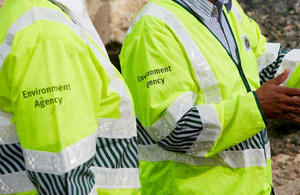


Good progress on Burton’s £30 million flood defences

Press release

A further section of the £30 million Burton-upon-Trent flood defence project has been opened to the public by the Environment Agency.

  • Environment Agency opens further section of £30m flood defence project
  • Public access to embankment and local nature reserve
  • Project on target to be completed spring 2021

Members of the public are now able to access the embankment between the Riverside Hotel and the edge of the golf course. The path through Toad Hole Nature Reserve has also been reopened.

It is hoped to open the remainder of the section near the golf course by the end of the year.

The whole project, which started in June 2019, is scheduled to finish next spring and will improve flood defences for over 4,500 homes and 1,000 businesses.

Construction work is continuing throughout the latest national lockdown with Environment Agency staff and contractors following government guidelines.

William Groves, senior flood advisor for the Environment Agency, said:

The work on this important infrastructure for the town is progressing very well.

We will be opening further sections as they are completed to minimise the inconvenience to members of the public.

With the onset of winter weather in recent weeks, we are also urging people to check their flood risk, sign up for free flood warnings and keep up to date with the latest situation at this link https://www.gov.uk/check-if-youre-at-risk-of-flooding or follow @EnvAgencyMids.

The Environment Agency has adopted COVID-19-safe ways of working in helping to protect people from flooding and are calling for people to be prepared this winter.

Simple steps should be taken, such as checking if you live in an area at high risk of flooding, preparing a bag with medication and important documents and moving valuable and sentimental items upstairs or to a safe place.

Know your risk:

  • Find out if you’re at risk – Use this postcode checker to see if you live in flood risk area

  • If you do live in a flood risk area sign up for flood warnings. These warn of the risk of flooding from rivers, the sea and groundwater. You’ll be alerted by phone, email or text when flooding is expected.

  • The Environment Agency has specially trained Flood Support Officers across the country who provide information and advice during and after floods. Call Floodline (24-hour service) on 0345 988 1188 or type-talk (for the hard of hearing) on 0345 602 6340 to find out if they’re active in your area.

Notes to editor

  • The Burton scheme is part of the £2.6 billion being spent over 2015-21 across the country, delivering more than 1,500 projects to better protect 300,000 homes. This is on top of £1 billion by 2020 to maintain flood defences.
  • We will be doubling this investment to a record £5.2 billion between 2021-27, creating around 2,000 new flood and coastal defences to better protect 336,000 properties across England.
  • In July 2020, the government published a new long-term policy statement on flood and coastal erosion risk management. This long-term plan to tackle flooding is the most comprehensive in a decade, with 5 ambitious policies and over 40 supporting actions to accelerate progress to better protect and prepare the country for future flooding and coastal erosion.
  • Flood defence investment takes place where the risk is highest, wherever it is across the country. Each scheme is carefully considered to where it will benefit the most people and property.
  • Further information about the Burton scheme is available at this link https://consult.environment-agency.gov.uk/west-midlands/copy-of-burton-frms-information-page/

Published 11 November 2020


£22.5 million funding to turn industry waste into environmental wins

  • Industry set to benefit from £22.5 million government funding to reduce waste and boost recycling in textiles, electronics, metals, construction and chemicals
  • emissions from the UK’s textiles industry alone are almost as high as those from cars used for private trips
  • research could stop the generation of 154 million tonnes of mineral waste each year, enough to fill 30,000-Olympic-sized swimming pools

Industries across the UK will be helped to tackle waste, boost recycling and build back greener from coronavirus thanks to £22.5 million of government funding for 5 state-of-the-art research centres in London, Loughborough and Exeter.

The research centres will explore how the reuse of waste materials in the textiles, construction, chemicals, transport, electronics and metal industries can protect the environment and boost the economy.

Emissions from the UK’s textiles industry alone are almost as high as those from cars used for private trips, and it is estimated that £140 million worth of clothing goes into landfill each year.

The better reuse and recycling techniques developed by these new centres – expanding the so-called ‘circular economy’ – will help to reduce greenhouse gas emissions, preserve natural resources and provide new opportunities for UK industries. Research has shown that expanding the circular economy could create up to 500,000 gross jobs by 2030.

Energy Minister Kwasi Kwarteng said:

We want to further the UK’s status as a world-leader in finding green solutions to industrial challenges, and projects like these are excellent examples of placing manufacturers at the forefront of the green industrial revolution.

I am pleased to support these new cutting-edge research centres that will transform the way industry reuses and recycles materials – another great step forward as we build back greener from coronavirus and achieve net zero emissions by 2050.

Environment Minister Rebecca Pow said:

Creating a more circular economy for our waste and resources lies at the heart of this government’s transformative agenda for the environment, and we are committed to going further and faster to reduce, reuse and recycle more of our resources.

These new research centres will play a vital part in creating a cleaner and more sustainable waste sector, thus helping us to better protect the environment and leave it in better shape for the next generation.

One of the 5 new centres, the Centre for Mineral-based Construction Materials, led by University College London, will develop more efficient use and recovery of mineral materials such as construction stones, cement and brick. This project will reduce UK minerals extraction by more than half a million tonnes per day and stop the generation of 154 million tonnes of mineral waste each year, enough to fill 30,000-Olympic-sized swimming pools.

To tackle the emissions from the UK’s textiles industry, one of the 5 new centres, the Interdisciplinary Textiles Circularity Centre, led by the Royal College of Art, aims to lessen the environmental impact of clothing in the UK by using household waste and used fabrics to develop new textiles instead of relying on imported materials.

Executive Chair of the Engineering and Physical Sciences Research Council, Professor Dame Lynn Gladden, said:

The move to a circular economy, where we use less resources and reuse more materials, is central to the UK’s green industrial revolution and our commitment to achieving a net zero economy by 2050.

By bringing together a wide range of academic disciplines with industry partners the centres will catalyse innovative new technologies and approaches that will boost the UK economy and benefit the environment.

The Interdisciplinary Circular Economy Centres are funded by the UK government as part of UK Research and Innovation’s Strategic Priorities fund. In addition to the UKRI Government investment, £11.2 million of funding and in-kind support is being provided by external partners, as well as support from host universities.

Today’s funding follows on from July’s announcement of £350 million to cut emissions in heavy industry and accelerate the UK’s economic recovery. The multi million-pound investment is playing a vital role in helping businesses to decarbonise across the heavy industry, construction, space and transport sectors and to secure the UK’s place at the forefront of green innovation.

The Interdisciplinary Circular Economy Centres are funded by UK Research and Innovation (UKRI) through the Strategic Priorities fund. In addition to the UKRI investment, £11.2 million of funding and in-kind support is being provided by partners.

Interdisciplinary Textiles Circularity Centre

The Interdisciplinary Textiles Circularity Centre, led by the Royal College of Art, aims to reduce our reliance on imported and environmentally and ethically impactful clothing materials and develop new ‘designed and made in the UK’ industries. They will lead research to turn post-consumer textiles, crop residues and household waste into renewable materials for use in textiles, developing new UK-based supply chains from waste management and farming through to textile production and design, and consumer experience.

Interdisciplinary Circular Economy Centre

The Interdisciplinary Circular Economy Centre for Mineral-based Construction Materials (ICEC-MCM), led by UCL, will explore how better design and manufacturing of products and structures made from mineral materials such as aggregates, cement and brick can help the UK’s construction industry to do more with less, and reduce waste, pollution and costs. For example, what does industry need to know about waste products such as excavation clay and metallurgical waste, to substitute them for mined and quarried materials used in construction products? How can the components of buildings that have been demolished be reused to minimise costs and environmental impacts?

Interdisciplinary Centre for Circular Chemical Economy

The Interdisciplinary Centre for Circular Chemical Economy, led by Loughborough University, aims to reduce the fossil reliance of the UK’s £32 billion chemical industry by creating and implementing methods to recover and reuse olefins from end-of-life products and CO2 emissions. Olefins are the raw materials for 70% of all organic chemical production, used to create synthetic fibres, plastics and detergents for example. As well as developing new transformative technologies, the centre will work with industry, consumers and other stakeholders to develop sector-wide solutions to reduce the industry’s environmental impact and increase its productivity.

Interdisciplinary Circular Economy Centre in Technology Metals

The Interdisciplinary Circular Economy Centre in Technology Metals, led by the University of Exeter, will explore how to create a circular economy for the technology metals such as cobalt, rare earths and lithium that are essential in all clean and digital technologies including electric cars and wind turbines. The centre aims to develop a new cycle, right from the first stages of extraction, to enable secure and environmentally-acceptable circulation of these crucial materials within the UK economy.

Interdisciplinary Centre for Circular Metals

The Interdisciplinary Centre for Circular Metals, led by Brunel University London, aims to make the UK the first country to fully circulate metals by 2050, which would deliver huge environmental benefits with the extraction of just 7 major metals accounting for 15% of global energy demand and 12% of global emissions. While the UK imports almost all metals, the centre will look at how metals can be recycled for use in sectors such as aerospace, automotive and electronics, which could contribute more than £100 billion to the UK economy over the next decade.

The Centres form part of the £30 million UKRI Interdisciplinary Circular Economy programme, funded by the UKRI Strategic Priorities Fund, and delivered by the Arts and Humanities Research Council (AHRC), Biotechnology and Biological Sciences Research Council (BBSRC), Economic and Social Research Council (ESRC), Engineering and Physical Sciences Research Council (EPSRC), Natural Environment Research Council (NERC), and Innovate UK, with DEFRA and BEIS.

As well as the interdisciplinary centres which have been allocated £4.5 million in UKRI funding each, UKRI will provide £2.5 million of funding to enable small and medium enterprise involvement with centres,and support an integration hub to provide national leadership and coordination, driving knowledge exchange and whole-systems learning:

The Strategic Priorities Fund (SPF) is one of the UK’s largest, publicly funded, programmes of work to spearhead multi and inter disciplinary research and innovation. Established in 2018 and led by UKRI, the SPF aims to:

  • drive an increase in high quality multi and interdisciplinary research and innovation
  • ensure that UKRI’s investment links up effectively with government research and innovation priorities and opportunities
  • ensure the system responds to strategic priorities and opportunities

A circular economy is based on the principles of designing out waste and pollution, keeping products and materials in use, and regenerating natural systems, according to the Ellen MacArthur Foundation.

Research from Green Alliance looks into how development of the circular economy in Britain can help to tackle key labour market challenges, such as regional and occupational unemployment.

In 2018, the government published their Resources and Waste Strategy for England, setting out how we will preserve material resources by minimising waste, promoting resource efficiency and moving towards a circular economy in England.


Landmark Agriculture Bill becomes law

Legislation that will unleash the potential of agriculture has passed into UK law today (11 November).

The Government’s landmark Agriculture Bill was introduced to Parliament in January this year, providing a boost to industry after years of inefficient and overly bureaucratic policy dictated to farmers by the EU. The Bill will empower our farmers and land managers, and make sure that we can reward them properly for the good work that they do. The Bill will help farmers stay competitive, increase productivity, invest in new technology and seek a fairer return from the marketplace.

Beginning next year, farmers will have a seven year transition period to adapt to a new agricultural system. Further details will be announced in late November.

The Agriculture Bill sets out how farmers and land managers in England will be rewarded in the future with public money for “public goods” – such as better air and water quality, thriving wildlife, soil health, or measures to reduce flooding and tackle the effects of climate change, under the Environmental Land Management scheme. These incentives will provide a powerful vehicle for achieving the goals of the government’s 25 Year Environment Plan and our commitment to reach net zero emissions by 2050.

This new system will replace the poorly targeted Basic Payment Scheme subsidy system, which largely pays farmers for the total amount of land farmed and has skewed payments towards the largest landowners, rather than rewarding farmers for any specific public benefits.

At the same time, the Bill includes measures designed to support our farmers and land managers to boost their productivity, and ultimately maximise the potential of our land to produce high quality food in a more sustainable way.

Environment Secretary George Eustice said:

Our landmark Agriculture Act will transform the way we support farmers.

The funds released as a result of the phasing out of the legacy Basic Payment Scheme (BPS) will be re-invested into a roll out of our future farming policy, which will be centred around support aimed at incentivising sustainable farming practices, creating habitats for nature recovery and supporting the establishment of new woodland and other ecosystem services to help tackle challenges like climate change.

We will support farmers in reducing their costs and improving their profitability, to help those who want to retire or leave the industry to do so with dignity, and to create new opportunities and support for new entrants coming in to the industry.

The government will now be able to further champion food production by improving the transparency and fairness in the supply chain from farm to fork, as well as keeping our world-famous food producers competitive and innovative by investing in the latest technology and research.

The government will also report on UK food security to Parliament every three years. The first report will be published at the end of next year, and will include analysis of the impacts on food supply of the coronavirus pandemic, as well as a wide range of themes including global availability of food, food safety and consumer confidence.

In order to spend more of the annual budget for agriculture on boosting productivity and environmental benefits, Direct Payments will be phased out over an agricultural transition period, starting with the 2021 Basic Payment Scheme year and running until the end of 2027. This annual budget for farming support will be maintained for every year of this Parliament, providing certainty and stability ahead of transitioning to the new system.

This will allow farmers and land managers the time they need to adapt to the new approach and consider which component of the new Environmental Land Management scheme will work best for their farm.

Farmers and land managers will also be able to apply for alternative support during this time, with productivity grants on offer next year and with Countryside Stewardship schemes remaining open to new applications in the first few years of the agricultural transition period, which will help farmers to springboard into the upcoming Environmental Land Management scheme.

Further details on plans to support our farmers and land managers over the agricultural transition period are due to be published later this month.


UK Royal Navy concludes first joint exercises with Egypt

The joint naval drills began last week when the British Royal Navy’s flagship HMS ALBION arrived at Alexandria Naval Base along with elements of Littoral Response Group (Experimentation) (LRG-X) during their three-month Mediterranean deployment.

The bilateral amphibious exercises aimed to enhance interoperability and exchange knowledge and expertise to counter common maritime challenges that the two nations’ navies are facing in the Mediterranean region.

While in Alexandria, the Royal Navy exchanged a series of briefings on naval operations and amphibious warfare with their Egyptian counterparts. With strict COVID-19 precautions in place, these preparations also allowed both Navies to develop a fully integrated and complex sea training phase that was supported by warships from the Egyptian Navy, multi-role combat aircrafts from the Egyptian Air Force and a fleet of landing craft from both nations. ALBION also welcomed onboard the UK Minister for Armed Forces, James Heappey MP, plus senior members of the Egyptian Naval Forces.

During the sea phase, HMS ALBION and HMS DRAGON were joined by Egyptian Navy’s Amphibious Assault Ship and Mistral-class helicopter carrier ENS ANWAR EL SADAT, the Frigate ENS SHARM EL SHEIKH and the Fast Attack Craft ENS ALI GAD. The training included an Air Defence Exercise and Surface Warfare Exercise to ensure that the UK-Egyptian Navies’ Task Groups can operate together and protect each other in tactical formations.

The exercises also involved special maritime operations with UK specialists working alongside Egyptian Special Naval Forces using the full spectrum of tactical watercraft and developing techniques and tactics. Forces of both nations practiced ship to objective manoeuvre, counter-terrorism assault techniques, battlefield medical training and reconnaissance of beach landing sites. The sea phase culminated in combined amphibious landing exercises across the Egyptian coastline.

British Ambassador to Egypt, Sir Geoffrey Adams, said:

The past few days have witnessed some truly exciting cooperation between the UK and the Egyptian military, focussed on developing and sharing expertise in amphibious operations. These exercises saw the participation of HMS Albion – the Royal Navy’s flagship – as well as other elements of the British armed forces. Together with the recent visit of the UK Minister for the Armed Forces, these joint exercises demonstrate our commitment to work with Egypt in the interests of both countries. Strength, modernity, partnership – this is what the UK armed forces offer. I look forward to more cooperation of this kind in the future.

For his part, British Defence Attaché Captain Royal Navy Stephen Deacon commented:

The recent bilateral maritime and amphibious exercises were a great success for both nations and provided an important opportunity to enhance interoperability. They reflect the growing strength of UK-Egyptian bilateral defence cooperation and partnership, particularly in the maritime domain. The exercises have also demonstrated the UK’s steadfast commitment to work with Egyptian partners to support regional security and stability within the Eastern Mediterranean.

The LRG(X) deployment in the Mediterranean, Black Sea and North Africa was formed to work with regional allies and partners in order to test experimental concepts to develop the Future Navy and Future Commando Force. After leaving Egypt, the task group will come under command of NATO for a period of support to Operation SEA GUARDIAN, which delivers Maritime Security activity across the Mediterranean Sea.