Pursuing peace and stability in the Sahel

Many thanks, Madam President, and I would like to join others in thanking all our briefers for their contributions today.

I would also like to pay tribute to the forces of the G5 Sahel, to UN peacekeepers serving in MINUSMA, and to international troops deployed in Operation Barkhane and to all those working to bring peace and security to the people of the Sahel. The UK’s own deployment to MINUSMA has begun, and we look forward to contributing to the protection of civilians and progress towards long-term and sustainable peace.

Sadly, since we last met, the security situation in the Sahel has continued to deteriorate. The region has suffered from a number of deadly attacks on civilians and military personnel, including attacks on MINUSMA. People across the Sahel continue to suffer from violence, illicit trafficking and food insecurity, which drive displacement and increase humanitarian need.

Madam President, against this challenging backdrop, we commend G5 Sahel member states for increasing their operational capability and effectiveness against those forces who seek to destabilise the region.

We would welcome more detail on the Forces’ measures of success beyond operational reporting. This includes an update on how the G5 Sahel force is working with the UN country team to create an enabling environment for development and for monitoring the return of national armed forces and local authorities. We believe that governance, sustainable development and peacebuilding are the building blocks for stability in the Sahel.

Regional efforts to address the problems of the Sahel are also a cause for optimism. We note ECOWAS’s pledge of $1 billion to fight terrorism and the AU’s forthcoming deployment of 3,000 troops to complement the efforts of the Joint Force. We continue to encourage all partners who have committed to support the Joint Force to fulfill those commitments.

Madam President, as others have said today, there can be no sustainable peace and security in the Sahel without the protection and promotion of human rights and compliance with international humanitarian law. As we have said before, all G5 governments must ensure that any allegations of violations committed by their security forces are thoroughly and transparently investigated and that all perpetrators are brought to justice. This is essential not only to prevent human suffering, but to prevent impunity, strengthen the social contract between citizens and state, and avoid creating grievances that fuel further violence.

MINUSMA’s support to the Joint Force hinges on full compliance with the UN’s human rights due diligence policy. We strongly encourage the force to implement all risk mitigating measures without delay, and we also urge the force to maintain momentum on fully operationalising their own human rights compliance framework.

In conclusion, Madam President, we know that security challenges in the Sahel remain deeply complex and the G5 Sahel Joint Force is a key actor in securing a sustainable, long-term solution. It is important that the force and all other elements of the UN and international response in the region remain coordinated and coherent to maximise their impact. The United Kingdom will continue to play its part, working with the UN, the G5 Sahel states and all our partners across the region in pursuit of peace, stability, sustainable development and justice for the people of the Sahel.

Thank you, Madam President.


Updated rules for farm workers arriving in England

The temporary measures published today will mean seasonal poultry workers arriving from abroad will be able to work during their 14-day quarantine period from 4am on 17 November. However, they will still be required to self-isolate from the general public. To avoid spreading the virus, they will be required to form ‘cohorts’ meaning they only live and work with a select group of the same workers during their stay and they do not mix with other employees.

The decision, agreed by the Department for Transport, the Department for Health and Social Care and Public Health England, will ensure poultry farmers and food producers, in particular turkey farmers, have access to the necessary workforce to mitigate any potential risks to Christmas food supply.

Each year around 5,500 seasonal workers arrive on English farms to help during the busy festive period. This includes slaughtering turkeys, a job that demands high-skilled professional labour to ensure our animal welfare standards are maintained.

Nevertheless the UK has a highly resilient food supply chain which held up well in the spring, and will do so again over the festive period. The Government continues to work closely with food retailers and the food industry to ensure it is prepared to deal with a range of scenarios.

Transport Secretary, Grant Shapps, said:

Christmas dinner is the highlight of the year for many families and this year it will be particularly significant.

Businesses up and down the country have faced unprecedented challenges from Coronavirus and these measures will ensure UK farmers and food producers are supported and able to keep up with the Christmas demand over the festive period.

Environment Secretary, George Eustice, said:

It’s essential that farmers and food producers get the support that they need at this busy time of year, so it is good news that seasonal workers will be able to get straight to work once they arrive in the country.

The run-up to Christmas is particularly important for farmers and food producers who need more workers on their farms to meet the festive demand.

Seasonal workers will be required to comply with a number of rigorous measures including:

  • Self-isolating away from the general public for the first 14 days – workers will stay in their work/accommodation bubbles with food and other required goods delivered to them by their employer
  • Cohorting – workers will be placed in groups with whom they will live and work, without mixing with other workers, throughout their stay, to contain any potential positive contacts
  • Covid-secure guidance – workers and employers will be provided with clear and translated guidance jointly developed by Defra and PHE
  • Time limit – all seasonal poultry workers are required to leave England by 31 December 2020, at which point the exemption will no longer be in force

National restrictions introduced on 5 November 2020 remain in place meaning everyone must stay at home unless travelling for a very limited set of reasons, including for work or education. This means people can no longer travel to take holidays or travel internationally – unless for work or other legally permitted reasons. Those in breach of the rules face penalties starting at £200 and rising to a maximum of £6,400.


Government secures 5 million doses of Moderna vaccine

  • Government concludes negotiations with Moderna to secure access to 5 million doses of its promising coronavirus vaccine
  • vaccine could be delivered to the UK from Spring 2021, if approved by the medicines regulator
  • deal increases total number of doses secured by the UK to 355 million, as part of government’s strategy to build a diverse portfolio of promising vaccines

The UK government has completed negotiations with biotech company Moderna to secure access to 5 million doses of its promising vaccine, enough for around 2.5 million people, the Business Secretary announced today (Monday 16 November).

If it meets robust standards of safety and effectiveness and approved by the medicines regulator, the vaccine could be delivered to the UK and Europe as early as Spring 2021 with the potential for the government to procure more doses next year.

This would follow the first deliveries of the Pfizer/BioNTech and the Oxford University/AstraZenece vaccines which, once final data from their phase 3 clinical trials has been published and if they receive regulatory approval, could be available before the end of the year.

The agreement is part of the government’s strategy to develop a diverse portfolio of vaccines, increasing the UK’s chances of securing access to a promising vaccine. Today’s deal means the government has put in place agreements with 7 different developers and has secured 355 million vaccine doses, giving the UK the best possible chance of protecting the public from coronavirus as soon as possible.

The news comes as Moderna today publishes initial data showing that its candidate is nearly 95% effective in protecting against COVID-19, with no safety issues identified to date. The safety data is still to be released by Moderna to show whether the vaccine is both safe and effective.

Until a vaccine is found to meet robust standards of safety and effectiveness, the public must continue to take necessary actions to keep themselves and their loved ones safe, including following the Hands, Face, Space guidance and other public health advice.

Business Secretary Alok Sharma said:

Today’s announcement is on top of the 350 million doses the UK has already secured from a range of other vaccine developers, putting us towards the front of the international pack on a per capita basis.

The speed at which scientists around the world have worked on a vaccine has been incredible, and it is thanks to their ingenuity that we are on the cusp of one of the biggest scientific breakthroughs in recent years.

While this is exciting news, I urge the public to not be complacent – we are at a critical point in the pandemic and in order to save lives we must continue to follow guidance by maintaining social distancing, wearing face masks and washing our hands regularly.

Health Secretary Matt Hancock said:

Today’s announcement is excellent news and an encouraging step forward in our fight against COVID-19.

We have moved swiftly to secure 5 million doses of this hugely promising vaccine meaning we are even better placed to vaccinate everyone who will benefit should the rigorous safety standards be met.

But we are not there yet. Until science can make us safe, we must remain vigilant and keep following the rules that we know can keep this virus under control.

Moderna is currently conducting phase 3 clinical trials of its vaccine and is using mRNA vaccine technology.

The Medicines and Healthcare products Regulatory Agency (MHRA) has started a rolling review of Moderna’s vaccine. MHRA will carefully and scientifically review the safety, quality and effectiveness data once it has all been submitted to determine how it protects people from COVID-19 and the level of protection it provides.

The data must include results from the lab and clinical trials; manufacturing and quality controls, product sampling, and testing of the final product.

Once they have thoroughly reviewed the data, the MHRA will seek advice from the government’s independent advisory body, the Commission on Human Medicines. They will critically assess the data too before advising the government on the safety, quality and effectiveness of any potential vaccine.

The MHRA is globally recognised for requiring the highest standards of safety, quality and effectiveness for any vaccine.

Chair of the government’s Vaccine Taskforce Kate Bingham said:

Today’s news from Moderna is very encouraging. The Moderna mRNA vaccine has posted excellent efficacy data to date from its initial phase 3 readout. The vaccine uses mRNA technology demonstrating that these novel vaccines are showing early promise in being effective against COVID-19.

The government has now signed agreements with seven vaccine developers to secure the most promising vaccines for the UK. The government’s Vaccine Taskforce are pursuing a portfolio approach to obtaining vaccines for the UK across different vaccine formats, to maximise the chances of finding safe and effective vaccines.

We will continue to monitor the field of promising vaccines, and are very encouraged by the effectiveness shown by these early frontrunners, but we must remain vigilant to the fact that no vaccine is yet approved for use by regulators.

We have secured early access to over 355 million vaccines doses through agreements with several separate vaccine developers at various stages of trials, including:

  • 100 million doses of University of Oxford/AstraZeneca vaccine – phase 3 clinical trials
  • 40 million doses of BioNTech/Pfizer vaccine – phase 3 clinical trials
  • 5 million doses of Moderna vaccine – phase 3 clinical trials
  • 60 million doses of Novavax vaccine – phase 3 clinical trials
  • 60 million doses of Valneva vaccine – pre-clinical trials
  • 60 million doses of GSK/Sanofi Pasteur vaccine – phase 1 clinical trials
  • 30 million doses of Janssen vaccine – phase 2 clinical trials

We have invested over £230 million into manufacturing any successful vaccine and an enormous amount of planning and preparation has taken place across government to be able to quickly roll out the vaccine, including ensuring we have adequate provision, transport, PPE and logistical expertise to do so. We are also working at pace to prepare for the delivery of any potential COVID-19 vaccination programme as quickly as possible.


Health and Social Care Secretary’s statement on coronavirus (COVID-19): 16 November 2020

Good afternoon and welcome to today’s Downing Street coronavirus briefing.

I’m joined today by Professor Jonathan Van Tam, Deputy Chief Medical Office and Dr Susan Hopkins, the Chief Medical Advisor to NHS Test and Trace.

Before we talk about testing and vaccines, I’d like to update you on the latest coronavirus data.

The average number of new cases each day is now 25,329 up from 22,443 last week.

There are today 14,915 COVID-19 patients in hospital across the UK, compared to 13,025 a week ago.

And, sadly, yesterday 168 deaths were reported.

This means that in the last week we’ve seen an average of 413 deaths, up from 332 a day a week ago.

My profound sympathies are with everyone who’ve lost a loved one throughout this pandemic. These numbers make painfully clear, this virus remains a potent threat. And that threat is not just to the oldest and most vulnerable but to anyone, of any age, and of any background.

We have already seen the serious impact that long COVID can have on peoples’ quality of life, even the fit and the young. Symptoms like fatigue, breathlessness, muscle pain, and neurological problems long after they first had the virus.

We know that long COVID affects thousands of people, many thousands of people. We have already opened long COVID clinics in many parts of the country. And I am very pleased to be able to confirm that the NHS will have a network of 40 long COVID clinics right across England in place by the end of the month.

They will bring together doctors, nurses, therapists and other NHS staff like physios to help those suffering with the long-term effects of coronavirus. Long COVID shows that this virus can strike us all, and we must all do our bit to strike back by following the rules and denying the virus the connections that it needs to spread.

I know that this has not been easy and that it has meant celebrating Diwali or commemorating the fallen in ways that have been different this year from what we might normally do.

I want to say thank you to everyone for their patience. We must persevere and get this virus under control. Coronavirus is not a short term problem that can easily be fixed. We must focus on the long term solutions, underpinned by the best possible science that can see us through this crisis and also lay firm foundations for the future.

Testing capacity

This includes our ability to test at scale. We’re constantly improving our response, to bring the confidence that high-quality testing can provide. We’ve already built the largest coronavirus testing capacity in Europe.

Up from 2,000 tests a day in March, to our current capacity of more than half a million. But we will not rest, because testing capacity helps keep people safe and can help us get things back more like normal life.

Today I am delighted that we can announce two new mega labs, which will open early in the new year. They will add another 600,000 capacity to our daily capacity, that doubles the current capacity. They will also create 4,000 jobs. Crucially, they will represent a permanent part of the UK’s new diagnostics industry.

We didn’t enter this crisis with a major diagnostics industry, and so together we have built one. Both to help beat the virus by testing more people and returning results more quickly and to give our country a permanent defence that we need for any future epidemic.

And to improve our care for so many other diseases, like heart disease or cancer or flu.

I am absolutely determined that we must have a massive diagnostics capacity, not just for this pandemic, but long into the future.

More capacity also speeds up turnaround times but speeding up turnaround times isn’t just about the test, it is also about the logistics.

So I want to take one moment to thank the Royal Mail, who, from this weekend, will empty some of their post boxes 7 days a week to speed up home testing. It is a big team effort and I am very grateful for our posties for playing their part to help keep people safe.

This expansion of testing matters because it helps protect people. I just want to touch on some of the reasons why it matters.

It means we can test the most vulnerable, and those who care for the most vulnerable, and we can test them more frequently.

Over the last week, for instance we have delivered more than 3 million tests to NHS staff, to begin their regular bi-weekly testing.

And today I know so many people have been relieved to hear that we have started a pilot for testing visitors in care homes, to use tests to allow people to visit loved ones in care homes in a way that keeps them safe and bring back some of those magical moments of social contact.

Our expansion of testing also means we can roll out mass testing further.

We are making progress in the city wide testing across Liverpool and we are now rolling out this localised approach to other areas.

83 local authorities have now signed up to receive regular batches of these new lateral flow tests, which can allow for results in minutes.

This is an important step and it combines the local insight of the brilliant Directors of Public Health right across the country with our strong national infrastructure of NHS Test and Trace combining to keep our communities safe.

Vaccines

I also want to turn to vaccines. While we don’t yet have a vaccine, we can now have hope.

You may have heard the two promising pieces of news from earlier today.

First, Janssen’s Phase 3 clinical trials are beginning today in 17 sites across the country, including Southampton, Dundee, Cardiff and Belfast.

It’s the third vaccine to enter clinical trials here and should the trials come good, and that is by no means certain, and it can be proved to be safe and effective. We have 30 million doses on order by the middle of next year.

Finally, you will no doubt have seen the excellent news that Moderna have today announced results from their preliminary trial data, suggesting that their vaccine has an effectiveness of 94.5 per cent. This is another encouraging step forward, although I stress that this is preliminary.

The safety data is limited and their production facilities are not yet at scale.

Should this latest vaccine be approved, the doses would be available from spring next year.

And I can announce that we have today secured an initial agreement for 5 million doses of the Moderna vaccine.

It is a similar RNA technology to Pfizer/BioNTech, of which we have already ordered 40 million doses, which should that be proved to work will come on stream potentially at the end of this year.

Across diagnostics and vaccines, great advances in medical science are coming to the rescue. And while there is much uncertainty, we can see the candle of hope.

And we must do all that we can to nurture its flame but we are not there yet.

Until the science can make us safe, we must remain vigilant and keep following the rules that we know can keep this virus under control.

Now I’d like to hand over to Dr. Hopkins to say more about our work on mass testing.
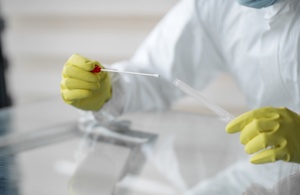


Royal Mail to collect COVID-19 test kits 7 days a week

Press release

Royal Mail is introducing a weekend extension for some priority postboxes from 21 November.

  • Collections will now be made from over 15,000 priority postboxes on a Sunday
  • Royal Mail has been a key partner for the government’s national testing programme for the distribution of coronavirus (COVID-19) test kits since the start of the pandemic
  • The majority of the tens of millions of home, regional test centre and care provider tests have moved through Royal Mail for some or all of their delivery and return journeys since April 2020

Royal Mail is introducing a weekend extension for over 15,000 existing priority postboxes from 21 November. Collections will now be made from these priority postboxes on a Sunday.

Royal Mail has also increased its number of priority postboxes available for Monday to Saturday postings from 33,000 to over 35,000, providing increased convenience for test kit customers.

Priority postboxes can be identified via the Royal Mail website or app.

Nick Landon, Chief Commercial Officer at Royal Mail, said:

Since April, we have played a crucial role in the movement of test kits. This includes delivery to and collection from the growing number of regional test centres and care providers and the return of home tests.

As part of this we introduced a unique network of priority postboxes for the rapid return of test kits to labs to help in the country’s fight against the pandemic.

Royal Mail has always been proud to help the country in whatever way we can and we could not be prouder of the support we have been asked to give the government and the Department of Health and Social Care.

Health and Social Care Secretary, Matt Hancock, said:

I want to thank the Royal Mail, who, from this weekend, will empty some of their post boxes 7 days a week to speed up home testing.

It is a big team effort and I am very grateful for our posties for playing their part to help keep people safe.

Published 16 November 2020