Media Freedom

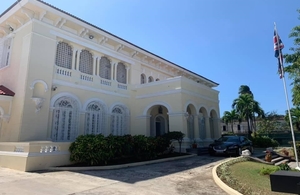
We support media freedom and are concerned to hear reports of assaults on cameramen working in good faith for the international media in Cuba. We await clarification and reiterate that freedom of speech is a human right.

Published 23 November 2020


Prime Minister publishes COVID Winter Plan

  • National restrictions to end on 2 December, with England returning to local tiers
  • Shops, gyms, personal care, and leisure to reopen, whilst collective worship, weddings and outdoor sports can resume
  • Tiers toughened in some areas to safeguard gains, and ensure testing and vaccines can have maximum impact
  • Prime Minister to announce on Thursday which area will be in each tier, based on latest data

The Prime Minister has published the government’s COVID Winter Plan, setting out the end of national restrictions and the steps ministers will take to help bring life back to normal by Spring.

The plan seeks to bring R below 1, find new ways of managing the virus and enabling life to return closer to normal, and minimise damage to the economy and society.

The collective effort during national restrictions has brought the virus back under control, slowed its spread and eased pressure on the NHS – meaning national restrictions will end on 2 December.

Across England, this means the ‘stay at home’ order will end and shops, gyms, personal care, and the leisure sector will reopen.

Collective worship, weddings and outdoor sports can resume, and people will not be limited to seeing one other person in outdoor public spaces. Instead, the rule of 6 will again apply.

However, the virus is still present and the Prime Minster, Chief Medical Officer and Chief Scientific Advisor agree that without targeted measures in areas where it is most prevalent, it could again run out of control. That would jeopardise progress made, and risk intolerable pressure on the NHS.

England will therefore move back into a regional, tiered approach – safeguarding the gains made, and using scientific advances in vaccination, treatments and testing to enable life gradually to return closer to normal by Spring.

Some restrictions will be amended, given lessons learned from previous tiers. For example, the hospitality curfew has been modified to last orders at 10pm and closing time at 11pm, allowing customers to depart in a staggered way.

In tiers 1 and 2, spectator sport can also resume outside with capacity limits and social distancing, providing consistency with theatres and concert halls.

But SAGE are clear that, while previous tiers reduced the R rate, they were not enough to bring it below 1.

That is why all tiers will be toughened. For example, in tier 1 people will be encouraged to minimise travel and work from home where possible.

In tier 2, alcohol may only be served in hospitality settings as part of a substantial meal. In tier 3, hospitality will close except for delivery and takeaway, and indoor entertainment venues, such as cinemas, casinos and bowling alleys, must also close.

These tiers will be uniform, without negotiations on specific measures, and will be based on the following criteria:

  • Case rates in all age groups;
  • Case rates in the over 60s;
  • The rate at which cases are rising or falling;
  • The number of cases as a percentage of tests taken
  • Pressure on the NHS, including current and projected occupancy.

Tiering allocations will be reviewed every 14 days, and tiering regulations will expire in law at the end of March.

Ministers continue to work with the Devolved Administrations on plans for temporary relaxation over Christmas and will set out details shortly, including for the clinically extremely vulnerable.

Given how tough these measures are for tier 3 areas, the government will rapidly extend community testing in those areas.

Following the example of Liverpool, tier 3 areas will be able to participate in a six-week community testing programme to identify asymptomatic cases, and ensure they self-isolate.

The government also plans to introduce frequent testing as an alternative to the need for self-isolation for people who have had close contact with a positive case.

Instead, contacts would have regular tests during the isolation period and only have to self-isolate if they test positive.

This will be trialled in Liverpool first then, if successful, will be rolled out across the NHS and care homes in December, and to everyone else from early next year. We will set out full details of our plans shortly.

You can read the full COVID Winter Plan here.


DIO delivers world class submarine simulator to HMNB Clyde

The SMERAS is a unique and modern facility which will give the Navy the capability to carry out essential on shore training for personnel in vital escape, rescue, abandonment and survival techniques using a unique, controllable training environment.

The Navy has funded the SMERAS facility as a significant investment in the training of its personnel. DIO delivered the project, working with its contractor Kier Graham Defence Ltd.

The building will house a simulator in which trainees can experience a range of realistic weather conditions and sea states including wind, rain and storms, so that they can practise in a safe and low risk environment before they board a real submarine.

An internationally-renowned training resource, the simulator, will replace the Submarine Escape Training Tank at Fort Blockhouse, Gosport, and has been recognised by Navies throughout the world for its cutting-edge technology and equipment.

The construction work was completed pre-Covid-19.

Charles Hoskins, DIO Programme Director, said:

DIO is proud to have delivered this world-class facility to the Royal Navy.

The SMERAS demonstrates DIO’s expertise in completing complex and one-of-a-kind projects to enable our Navy to access the most modern training available.

It also affirms our commitment to support HMNB Clyde in becoming a centre of excellence for submariners.

John Thomson, Royal Navy Command Assistant Head of Infrastructure, said:

The Royal Navy was proud to provide the funding for this excellent facility delivered by DIO and their contractors.

The purpose-built SMERAS training facility at HMNB Clyde provides a critical and world leading experiential training facility for the Royal Navy and replaces the Submarine Escape Training Tank at Fort Blockhouse, Gosport.

The facility provides class specific high-fidelity escape towers and escape compartments, a training pool capable of replicating the environmental conditions that submarine escapes may need to be carried out in and supporting classrooms, offices, workshops, plant rooms and changing areas.

SMERAS is a key element in the development of HM Naval Base Clyde as the Royal Navy Submarine Centre of Specialisation and base port for all UK submarines.

Cdr D McClement RN, Fleet Operational Sea Training (Submarines), HMNB Clyde, said:

The SMERAS Training Facility is a fantastic new and world-leading escape and surface abandonment capability that enhances the training benefit for Royal Navy submariners.

The Royal Navy, as the customer for this new facility, is justifiably proud that we are delivering high-levels of experiential training to our submarine personnel and on track to reach Full Operating Capability in March 2021.

The facility fulfils a significant gap for the Royal Navy in delivering realistic experiential training for surface abandonment in addition to submarine escape.

The Royal Navy’s reputation for submarine escape training has been significantly enhanced by this impressive capability that combines both escape and surface abandonment training.

Gary Holmes, Managing Director Building North at John Graham Construction Ltd, said:

We’re proud to have delivered this critical facility for the Clyde Naval Base on behalf of the Kier Graham Defence Ltd joint venture.

After three years of design and construction, working collaboratively with the Royal Navy and DIO, we’re proud to provide this new purpose-built environment which will play a vital role in improving the skills of submariners, ensuring their ongoing support and training can be conducted within this highly realistic, scenario-based training facility.

As part of the UK, Scotland benefits from billions of pounds of MOD contracts placed directly and indirectly with hundreds of companies, which sustain thousands of jobs.

The UK government is firmly committed to the future of defence in Scotland and of Scotland’s continued vital role in defence. The major investment in the future of HMNB Clyde is a testament to this.

DIO is investing £1.6-billion in total to develop infrastructure at HMNB Clyde to make it a centre of excellence for submariners.

Further information on the new submarine training building at HMNB Clyde can be viewed on YouTube.

https://www.youtube.com/watch?v=Q7CUPvVo17I&feature=youtu.be

Text in the video reads as follows:

  • DIO has delivered the £34-million submarine escape, rescue, abandonment and survival (SMERAS) training building at HMNB Clyde in Faslane
  • SMERAS is a unique and modern facility which allows the Navy to carry out essential on shore training for personnel in escape, rescue, abandonment and survival techniques
  • the building houses a realistic submarine escape training experience where trainees can experience a range of weather conditions and sea states including win, rain and storms
  • the facility is an internationally renowned training resource, it has been recognised by Navies throughout the world for it’s cutting-edge technology and equipment.


PM statement on COVID-19 Winter Plan: 23 November 2020

Mr Speaker, thank you very much and with your permission, I will make a statement on the Government’s COVID-19 Winter Plan.

For the first time since this wretched virus took hold, we can see a route out of the pandemic.

The breakthroughs in treatment, in testing and vaccines mean that the scientific cavalry is now in sight

and we know in our hearts that next year we will succeed.

By the Spring, these advances should reduce the need for the restrictions we have endured in 2020

and make the whole concept of a Covid lockdown redundant.

When that moment comes, it will have been made possible by the sacrifices of millions of people across the United Kingdom.

I am acutely conscious that no other peacetime Prime Minister has asked so much of the British people

and just as our country has risen to every previous trial,

so it has responded this time, and I am deeply grateful.

But the hard truth, Mr Speaker, is that we are not there yet.

First we must get through Winter without the virus spreading out of control and squandering our hard-won gains,

at exactly the time when the burden on the NHS is always greatest.

Our Winter Plan is designed to carry us safely to Spring.

In recent weeks, families and businesses in England have, once again, steadfastly observed nationwide restrictions

and they have managed to slow the growth of new cases and ease the worst pressures on our NHS.

I can therefore confirm that national restrictions in England will end on 2nd December, and they will not be renewed.

From next Wednesday people will be able to leave their home for any purpose,

and meet others in outdoor public spaces, subject to the Rule of Six.

Collective worship, weddings and outdoor sports can resume,

and shops, personal care, gyms and the wider leisure sector can reopen.

But without sensible precautions, we would risk the virus escalating into a Winter or New Year surge.

The incidence of the disease is, alas, still widespread in many areas,

so we are not going to replace national measures with a free for all, the status quo ante Covid.

We are going to go back instead to a regional tiered approach,

applying the toughest measures where Covid is most prevalent.

And while the previous local tiers did cut the R number, they were not quite enough to reduce it below 1,

so the scientific advice, I am afraid, is that as we come out is that our tiers need to be made tougher.

In particular, in tier 1 people should work from home wherever possible.

In tier 2, alcohol may only be served in hospitality settings as part of a substantial meal.

In tier 3, indoor entertainment, hotels and other accommodation will have to close, along with all forms of hospitality, except for delivery and takeaways.

And I am very sorry obviously for the unavoidable hardship that this will cause to business owners who have already endured so much disruption this year.

Mr Speaker, unlike the previous arrangements, tiers will now be a uniform set of rules,

That’s to say we won’t have negotiations on additional measures with each region, it’s a uniform set of rules

We have learnt from experience that there are some things we can do differently

So from the 10pm closing time for hospitality we’re going to change that to so that it is last orders at 10 with closing at 11.

In tiers 1 and 2, spectator sports and business events will be free to resume inside and outside – with capacity limits and social distancing –

providing more consistency with indoor performances in theatres and concert halls.

We will also strengthen the enforcement ability of Local Authorities,

including specially trained officers and new powers to close down premises that pose a risk to public health.

Later this week we will announce which areas will fall into which tier, I hope on Thursday,

based on analysis of cases in all age groups, especially the over 60s,

also looking at the rate by which cases are rising or falling,

the percentage of those tested in a local population who have Covid,

and the current and projected pressures on the NHS. I am sorry to say we expect that more regions will fall – at least temporarily – into higher levels than before,

but by using these tougher tiers

and by using rapid turnaround tests on an ever greater scale

to drive R below 1 and keep it there, it should be possible for areas to move down the tiering scale to lower levels of restrictions.

By maintaining the pressure on the virus, we can also enable people to see more of their family and friends over Christmas.

Mr Speaker, I can’t say that Christmas will be normal this year,

but in a period of adversity, time spent with loved ones is even more precious for people of all faiths and none.

We all want some kind of Christmas,

we need it,

we certainly feel we deserve it.

But what we don’t want is to throw caution to the winds and allow the virus to flare up again, forcing us all back into lockdown in January.

So to allow families to come together, while minimising the risk,

we are working with the Devolved Administrations on a special, time-limited Christmas dispensation,

embracing the whole of the United Kingdom, and reflecting the ties of kinship across our islands.

But this virus is obviously not going to grant us a Christmas truce, it doesn’t know it’s Christmas Mr Speaker and families will need to make a careful judgement about the risk of visiting elderly relatives.

We will be publishing guidance for those who are clinically extremely vulnerable on how to manage the risks in each tier, as well as over Christmas.

As we work to suppress the virus with these local tiers,

two scientific breakthroughs will ultimately make these restrictions obsolete.

As soon as a vaccine is approved, we will dispense it as quickly as possible.

But given that this cannot be done immediately, we will simultaneously use rapid turnaround testing, the lateral flow testing that gives results within 30 minutes,

to identify those without symptoms so they can isolate and avoid transmission.

We are beginning to deploy these tests in our NHS

and in care homes in England,

so people will once again be able to hug and hold hands with loved ones, instead of waving at them through a window.

By the end of the year, this will allow every care home resident to have two visitors, who can be tested twice a week.

Care workers looking after people in their own homes will be offered weekly tests from today.

And from next month, weekly tests will also be available to staff in prisons, food manufacturing, and those delivering and administering Covid vaccines.

We are also using testing as the House knows to help schools and universities stay open,

and testing will enable students to know they can go home safely for Christmas and indeed back from home to university.

But there is another way of using these rapid tests,

and that is to follow the example of Liverpool,

where in the last two and a half weeks over 200,000 people have taken part in community testing, contributing to a very substantial fall in infections.

So together with NHS Test and Trace and our fantastic Armed Forces,

we will now launch a major community testing programme,

offering all local authorities in tier 3 areas in England a six week surge of testing.

The system is untried and there are of course many unknowns,

but if it works, we should be able to offer those who test negative the prospect of fewer restrictions,

for example, meeting up in certain places with others who have also tested negative.

And those towns and regions which engage in community testing will have a much greater chance of easing the rules, the tiering, that they currently endure.

Mr Speaker, we will also use daily testing to ease another restriction that has impinged on many lives.

We will seek to end automatic isolation for close contacts of those found positive.

Beginning in Liverpool later this week,

contacts who are tested every day for a week will only need to isolate if they themselves test positive.

If successful, this approach will be extended across the health system next month,

and to the whole of England from January.

And, of course, we are working with the Devolved Administrations to ensure that Wales, Scotland, Northern Ireland also benefit as they should and will from these advances in rapid testing.

But clearly the most hopeful advance of all is how vaccines are now edging ever closer to liberating us from the virus,

demonstrating emphatically that this is not a pandemic without end.

We can take heart from today’s news, which has the makings of a wonderful British scientific achievement.

The vaccine developed with astonishing speed by Oxford University and AstraZeneca is now one of three capable of delivering a period of immunity.      We don’t yet know when any will be ready and licensed,       but we have ordered 100 million doses of the Oxford vaccine,       and over 350 million in total,   more than enough for everyone in the UK, the Crown Dependencies and the Overseas Territories.

And the NHS is preparing a nationwide immunisation programme, ready next month,

the like of which we have never witnessed.

Mr Speaker, 2020 has been in many ways a tragic year when so many have lost loved ones and faced financial ruin.

This will be still a hard Winter,

Christmas cannot be normal,

and there is a long road to Spring.

But we have turned a corner: and the escape route is in sight.

We must hold out against the virus until testing and vaccines come to our rescue and reduce the need for restrictions.

Everyone can help speed up the arrival of that moment

by continuing to follow the rules,

getting tested and self-isolating when instructed,

remembering hands, face and space,

and pulling together for one final push to the Spring,

when we have every reason to hope and believe that the achievements of our scientists will finally lift the shadow of the virus.

Mr Speaker, I commend this Statement to the House.


Welsh Secretary discusses post-EU immigration in virtual event

Press release

Secretary of State for Wales Simon Hart takes part in event to highlight changes to the immigration and visa system after the end of the EU Transition Period.

EU and UK Flag

Secretary of State for Wales Simon Hart has held the latest in a series of events to talk directly to businesses and people in Wales ahead of the end of the EU Transition period.

The Welsh Secretary joined Minister for Future Borders & Immigration Kevin Foster MP for a live virtual event on Thursday (19 November) to discuss changes to the immigration and visa system.

The UK has left the European Union and new rules for businesses and citizens will begin on 1 January 2021.

Mr Hart stressed during the webinar that all EU citizens living in the UK by 31 December 2020 are eligible to apply to the EU Settlement Scheme and have until 30 June 2021 to make an application.

The Welsh Secretary and Minister Foster were joined by Robert Lloyd Griffiths from IOD Cymru who chaired the discussion and officials from the Home Office who provided an overview of the Future Immigration System following the end of the Transition Period with an opportunity of questions from the audience.

Secretary of State for Wales Simon Hart said:

Our starting position is we are looking for reasons to grant people who are already living and working here status. We understand the impact EU Transition has had on individuals and families. That is why the UK Government has ensured that the process for citizens with pre-settled and settled status will be that they will still able to live and work here as well as access the NHS and enrol in education after the end of the transition period.

Whether you are a skilled worker, a visitor to Wales or a student looking to study here, the UK Government is working to streamline and simplify the immigration system.

Minister for Future Borders and Immigration Kevin Foster said:

I was delighted to be invited by the Secretary of State for Wales to speak at this excellent event, set up to ensure businesses across Wales are ready for the end of the transition period. There was a great deal of useful information shared and some excellent questions asked by a really engaged audience.

Immigration routes will open for applications later this year for those wishing to come to the UK from 1 January 2021. The first routes, the student and child student routes, opened on 5 October

EU citizens and their family members who are resident in the UK before the end of the transition period continue to be eligible for the EU Settlement Scheme. The deadline for applications is 30 June 2021.

New immigration system: what you need to know

UK points-based immigration system: employers and EU citizens

Recruiting people from outside the UK from 1 January 2021

Published 23 November 2020