Joint statement on the UK-Brazil JETCO

  • The 11th meeting of the United Kingdom – Brazil Joint Economic and Trade Committee (JETCO) was held on 11 November 2020 by videoconference. The meeting was co-chaired by Roberto Fendt, Brazil’s Special Secretary for Foreign Trade and International Affairs, and the Rt Honourable Elizabeth Truss, the United Kingdom’s Secretary of State for International Trade.

  • At this first meeting between the current Brazilian and British governments, the two parties recognised the changing backdrop to the JETCO, both politically with the United Kingdom having left the EU, and due to Covid-19. The moment presented both an opportunity and a sense of urgency in pressing for a closer and deeper relationship between the United Kingdom and Brazil. Both sides reiterated their commitment to strengthening bilateral commercial ties and to cooperating to promote bilateral trade and investment relations between the two countries.

  • Brazil and the United Kingdom have agreed to put their best efforts towards building a long-term vision for improving their trade relationship, in order to maximise the potential opportunities. To that end they agreed to continue work on market access and to intensify preparations for a future Free Trade Agreement, on which they will reconvene to check progress in six months’ time.

  • The two countries acknowledged that an Agreement to avoid Double Taxation would facilitate a substantial increase in trade and investment flows between Brazil and the United Kingdom. This has been one of the top investment promotion mechanisms raised by companies in both countries. They committed to further develop discussions to address technical issues, and to report on progress made at the next Economic and Financial Dialogue between the United Kingdom’s Chancellor of the Exchequer and Brazil’s Minister of Economy

  • Brazil and the United Kingdom noted the opportunities brought by an intensified exchange of views on market access, services, intellectual property, trade facilitation and business environment for increasing bilateral cooperation, trade and investments flows. The United Kingdom firmly welcomed Brazil’s recent modernisation of regulations that were affecting around £140 million of British exports in a range of sectors including Agriculture, Financial Services and Energy.

  • The UK welcomed the news that Brazil had amended its national Geographical Indication law, allowing gentilics to be registered, and Brazil committed to considering the Scotch Whisky Association’s application for recognition of scotch whisky. The UK said it would welcome any future applications for Brazilian GIs, including Cachaça, from the 1st January when the UK Government will launch its new GI scheme. Ministers asked for an update within four months.

  • Both Ministers emphasised the role of free and open trade on delivering economic growth and prosperity for the Brazilian and British economies and societies, especially to recover from Covid-19 economic shocks. They agreed that this recovery must be based on building more sustainable, resilient economies and reaffirmed their commitment to promote low carbon growth and green jobs. They also agreed to pursue their trade relationship in a way that contributes to sustainable development and builds on their multilateral commitments, and reaffirmed their commitment to further support the transition to more sustainable sources of energy and supply chains, noting the crucial importance of combating illegal deforestation. The UK also emphasised the importance of dialogue with other major consumer and producer countries, to promote sustainable growth in the run up to COP26.

  • Brazil and the United Kingdom acknowledge the importance of strengthening economic ties through sustainable, clean growth. They have accelerated discussions and intend to sign, before the end of 2020, a Memorandum of Understanding that strengthens mutual collaboration in clean growth, while supporting an efficient and competitive energy market and incentivising more trade and investment.

  • The two Ministers also recognised the importance of the services sector and supported greater cooperation between UK and Brazilian regulators as a way to exchange best practices on regulatory issues on services in order to provide more efficient business environment in both jurisdictions and boost bilateral services trade and investments.

  • Turning to the ongoing challenges presented by Covid-19, the United Kingdom and Brazil remain committed to keeping supply chains open and functional. The United Kingdom acknowledges Brazil’s critical role as a major food exporter and its efforts to keep exports afloat despite the logistical obstacles brought by the pandemic. The two countries agree to build on the commitments made by G20 Trade Ministers on 14 May 2020 to keep trade in medical goods flowing in light of the use of trade restrictions during the pandemic. Brazil and the United Kingdom agree to work together towards permanent actions that ensure greater liberalisation of such goods, while preventing new export restrictions and strengthening their healthcare systems, guaranteeing essential supplies to both countries.

  • Brazil and the United Kingdom agreed that strong international cooperation, including through the G20 and multilateral economic fora, is needed to promote a sustainable global economic recovery. Both countries reaffirmed their commitment to strengthening the rules based multilateral trading system, and agreed on the need for comprehensive World Trade Organization reform to improve transparency. It was agreed that these are essential for promoting investment, increasing productivity and integrating economies into global supply chains. Brazil looks forward to working with the United Kingdom in the WTO as an independent member. Brazil also stressed that, as part of the current momentum of bilateral relations, its market access conditions should not be undermined by the UK’s departure from the European Union.

  • Brazil’s request to join the Government Procurement Agreement was recognised as an important step towards trade and investment liberalisation. The United Kingdom also reiterated its firm and active support for Brazil’s accession to the Organisation for Economic Cooperation and Development (OECD) and was pleased to announce the allocation of an additional £600,000 to the Prosperity Fund which will help accelerate this process by speeding up work on transfer pricing in Brazil.

  • Ministers were pleased that business representatives from both countries were able to meet, prior to the Plenary meeting, at a business roundtable, where they had the opportunity to highlight and discuss opportunities and challenges faced by their companies in relation to bilateral trade and investment. Their discussions were reported to the Plenary and both sides agreed to further develop joint initiatives based on those discussions.

  • The Ministers celebrated the holding of the 5th meeting of the Brazil – United Kingdom High-level Strategic Dialogue on 7 October, led by the Minister of Foreign Affairs of Brazil and Foreign Secretary of the United Kingdom. They also shared the expectation that the 4th meeting of the Brazil – United Kingdom Economic and Financial Dialogue (EFD) would take place before the end of the year, led by Brazil’s Minister of the Economy and United Kingdom’s Chancellor of the Exchequer.

  • Brazil and the United Kingdom aim to continue to work together in the context of JETCO in order to establish a productive dialogue for strengthening the bilateral commercial and investment relationship.
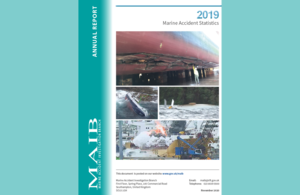


  • Marine Accident Statistics report 2019 published

    News story

    Today, we have issued our Marine Accident Statistics report for 2019.

    This report includes:

    • a statement from the Chief Inspector of Marine Accidents
    • an overview of marine casualty reports to the MAIB in 2019
    • detailed statistics for:
      • UK vessels: accidents involving loss of life
      • UK merchant vessels 100gt and over
      • UK merchant vessels under 100gt
      • UK Fishing vessels
      • Non-UK commercial vessels

    This document has been added to our Annual Report 2019 page.

    Published 25 November 2020


    Changes to the UK’s aid budget in the Spending Review

    The Chancellor of the Exchequer has announced, as part of the Spending Review, a temporary reduction in the UK’s aid budget from 0.7% to 0.5% of our national income.

    The seismic impact of the pandemic on the UK economy has forced the government to take tough but necessary decisions, including this temporary reduction in the overall amount we spend on aid. We will return to 0.7% when the fiscal situation allows.

    The UK government remains a world leading aid donor spending 0.5% of our national income. We will spend more than £10 billion next year to fight poverty, tackle climate change and improve global health.

    We will do aid better across government, even if the budget is smaller, to deliver maximum impact for every pound we spend.

    We will combine aid with diplomacy, focusing our efforts where the UK can make a world-leading difference ensuring the UK is a force for good across the globe.

    Today in a statement to the House of Commons, the Foreign Secretary set out how we will overhaul UK aid to deliver even greater impact by focussing on 7 global challenges where it can make the most difference:

    • Climate Change and biodiversity: A greener and cleaner path to growth in developing countries.
    • COVID and global health security: Combat COVID-19 and support healthier and more resilient populations in developing countries.
    • Girls’ education: A global commitment to get 40 million girls into education and 20 million more girls reading by the age of 10.
    • Science, research, technology: Deliver cutting edge technology and research-led solutions in health, education, resilience, low carbon technologies, agriculture and economic development, conflict and poverty.
    • Open societies and conflict resolution: Strengthen democratic institutions, human rights, free media and effective governance.
    • Humanitarian preparedness and response: Lead stronger collective international response to crises and famine.
    • Trade and economic development: Build trading and investment partners of the future.

    We will prioritise what we spend aid on and where we spend it. Spending will also be subject to a new and rigorous performance assessment.

    Published 25 November 2020
    Last updated 26 November 2020 + show all updates

    1. Updated with more detail following the Foreign Secretary’s statement to the House of Commons on 26 November 2020

    2. First published.


    Government plans to strengthen firearms laws for public safety

    News story

    Consultation proposes new controls on air weapons, miniature rifle ranges, and high-powered firearms.

    The government has set out new wide-ranging proposals to strengthen firearms laws and protect the public in a consultation launched today (Tuesday 24 November).

    This includes new controls on air weapons, aimed at keeping them out the hands of unsupervised young persons.

    It will also close loopholes which currently mean owners of small gun ranges can buy weapons without informing the police or having a licence.

    Policing Minister Kit Malthouse said:

    Our gun laws are among the toughest in the world – we are determined to ensure they stay this way to keep the public safe.

    These measures will tighten controls on air weapons and minimise the risk of tragic accidents, which have devastated families in the past.

    They will also close loopholes in our laws to prevent dangerous weapons falling into the wrong hands and ensure that law-abiding shooters can use their firearms safely.

    The new air weapons controls being consulted on will include:

    • removing exemptions which allow people from the age of 14 to have unsupervised possession of air weapons on private premises
    • making it an offence to fail to lock up an air weapon and its ammunition separately in the presence of under-18s while not in use
    • working with industry and retailers to improve the safe keeping of air weapons and advice at the point of sale

    Owners of miniature rifle ranges are also planned to be placed under the licensing regime.

    Under these proposals, owners will no longer be able to legally buy weapons smaller than .23-inch calibre without having a firearms certificate or informing the police.

    The public consultation will also seek views on how to increase security measures around powerful firearms, described as high muzzle energy rifles, and how to strengthen controls on ammunition parts to prevent the unlawful manufacture of full rounds.

    This follows new laws announced this month aimed at closing antique firearms loopholes, after evidence showed these were being exploited by criminals.

    Seven ammunition types have been removed from the definition of antique firearm, making up to 26,000 guns that use them illegal to own without a firearms licence.

    View the full consultation here.

    Published 25 November 2020


    Climate change and water: Are we doing enough, fast enough?

    February this year was the wettest on record.

    It was followed by the sunniest spring on record.

    Climate change will increasingly bounce us between these extremes in the coming decades, and water – whether too much, too little, or its quality – will only become more of a concern.

    The Environment Agency is an operator, a regulator, and an adviser to Government.

    We are more effective and efficient because we bring these disciplines together.

    In the last year alone, we handled 76,777 environmental incidents across the country.

    We also:

    • Created a healthier water environment, with over 1,700 kilometres of rivers improved.
    • Increased biodiversity, creating or restoring over 3,000 hectares of habitat.
    • And, ensured a further 48,000 homes are better protected against flooding.

    Like the Institute of Water, we know that these things happen because people have devoted their careers to the environment.

    But while we celebrate their successes, we do not ignore the many problems with modern society’s relationship with water.

    The water classification results for England this year, showed just 16 percent of waters meet the criteria for ‘good ecological status’.

    And our annual environmental performance assessment of England’s water companies showed that four out of nine companies are falling short of expected standards…

    …based on serious pollution incidents, pollution per kilometre of sewer pipes, and compliance with permits.

    I’ll return to this shortly.

    Last week, the Prime Minister published his ten point plan for a green industrial revolution, mobilising £12 billion of investment and creating and supporting up to 250,000 jobs.

    It’s ambitious, and we are working with government on many aspects of the plan.

    For instance:

    • We’re developing our regulatory role and guidance to meet the new demand in hydrogen, as it begins to replace natural gas in domestic supply.
    • We’re working with the nuclear industry on regulating existing sites and on nuclear new builds, including the potential for small modular reactors.
    • We’re working with industry to ensure carbon capture and storage technology can be deployed while protecting people and wildlife.
    • We’re looking into a range of nature-based solutions that lock in carbon – through tree planting, restoring peatland, managing soils, wetlands and saltmarsh.
    • And, our Climate Change, Trading and Regulatory Services team regulates over half the country’s greenhouse gas emissions through the EU Emissions Trading System.

    We are ready to play our part helping to deliver the government’s emissions reduction targets at the end of the EU Transition period.

    In the 2 years between January 2017 and December 2018, the Climate Change Agreements we administer saved about 45,653 gigawatt hours of power.

    That is equivalent to 9 million tonnes of carbon dioxide, and enough energy to supply over 2 million homes for a year.

    The schemes we facilitate and enforce help businesses reduce their emissions and improve energy efficiency.

    Like the water companies, the Environment Agency has set itself the goal of becoming a net zero organisation by 2030.

    That means we will be taking as much carbon out of the atmosphere as we are putting into it.

    We have adopted a tough, internationally recognised definition of net zero: not just the carbon we produce ourselves but also the carbon produced through our supply chain.

    Having achieved a 47 percent reduction in direct emissions in the last 14 years, we have 4 times this amount to do over the next 10 years.

    We will achieve our ambitious ten year target by reducing our emissions by at least 45 percent by 2030…

    …and addressing the effect of our remaining emissions through offsetting measures that lock up carbon and deliver multiple benefits for biodiversity and reducing flood risk.

    We do not underestimate the scale of the challenge.

    It’s huge. Our carbon footprint is around 180,000 tonnes a year, comprised of 44,000 tonnes from our activities and 136,000 from our supply chain.

    Our main emissions come from flood defence construction, pumping to alleviate flood and drought, travel, and buildings.

    Success will require wholesale behavioural and cultural change across the organisation in how we do things and how we work with others.

    However, EVEN IF this country reaches the government’s target of net zero by 2050:

    • Summer temperatures are set to be up to 7.4˚C hotter.
    • There will be 59 percent more winter rainfall.
    • And, once-a-century sea level events are expected to be annual events.

    So, we also need to think about how we are preparing.

    At the Environment Agency, we are preparing for a 2°C rise in global temperatures but we also need to plan for a potential 4°C rise by 2100.

    Our new Flood and Coastal Erosion Risk Management Strategy will help the country prepare for that future, but it starts now, ahead of winter.

    It sets out how we (alongside risk management authorities, partners and communities) will build up the resilience of millions more homes and businesses.

    Some examples of what this means are:

    • Expanded flood warnings by 2022 to all at-risk properties.
    • Increased investment in natural flood management schemes.
    • And, more collaborative partnerships with national road, rail and utilities providers to ensure their investments are flood resilient.

    The government has committed a record £5.2 billion long-term investment in flood scheme construction in England, which also features in the Prime Minister’s 10 point plan.

    It is money well spent.

    For every £1 used to improve protection from flooding and coastal erosion, we avoid around £5 of property damages.

    Periods of more extreme weather are a threat to people’s safety and the economy.

    They are also causing more pollution incidents.

    We recognise this additional pressure on the water sector, but we are also clear that it doesn’t excuse negligence or criminality.

    We won’t hesitate to take action against those who pollute.

    Good regulation matters, particularly as climate shocks escalate.

    Well-designed, well-resourced rules lead to improvements.

    The very best results are also driven in partnership with NGOs (for example, on bathing waters).

    But… no regulation works unless there is a threat.

    While we have a lot to celebrate in terms of our partnership with the water industry, there are some who don’t think they will be caught, or don’t fear the penalties.

    Fines for environmental crimes are disproportionately small compared to those in – for example – financial services.

    Fines need to hurt.

    In five years, we have brought 44 prosecutions against water companies, securing fines of £34 million.

    But, even Thames Water’s £20 million fine a few years ago was only ten days’ worth of operating profit.

    Economic turnover penalties are the next natural step if, after fair warning, water companies do not turn around their performance.

    That means the most serious breaches by very large companies would be based on a percentage of their turnover.

    Below this I would like to see the criminal courts apply penalties consistently and proportionately.

    Anything less is no deterrent.

    Resources are an issue.

    In 2019/20 we received £15 million from the government to fund our water quality work – enforcement of the regulations, monitoring of what is happening in England’s rivers and coastal waters, tackling pollution incidents.

    With roughly 240,600 kilometres of rivers and streams in England, that equates to just £62 to protect and enhance each kilometre.

    Dedicated funding for enforcement drives investment towards legitimate business, green growth, good performers and generates substantial net-benefits for the economy.

    These issues do not exist in isolation from climate change.

    It’s vital we take an integrated approach to water management in catchments.

    At the Environment Agency, people who work towards these goals work closely together – and in partnership with your industry – sharing information and expertise.

    Two weeks ago, the Chancellor’s announcement of the UK’s first Green Sovereign Bond was a fantastic step to help unlock a wall of investment from the public and private sectors.

    It would be a significant statement of intent if some of this were to help fund preparations for future climate shocks in the water environment, as well as our net zero ambitions.

    Because flood protection, net zero, regulation, and environmental improvements are all connected.

    You can’t drive your electric car to work on a flooded road.

    This country has led the world before, when we implemented the world’s first Climate Change Act…

    …Which helped to reduce the UK’s greenhouse gas emissions to 43 percent below 1990 levels by 2017.

    We can do it again.

    The question set by this conference was “Are we doing enough, fast enough?”

    The answer is no.

    BUT… we are shifting gears on the climate emergency, and the water sector’s plan for net zero by 2030 shows significant ambition and leadership.

    If this is coupled with a matching effort to reduce pollution incidents, and prepare the country for climate impacts like floods and droughts, then water companies will not only lead industry, they can help transform the environment.

    Improving water quality is a challenge as complex as managing a changing climate.

    The Environment Agency looks forward to working with you on that… through 2030, and beyond.

    Thank you.