Spending Review to deliver jobs and infrastructure for Wales

  • Chancellor Rishi Sunak announces £1.3bn of new funding for Wales for 2021/22. This is more than double the £600m new funding provided for 2020/21 at the 2019 Spending Round.
  • Rishi Sunak sets out how UK Government will provide billions of pounds to fight coronavirus, deliver the peoples’ priorities and drive the UK’s recovery.
  • Wales will also benefit from more than £100bn of capital investment across the UK in 2021/22 – creating jobs and growing the economy.

Chancellor Rishi Sunak today unveiled a Spending Review for the whole of the UK as he laid out plans to help Wales to fight the coronavirus and build back better.

Rishi Sunak announced that Wales will receive £1.3bn of new funding from the UK Government in 2021/22 through the Barnett formula for devolved areas such as health and social care, education and housing. This is more than double the £600m provided for 2020/21 at the 2019 Spending Round.

It is separate from the £5bn additional funding guaranteed to the Welsh Government in 2020/21, above the funding allocated at the Spring Budget earlier this year, in the face of the coronavirus and its impact on the economy.

Wales will also receive a significant boost from more than £100bn of capital investment across the UK in 2021/22, improving connectivity and productivity for the whole of the UK.

Chancellor of the Exchequer Rishi Sunak said:

Today’s Spending Review underlines our commitment to the people of Wales as we look to the future.

It provides billions of pounds to fight coronavirus, deliver the peoples’ priorities and drive the UK’s recovery.

The Treasury is, has been, and will always be the Treasury for the whole of the United Kingdom. And this is a Spending Review for the whole United Kingdom.

Secretary of State for Wales Simon Hart said:

The Chancellor’s package of measures delivers for Wales as we plan our recovery from the coronavirus pandemic.

As well as the extra £1.3bn block grant increase for the Welsh Government, Wales as a whole will benefit from the UK Government’s new £2.9bn Restart programme to help unemployed people find work, as well as a doubling of work coaches and the continued support schemes for jobs through the pandemic which have so far supported more than 500,000 livelihoods in Wales.

This is in addition to planned improvements to mobile and broadband connectivity and investment in green industries like carbon capture and offshore wind which have huge potential benefits for Wales. This continues to be an exceptionally challenging time for everyone in the UK but the Chancellor has today set out a fantastic economic package for Wales.

Projects announced today include the Gigabit and Shared Rural Network programmes for better mobile coverage.

The Gigabit programme subsidises the rollout of gigabit-capable broadband in the most difficult to reach 20% of the country, while the Shared Rural Network programme is a partnership with industry that will deliver high-quality 4G mobile coverage across 95% of the UK by 2025.

Investment in new green industries will support green growth clusters, offshore wind capacity, port infrastructure, Carbon Capture and Storage and low carbon hydrogen.

Separately, institutions and companies in Wales will also be able to access a £14.6bn UK-wide research and development fund.

The Chancellor also today announced that through the Shared Outcomes Fund Wales will host one of five pilots around drug enforcement and treatment which will tackle drug use through better join up of local law enforcement agencies, prisons and health and social care services.

And Cardiff will host a separate pilot which aims to bring service providers together to work with offenders and their families in a community focussed way to address issues around intergenerational offending.

Wales will benefit from a share of the 6,000 additional police officers that will be recruited in 2020-21 as part of the commitment to recruit 20,000 additional officers by 2023, which this SR commits £400 million to deliver.

The allocation of additional officers to Welsh police forces will be confirmed in the police funding settlement for 2021-22.

The Chancellor also unveiled plans to create and support hundreds of thousands of jobs across the UK through a new three-year £2.9 billion Restart programme to help one million unemployed people find work, alongside £1.4 billion of new funding to increase Job Centre Plus capacity.

And the Government confirmed funding for the next stage of the Plan for Jobs – including £1.6bn for the landmark Kickstart scheme in 2021/22, which will see the creation of up to 250,000 government-subsidised jobs for young people.

The apprenticeship hiring incentive that launched in August will also be extended to 31 March 2021, offering employers up to £2,000 for every new apprentice they hire. There will also be a £375m package to support skills which includes £138m of new funding to deliver the Prime Minister’s Lifetime Skills Guarantee and £127m to continue the Plan for Jobs skills measures.

Investment from EU Structural Funds is increasing in each of England, Scotland, Wales and Northern Ireland in 21-22 compared to this financial year.

The Spending Review provides additional UK funding to help local areas prepare over 2021-22 for the introduction of the UK Shared Prosperity Fund.

Further details will be published in the New Year.

The UK Government has also delivered on its manifesto commitment to maintain funding by providing £240m to support farmers, land managers and the rural economy, and £2m to support fisheries in Wales.

The Government committed to boost local economies through at least one freeport in each of Scotland, Wales and Northern Ireland, with locations to be decided in consultation with the devolved administrations.

And on the cultural front the Government announced £29.1m for Festival UK with projects expected across Scotland, Wales and Northern Ireland.

At this Spending Review Scotland, Wales and Northern Ireland will benefit from UK-wide coronavirus support in health, including £15bn for Test and Trace with Barnett funding provided for England-only elements of the programme.
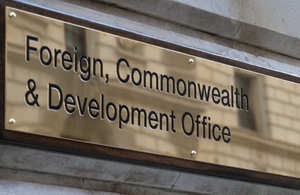



UK response to settlements in Har Homa

Press release

The UK is deeply concerned by the Government of Israel’s decision to advance the construction of 540 new buildings in the existing settlement of Har Homa, in southern Jerusalem.

A Foreign, Commonwealth & Development spokesperson said:

The UK is deeply concerned by the Government of Israel’s decision to advance the construction of 540 new buildings in the existing settlement of Har Homa, in southern Jerusalem. This follows the announcement on 15 November to advance 1,257 settlement units in Givat HaMatos.

The UK’s position on Israeli settlements is clear: they are illegal under international law and damaging to efforts to rebuild trust and dialogue between the parties.

We urge Israel to reverse this decision immediately.

Published 25 November 2020


Rail Minister joins with rail industry to tackle suicide prevention

News story

Chris Heaton-Harris attended a special virtual industry event aimed at tackling suicides on the rail network.

Samaritans logo and the words 'Whatever you're facing, we're here to listen. Call free day or night on 116 123. Email jo@samaritans.org.'
  • key rail industry experts join together to find innovative approach to tackle suicide on rail network
  • Rail Minister pledges to do whatever he can to help tackle the tragedy of rail suicides
  • work bringing together rail industry and suicide prevention experts follows 2,233 lifesaving interventions made on the railways in 2019 to 2020

Rail Minister Chris Heaton-Harris has pledged to lead the ongoing battle to tackle suicide on Britain’s railways, during a special virtual event with key industry experts today (Wednesday 25 November 2020) aimed at tackling deaths on the network.

Mr Heaton-Harris thanked members of the rail industry, transport sector and suicide prevention experts – including from the Rail Delivery Group (RDG), British Transport Police (BTP), and Rail Safety and Standards Board (RSSB) – for their work and dedication in keeping people safe, ahead of a discussion to examine best practice in how industry can help prevent more deaths on rail.

As a result of the work being done by the sector, with Network Rail leading the way, 2,233 lifesaving interventions on the railways were made between 2019 and 2020, meaning that 6 people were saved for every one that took their life.

Rail Minister Chris Heaton-Harris said:

For the majority of us, it is almost impossible to comprehend the mental anguish that leads people to attempt to take their own lives.

We all have a part to play, and I am personally committed to doing whatever I can to ensure the railway does more to help those in crisis. Days like today – bringing together the industry to consider new and innovative approaches – are crucial to help reach our joint target of achieving a reduction in suicides nationally.

I am incredibly proud of the exceptional work that has already been done to prevent suicides on the transport network, helping result in thousands of life-saving interventions made every year. Now, we’re challenging ourselves to do more.

Samaritans has so far trained more than 20,000 railway employees in prevention techniques, while hundreds of rail industry employees have donated their time to the Million Hour Challenge to support the charity, whose Small Talk Saves Lives campaign has been running successfully since 2017.

Published 25 November 2020


Spending review for ‘whole UK’ will deliver for Scotland

Chancellor Rishi Sunak today unveiled a Spending Review for the whole of the UK as he laid out plans to help every corner of Scotland to build back better and fight coronavirus.

The Chancellor announced that Scotland will receive £2.4bn of new funding from the UK Government in 2021/22 through the Barnett formula for devolved areas such as health and social care, education and housing.

This is double the £1.2bn new funding provided for 2020/21 at the 2019 Spending Round.

It is also in addition to the £8.2bn guaranteed to the Scottish Government in 2020/21, above the funding allocated at the Spring Budget earlier this year, in the face of the coronavirus and its impact on the economy.

Scotland will also receive a significant boost from more than £100bn of capital investment across the UK in 2021/22, improving connectivity and productivity.

Chancellor of the Exchequer Rishi Sunak said:

This Spending Review will help people in every corner of Scotland.

It will provide billions of pounds to fight coronavirus, deliver the peoples’ priorities and drive the UK’s recovery.

The Treasury is, has been, and will always be the Treasury for the whole of the United Kingdom. And this is a Spending Review for the whole of the United Kingdom.

Speaking after the Chancellor delivered the UK Government’s Spending Review, Scottish Secretary Alister Jack said:

The UK Government’s Spending Review delivers for all parts of the UK at this challenging time. Never before has the strength of the Union, and the role of the UK Treasury, been more important.

The UK Government pledged to bring funding decisions back from Brussels, and our plans for a new UK Shared Prosperity Fund will deliver on this promise. Communities across the UK have been hit hard by Covid, so I welcome the Chancellor’s announcement today of £220 million in additional funding in the coming financial year. This will be delivered by the UK Government across the UK, working in partnership with local authorities and communities.

We made a commitment to maintain funding for our vital rural and coastal communities and are fulfilling that through £570 million to support farmers and our rural economy, and £14 million to support Scottish fisheries. Additional funding for broadband will help boost the economies of some of Scotland’s most remote communities.

Accelerating the Tay, Moray, Borderlands and Islands growth deals is great news. It will help support jobs and drive economic recovery across swathes of Scotland.

The new UK Infrastructure Bank will help support our post-covid economic recovery. A billion pounds for our net zero climate change target will ensure the UK remains a world leader in climate action, ahead of us bringing the world to Glasgow for COP26 next year. And the new counter-terrorism operations centre will help keep people in all parts of the UK safe from global threats.

The Scottish Government will receive an additional £2.4 billion in Barnett Consequentials. This is over and above the £8.2 billion they have already been allocated since March this year. This additional funding will help support jobs and public services in Scotland while we fight the pandemic.

The UK Government will continue to do all it can to support people in all parts of the United Kingdom.

The Chancellor used the Spending Review to reaffirm his commitment to growth across Scotland – announcing an £11m acceleration of City and Growth Deal funding over each year remaining in four Scotland Deals.

Tay Cities, Borderlands (Scotland), Moray and the Scottish Islands will be funded over 10 years, rather than 15 years, releasing funding more quickly to enable projects to come online sooner.

By bringing forward the investment, Tay Cities will receive an additional £6.3m each year, Borderlands (Scotland) an extra £2.1m, Moray an extra £1.1m and the Scottish Islands an additional £1.7m.

Projects announced today include the Gigabit and Shared Rural Network programmes for better mobile coverage.

The Gigabit programme subsidises the rollout of gigabit-capable broadband in the most difficult to reach 20% of the UK, while the Shared Rural Network programme is a partnership with industry that will deliver high-quality 4G mobile coverage across 95% of the UK by 2025.

Investment in new green industries will support green growth clusters, offshore wind capacity, port infrastructure, Carbon Capture and Storage and low carbon hydrogen.

The global underwater hub, funded by £1.3m announced at today’s Spending Review, will eventually comprise of physical presences in the existing underwater engineering cluster in North East Scotland.

Separately, institutions and companies in Scotland will also be able to access a £14.6bn UK-wide research and development fund.

The Government today confirmed funding for the next stage of the Plan for Jobs – including £1.6bn for the landmark Kickstart scheme in 2021/22, which will see the creation of up to 250,000 government-subsidised jobs for young people.

The apprenticeship hiring incentive that launched in August will also be extended to 31 March 2021, offering employers up to £2,000 for every new apprentice they hire.

Investment from EU Structural Funds is increasing in each of England, Scotland, Wales and Northern Ireland in 21-22 compared to this financial year.

The Spending Review provides additional UK funding to help local areas prepare over 2021-22 for the introduction of the UK Shared Prosperity Fund.

Further details will be published in the New Year.

The UK Government has delivered on its manifesto commitment to maintain funding by providing £570m to support farmers, land managers and the rural economy, and £14m to support fisheries in Scotland.

The Government committed to boost local economies by establishing at least one Freeport in each of Scotland, Wales and Northern Ireland, with locations to be jointly decided by the UK Government and the devolved administrations.

And on the cultural front the Government announced £29.1m for Festival UK with projects expected across Scotland, Wales and Northern Ireland.

The UK Government’s recent announcement of record spending on defence will also directly benefit Scotland as it finances the UK’s order of 8 Type 26 and 5 Type 31 frigates, which are currently being constructed on the Clyde, creating thousands of jobs.

At this Spending Review Scotland, Wales and Northern Ireland will benefit from UK-wide coronavirus support in health, including £15bn for Test and Trace with Barnett funding provided for England-only elements of the programme.


Chancellor’s Spending Review will deliver Jobs and Infrastructure for Northern Ireland

Rishi Sunak set out how the UK Government will provide billions of pounds to fight coronavirus, deliver the peoples’ priorities and drive the UK’s recovery. Northern Ireland will also benefit from more than £100bn of capital investment across the UK in 2021/22 – creating jobs and growing the economy.

Chancellor Rishi Sunak today unveiled a Spending Review for the whole of the UK as he laid out plans to help Northern Ireland fight coronavirus and build back better.

The Chancellor announced that Northern Ireland will receive £900m of funding from the UK Government in 2021/22 through the Barnett formula for devolved areas such as health and social care, education and housing. This is more than double the £400m new funding provided for 2020/21 at the 2019 Spending Round.

It is in addition to the £2.8bn additional funding guaranteed to the Northern Ireland Executive in 2020/21, above the funding allocated at the Spring Budget earlier this year, in the face of the coronavirus and its impact on the economy.

Northern Ireland will also receive a significant boost from more than £100bn of capital investment across the UK in 2021/22, improving connectivity and productivity for the whole of the UK.

Chancellor of the Exchequer Rishi Sunak said:

The commitments we have made at this Spending Review will help people across Northern Ireland to bounce back from the economic impact of coronavirus.

We will provide billions of pounds in the fight against coronavirus, deliver the peoples’ priorities and drive the UK’s recovery.

The Treasury is, has been, and will always be the Treasury for the whole of the United Kingdom. And this is a Spending Review for the whole of the United Kingdom.

Commenting on the Chancellor’s statement earlier today, Secretary of State for Northern Ireland, Brandon Lewis said:

Today’s announcement by the Chancellor of over £900m additional funding for Northern Ireland is brilliant news. This is in addition to the £2.8bn guaranteed by the UK Government in 2020/21, and above the £216m allocated at the Spring Budget.

This additional funding can be used to support devolved areas such as health and social care, education and housing.

Northern Ireland will also benefit from a share of more than £100bn capital investment across the UK. This investment will help improve connectivity and productivity across the United Kingdom, including in Northern Ireland.

As we continue to battle the economic upheaval of the COVID pandemic on our society, today’s announcement has once again shown that this Government’s number one priority is to ensure that health, jobs and livelihoods are protected. Everyone deserves to have a secure financial future, and provide their families with hope and stability as we move forward into 2021.

Projects announced today include the Gigabit and Shared Rural Network programmes for better mobile coverage.

The Gigabit programme subsidises the rollout of gigabit-capable broadband in the most difficult to reach 20% of the UK, while the Shared Rural Network programme is a partnership with industry that will deliver high-quality 4G mobile coverage across 95% of the UK by 2025.

Investment in new green industries will support green growth clusters, offshore wind capacity, port infrastructure, Carbon Capture and Storage and low carbon hydrogen.

Separately, institutions and companies in Northern Ireland will be able to access a £14.6bn UK-wide research and development fund.

Investment from EU Structural Funds is increasing in each of England, Scotland, Wales and Northern Ireland in 21-22 compared to this financial year.

The Spending Review provides additional UK funding to help local areas prepare over 2021-22 for the introduction of the UK Shared Prosperity Fund. Further details will be published in the New Year.

The UK Government has also delivered on its manifesto commitment to maintain funding by providing £315m to support farmers, land managers and the rural economy, and £3.1m to support fisheries in Northern Ireland.

The Government committed to boosting local economies through at least one freeport in each of Scotland, Wales and Northern Ireland, with locations to be decided in consultation with the devolved administrations.

And on the cultural front, the Government announced £29.1m for Festival UK with projects expected across Scotland, Wales and Northern Ireland.

At this Spending Review Scotland, Wales and Northern Ireland will benefit from UK-wide coronavirus support in health, including £15bn for Test and Trace with Barnett funding provided for England-only elements of the programme.