Is getting useful references a challenge?

The Disclosure and Barring Service (DBS) is collaborating with a number of safeguarding partners to hold a consultation about safer recruitment practices, references and conduct information within the social care and health sector.

Working alongside Skills for Care, Reed Screening, Dominic Headley & Associates, and VBA Consulting, our aim is to develop resources which will provide social care employers with the guidance, knowledge and tools to allow them to share accurate and relevant information about individuals with prospective employers – and with DBS, when appropriate.

Background

Gathering effective references for staff working in social care and health settings has always been an essential part of safe and fair recruitment, but many employers experience challenges in obtaining and providing them. Some employers refuse to complete references, others provide insufficient information and sometimes, appropriate ‘evidence of conduct’ is not provided, which is legally required by the Care Quality Commission.

Temporary arrangements put in place due to COVID-19, including the introduction of our 24-hour emergency Barred Lists checks, have resulted in an increased need for satisfactory social care references, and evidence of conduct. Our COVID-19 Barred Lists checks allow individuals working in eligible roles to commence employment prior to receipt of the full DBS certificate, so references and other elements of safe recruitment are essential.

Consultation and workshops

In light of the above, DBS is working with the above-mentioned partners to hold an online consultation and several workshops which will then inform the development of a number of resources – all of which aim to assist social care and health employers where references and evidence of conduct are involved.

The workshops will:

  • provide further information about the project
  • examine the barriers and challenges that employers face in gathering and providing references and evidence of conduct
  • look at any ideas that participants have for improving referencing within the social care and health sector, or any practices that currently work well within their organisation

Each session will include case study scenarios for participants to explore that will highlight some of the key issues we are trying to address.

Executive Director of Barring and Safeguarding, Dr Sue Smith, says:

Effective evidence of conduct and references are part of a basket of measures that are key for safer recruitment within the social care and health sector, and we understand the difficulties that employers sometimes face in providing and obtaining this essential information. We are working together with Skills for Care, Reed Screening, Dominic Headley & Associates, and VBA Consulting, to develop these resources and workshops so we can provide employers with the tools they need to support them during recruitment and ongoing employment, and in doing so, continue our work within the safeguarding community to make recruitment safer.

Dates and times of the workshops are as follows:

Date Time
Wednesday 13 January 12:30 to 15:00
Thursday 21 January 12:30 to 15:00
Wednesday 3 February 12:30 to 15:00

Register your interest in a workshop

To find out more about this consultation, or register your interest in a workshop, please email dominic@dominicheadleyassociates.co.uk.

Survey

As part of this consultation, we are asking organisations within the social care and health sector to take part in a short survey, which focuses on how they currently obtain and provide references, their understanding of references and the part they play within recruitment, and what they would like to gain from this consultation. This survey can be found here.
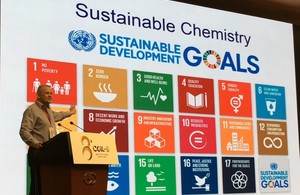



GC Christmas webinar: Sustainable Chemistry

Professor Tom Welton speaking at the Green & Sustainable Chemistry conference (2019)

Professor Tom Welton speaking at the Green & Sustainable Chemistry conference (2019)

During our Christmas webinar, Professor Tom Welton presented how sustainable chemistry is the natural corollary of the concept of sustainable development as described in the UN Sustainable Development Goal 12.4 (SDG 12.4), and described the challenges that it presents.

Background

SDG 12.4 describes the target to achieve the environmentally sound management of chemicals and all wastes throughout their life cycle by 2020, in accordance with agreed international frameworks, and significantly reduce their release to air, water and soil in order to minimize their adverse impacts on human health and the environment.

During his talk, Professor Welton focussed particularly on plastics and showed that both consumers and producers need to act to achieve the environmentally sound management of chemicals and waste.

About the speaker

Professor Tom Welton OBE CChem FRSC, is the current President of the Royal Society of Chemistry (2020-2022), Former Dean of the Faculty of Natural Sciences and Professor of Sustainable Chemistry at Imperial College London. He works with ionic liquids in order to develop sustainable solvent technologies and has published over 100 papers, primarily on the structures and chemistry of ionic liquids and their solutes.

Professor Welton was introduced by Julian Braybrook, Government Chemist

Listen to this webinar

The webinar took place on 17 December, 14:00 GMT. You can now listen to the recording.

Published 1 December 2020
Last updated 21 December 2020 + show all updates

  1. Webinar recording is now available.

  2. There is still time to register for this webinar.

  3. First published.


Latest financial results show continued strength of social housing sector despite challenges

Press release

The latest Quarterly Survey published by the Regulator of Social Housing indicates good financial position for social housing sector.

The Regulator of Social Housing has today (1 December) published the results of its latest quarterly survey of registered providers’ financial health. The report covers the period from 1 July 2020 to 30 September 2020.

The sector remains financially strong with access to sufficient finance. Performance in the quarter continues to reflect some of the challenges arising from the coronavirus pandemic. However, the sector retains a good financial position overall.

The sector has good access to finance with total cash and undrawn facilities totalling £34.7 billion at the end of the quarter. During the quarter, new facilities totalling £4.5 billion were arranged by 44 providers, with £1.2 billion of that relating to the COVID Corporate Financing Facility.

Development spending in the quarter increased from the previous quarter as restrictions on construction sites were removed, but is still 18% lower than in the same quarter of the previous year. Current asset sales in the quarter totalled £1.0 billion; 23% higher than the forecast.

The coronavirus restrictions and associated increase in unemployment continues to affect arrears and void loss figures, though not to the extent anticipated in June. Rent collection rates have increased to a level more consistent with normal seasonal trends, with underlying cashflow performance remaining strong.

Forecasts for the next 12 months indicate that performance and plans are beginning to return towards levels seen before the coronavirus pandemic. Forecast major repairs spend is now back in line with December 2019 projections and forecasts for both sales receipts and development expenditure have increased since June. While encouraging, these forecasts are clearly subject to change as the COVID situation develops.

Will Perry, Director of Strategy at RSH said:

The social housing sector continues to maintain a good financial position with forecasted improvement. Considerable challenges still remain, and providers will need to manage risk effectively to ensure that they can maintain services to tenants and plan and invest for the future.

Notes to editors

  1. The quarterly survey provides a regular source of information regarding the financial health of private registered providers, in particular with regard to their liquidity position.

  2. The quarterly survey returns summarised in the report cover the period from 1 July 2020 to 30 September 2020 and the latest report is based on regulatory returns from 214 PRPs and PRP groups who own or manage more than 1,000 homes. The survey Data about income collection, including rent collection, was first collected in 2013.

  3. The Regulator of Social Housing promotes a viable, efficient and well-governed social housing sector able to deliver homes that meet a range of needs. It does this by undertaking robust economic regulation focusing on governance, financial viability and value for money that maintains lender confidence and protects the taxpayer. It also sets consumer standards and may take action if these standards are breached and there is a significant risk of serious detriment to tenants or potential tenants.

  4. For press office contact details, see the Media enquiries page. For general queries, please email enquiries@rsh.gov.uk or call 0300 124 5225.

Published 1 December 2020


New £16 million Winter Support grant to FareShare to provide meals for those in need

A new £16 million government grant, delivered across England through charity FareShare, will allow thousands local charities across England to distribute food to people struggling as a result of the pandemic, Food Minister Victoria Prentis has announced today.

The Defra Winter Support programme forms part of the wider Government winter support package and will help those who are vulnerable and disproportionately impacted by Covid-19 to access healthy and nutritious food through front-line charities throughout the winter, starting this week.

At least 4,000 frontline charities, not-for-profit organisations and community groups in England will benefit, including refuges, homeless shelters and rehabilitation services. It will cover rural areas as well as cities, targeting those who are struggling to get food. The programme aims to provide over 7,600 tonnes of food over the winter months.

FareShare have well-established, extensive networks for funding local charities and delivering food, which means they can swiftly ensure adequate support is provided when and where it is needed, as quickly as possible.

Food Minister Victoria Prentis said:

During this difficult winter period, our frontline charities are providing vital support to the most vulnerable members of our communities.

Alongside the wider Government support package, this grant will make a real difference to people across England. It will enable FareShare and their partner organisations to provide millions of meals for those who need them most.

Lindsay Boswell, CEO, FareShare said:

The FareShare network has been running a full time operation throughout the Covid 19 crisis, to get food to our most vulnerable communities. In England alone we have delivered food equivalent to over 57 million meals since March 23rd. We welcome the Government’s further financial support on behalf of the 4000 plus charities we provide food to in England, who in turn created over 3 million meals a week to help their clients at the height of the first lockdown. Both through this winter, and through the undoubtedly tough economic conditions set to impact the country this coming year, it is vital that we all work together to get help to those most in need.

The Government has recently announced a comprehensive package of additional support for vulnerable children and families during the winter period and beyond, which includes the £170m Covid Winter Grant Scheme as well as this grant.

As part of this wider package, ring-fenced funding will be given directly to Local Authorities to support their communities and covers a broader range of needs. At least 80% is earmarked to support with food, energy and water bills, and will cover the period to the end of March. Local Authorities will receive the funding in early December.

The government continues to urge people to support family, friends and neighbours by helping with shopping for food and other supplies. Information on how to help safely can be found on gov.uk/safehelp. Those who meet the criteria for support from the NHS Volunteer Responders programme can refer themselves or a family member by calling 08081963646.

Local councils may also be able to offer support and give advice to those who do not have friends and family nearby to help. You can find your local authority by visiting https://www.gov.uk/find-local-council.

Those who are well and able to get to the shops are also encouraged to do so, leaving online delivery slots for those who need them most. If you are clinically extremely vulnerable, you will be able to register for additional support online. If you were on the supermarket priority list for food delivery slots before 31 July 2020, you’ll remain on the list.

The full package of Government winter support continues up until Easter 2021 and the Government will continue to monitor the situation and will make decisions on funding accordingly.


Lastminute.com commits to refund over £7m for cancelled holidays

The Competition and Markets Authority (CMA) has been investigating lastminute.com after receiving hundreds of complaints that people were not receiving refunds for package holidays cancelled due to the Coronavirus (COVID-19) pandemic.

More than 9,000 customers whose holidays were cancelled by lastminute.com are currently awaiting refunds, amounting to over £7 million. Many of these will have had to wait more than 14 days, exceeding the repayment window required by law. Following CMA intervention, lastminute.com has now signed formal commitments – known as ‘undertakings’ – to pay these refunds as soon as possible and by 31 January at the latest.

The commitments secured by the CMA will also mean that anyone entitled to a refund for a holiday cancelled by lastminute.com on or after 3 December 2020 will be paid within 14 days.

To ensure that lastminute.com adheres to its commitments, the company must provide the CMA with regular reports on the progress of its refunds.

Andrea Coscelli, Chief Executive of the CMA, said:

Online travel agents have a legal responsibility to provide prompt refunds to customers whose holidays have been cancelled due to coronavirus – irrespective of whether the agent received refunds from airlines and accommodation providers.

Our action today means that customers whose holidays were cancelled by lastminute.com will receive their money back without undue delay.

The CMA is continuing to investigate package holiday firms following concerns that people are not getting the refunds they’re entitled to when bookings can’t go ahead because of the pandemic. If we find that businesses are breaching consumer protection law, we will not hesitate to take further action.

Today’s announcement follows significant action by the CMA in relation to holiday cancellations. It has written to over 100 package holiday firms to remind them of their obligations to comply with consumer protection law, and has already secured refund commitments from Virgin Holidays, TUI UK, Sykes Cottages and Vacation Rentals.

In order to help businesses to understand their legal obligations with regard to consumer protection law, the CMA published a statement on its view of how the law relates to cancellations and refunds due to coronavirus.

Further information on this case can be found on the COVID-19 cancellations: package holidays web page.

Notes to editors

  1. Lastminute.com will repay at least half of customers by 16 December 2020 and pay the remaining refunds by no later than 31 January 2021.
  2. Lastminute.com has committed to these dates as the earliest by which it can pay.