Update on fast-tracks grants

The MMO has closed the fast-track grants scheme to new applications after fully committing its remaining funding.

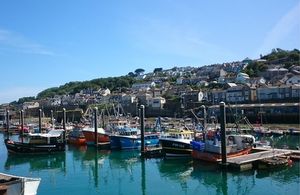
The scheme re-purposes the balance of the European Maritime and Fisheries Fund (EMFF), with £300,000 available to fishing vessel owners for health and safety improvements.

The MMO is now working with applicants to issue grants as quickly as possible.

We are also reviewing and assessing bids for the £500,000 ports and harbours fund following the closure of the application window on 29 November.

Grants of up to £100,000 each are available for existing projects that are aimed at mitigating impacts of Covid-19 at ports and harbours and bringing benefits to the local area.

The MMO will be in touch with applicants in due course. For more information, see the MMO website here, or contact the MMO Grants Team by phone on 0208 026 5539 or via email to EMFF.Queries@marinemanagement.org.uk.

The MMO has administered the EMFF and other funds investing over £40m in the fishing industry and coastal communities since launching in 2016. It also issued a further £9m across the industry earlier this year through the Fisheries Response Fund and the Domestic Seafood Support Scheme.

Published 1 December 2020
Last updated 1 December 2020 + show all updates

  1. Photo update

  2. Link not working

  3. First published.


‘Lockdown was the only way to stop the NHS being broken’ – The Times Weekend Essay

It was a decision none of us wanted to take. But it was a decision none of us could avoid. When ministers met just one month ago to consider whether to introduce a second national lockdown we were presented with a Devil’s dilemma.

We were being asked to impose restrictions on individual liberty which went against every instinct we have had all our adult lives. We would be asking friends and families to avoid each other’s company. We would be closing shops, bars and restaurants, and not just denying people the social contact which defines us as human beings but also suppressing the animal spirit which keeps our economy going. We would be asking millions who had already given up so much to sacrifice even more.

So why did those of us gathered round the cabinet table that Friday afternoon decide that we would, indeed, choose to make November 2020 such a difficult month? For the same reason that Emmanuel Macron in France, Sebastian Kurz in Austria, Micheál Martin in Ireland, Mark Rutte in the Netherlands, Angela Merkel in Germany, Stefan Löfven in Sweden and so many other democratic leaders chose to restrict their people’s freedoms. And for the same reason that the eight political parties in power in devolved administrations have taken similar steps to the UK government. Because the alternative would have been indefensible.

We had to act, as they did, because if we did not our health service would have been overwhelmed.

That Friday morning I was in Surrey, looking forward to a trip later to an award-winning business in my constituency, the Hogs Back Brewery. But a cloud already hung over my day. I knew that the data coming in from the frontline of the fight against the virus was ominous. So I was not surprised, although I was certainly chilled, by the summons to an action meeting to consider the difficult steps that might now be required. Of course, I’d change my diary: was the meeting tomorrow, or Sunday? No — please get back to London as soon as possible.

That afternoon we were confronted with what would happen to our hospitals if the spread of the virus continued at the rate it was growing. Unless we acted, the NHS would be broken.

Infections were doubling fast. The number of days taken to see that increase was open to question. But the trend was not. Infection numbers were growing in areas which had previously seen low prevalence. And as the numbers infected increased so, with iron logic, did the numbers in our hospitals. We could not know exactly when, or how late, we could leave it and still have time to pull the handbrake to avoid disaster, but sooner or later our NHS hospitals would be full.

Not just administratively at full stretch. But physically overwhelmed. Every bed, every ward occupied. All the capacity built in the Nightingales and requisitioned from the private sector too. The NHS could, and would, cancel the operations of patients waiting for hip replacements and other routine procedures to free up more beds. But that wouldn’t be enough. The numbers infected with Covid-19 and requiring a bed would displace all but emergency cases. And then even those. With every NHS bed full, the capacity of the health service to treat new emergency cases — people who had suffered serious accidents, heart attacks, strokes — would go.

The questions we asked that afternoon — and had asked before — were the questions we were to hear everyone ask after we took our decision. Couldn’t NHS capacity have been increased to meet this pressure? Well it had been; the Nightingales had been built, staff redeployed, retired doctors and nurses called to the colours. But while capacity had been, and can be, increased, there is a limit. With the numbers becoming infected and facing hospitalisation doubling, there comes a point where no more flexibility exists. It is difficult to strengthen flood defences when the tsunami is surging towards the shore. Hospitals need doctors and nurses and you can’t double their numbers in a month. And even if you could, you would still need to slow the virus spreading to stop even that capacity being overwhelmed.

Could not more patients be treated at home? And surely improvements in treatment — dexamethasone and non-invasive oxygen support — had made the virus less deadly? Well yes, some patients could be treated at home but the difference could only be made at the margins. And yes, these new treatments reduced mortality. But they relied on patients being in hospital and receiving the treatments from trained professionals. And that was precisely the resource that would run out.

Keeping our hospitals open, available and effective was not just crucial to dealing with Covid-19. It was imperative for the health of the whole nation. But the only way to ensure we can take care of cancer patients, administer radiotherapy and chemotherapy, and help stroke victims and treat heart attacks is by protecting the NHS. And the only way we can do that is by reducing the spread of the virus, thus limiting the number of Covid-19 patients in hospital. Reducing infections is not a distraction from saving other lives, it is a precondition of saving other lives.

And just as we want to reduce Covid-19 infections to save lives, so reducing them is the key to saving the economy. Think for a moment what would happen to our economy if we allowed infections to reach such a level that our NHS was overwhelmed. Would families seek out crowded bars and buzzing restaurants if they knew they could be infecting friends and relatives who could not be treated if they fell ill? Would we flock to the January sales if the doors to our hospitals were shut? Would investors, entrepreneurs and tourists make a beeline for Britain if we could not even guarantee the lives and welfare of our existing citizens?

All the arguments against lockdown came up against that harsh, brute reality. If this government could not guarantee that the NHS was there for our citizens, it would not just be a political and moral failure. It would mean Covid-19 patients who could be saved would die; cancer patients who could be cured would be lost; thousands in pain would suffer for longer; countless more would lose years of their lives; the economy would grind to a halt, as a population we could not protect sought to save their loved ones; and the world would hang an indelible quarantine sign over our nation’s name.

So we acted. And we did so knowing that the most difficult lesson we had learnt that year is that tougher measures than we would ever want to impose are required to restrict the virus’s spread. The tiers we had in place before the lockdown had not suppressed it sufficiently: they were neither strong enough to reduce social contact sufficiently, nor applied widely enough to contain the virus’s spread. And that is the difficult lesson we cannot unlearn as this lockdown ends.

Thanks to the chancellor’s swift action, millions of people have been helped financially through the dark days of this crisis. Since March, we have provided more than £200 billion in fiscal support. We have extended the furlough scheme to the end of March next year, and businesses that are forced to close can get grants of up to £3,000 a month. For councils, we have also provided an additional £900 million on top of previous funding, to support local economies and communities and fund local healthcare needs.

This coming month brings hope. Vaccines that will defeat the virus are motoring towards regulatory authorisation and distribution. We are seeing strong efficacy rates coming out of the Pfizer/Biontech, Moderna and Oxford/Astrazeneca trials, and the regulator is reviewing both the Pfizer and Oxford vaccines to determine if they reach the required robust standards for quality, safety and effectiveness. The end of the national lockdown means that in all areas shops can reopen, people can go to the gym, hairdressers and beauty services are available again, collective worship can resume and outdoor sports can restart. And, of course, this Christmas, friends and families across the UK can travel to celebrate in each others’ homes.

But for many, these relaxations are cold crumbs of comfort at the start of a long, harsh winter. The new, tougher tiers which cover most of the country still limit social mixing, keep friends apart and hit pubs and bars particularly hard.

Yet they are grimly, inevitably, necessary. The level of infection across the country remains uncomfortably and threateningly high. The pressure on hospitals is still severe: across the UK, about 16,000 beds are filled with Covid-19 patients, which compares with almost 20,000 at the April peak and as low as 740 on September 11. From the current high base, any sharp uptick in infection could see the NHS under even more severe threat again.

Before the lockdown, the increase in infections was like a tap filling a bath faster and faster with every day that passed. Lockdown first slowed the pace at which the bath was filling up, then stabilised it. Slowly, it has begun to lower the water level. But as we exit this lockdown the level is still high and it would not take too much, or too rapid an increase, for us to risk it overtopping again.

If, however, we can keep the level of infection stable or, even better, falling, and hold out through January and February, then we can be confident that vaccination will pull the plug on the problem. That is why in our Winter Plan we have set out new, stronger tiers. Bluntly, our previous tiers were not as effective as we had hoped. In general, infections continued to rise in Tier 1 and Tier 2 areas and even the bare, basic, old Tier 3 wasn’t enough.

These are, of course, uncomfortable truths. Not least for those of us who argued that these measures, on their own, would be enough. But we cannot ignore the evidence. What has worked, however, is the combination of a toughened Tier 3 and widespread community testing. In Liverpool, the mayor Joe Anderson bravely adopted measures above and beyond the old basic Tier 3 and championed mass testing. The result: falling infections, reduced hospitalisations and a smooth transfer to the new Tier 2.

Learning from that experience, we are confident that our new, tougher tiers will have a real impact, and equip us to respond to local conditions — guarding against spread, stemming signs of growth, or bringing a local outbreak back under control so that hospital capacity is not overwhelmed.

Why is it, some ask, that when they come into force on Wednesday, so many areas will be in Tiers 2 and 3, when they entered the lockdown a tier below? Because the level of infection, while stabilising, is simply still too high, and many hospitals remain under pressure. And why is it that we did not take an even more localised approach, and carve up local authorities? Because we are a small, densely populated country where this virus has proven it can spread with ease — so casting the net wide is more effective. And for another reason too, which is that many NHS hospital catchments are expansive, and so to protect our hospitals you need to tackle the virus right across the areas they serve.

The truth, however uncomfortable, sets you free. And these new tiers, alongside the wider deployment of mass testing, have the capacity to prevent our NHS being overwhelmed until vaccines arrive.

In politics there is often a readier market for comfortable evasions than uncomfortable truths. Some have argued that you can avoid restrictions on everyday life, let the young in particular go out and about, and build up collective or herd immunity — “Just look at Sweden”.

But Sweden, which has in fact always placed restrictions on its population, has found that even the battery of measures it adopted was not enough. Infections rose dramatically in October and early this month, and hospitalisations continue to rise as its government has, reluctantly but firmly, introduced new measures to keep households apart, restrict commerce, stop people visiting bars and restaurants and comprehensively reduce the social contact that spreads infection.

Others have argued, in good faith of course, for a sort of Sweden-that-never-was — for the strict segregation of the most vulnerable while the rest of us go about our business until the pandemic passes. But what would that involve? How, practically, could we ensure that every older citizen, every diabetic, everyone with an underlying condition or impaired immune system was perfectly insulated from all contact with others for months to come? How many are we expected to isolate completely and for how long? Five million? Ten? No visits by carers or medical staff, no mixing of generations, the eviction of older citizens from the homes they share with younger? No country has embarked on this course, with no detailed plan for implementing such a strategy ever laid out.

That is not to deny the course we are on has costs. But those costs are not ones we choose; they are ones we must endure. It is this virus — which in its combination of rapid spread and targeted lethality poses a bigger public health threat than any pandemic since the Spanish flu of 1918 — which brings terrible costs. As previous pandemics always have.

And when the country is facing such a national crisis, the truth is that all of us who have been elected to parliament, not just ministers, must take responsibility for difficult decisions. Covid-19 is no respecter of constituency boundaries and the hardships we are facing now are unfortunately necessary to protect every single one of us, no matter where we live. In any analysis of this government’s, or any government’s approach, the cost of lockdown and restrictions cannot be reckoned against the status quo ante, but only against the cost of inaction, or inadequate action, and the overwhelming of the NHS.

We know now that the costs, significant as they were, generated by our pre-lockdown measures still did not bring us the benefit of a virus under control. We know now, as do other European and western nations, that we can keep the enemy at bay until vaccination turns the tide, but it will be tough. For France, with cafés and restaurants closed across the country until January; for Germany, where even as I write they debate whether even school closures may be necessary; in the US, where Joe Biden, the president-elect, knows he must enter office imposing tougher restrictions to cope with resurgent infections, the need to act is the same. Because the grim calculus of infection is the same. We cannot alter the mathematics, bargain with the virus or evade our responsibilities.

But we can see an end to this. We can end the suffering. Mass testing, vaccination, liberation. But until that liberation comes, we must stand firm. Stand in solidarity with each other. And shoulder the sacrifices required to save the lives of those we love.

The original article can be found on the Times’ website here


Celebrating smarter working successes in the public sector

Over the last 12 months, the Government Property Agency (GPA) has been working closely with a number of partners to deliver a conference and awards show celebrating smarter working in the public sector.

Though COVID-19 brought with it some of the biggest changes to the ways of working we’ve ever seen, nominations for the awards portion of Smarter Working Live actually closed in February, before it had even reached pandemic status here in the UK.

Over the last nine months, it has become clear to all just how important smarter working is, and the need for its principles of flexibility and resilience to shape our long-term approach to ways of working.

Supporting Smarter Working Live

Organised by our partners GovNewsDirect and Pendulum Media, what started off last November as a typical conference and awards show, with physical venues and exhibition stands, quickly had to morph into something new in response to the Coronavirus pandemic.

This year’s Smarter Working Live was a wholly virtual event and members of GPA’s smarter working team worked with the event organisers to pull together an agenda packed full of expert speakers from across the public and private sectors, as well as virtual workshops, live lounges and exhibitions.

The conference and awards ceremony went ahead on Thursday 26 November and was a great success with 1,000 attendees. A number of GPA colleagues presented at the conference, including our CEO Steven Boyd who spoke about the celebration of places, GPA’s Director of Workplace Services Dominic Brankin who delivered the opening address and chaired the plenary sessions, and GPA’s Smarter Working Programme Director Kate Guthrie, and Head of Business Change Jenny Baynes who both talked about celebrating smarter working.

The plenary sessions were the highlight of the event for many, with close to 300 joining in the sessions.

Smarter Working Live awards

After the conference ended, we moved into the awards part of the evening with Minister Julia Lopez, Parliamentary Secretary at the Cabinet Office, delivering the opening remarks.

Throughout the awards ceremony, sponsors of Smarter Working Live announced which organisations had won in each category.

The winners of the evening were:

Places

  • Workplace and workspace transformation: Defence Infrastructure Organisation – Smarter Working Programme
  • Asset management innovation: Tameside Metropolitan Borough Council – Tameside One
  • Efficiency in the property portfolio: NHS Property Services – 120 The Broadway
  • Best use of a solution: The Queen Elizabeth Hospital King’s Lynn NHS Foundation Trust – The Same Day Emergency Care Unit

People

  • Corporate leadership, management and culture: HM Revenue and Customs – Smarter Ways of working – simply the way we do things here
  • Skills and succession planning: Department for Education – Building Skills for Smarter Working in DfE
  • Workforce management – NHS London Procurement Partnership – The Workforce Alliance Permanent and Temporary Staffing Solutions Suite
  • Best use of a solution – Leicestershire Partnership NHS Trust – Implementation of Auto Planner within District Nursing

Processes

  • Automation (digital, robotic, AI): West Midlands Police – Centre for Applied Automation
  • Data and interoperability: Nottinghamshire County Council – Business Intelligence – Power B.I. Dashboards
  • Paperless: Driver and Vehicle Standards Agency – The Driving Examiner Services App
  • Best use of a solution: DWP Digital – Data Control Service

Technology

  • Unified communications: Barnsley Metropolitan Borough Council – #DigitalFirst
  • Efficiency savings: NHS Digital – Health and Social Care Network: Better Connectivity for Health
  • Small scale project: NHS Business Services Authority – Am I Exempt?
  • Best use of a solution: London Ambulance Service NHS Trust – Collaboration with GoodSAM

Special Recognition

  • Special recognition of a project: Education and Skills Funding Agency – AMSD Knowledge Management and Smarter Working
  • Smarter working project of the year: Department for Education – Building a Culture of Smarter Working in DfE

We would like to congratulate all of this year’s finalists as well as the winners – even before the COVID-19 pandemic hit, you were all making great strides toward smarter working maturity. We hope the lessons learned this year will inform and help shape future workforce strategies.

If you registered for Smarter Working Live, you can access the workshops and speaker sessions on your event account for the next 30 days, and watch the awards to learn about the winning projects.

If you’re in a public sector organisation and would like to find out more about GPA’s Smarter Working Programme, please contact: gpasmartworkingqueries@gpa.gov.uk


£100k Get Fishing Fund to benefit new anglers

Press release

The Environment Agency and Angling Trust have today announced a new £100k ‘Get Fishing Fund’ to encourage more people to give fishing a go.

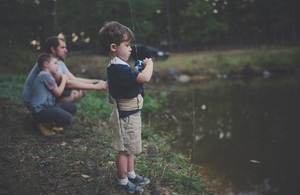
Young boy fishing with a younger boy and adult male fishing in the distance

The Environment Agency and Angling Trust announce a new £100k Get Fishing Fund to benefit new anglers.

The Environment Agency and Angling Trust have today (1st December 2020) announced a new £100k ‘Get Fishing Fund’ to encourage more people to give fishing a go for the first time, or get back into angling after a break from the sport.

Funded from rod licence sales, grants of up to £500 to benefit small-scale projects and up to £5,000 for larger projects will be available. The funding will help the delivery of future angling participation events, including any additional equipment needed to ensure fisheries are following Covid-19 safety guidelines, PPE and signage. It can also cover the costs of fishing equipment, terminal tackle and bait, as well as event resources including promotional material, gazebos and basic storage facilities.

The easing of lockdown restrictions in May 2020 led to a huge increase in popularity for angling as people sought the wellbeing benefits the sport can offer. The new buzz around fishing looks set to continue, with latest rod licence sales currently showing more than 900,000 people have bought or renewed their fishing licence since April this year, with 100,000 new anglers taking up the sport. This additional income has allowed the Environment Agency to offer increased investment to support projects that will run safe angling participation events throughout 2021.

Graeme Storey, Fisheries Manager for the Environment Agency, said:

The Get Fishing Fund will support organisations to put on a range of fishing activities to encourage new anglers through the 2021 season. We are always looking for ways to support our angling community and the Environment Agency has invested £1.5M of the additional income from this year’s licence sales back into projects that improve fisheries.

The increased interest in fishing over the summer proves that people are not only rediscovering angling but more people are trying angling for the first time. We want to see this continue and hope that these new projects will encourage more people to give fishing a go.

Clive Copeland, Head of Participation at the Angling Trust added:

We work with a great network of coaches, clubs and fisheries across the country which this fund will help but this also a fantastic opportunity for new partners to get involved in angling participation too.

We’ve worked with the Environment Agency to make this a short, easy process and we’ve got friendly staff with lots of experience ready to help anyone who needs it.

The Get Fishing Fund is available to angling clubs, coaches and fisheries but also to non-angling organisations such as schools, local authorities or charities based in England.

Published 1 December 2020


Amanda Spielman launches Ofsted’s Annual Report 2019/20

Thank you all, for coming to this virtual launch of my annual report. As you are having to watch on a screen, I’m going to be briefer than usual.

Many of you will be listening out for your area of interest, but today I’m going to talk more generally, but with a particular slant towards schools. There is of course a great deal to read in the report about all of the areas in which we work. And I’ve also asked colleagues to record short videos with their reflections on the year. So after this launch, you can follow up on early years, social care, independent schools, unregulated schools, further education and skills, and on special educational needs, all on the Ofsted YouTube channel.

Every year, this speech is a bit of a balancing act, between what is covered in the report, which is of course about the previous academic year, and more recent developments.

And, of course, this year the contrast between the first 6 months of that year, and the period since, could hardly be starker. Talking about 2019? Right now, that feels like reminiscing about halcyon days.

The pandemic isn’t just a colossal disruption. It’s also bringing out truths about our society. It has been so hard for so many people in so many ways: losing people we love, losing livelihoods, losing freedoms, losing the things that motivate us, losing everyday pleasures and joy.

But it’s also given us new insights into how we work together – and into how our institutions interact with us, and with each other. Truths that we might previously have suspected, and are now confirmed and laid bare.

As I’ve reflected on 2020, it’s the breadth of the role of schools that stands out. Closing schools to most pupils had an enormous impact. The decision caused a great splash, the boat is still rocking, and we don’t yet know quite how far the ripples will go.

The crisis has really shown us how important schools are to the fabric of society, given how much they now do beyond their core educational purpose.

Education has been compulsory for less than 150 years. For most of its history, it’s been a relatively simple business for most children: reading, writing, arithmetic and religious instruction. Until relatively recently, most schools had no conception of any wider role. Historically speaking, it’s quite a new thing for schools to be more than places of education.

But the COVID crisis really has shown how much is now expected of schools.

I was reminded of this a few weeks ago when I was being interviewed about our autumn visits. We’ve been visiting nurseries, schools, colleges, children’s homes and local authorities, and this has informed a series of reports, with more to come. The most recent set attracted a lot of attention, and for good reason.

Because school and nursery leaders had reported that some children had actually regressed through lockdown. Time didn’t just stand still for them; it went backwards. I can give some examples from our reports. Potty-trained children returning in the autumn back in nappies; and children who had learned to hold and use a pencil properly having lost that skill.

Education standards for older children had also suffered – for example, a loss of stamina when it came to reading and writing.

Some commentators were outraged, and fumed about schools and nurseries having to make up for gaps in parenting. And I have in the past pointed out that too many children reach primary school age without being potty-trained – but that wasn’t the issue here. And blame is not the point either. It’s about the impact of an event that has disrupted families, nurseries and schools.

What closures have reminded us about here is the importance of consolidation in learning. The knowledge and skills that matter aren’t learned instantly. They have to be practiced and reinforced – ideally both at home and in school.

Some children have thrived in lockdown – the ones whose parents could be at home, work flexibly, weren’t too distracted by younger siblings, and could help with remote learning. But many households just don’t have that kind of capacity and flexibility. These children also missed out on the time they’d usually have with teachers and staff at school or nursery. They haven’t had the chance to consolidate recent learning.

And by the way, this picture is not unique to England: we’ve been hearing from our counterparts across Europe that it’s looking similar elsewhere.

I do want to say, however, that while it is very clear that there is ‘learning loss’ in the short term, it is simply too early to say what the long-term impact will be. There have been some alarming extrapolations. But the most important thing is to get on with the job of teaching children, whether it’s the things they learn at home or at school. Good parenting and good teaching will fill most of the gaps for most children.

But we also saw the dramatic impact of school closures in falling referrals to children’s social care. Teachers are often the eyes that spot signs of abuse and the ears that hear stories of neglect. Closing schools didn’t just leave the children who – unbeknown to others – suffer at home without respite: it also took them out of sight of those who could help.

I want to talk about these ‘out of sight’ children a bit more, as they concern us all.

When nurseries and schools closed in March, they were told to remain open to the most vulnerable – which of course meant those whose need was already identified. And even of these, we know that relatively few actually attended. The rest stayed at home – some, inevitably, in harm’s way.

There was a concerted effort to reach these children, with partnership working across England. Many of our staff moved temporarily into local authorities to help. It’s worth noting that the COVID challenge has given new impetus to partnership working across education and social care.

But even with the best efforts of so many, attendance remained stubbornly low.

And even now, while referrals have been rising, they are still below previous levels. We don’t know why – perhaps in part because of the current constraints on how schools operate.

Our autumn briefings have also covered headteachers’ reports of children who haven’t returned at all. Some parents have removed children, to educate them at home. And it appears they have done this mostly because of concerns around COVID, rather than a new-found enthusiasm for home schooling. A recent survey by the Association of Directors of Children’s Services shows an increase of nearly 40% since this time last year, taking the number of children believed to be home schooled above 75,000.

And a significant proportion of the children who have come off school rolls are already known to one or more external children’s services – because they have special needs, previous attendance issues or other interventions in their lives. And almost all children, vulnerable or otherwise, are missing out on a lot when they aren’t at school. (And yes, I do know there are exceptions here – but they are exceptions.) Some will have a great experience, but other families will find it harder than they thought, and their children could lose out as a result.

We must be alive to these risks, and we must also watch out for bad practices creeping back in that could compound risk. We don’t want to see any schools off-rolling children; and we need all schools to make the effort to help children with SEND to attend.

We know that many SEND children and their parents particularly struggled during lockdown, as many services were withdrawn.

Of course, safeguarding has been a core responsibility of schools for many years. That’s not getting any easier. And schools are now expected to address wider health concerns. Our reports show that children’s physical fitness has suffered from lockdown. School leaders told us that children came back less active and less fit. This highlights the importance of physical education and school sport.

If we look back, school sport was once about finding a new talent, developing teamwork and even building moral fibre, as much as about physical fitness. Now it’s also one of the ways schools contribute to countering childhood obesity – alongside the school canteen, which we expect to serve up healthy, nutritious and affordable meals.

And there are social concerns besides obesity that have become interwoven with schooling. Understandable concerns about youth crime and violence, for example, have driven some to decry the use of exclusion as part of a school’s approach to maintaining behaviour, and expect mainstream schools to find all the answers.

We all expect teachers to maintain a calm and orderly learning environment. It’s critical for children, it’s valued by parents and, yes, it’s scrutinised by Ofsted. So schools devise strategies to teach and manage behaviour. Exclusion is the ultimate sanction, to be used only in extremis.

But calls to ban it entirely, on the argument that excluded children can be drawn into crime, presents challenges. Trying to address such a complex social issue, by constraining schools to this extent, risks losing sight of the needs of classmates, teachers and even of excluded children themselves, at a point that no-one has yet worked out what will meet their needs.

Education, of course, has intrinsic value – and now we expect it to keep accelerating social mobility.

And increasingly we see efforts to commandeer schools and the curriculum in support of worthy social issues and campaigns. In the last year, many of these calls have been about environmental causes and against racism.

Climate change activists have called for new qualifications or more explicit alterations to the curriculum. They sometimes forget the importance of grounding climate change within the wider body of learning about science and about geography. And they don’t always notice how much schools already do in this space.

And last month, The Times published research findings that black and minority ethnic Britons see changes in education as the most effective way to address their concerns. When asked what policy changes would make the most difference to ethnic minority lives in Britain, the top answer was ‘a more diverse school curriculum’.

Why is that? Is it because there is a fundamental issue with the national curriculum that limits exposure to diversity in literature, history, or geography? Or is it because there’s a widely held and justifiable assumption that changing things in school is the key to changing wider social attitudes?

And of course social change is difficult. We have seen friction in some schools, where, for example, lessons making children aware that loving relationships exist between same-sex couples conflict with some parents’ religious beliefs. They argue that the curriculum has moved too far in the name of equality, and that it now infringes on their religious freedoms.

I’m not making a moral point here, but rather a practical one. Schools are the go-to solution, perhaps more than any other institution in society. The arguments are often impassioned and well-constructed. Most significantly, perhaps, they are often amplified by thousands of voices, using social media, online petitions and by well-meaning commentators.

Treating schools as the great panacea of our time underlines the importance of education, but it doesn’t make it any easier to run a school. The pressure on schools to do more than teach their current curriculum continues to grow.

And, of course, COVID has added another layer of complexity. Schools must now be experts in limiting the spread of an invisible infection, organising themselves around complicated and shifting sets of health rules.

And when it’s impossible to have children at school, they are also expected to switch seamlessly to remote education, and to maintain the pace and precision of their curriculum delivery, to pupils who are away from the teachers’ gaze and susceptible to all the temptations of home. This is a very big ask. And by the way, none of us should be seduced by the idea that remote education can match the classroom for most children; it’s a lot better than nothing, but for most, it can’t match it.

And this isn’t just about social or technological inequalities. In many instances, it’s about motivation – the same issue that dogs so many adults adjusting to working from home. Nevertheless, just as schools have adapted to so much else, now they must adapt to this new reality too.

In many ways, schools are the victim of their own success. They’re far removed from Victorian incarnations. They play critical roles in children’s educational, physical and social development. They’re a crucial part of the care system that protects the vulnerable, and they support children with a whole range of needs. They do far more than they are often given credit for.

It’s a good moment to thank all of you who work in education and in social care, as you continue to do your level best at a time of great pressure and uncertainty.

I’ve outlined where I think schools are. And I return to the question I asked at the start: are we getting the balance right? Do we want schools to have such extensive roles beyond education: as the community hub; as the triage point for support services and intervention; as the go-to solution for social problems; as the guardian of children’s waistlines?

And if we do, are we giving schools the tools and capacity to do those jobs well, and leaving them enough time and headspace for the core job of education?

The COVID crisis has stress-tested so many parts of our society, and education and social care are feeling that stress. As we look forward in hope of a better year ahead, I hope there will be time to consider these questions.

I know that some of my audience will see the impact of COVID as a reason why Ofsted shouldn’t return to school inspections for a while yet. And I know that school leaders have been looking for certainty. I’m expecting the government to make an announcement about this very soon, as it is ultimately their decision.

But I’m not expecting us to be doing graded inspections from January. We need to take account of the national situation, and indeed we’ve always said that the timing of our return was under review, and also the form of our inspections. We do understand what teachers are going through. Though with such positive news about vaccines, we are all hoping for a return to some sense of normality not too far into 2021.

But I must remind you, we also know what children are going through. We owe it to them to have good provision for them, wherever they are. And where it isn’t, this needs to be known about.

The normal scrutiny within the system has been absent for a good while now, and it does need to be reintroduced next year – and that includes schools formerly covered by the outstanding exemption, now removed.

And of course, it also includes the other sectors we look at – all of which play such crucial roles in children’s lives: childminders, nurseries, colleges, children’s homes, fostering and adoption agencies – the list goes on. And older learners too, whether post-16 students or apprentices; adults looking to retrain; or prisoners wanting to transform their future through education. Our role for all of these is to raise standards and improve lives – and that’s why it’s important that we are able to return to our work next year.

But when we do return, we will not be looking at the challenges of the first lockdown and we will not be expecting people to have performed miracles, but rather to have done their best in the circumstances. Because we all want to do what’s in children’s best interests.

Our autumn visits led us to a clear conclusion: keeping schools open is unbelievably important. I wholeheartedly support the government’s stance on this, through this second lockdown.

We must not deprive children of all that schools do and all that schools are. And if we are serious in that aim, we must carry on aiming for the same standards as before this virus arrived, though in the short term we all know that trade-offs must inevitably be made.

In this collective endeavour, we will play our part. We always remember that education should be about broadening minds and enriching communities and advancing civilisation: in short, about leaving the world a better place than we found it. We will carry on working to help preserve and promote the standards of education and care that this generation needs and has every right to expect.