Extra measures to support students ahead of next summer’s exams

Students sitting exams and other assessments next year will benefit from a package of exceptional measures to make them as fair as possible and manage the disruption caused by Covid-19, Education Secretary Gavin Williamson announced today (Thursday 3 December).

In recognition of the challenges faced by students this year, grades will be more generous, students will be given advance notice of some topic areas, and steps will be taken to ensure every student receives a grade, even if they miss a paper due to self-isolation or illness.

The Government has been clear that exams are the fairest way to judge a student’s performance and has made keeping schools and colleges open a national priority throughout the pandemic in order to minimise disruption to education.

Building on the three-week delay to exams to free up extra teaching time announced in October, the new measures include:

  • more generous grading than usual, in line with national outcomes from 2020, so students this year are not disadvantaged;
  • students receiving advance notice of some topic areas covered in GCSE, AS and A levels to focus revision;
  • exam aids – like formula sheets – provided in some exams giving students more confidence and reducing the amount of information they need to memorise;
  • additional exams to give students a second chance to sit a paper if the main exams or assessments are missed due to illness or self-isolation; and
  • a new expert group to look at differential learning and monitor the variation in the impact of the pandemic on students across the country.

Education Secretary Gavin Williamson said:

Exams are the best way of giving young people the opportunity to show what they can do which is why it’s so important they take place next summer.

But this isn’t business as usual. I know students are facing unprecedented disruption to their learning. That’s why exams will be different next year, taking exceptional steps to ensure they are as fair as possible.

I am determined to support students, parents and teachers in these unprecedented times and hope measures like more generous grading and advance notice of some topic areas will give young people the clarity and confidence they need to achieve every success.

Today’s steps follow extensive engagement with Ofqual, exam boards and senior leaders across the education sector.

The measures recognise that while teachers have gone above and beyond to support their pupils during a difficult period, some young people have had their teaching disrupted more than others and will need extra support to catch up on the curriculum and achieve their potential in exams.

In these instances, receiving advance notice of some topic areas and being given exam aids will support students and ensure they can move on to their next stage of education, training or employment with the grades they deserve.

Students taking vocational and technical qualifications will also see adaptations to ensure parity between general and vocational qualifications. Some vocational qualifications will require more varied adaptations due to the different qualification types.

The Government has also developed a series of contingency measures with Ofqual that will mean, even if students miss one or more exams due to self-isolation or sickness but have still completed a proportion of their qualification they will still receive a grade.

If a student misses all their assessments in a subject, they will have the opportunity to sit a contingency paper held shortly after the main exams. In the extreme case where a student has a legitimate reason to miss all their papers, then a validated teacher informed assessment can be used, only once all chances to sit an exam have passed.

The Government will set out further detail on this process, and on adaptations to exams, in the new year.

The Government has also announced that full, graded Ofsted inspections will not resume until the summer term.

In the interim, Ofsted will conduct supportive monitoring inspections to those schools and colleges currently judged “inadequate” and some that “require improvement”. These inspections will focus on important issues like curriculum, remote education and pupil attendance, particularly of vulnerable children.

Ofsted will also continue to have the power to inspect a school, further education or early years provider, if they have serious concerns, including about safeguarding and remote education.

John Jolly, Chief Executive, Parentkind, said:

We welcome the clarity that the Department is providing for parents of young people preparing to take their exams in summer 2021. Parents have told us that the uncertainty over arrangements for exams has been a source of concern and anxiety for both them and their children.

Parents and young people will be relieved to have a clearer sense of what the arrangements are and how this will ensure that individual circumstances are taken into account. At Parentkind we will continue to raise parents’ questions about the arrangements going forward.

Leora Cruddas, Chief Executive, Confederation of School Trusts, said:

Given the disruption to teaching last year, as well as the likelihood of ongoing disruption this year, it is increasingly likely that large numbers of students will not be able to cover all the content needed for examinations, as they would in a normal year.

These steps help students feel confident about their exams as an important step towards making the system is as fair as possible.

Test and exam results will not be included in performance tables this year, and instead will be replaced by attendance information, and student destinations and the subjects taken at key stage 4 and 5.

These changes take account of the challenges posed by the pandemic but will ensure parents still have access to vital information about their local school.

The Government has also reviewed remote education guidance and published updated expectations to provide further clarity for schools, colleges, parents and pupils. Primary schools are expected to provide a minimum of three hours a day on average of remote education, with secondary schools expected to provide at least four hours’ worth.

Similar expectations will apply for colleges and other further education providers which take into account the sector’s role in delivering both academic and technical provision.

For primary assessments, key stage 1 tests in English reading and mathematics, and the English grammar, punctuation and spelling tests at key stage 1 and 2 will be removed for one year, in recognition of the challenges posed by the pandemic.

Schools can take a flexible approach to the administration of the key stage 2 tests and phonics screening check, by extending the original timetable by a week, until 26 May and 25 June, respectively.

Although primary performance data will not be published, teacher assessment in English reading, writing and mathematics at key stage 1, and all other assessments at key stage 2, will remain. These measures will help to understand pupils’ lost time in education and support those that need it most, providing vital information to parents and assisting with pupils’ transition to secondary schools.

Martyn Oliver, Chief Executive of Outwood Grange Academy Trust, said:

As a Trust which supports 39 schools in the North of England, of which 35 are located within a Tier 3 region since the national restrictions ended, our focus has been and remains on how children who have faced unprecedented disruption will be treated fairly.

By running exams with these measures and committing to looking at the differential loss of learning, our children and their parents can feel assured work to level-up is serious.

Ian Pryce, Chief Executive of Bedford College, said:

The Department and Ofqual have consulted genuinely, widely and seriously and I hope this will reassure students, parents and teachers.

Great care is being taken to ensure students will have an opportunity to sit their exams; will have longer to prepare, and will be given information and options to help them achieve even where they have seen a reduction in face-to-face teaching.

Maintaining overall standards roughly at last year’s level recognises the variability of the experience of different students. It is the appropriate decision and will help students achieve a good outcome.

Lesley Powell CBE, Chief Executive of North East Learning Trust:

The measures put in place offer a sensible and pragmatic route through the wake of COVID disruption and offer staff and students a clear target for next year.

The approach covers a range of contingencies that will hopefully instill confidence in the exam process and reduce stress for everyone involved. Exams are an important aspect of children’s educational experience, and indeed of growing up; allowing these to continue, in as fair a way as possible, I strongly believe is the right thing to do.



Government consults on ending live animal exports for slaughter

Plans to ban the export of live animals for slaughter and fattening have been unveiled by the Environment Secretary today (3 December), in the start of a renewed push by government to strengthen the UK’s position as a world leader on animal welfare.

These proposals form part of an eight-week consultation, launched today in England and Wales, seeking views on how to better protect animal welfare during transport.

Live animals commonly have to endure excessively long journeys during exports, causing distress and injury. Previously, EU rules prevented any changes to these journeys, but leaving the EU has enabled the UK Government to pursue these plans which would prevent unnecessary suffering of animals during transport and see us become the first country in Europe to end this practice.

The government is also consulting on proposals to further improve animal welfare in transport more generally, such as:

  • reduced maximum journey times
  • animals being given more space and headroom during transport
  • stricter rules on transporting animals in extreme temperatures
  • tighter rules for transporting live animals by sea.

Environment Secretary George Eustice said:

We are committed to improving the welfare of animals at all stages of life. Today marks a major step forward in delivering on our manifesto commitment to end live exports for slaughter.

Now that we have left the EU, we have an opportunity to end this unnecessary practice. We want to ensure that animals are spared stress prior to slaughter.

Around 6,400 animals were transported from the UK directly to slaughter in continental Europe in 2018, based on internal figures.

This consultation takes into account the responses to the 2018 Call for Evidence, as well as the report published by the then Farm Animal Welfare Committee (now known as the Animal Welfare Committee), which is made up of farming and veterinary experts, into the existing welfare standards for animals during transport.

Chris Sherwood, CEO for the RSPCA said:

We welcome plans to end live exports and look forward to seeing this happen as the RSPCA has campaigned on this issue for more than 50 years.

There is absolutely no reasonable justification to subject an animal to an unnecessarily stressful journey abroad simply for them to be fattened for slaughter.

Ending live exports for slaughter and further fattening would be a landmark achievement for animal welfare.

Peter Stevenson, OBE and Compassion in World Farming’s Chief Policy Advisor said:

Compassion in World Farming is delighted that Defra plans to ban live exports for slaughter and fattening. We have campaigned for over 50 years against the massive suffering caused by this inhumane, archaic trade, so this unambiguous proposal is very welcome.

We urge farmers not to oppose the proposed ban but rather to recognise that this is an important part of moving forward to a high welfare future.

This announcement marks the start of renewed efforts from government to raise standards on animal welfare even further now we are outside the EU, including taking steps to ban primates as pets and crack down on the illegal smuggling of dogs and puppies, with further proposals to improve standards and eradicate cruel practices expected to be set out in the coming months.

The consultation can be accessed here.

  • Animal welfare is a fully devolved matter. The UK Government is working closely with the Welsh Government on this consultation. We will also discuss the results of this consultation with the Scottish Government with the aim of having similar rules apply across Great Britain on improving the protection for animals in transport. Northern Ireland will continue to follow EU legislation on animal welfare in transport for as long as the Northern Ireland Protocol is in place.
  • The measure on live exports will not impact on poultry exports or exports for breeding purposes.
  • We have been unable to pursue this policy in the past because of the EU trading rules on the movement of animals. Leaving the EU has enabled us to pursue this policy on ending live exports for slaughter and fattening.


Ofsted: phased return to inspections

Press release

Ofsted’s return to inspection in 2021 will happen in phases, with no graded inspections for education or social care providers planned before the summer term.

Following the Secretary of State’s announcement today, Ofsted is able to set out plans for its return to inspection in schools and further education providers – as well as plans for inspections and regulatory work in early years and social care.

Her Majesty’s Chief Inspector, Amanda Spielman, said:

The usual level of scrutiny within the education and care system has been absent since last March, so it’s important that it returns next year as we all hope for a greater level of normality. But we understand the pressure that everyone in education and social care is working under and we want to return to our usual work in a measured, sensitive and practical way.

We will not re-introduce graded inspections to schools and colleges before April. During the spring term, we will use supportive monitoring inspections to help those that most need it, focused on how well pupils and students are learning. Routine inspections in early years and social care are also planned for the summer term, but regulatory work will continue in the interim.

Our role is to offer the greatest assurance we can to parents and the public about the quality of education and care arrangements for children and learners. These plans will help us support the providers who are facing the greatest challenges during these difficult times. They will ensure that inspection is fair, safe and valuable, while remaining true to our core purpose and principles.

Over the coming months, Ofsted will discuss the approach to routine inspection in 2021 with sector representatives and test it through a series of pilot visits, where necessary.

Maintained schools and academies

  • From January, we will resume monitoring inspections of schools judged inadequate at their previous inspection and some schools graded as requires improvement. These will not result in a grade.

  • Emergency inspections of schools will continue as they have done throughout the pandemic, in response to any serious concerns raised with Ofsted.

  • Routine inspections, which result in a school being awarded a new grade or being confirmed in its current grade, will resume in the summer term.

Independent schools

  • Throughout the spring term, all inspections will be at the request of the Department for Education (DfE).

  • Routine inspections will resume in the summer term.

Further education and skills

  • From January, we will resume monitoring visits to providers that would be monitored in normal times, in particular those graded requires improvement and inadequate, and new providers.

  • Colleges that do not receive a monitoring visit may receive support and assurance visits. Safeguarding visits will continue in response to concerns raised about providers.

  • Full graded inspections will resume in the summer term.

  • Interim education visits to prisons will start in January, to support and challenge prisons to return to full programmes of education and skills activities following COVID-19 restrictions.

Early years

  • We will carry out a programme of assurance inspections from the start of the spring term. These inspections will confirm whether or not a provider is meeting the early years foundation stage (EYFS) requirements.

  • Assurance inspections will be proportionate and risk-based. Providers will be prioritised based on the length of time since their last inspection, and any other relevant information.

  • Routine graded inspections will resume in the summer term of 2021.

Children’s social care

  • From January, we will resume focused visits to local authority children’s services. These visits will not result in a graded judgement.

  • Routine inspection under the inspection of local authority children’s services (ILACS) framework will begin from April. We will prioritise inadequate local authorities that are ready for re-inspection, and authorities where there are concerns.

  • We will continue with assurance visits under the social care common inspection framework (SCCIF) until April, when routine inspections will resume.

Area special educational needs and disabilities (SEND)

  • From January we will resume joint interim visits with the Care Quality Commission. These visits aim to support improvement and will not result in a published letter or graded judgement.

Published 3 December 2020


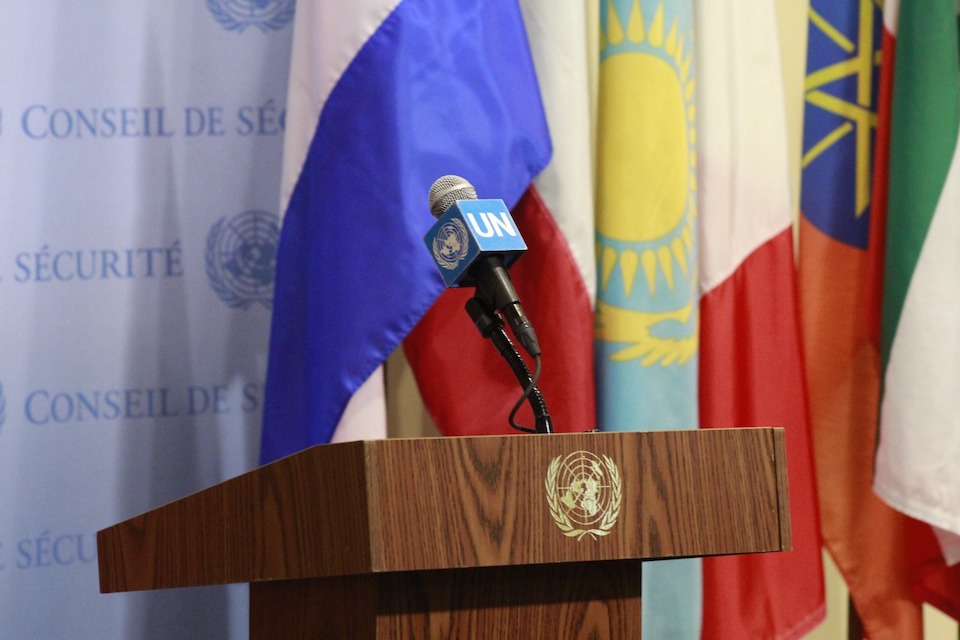
Joint Press Statement on Ukraine

UN Security Council press stakeout

Russia held a meeting at the UN today on what Russia claims is the status of the implementation of the Minsk agreements. This meeting was a transparent attempt to present a false and misleading narrative regarding the conflict in eastern Ukraine. We strongly reject Russia’s premise that it is acting as a mediator within an internal conflict. Russia is an active participant that trains, arms, and leads armed formations in areas outside of Ukrainian government control, supplementing these proxy forces with military personnel and equipment. It instigated and continues to fuel a conflict which has resulted in approximately 13,000 deaths, appalling human rights abuses, and a deteriorating humanitarian situation for the civilian population.

We reiterate our support for the Minsk agreements and our firm commitment to see the peaceful resolution of the conflict with full respect of Ukraine’s sovereignty and territorial integrity. We welcome the steps taken by the Ukrainian government to make progress in resolving the conflict and call on Russia to act likewise.

We will continue to engage with all initiatives at the UN that support constructive ends. This event, designed purely to distort the realities of the conflict in eastern Ukraine, served Russian interests alone.

Published 2 December 2020


Foreign Secretary underlines UK commitment to NATO

  • The Foreign Secretary spoke this week at the virtual NATO Foreign Ministers’ meeting on the future of NATO.
  • He underlined the strengths of the Alliance and the need for it to evolve to meet new challenges and take action against malicious state activity.
  • The recent £24.1 billion increase in UK defence spending commitment cements our position as NATO’s largest European contributor.

The Foreign Secretary has underlined his support for NATO this week, as he spoke to Allies across Europe and North America.

He also expressed strong support for the work of NATO’s ‘Reflection Process’ Group whose report proposed concrete ways the Alliance could continue to adapt to face future challenges.

The Secretary General will now develop these recommendations into a package of proposals for leaders of NATO countries to consider at their next Summit in 2021.

The Foreign Secretary also used the Foreign Ministers’ meeting to call for the Alliance to continue to take a collective voice against malicious state action, citing NATO’s swift collective response on the Navalny poisoning as a leading example.

This meeting follows the announcement that the UK will increase defence spending by £24.1 billion over the next four years – the biggest single investment in UK defence capabilities since the Cold War. The budget cements the UK’s position as the biggest European contributor to NATO, and the second biggest in the alliance. It will also allow the UK to maintain the wide spectrum of capabilities it offers to NATO, including the Carrier Strike Group.

Foreign Secretary Dominic Raab said:

NATO is the most successful alliance in history and at a time when our adversaries are operating in the space between peace and war – launching cyber-attacks and spreading disinformation – it is more important than ever.

The UK supports NATO’s work to continually adapt to face new threats and challenges. This includes responding to technological innovations, the threats from cyber and hybrid warfare and the need to combine our political and military tools to have the greatest impact.

NATO Allies also discussed Russia’s military build-up, the importance of effective arms control, China, NATO’s training mission in Afghanistan and Black Sea security.

Allies were joined in some of these session by NATO Partners, including Australia, Japan, South Korea, Ukraine, Georgia, Sweden, Finland and the EU. The NATO 2030 report has now been published, outlining proposals for further reform of the alliance to address new and emerging security threats.