Annual Clinical Excellence Awards 2021 competition launches

  • High-performing consultant doctors and dentists, and academic GPs can apply for the annual national Clinical Excellence Awards competition
  • The 2021 Awards will recognise the extraordinary work of senior clinicians in all disciplines, including work undertaken during the pandemic
  • The Minister for Care has called for more women and people from black, Asian and minority ethnic (BAME) background to apply to improve representation and ensure excellence is recognised across the NHS

High-performing consultant level doctors and dentists and academic GPs in England and Wales can apply for national Clinical Excellence Awards (CEA) as the 2021 competition opens today (Monday 7 December).

The awards will recognise the extraordinary work staff have undertaken over the last four-to-five years, including efforts this year in response to the unprecedented COVID-19 pandemic in relation to patient care, research or COVID-19 related clinical trial work. Those who have delivered nationally in other clinical services, teaching or training during this period will also be recognised.

This year Ministers are calling for more women and BAME backgrounds to apply. Analysis indicates that consultants from BAME backgrounds are under-represented as a proportion of applicants. Women have also been consistently under-represented, but evidence suggests that when women do apply, they are as broadly successful as men in securing an award.

To reduce the burden on staff and employers during this busy time, the process has been simplified and the application window extended from the usual eight to fourteen weeks. Following the suspension of the 2020 awards due to the pandemic, a higher number of awards will be available this year.

Minister for Care Helen Whately said:

I’m delighted to launch the Clinical Excellence Awards competition for 2021. This year’s extended and expanded scheme is an important means of recognising and rewarding the work of senior doctors and dentists, particularly during this hugely challenging time. It’s important we pay tribute to our extraordinary NHS and social care staff – they have been truly inspiring through such an unprecedented year.

I urge as many people as possible to apply – and especially women and those from ethnic minority backgrounds so we can recognise excellence right across the health service. Good luck to all those applying and thanks to all our NHS and social care staff for their continued hard work.

Professor Geeta Menon, Postgraduate Dean South London, Health Education England and Medical Vice Chair, South East ACCEA Subcommittee:

It is important that we recognise the extraordinary skills and knowledge our consultants and GP academics bring to the NHS, especially during these challenging times. We hope to receive a wide range of applications, to enable the NHS to recognise all those, regardless of their background, who have gone above and beyond their day to day role.

Applicants self-nominate with sign-off and agreement by their employer and must demonstrate achievements over-and-above their usual work responsibilities that have had a national or international impact. The scheme is run openly and fairly and every application is considered on the merits of the evidence presented. Applications are scored by members of a regional sub-committee and the scores are then averaged and ranked against competitors. Following a rigorous quality assurance governance process, recommendations for new and renewed awards are sent to the Advisory Committee on Clinical Excellence Awards’ Main Committee for agreement before being sent to Ministers for final approval.

The Advisory Committee on Clinical Excellence Awards will be shortly seeking views on reforms to the current national awards. This follows recommendations made by the Pay Review Body on Doctors’ and Dentists’ Remuneration to review and incentivise the Clinical Excellence Awards for consultants at local and national levels. The consultation will ask for views to ensure that any new scheme fairly assesses and rewards the highest performing consultants and academic GPs, regardless of their background.

Notes to editors

The 2021 competition opens to applications on 7 December 2020 and closes on 18 March 2021. Ordinarily, each year 300 new CEAs are awarded in England at four levels of progression and are renewable subject to application.

Awards last for 5 years and yearly award values are; Bronze – £36,192; Silver – £47,582; Gold – £59,477 – gold and; Platinum – £77,320. The awards are pensionable and on-costs increase the value of the awards. Final numbers will be determined by a number of factors, including the quality of applications.



Shark fins: Call for evidence on protecting endangered shark species launches

Greater protections for species of sharks will be considered through a new call for evidence to better understand the scale of the shark fin trade in the UK, as a way to help reduce the import and export of shark fins and protect the world’s sharks.

The UK has a strong track record in marine conservation and has been pressing for stronger international action to protect sharks against unsustainable fishing practices and shark finning, which is the practice of removing a shark’s fins at sea and discarding the finless body back into the water.

The government is now seeking additional evidence to ensure that appropriate protection is in place for all shark species and to inform future policy on protecting marine wildlife.

The call for evidence will help the government better understand the scale of the shark fin trade in the UK and the conservation, economic, social and cultural impacts of potential further restrictions such as banning the import and export of detached shark fins.

The greatest threat to sharks is overfishing, driven by demand for shark products. Wild populations of shark, skates and ray species have declined rapidly and species such as the scalloped hammerhead and angelshark are now considered critically endangered.

The call for evidence will provide insight into the role of the shark fin trade and what action can be taken to better protect sharks.

International Environment Minister Lord Goldsmith said:

Shark finning involves slicing the fins off living sharks that are then tossed back into the sea to die painful deaths. It is an extraordinarily barbaric practice, and has been banned in the UK for nearly 20 years. But the UK still imports shark fin products and therefore may still be inadvertently contributing to the practice.

At the end of the Transition Period and as a fully independent nation, we will have far more freedom to introduce measures to protect endangered species – on land and in the ocean. So we have launched this call for evidence to identify the best options to protect these incredible animals and to continue leading the way on shark conservation.

Samuel Stone, Head of Fisheries and Aquaculture at the Marine Conservation Society said:

We welcome the government’s desire to increase protections for endangered shark species and this call for evidence to better understand the impact of the shark fin trade in the UK. Despite the abhorrent practice being banned by most fishing nations, including the UK and EU, illegal shark finning remains a significant problem in several fisheries around the world. This undermines attempts to improve the management and recovery of shark species and it’s important that the government explores all avenues available to them to help stamp out the practice.

It will be important to explore how efforts can best distinguish between trade linked to illegal shark finning versus the legitimate trade of shark products from potentially well managed fisheries. Whilst the UK trade of shark fins may be relatively small on the global stage, efforts made here may have the potential to make a significant impact. We look forward to seeing the additional evidence and recommendations produced by this review.’

Strict trade controls are already in place for certain species of sharks under the Convention on International Trade in Endangered Species of Wild Fauna and Flora (CITES), which prohibits or requires trade to be carefully regulated. The UK also played a leading role in successfully listing an additional 18 shark species under CITES in August 2019.

The UK is leading in marine conservation efforts to protect the world’s ocean and has already set up a ‘Blue Belt’ of protected waters nearly twice the size of England including 41 Marine Conservation Zones.

In September 2019 the UK government also launched a Global Ocean Alliance of countries that work will together to protect at least 30% of the global ocean by 2030 (30by30).

The call for evidence marks the start of renewed efforts from government to raise standards on animal welfare even further now we are outside the EU, including taking steps to ban primates as pets, end live exports of animals for fattening and slaughter, and crack down on the illegal smuggling of dogs and puppies, with further proposals to improve standards and eradicate cruel practices expected to be set out in the coming months.

For more information on how to engage with this Call For Evidence please click here.


500 hectare planting boost for England’s Community Forests

Over 500 hectares will be planted with trees across England’s ten Community Forests, from Yorkshire to Somerset, backed by £12.1 million of investment, the government announced today (6 December). This will also build the pipeline of projects for community planting in future years.

The new programme – Trees for Climate – will see trees planted in community forests across the country over the next five months. When mature, the trees will eventually store over 100,000 tonnes of carbon dioxide, playing an important role in the meeting the government’s net zero emissions by 2050 target. The project will also reduce flood risk, increase sustainable UK grown timber, provide more places for nature and biodiversity to thrive, and increase people’s access to and enjoyment of woodland. The funding will also create new jobs and secure existing ones within the forestry and environmental sector, helping to boost local economies as part of a green recovery.

Forestry Minister, Lord Goldsmith, said:

Through this exciting new programme we will build back greener, as more communities – particularly those in urban environments – will have access to nature, with real benefits for health and wellbeing.

Trees are the backbone of our urban and rural environments and essential in tackling the climate emergency. This vital programme will plant trees where they are most needed to stem flooding and provide more places for nature to thrive.

Paul Nolan, Director of The Mersey Forest and the Chair of England’s Community Forests, said:

Our Trees for Climate programme will plant millions more trees around England’s town and cities, targeted at areas where they can make the greatest difference, in particular to local quality of life and levels of health and wellbeing.

The national network of Community Forests has been working for over 25 years to bring nature closer to people and local communities and is perfectly placed to deliver real change, on the ground.

Chair of the Forestry Commission, Sir William Worsley, said:

This exciting new programme will benefit local communities all across England – helping to increase access to nature, creating much needed jobs in the environmental sector and bringing invaluable benefits to people’s health and wellbeing.

The £12.1 million boost will be a huge help both for getting trees in the ground, but also enabling each of the Community Forests to ensure they are well-managed in the long term, making sure these new woods can thrive to the fullest extent.

Exchequer Secretary to the Treasury, Kemi Badenoch, said:

This investment will support growth right across England by creating new local jobs. It will also reduce flood risk, improve air quality and help make areas more attractive places to live. We are committed to supporting Britain to build back better and greener – and projects like this play a key role in doing so.

The programme is being delivered by a collaboration of ten Community Forest organisations, supported by the national charity The Community Forest Trust. The following Community Forests will carry out the planting:

  • The Forest of Marston Vale, Bedfordshire
  • Great Western Community Forest, covering the North Wessex Downs to the River Thames
  • The Greenwood Community Forest, west Nottinghamshire
  • The Mersey Forest, which covers Merseyside and North Cheshire
  • City of Trees, Greater Manchester
  • Forest of Avon Trust, which covers Bristol and Avon
  • HEYwoods, which covers Kingston upon Hull and the East Riding of Yorkshire
  • Thames Chase Trust, which covers East London and South West Essex
  • White Rose Forest, which covers Leeds city region and North and West Yorkshire
  • Forest of Mercia, which covers Staffordshire and the West Midlands

Trees for Climate will help deliver against goals in the government’s 25 Year Environment Plan and support Nature Recovery Networks across England.

The government recently consulted on a new England Tree Strategy to accelerate tree planting and improve the management of our existing trees and woodlands. The new Strategy will help shape policies to plant and look after more trees for the climate, nature, people and the economy.

The £640 million Nature for Climate fund will help us deliver the English portion of the government’s manifesto commitment to increase tree planting to 30,000 hectares per year across the UK by 2025, alongside peatland restoration and nature recovery.

The Prime Minister also recently announced a further £40 million additional investment into the government’s Green Recovery Challenge Fund – this will go towards creating and retaining thousands of jobs in the environmental sector, such as ecologists, project managers, tree planters and teams to carry out nature restoration.


Joint Statement from European Commission President von der Leyen and UK Prime Minister Boris Johnson

Press release

A joint statement from European Commission President von der Leyen and UK Prime Minister Boris Johnson.

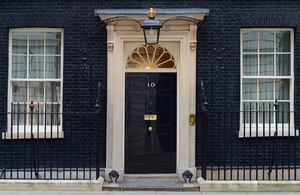
The front door of Number 10 Downing Street

In a phone call today on the on-going negotiations between the European Union and the United Kingdom, we welcomed the fact that progress has been achieved in many areas. Nevertheless, significant differences remain on three critical issues: level playing field, governance and fisheries. Both sides underlined that no agreement is feasible if these issues are not resolved.

Whilst recognising the seriousness of these differences, we agreed that a further effort should be undertaken by our negotiating teams to assess whether they can be resolved.

We are therefore instructing our chief negotiators to reconvene tomorrow in Brussels.

We will speak again on Monday evening.

Published 5 December 2020


UK and Egypt sign Association Agreement

The British Ambassador to Egypt, Sir Geoffrey Adams, today signed an agreement with Egypt’s Assistant Foreign Minister for Europe, Badr Abdelatty to strengthen political and trade ties between the two countries.

The agreement will allow British businesses and consumers to benefit from continued preferential access to the market after the end of the transition period – which will help boost vital trade and investment.

In addition to securing trade, today’s agreement provides a framework for cooperation and further development of political, economic, social and cultural links. The UK is committed to strengthening its relationship with Egypt and building co-operation on important issues including education, the environment and human rights.

The agreement will provide tariff-free trade on industrial products, as well as liberalisation of trade in agriculture, agri-foods and fisheries which will make trade easier and deliver significant savings to businesses in both the UK and Egypt.

Total trade on goods and services between the UK and Egypt was worth £3.5 billion in 2019, which we will seek to expand.

Welcoming the agreement, Foreign Secretary Dominic Raab said:

This agreement highlights the strength of the UK-Egypt partnership, and reflects our shared ambition to build our cooperation on a range of important issues.

Stronger trade links and more investment will grow our economies and help both our countries build back better from the impact of the coronavirus pandemic.

International Trade Secretary, Liz Truss said:

This agreement is a clear signal of the UK’s enduring commitment to our close bilateral relationship with Egypt and will help strengthen trade and investment ties in the future.

It will help provide both British and Egyptian businesses with new opportunities and provide them with the certainty they need to keep trading.

The UK remains committed to securing deals that support British jobs, deliver significant savings and help drive the post covid-19 recovery.

Egypt is an important market for UK exports worth £2.3 billion in 2019 (£1.5 billion in goods exports, £0.8 billion in services exports). Major goods exports to Egypt last year included metal ores (£235 million) as well as medicinal and pharmaceutical products (£111 million). Consumers and businesses will continue to benefit from more choice and lower prices on goods imported from Egypt. Major imports to the UK in 2019 included intermediate electrical goods (£193 million), and vegetables and fruit (£160 million).

General Manager at GlaxoSmithKline (GSK) North Africa, Nabil Besri said:

As a large British Healthcare company in Egypt, GSK Consumer Healthcare welcomes the signature of this trade agreement between Egypt and the UK. This important agreement will undoubtedly ensure the continuity of the strong business partnership between our two countries and allow British investors to continue to benefit from a strong and healthy investment environment in Egypt.

We continue to be very optimistic about the future development opportunities in Egypt and look forward to more growth under the terms of this agreement, serving the interests of both the British & the Egyptian economies.

Anthony Pile, Chairman at Blue Skies Holdings said:

As a British business that has invested significantly in Egypt over the last 18 years, a continuation of the free trade agreement between Egypt and the UK is of critical importance to Blue Skies.

The agreement is vital to securing jobs, prosperity, sustainability and indeed driving much needed economic growth in both Egypt and the UK. Now, more than ever in the current international climate, we need the security of a seamless continuation of free trade to safeguard the future of our business.

  • This Agreement is designed to take effect when the EU-Egypt Association Agreement ceases to apply to the UK.
  • This Agreement will now be subject to domestic parliamentary procedures in both the UK and Egypt.
  • In under two years, the UK Government has signed or agreed in principle Free Trade Agreements (FTAs) with 54 countries. Total UK trade with these countries was worth £166 billion in 2019.
  • A regularly updated list of all signed agreements is available on GOV.UK.
  • Source of trade statistics: ONS ‘UK total trade: all countries, non-seasonally adjusted April to June 2020 release’. Figures are provided on a nominal basis.
  • Source of trade in goods statistics: ONS ‘UK trade: September 2020 release’.