CMA and global partners secure privacy changes to the App Store

The UK’s Competition and Markets Authority (CMA), along with the Netherlands Authority for Consumers and Markets and the Norwegian Consumer Authority, took a leading role in the international effort to improve information available on the use of personal data by apps available in Apple’s App Store. This follows ongoing work from ICPEN (the International Consumer Protection and Enforcement Network), involving 27 of its consumer authority members across the world including the CMA.

Consumer protection authorities, including the CMA, became concerned that people were not being given clear information on how their personal data would be used before choosing an app, including on whether the app developer would share their personal data with a third party. Without this information, consumers are unable to compare and choose apps based on how they use personal data.

Following the intervention by the 27 ICPEN members, Apple announced in June a new section to each app’s product page in its App Store, containing key information about the data the app collects and an accessible summary of the most important information from the privacy policy.

The changes secured by the CMA and its international partner agencies mean that people can more easily consider privacy issues when choosing whether or not to buy and download an app. These changes will come into effect for consumers shortly. ICPEN members are also in discussions with Google about privacy information on its App Store.

Ensuring consumers are protected in digital markets is a priority for the CMA, and today’s announcement comes as the CMA-led Digital Markets Taskforce advises the Government on the design of a new regulatory regime for digital markets in the UK, following the Government’s commitment to establish a Digital Markets Unit within the CMA in April 2021.

Safeguarding people’s control over their data is important for protecting privacy as well as for the healthy operation of the market. The CMA’s market study into online platforms and digital advertising advocated a competitive-neutral approach to implementing privacy regulation, so that the big platforms are not able to exploit privacy regulation to their advantage. The CMA will be working with the Information Commissioner’s Office and with the communications regulator Ofcom further to address privacy and consumer protection issues through the Digital Regulation Cooperation Forum.

For more information, visit the ICPEN web page.

For media enquiries, contact the CMA press office on 020 3738 6460 or press@cma.gov.uk.


Tyne Valley investment continues five years on from Storm Desmond

The Environment Agency has invested £10million to improve flood defences since Storm Desmond wreaked havoc across Northumberland five years ago.

And over the next six years it will spend a further £10million to better protect local communities in the Tyne Valley, the most affected area in the North East, as part of a £272million programme of work which will protect 15,000 homes across the region.

In the immediate aftermath of Storm Desmond, which resulted in some of the highest river levels on the River Tyne since 1771, emergency repair work was also carried out to ensure communities were immediately protected as part of a £3 million government recovery package for the North East.

The Environment Agency’s Tristan Drought, from the Flood and Coastal Risk Management Team in the North East, said:

I remember vividly the devastating impact Storm Desmond had on Tyne Valley communities when record-breaking rainfall led to some of the highest river levels ever recorded on the Tyne.

Together with our partners and local communities, we have worked tirelessly since then to better protect homes, businesses and infrastructure in the Tyne Valley and Ponteland.

By working collaboratively with local people we’ve been able to identify solutions together and create climate resilient communities. The £20million investment we’ve secured means that we can safeguard the local economy and better protect 15,000 properties across the North East.

We can never completely eradicate the risk of flooding, however, with climate change already causing more frequent, intense flooding, it’s important that people are flood resilient. Being prepared is key – people who live in a flood risk area need to know what to do in a flood. This is absolutely vital.

People should go online at gov.uk to check their flood risk, sign up to receive Flood Warnings and prepare a Flood Plan to keep their family safe and protect their belongings.

Northumberland County Councillor Nick Oliver added:

As the local councillor and Northumberland’s representative on the Regional Flood and Coastal Committee I see first hand the great work the Environment Agency is doing improving flood defences in Corbridge and right across the county.

They work closely with the Northumberland County Council Flood Team and together have brought peace of mind to many people.

Guy Opperman MP said:

Five years on from the devastation of Storm Desmond, it is great to look back at the progress we have made – from Tyne Green to Ponteland – to prevent future flooding across Tynedale.

Of course, there is always more work to do. I am looking forward to seeing work start on new flood defences in Corbridge, as well continued engagement with local residents, parish councils, and the Environment Agency through my Flood Forum. We must continue to do all we can to protect and defend our local communities from the devastation that flooding can cause.

Reducing flood risk in Corbridge

This week (wc 7 December), work has started on a £1million scheme in Corbridge to strengthen the existing flood defences on the South Bank of the River Tyne and Devil’s Water to protect 37 homes. The Environment Agency is also looking at the possibility of installing property level resilience measures at some homes in the town

The town was one of the worst affected places in the North East during Storm Desmond, which devastated communities across the country in early December 2015. Corbridge saw 55 homes flooded as the River Tyne experienced some of the highest river levels since 1771 following record rainfall.

Making Acomb, Hexham and Ponteland more resilient to climate change

In Acomb, work is ongoing extend and raise the existing defences and make improvements to the main road bridge, to better protect 32 homes. The Environment Agency is also working with landowners and the Tyne Rivers Trust to develop options for additional flood water storage capacity upstream of the town, which would have the added benefit of restoring habitats for local wildlife.

In Hexham, design work is taking place for a project which will reduce flood risk from the River Tyne to up to 90 homes and businesses at the town’s Bridge End and Tyne Mills Industrial Estates. It’s hoped construction will start in Spring 2021. The project received a £1million government funding boost towards its £4.1million cost from a £170million pot for ‘shovel-ready’ flood schemes announced in July.

Elsewhere in Northumberland, Ponteland flood scheme – which received £450,000 towards it’s £3million cost from the same £170million pot of funding– started in August and is due to be completed in the Spring to better protect 265 homes in the town.

This builds on work carried out by Northumberland County Council over the summer to reduce surface water flood risk to 29 properties as part of highway improvements to Callerton Lane.

Investment in flood risk management in Tynedale

Other ongoing projects include:

  • Northumbrian Water, through the Northumbria Integrated Drainage Partnership (NIDP), is investigating how the risk of flooding can be reduced in Haydon Bridge. An Environment Agency project to repair some erosion downstream of the road bridge is also being finalised.

  • The NIDP is also assessing a number of options identified to reduce flood risk in Riding Mill and Stocksfield.

  • In Wylam, contractors have carried out a structural assessment of the embankment, and will work with the Environment Agency will consider how best to reduce flood risk in the area.

  • In Ovingham, Northumberland County Council is planning further work for summer 2021 which will see a total of 68 properties in the village better protected.

Working with communities

Since the impacts of Storm Desmond the Environment Agency and partners at local authorities have introduced Flood Community Engagement Officers to work directly with communities at risk to improve their resilience.

In the Tyne Valley alone the project has seen five new Community Flood Groups set up and flood plans created, adding to the 11 that were already established, and 28 new volunteer Flood Wardens recruited. Over 3,000 school children have also been involved in workshops looking at the causes of flooding, what to do in a flood and how the future generation can get involved in tackling the effects of climate change.

For more information and to find out how to Prepare. Act. Survive. visit the ‘what to do in a flood’ page.

Over 5 million homes are at risk of flooding in England alone, the average cost of flooding to a home is £30k and the mental health-impacts long-lasting.

A record government investment of £5.2bn to better protect 336,000 properties was announced this year, through the creation of around 2,000 new flood and coastal defences in England by 2027.



An Inspection Report Published: Inspection of Country of Origin Information Thematic Report on Sexual Orientation and Gender Identity or Expression

News story

This report covers a thematic review of CPIT products that deal with claims based on sexual orientation and gender identity or expression.

Inspection reports

Publishing the report, David Bolt said:

The Independent Advisory Group on Country Information (IAGCI) and I are grateful to Dr Chelvan for his painstaking thematic review of the Home Office’s Country of Origin (COI) products dealing with sexual orientation and gender identity or expression covering 30 countries.

CPIT responded relatively quickly (within three months) to update most of the products identified as requiring “Urgent” or “Priority Action”. The last of these (Malawi) was updated in October 2020.

I made three recommendations, in addition to those made by Dr Chelvan. While my recommendations flow directly from this latest review, they also reflect concerns that I have raised repeatedly with the Home Office during my tenure as Independent Chief Inspector regarding the resourcing of the production of COI and the attention paid to this important area of the department’s work.

It is therefore disappointing that the Home Office has rejected two of my three recommendations, while the sub-text of its “acceptance” of the third is that no specific action is required. The latter is particularly obtuse, given that my report criticises exactly this practice.

Overall, I believe that the Home Office needs to invest more resources in COI production and more oversight of its use. I understand that its resources are finite and that it has to prioritise, and I have some sympathy for the argument that the demand for COI is potentially limitless, but the department needs to look carefully at whether it is satisfying Paragraph 339JA (Asylum) of the Immigration Rules with regard to providing decision makers with country information that is reliable and up-to-date for countries of origin and transit. Of the 200 COI products published on GOV.UK, roughly a third (71) were issued/updated in 2020. The rest date from 2016-19.

The Home Secretary has referred to fixing the “broken” asylum system. While the production and use of COI is not broken, any review of the system must ensure that it is as good as it can be in supporting efficient and effective decision making.

David Bolt
Independent Chief Inspector of Borders and Immigration

Published 8 December 2020


Appeal to catch Devon asbestos dumpers

Press release

The Environment Agency has launched an appeal to catch the people who dumped asbestos in a Devon watercourse.

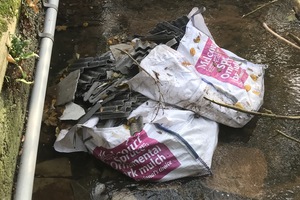
Two white builders' bags overflowing with corrugated strips of asbestos in a shallow stream

The asbestos was left in a Mill Leat in Sowton Village, Devon

Two builders’ bags full of asbestos sheets were found in the Mill Leat, on the River Clyst, near Sowton Village, East Devon. It is thought the illegal dumping happened on or near 20 November 2020.

Fly-tipping is not a victimless crime. The cost of clearing up falls on the landowner. But in limited circumstances the Environment Agency can step in. The asbestos is now being removed and disposed of safely.

Dave Brogden of the Environment Agency said:

The burden of investigating and clearing waste from fly-tipping often falls on local councils and we get involved if the amount and type of waste is so bad it can only be classified as illegal dumping.

On this occasion we have stepped in to sort out this problem, the result of someone showing a complete disregard to the safety of the public and the environment and for the time and resources of local services such as ours, which are already under extreme pressure.

Everyone who produces waste has a duty of care to make sure it does not cause harm to human health or pollute the environment and that it goes to the right place for disposal. On this occasion there were at least three sites within a few miles of the location permitted to accept this sort of hazardous waste.

If the cost of any work being carried out is unusually low, the contractor may not have a permit to carry waste nor any intention of paying for its proper disposal. You can check their waste-carrying credentials at https://environment.data.gov.uk/public-register/view/search-waste-carriers-brokers.

Dave Brogden said:

If you use someone to take away waste, we want you to take 3 steps: check if they if they have a permit, ask where the rubbish will end up, then record the details of the vehicle used to take the rubbish away. Never pay cash and insist upon a receipt.

If you have any information about who is responsible for this waste crime, contact the Environment Agency’s 24/7 hotline 0800 807060 or Crimestoppers on 0800 555111 or www.crimestoppers-uk.org.

Published 8 December 2020


UK and Kenya sign trade agreement

The UK has today (Tuesday 8 December) signed an Economic Partnership Agreement with Kenya. The deal was signed in London by International Trade Minister Ranil Jayawardena and Kenya’s Cabinet Secretary for Trade, Minister Betty Maina.

This trade agreement will ensure that all companies operating in Kenya, including British businesses, can continue to benefit from duty-free access to the UK market.

It will support jobs and economic development in Kenya, as well as avoid possible disruption to UK businesses such as florists who will be able to maintain tariff-free supply routes for Kenya’s high-quality flowers.

Top goods imports to the UK from Kenya last year were in tea, coffee and spices (£121 million); vegetables (£79 million); and live trees and plants, mostly flowers (£54 million). 

The UK market accounts for 43% of total exports of vegetables from Kenya as well as at least 9% of cut flowers, and this agreement will support Kenyans working in these sectors by maintaining tariff-free market access to the UK.

It will also benefit many of the approximately 2,500 UK businesses exporting goods to Kenya each year, including many UK suppliers of machinery, electronics and technical equipment, where continued tariff-free access will be guaranteed.

As one of the largest economies in East Africa, Kenya is an important trading partner for the UK.

This deal also recognises the importance of the wider region, and the agreement is open for other members of the East African Community to join.

International Trade Minister Ranil Jayawardena said:

I am delighted that today we have signed a trade agreement with Kenya. This deal makes sure businesses have the certainty they need to continue trading as they do now, supporting jobs and livelihoods in both our countries.

Today’s agreement is also a first step towards a regional agreement with the East African Community, and I look forward to working with other members to secure an agreement to forge ever-closer trading ties.

Minister for Africa James Duddridge said:

This agreement will provide the strongest possible platform for the United Kingdom, Kenya and, ultimately, the whole EAC, to expand our trade relationship in future.

We will use this agreement as the catalyst to deepen our mutual prosperity alongside the other areas of cooperation in our Strategic Partnership with Kenya that includes security, sustainable development, climate change, and cultural pillars.

Notes to Editors

  • The deal is a translation of the terms previously agreed between the EU and the East African Community (EAC) and includes clauses to allow other East African Community states to join in the future.
  • The provisions of the Economic Partnership Agreement will apply from 1 January 2021
  • In under two years, the UK government has signed or agreed in principle trade agreements with 55 countries. Total UK trade with these countries was worth £170 billion in 2019.
  • This agreement is the sixth we have secured in Africa, covering 14 countries. Source of trade statistics: ONS UK total trade: all countries, non-seasonally adjusted April to June 2020; HMRC Overseas Trade in Goods Statistics, September 2020.