Prosperity Fund Portfolio in Brazil

UK Aid policy and the Prosperity Fund

The UK is committed to spend 0.7% of the GNI (Gross National Income) in Official Development Assistance (ODA).

The Prosperity Fund is a £1.2 billion portfolio of programmes over seven years focused on promoting inclusive economic growth and reducing poverty. The Fund also looks to create opportunities for international business including UK companies, as a secondary benefit.

The Fund’s focus is on ODA-eligible middle-income countries where around 60% of the world’s poor live and where 60% of global growth will come from by 2030 (OECD). The Fund includes a small non-ODA component of £33 million, split over 4 years (2016 to 2020).

The Fund provides expertise and technical assistance in sectors and countries where there is the highest potential for inclusive growth, to:

  • promote economic reforms and remove barriers to trade
  • strengthen policy capacity and build strong institutions
  • reform key sectors such as infrastructure, energy, finance, education and healthcare
  • tackle corruption

The Prosperity Fund forms a small but strategic proportion of the UK’s total ODA commitment. It focusses on multi-year programmes in middle-income countries, which will help to make the world a more prosperous place.

All development projects and programmes comply with the International Development Act 2002, the International Development (Gender Equality) Act 2014, the OECD Development Assistance Committee (DAC) criteria, and UK Government transparency commitments on ODA spend. All UK ODA is untied.

Brazil

Brazil is an eligible country to receive ODA resources, according to OECD DAC. The UK’s Overseas Development Assistance (ODA) spend in Brazil has increased significantly since 2015, to well over £50 million a year.

Brazil has striking potential, but still counts with high levels of poverty and inequality. Brazil has a track record of economic growth coupled with poverty reduction: 35 million people were lifted out of extreme poverty (<$1.90 day) since 2005, although approximately 55 million Brazilians still live in poverty. COVID-19 will have a disproportionate effect on the lives and livelihoods of vulnerable groups in the short and medium term, so presents further challenges.

Opportunities for productivity growth in Brazil include: energy needs, especially in renewables to meet ambitious climate targets; additional private financing for essential infrastructure investments; improvements in infrastructure operation; reduction of costs of international trade and unlock export opportunities for many companies, and filling significant skills gaps. Specific strengths include a strong R&D base, a young and digitally savvy population, huge solar and wind potential and world-leading agritech.

The UK will work together to increase Brazil’s productivity and develop sustainable, inclusive, low-carbon economic growth.

Prosperity Fund in Brazil

The Brazil Prosperity Fund programme aims to support Brazil’s economic modernisation, where increased productivity will facilitate sustainable economic growth and poverty reduction. The Fund is also well positioned to bolster Brazil’s recovery from COVID-19, helping to create opportunities for green growth and better public services.

This programme encourages economic development in Brazil, and support a range of Sustainable Development Goals, in particular Sustainable Development Goal 17 ‘Strengthen the means of implementation and revitalize the global partnership for sustainable development’. It will also work towards better functioning markets that will drive prosperity in Brazil by creating opportunities and incentives for firms to invest, generate jobs and grow.

The Portfolio in Brazil

The Portfolio has programmes in the following areas for development, which have been chosen because they are likely to lead to the greatest overall opportunities in support of long-term, sustainable inclusive growth. In each of these areas, we are working in close collaboration with Brazilian partners including government at federal, state and municipal levels, and regulatory agencies. The programmes have a range of delivery models but typically are being implemented by commercial partners following a competitive procurement process, or multilaterals.

Trade

The Trade Portfolio (Bilateral, Global Trade and Global Business Environment Programmes) unlocks additional trade flows from Brazil into the international market and create an easier and more stable business environment, generating job creation, economic growth, women’s empowerment and poverty reduction.

Energy

The Energy programme fosters growth in renewable energy by improving regulations and helping to create an enabling environment that supports Brazil’s low-carbon energy transition. This will lead to increased energy security, affordability, and increased investment in clean energy and technologies such as smart grids, energy storage, and grid integration.

Green Finance

The Green Finance programme addresses poverty and inequality by improving the availability of private sector finance for high quality ‘green’ infrastructure investments, both deepening capital markets and supporting the country’s journey to a low carbon economy as a result.

Future Cities

The Future Cities Programme advances sustainable urban development in Brazil through the development of smart city technologies in mobility, water and data management. It supports innovations in order to reduce poverty and boost sustainable economic growth, by piloting new technologies with biggest potential to bring change and able to scale up.

Health

The Better Health Programme supports the increase of sustainability and efficiency of the Brazilian Unified Healthcare System, SUS. This work focuses on: a) strengthening primary care; b) improving data and information management and c) translating research into innovation.

Skills for prosperity

The Skills for Prosperity Programme improves the affordability, quality, relevance and equity of Higher Education (HE) and Technical and Vocational Education and Training (TVET) in partner countries. It focuses on improving equity, quality and relevance of education and promote an enabling environment for reform through English Language Teaching (ELT) and transferable skills. The programme equips youth with language skills where poor English is a barrier to access further education and employment. It also creates a model for ELT that elevates language standards in Brazil, supporting social mobility and business opportunities.

Digital access

The Prosperity Fund’s Digital Access Programme catalyses affordable, inclusive, safe and secure digital access for underserved and excluded populations. It utilises digital inclusion to support thriving digital ecosystems, create skilled jobs and generate digital solutions to local challenges.

Infrastructure

The Infrastructure programme works with the Ministry of Economy and the Ministry of Infrastructure to support implementation of UK’s 5 case business model for development and selection of infrastructure projects and implement Business Intelligence Modelling (BIM) policies.

One Pager – Prosperity Fund Brazil (PDF, 392KB, 1 page)

For more information about the Prosperity Fund in Brazil, please contact us: Brazil.ProsperityFund@fcdo.gov.uk


Sign up for 2021 international deterrence and assurance conference

News story

Dstl partners with U.S. Strategic Command and U.S. Naval War College for the 6th annual deterrence and assurance academic alliance event.

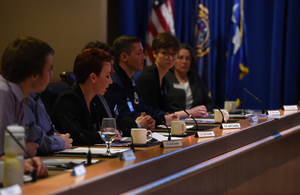
Speaker and audience at a previous international deterrence conference

Registrations and abstract submissions are open for a fully virtual event being held from 30 March to 1 April 2021, hosted by the University of Nebraska in Omaha, USA.

This year’s theme is ‘Building a Common Language: Integrating Deterrence and Competition with Allies’ and it will feature panel discussions with participants from around the world, plus an experiential learning event designed to challenge participant understanding of deterrence. The event is free, but you must register.

Sign up or submit an abstract for the U.S. Strategic Command Academic Alliance Conference and Workshop 2021.

Dstl runs a parallel Deterrence and Assurance Academic Alliance in the UK, bringing together students and academics with an interest in deterrence and assurance. This community of interest, made up of academic institutions in partnership with Dstl, conducts new research on deterrence and related topics such as coercion and conflict escalation.

Published 10 December 2020


Homes England revamps land disposal process to support SMEs and new entrants

From July 2021 a new Dynamic Purchasing System (DPS) will replace the current Delivery Partner Panel (DPP3). The DPS will change how Homes England procures housebuilders, increasing flexibility and introducing a new more proportionate approach to ensuring partners’ ability to deliver homes on sites.

The DPS is planned to open for the first round of applications from April 2021. Housebuilders will have the option to apply to join the DPS at any time as our pipeline of sites coming to market are publicised on the Homes England Land Hub or are brought forward by public sector landowners. We are moving away from the DPP approach where housebuilders had one opportunity to join when the panel was renewed. This new dynamic and land led approach will open Homes England sites up more widely to the whole market and be more flexible to accommodate market changes.

The DPS will also be available to help other public sector bodies, including local authorities and Registered Providers, procure a housebuilder or contractor to build homes on their land.

The DPS will introduce different categories of membership. SMEs bidding to deliver smaller sites will benefit from simpler entry criteria whereas the entry criteria for developers bidding to deliver larger strategic sites will be proportionately more testing. Larger developers will be expected to demonstrate leadership around issues such as design quality, building safety and improving equality and diversity in the industry.

Housebuilders will be able to tailor their membership to express interest in specific locations or types of development to give the agency the ability to more effectively market sites to interested parties.

Throughout the lifetime of the DPS, housebuilders will be able to apply to enter new categories and amend their membership, giving SMEs the ability to take on more ambitious schemes as they grow.

Minister of State for Housing Rt Hon Christopher Pincher MP said:

“We are helping more SME and new developers to get into the house building market, and the measures announced today will make it easier for them to work in partnership with Homes England – unlocking home ownership for more families across the country.

“This compliments our recent work to simplify the outdated planning system through our planning reform proposals, making it easier and cheaper for small developers to build the homes we need.”

Nick Walkley, Chief Executive of Homes England, said:

“Whilst a government procurement framework may not sound like exciting news, our new Dynamic Purchasing System (DPS) and land led approach really does modernise how we invite bids for public land. I hope our partners can see that we’ve actively listened to their feedback and acted on it.

“Our new DPS, with its new flexibilities, new membership criteria and more effective approach to marketing sites, will benefit our partners in the public sector and the housebuilding sector, particularly new entrants and SMEs.”


Newham rapist has his sentence increased

News story

Ian Vacciana has had his sentence increased following an intervention by the Solicitor General, Rt Hon Michael Ellis QC MP.

Royal Courts of Justice

A man who repeatedly raped and assaulted a woman has had his sentence increased following intervention by the Solicitor General, Rt Hon Michael Ellis QC MP.

Ian Vacciana, 58, raped and assaulted a woman on a number of occasions between 2018 and 2019. The first incident occurred in 2018 when Vacciana attempted to rape her. In the following months Vacciana violently assaulted her several times, with the victim requiring hospital treatment as a result of his attacks.

After a series of violent assaults, Vacciana raped the woman on multiple occasions. She managed to call the police after a particularly violent attack and Vacciana was arrested.

Vacciana was sentenced to 13 years and 6 months’ imprisonment with an extended licence period of 4 years on 16 March 2020 at Snaresbrook Crown Court.

Following a referral to the Court of Appeal by the Solicitor General, on 10 December the sentence was found to be unduly lenient and has been increased to 18 years’ imprisonment with an extended licence period of 4 years.

After the hearing at the Court of Appeal the Solicitor General, Rt Hon Michael Ellis QC MP, said:

Vacciana is a dangerous individual who has shown no remorse for his sickening behaviour. I hope the Court of Appeal’s decision today brings some closure to the brave victim.

Published 10 December 2020


Nationwide call for views on tackling violence against women and girls

A nationwide Call for Evidence to inform a new strategy to tackle Violence Against Women and Girls has been launched by the government today (10 December).

The launch of this Call for Evidence will mean that the experiences of victims and survivors will be at the heart of the government’s strategy. As well as urging organisations who directly support victims and survivors – such as frontline professionals and academics – to respond, for the first time the government is also asking victims, survivors, and their families and friends for their views and experiences.

Over the last 10 years, the government has responded to newer forms of crimes against women, such as cyber flashing and revenge porn. Action includes making ‘upskirting’ a specific criminal offence and commissioning a review of the laws around non-consensual sharing of intimate images, however, the pace of societal and technological change means it is even more critical that we adapt the response to these crimes.

This strategy will be an important step in making sure the government’s efforts continue to keep up with societal and technological change.

Given sensitivities, this survey will be carried out in partnership with third sector organisations so that victims and survivors are fully supported when speaking about their experiences. This will be anonymous, enabling respondents to provide as much information as they are comfortable with.

During the 10 week consultation, the government will also seek the views of organisations who directly support victims and survivors, such as frontline professionals and academics.

Home Secretary Priti Patel said:

Crimes which disproportionately affect women and girls, such as sexual violence, have a devastating impact on those directly affected, as well as on society as a whole.

Sadly, the methods used by perpetrators of these horrible crimes are constantly evolving and adapting, so our response must too.

I am steadfast in my determination to see more perpetrators brought to justice and all victims and survivors receiving the support they deserve.

Safeguarding Minister Victoria Atkins said:

Crimes that disproportionately affect women and girls range from rape and FGM to upskirting and online offences; they can have terrible effects on victims. We want to do all we can to tackle these appalling crimes, through a new strategy to tackle Violence Against Women and Girls.

I know it requires great bravery for victims to come forward, but we want to hear from them and from the public, so that the strategy reflects their views and experiences.

Help us to create a strategy to tackle crimes against women and girls in the 21st century.

Nimco Ali OBE, who was recently appointed as an Independent Government Adviser on Tackling VAWG, will be supporting this Call for Evidence and making sure voices from all parts of society are heard.

Independent Government Adviser on Tackling Violence Against Women and Girls Nimco Ali said:

As a survivor of FGM, I know the impact gender based violence can have on your life. How it can eat away at your peace of mind and the ability to feel safe in your body, your home and at times in the world. But I also know that we can prevent Violence Against Women and Girls and we can erase the fear that consumes so many of us.

Today as we launch the consultation on Violence Against Women and Girls, I want you to know this government cares about everyone woman and girl in this country and we want to hear from you.

We want to hear your lived experience and how we can help make you feel safer. Progress is possible and with your help we can create a world free of VAWG and the fear of it.

The 10-week consultation begins today (10 December) and closes on 19 February 2021.

As well as the public survey, the Home Office will set up focused discussions with a range of representatives from charities directly engaging with victims to gather their views. The survey will provide the fine detail of the lived experiences, while the focus groups will inform with more strategic or structural issues.

Statistics show that there were estimated 2.3 million victims of domestic abuse in the last year and it costs society an estimated £71 billion. Domestic homicides count for around 1 in 5 of all homicides and the government is aiming to reduce homicide overall.

This is why the government will next year bring forward a new dedicated standalone Domestic Abuse strategy which will complement the new VAWG strategy so it will be given the national prominence it deserves with a comprehensive strategy to tackle it.

The Tackling Violence Against Women and Girls Strategy will be published early next year, with the Domestic Abuse Strategy due to follow once the Domestic Abuse Bill receives Royal Assent.